manuals.online logo
Brands
  1. Home
  2. •
  3. Brands
  4. •
  5. JVC
  6. •
  7. Amplifier
  8. •
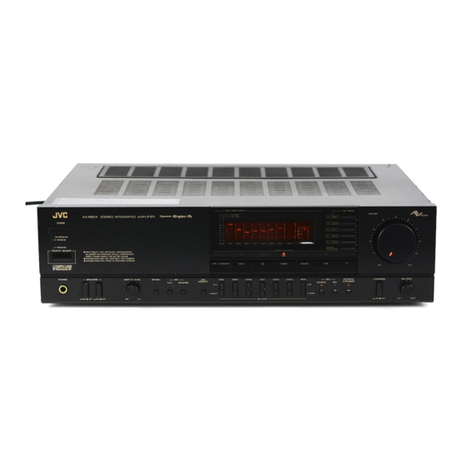
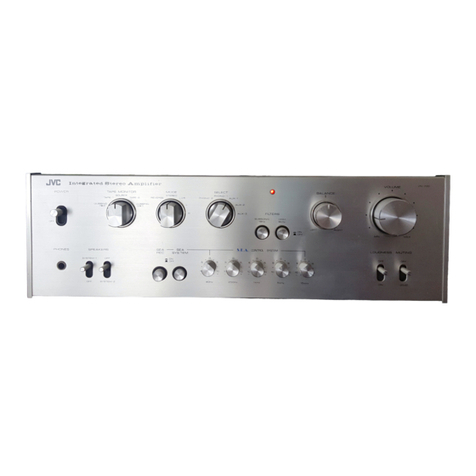
  9. JVC AX-M9000 User manual

JVC AX-M9000 User manual

Other manuals for AX-M9000

2

Other JVC Amplifier manuals

JVC KS-DR2001D User manual

JVC

JVC KS-DR2001D User manual

JVC KS-A101J User manual

JVC

JVC KS-A101J User manual

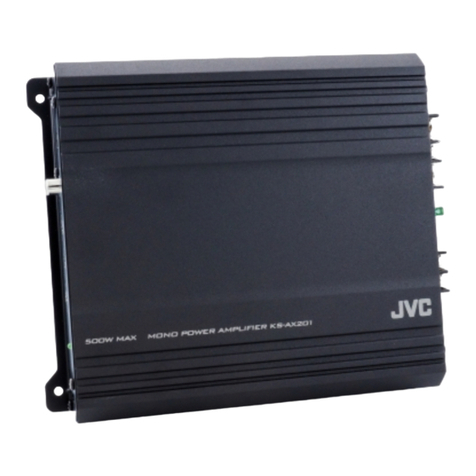
JVC KS-AX201 User manual

JVC

JVC KS-AX201 User manual

JVC AX-Z1010TN User manual

JVC

JVC AX-Z1010TN User manual

JVC JA-S22 User manual

JVC

JVC JA-S22 User manual

JVC AX-SD1GD User manual

JVC

JVC AX-SD1GD User manual

JVC AX-V55BK User manual

JVC

JVC AX-V55BK User manual

JVC AX-V5BK User manual

JVC

JVC AX-V5BK User manual

JVC KS-DR3001D User manual

JVC

JVC KS-DR3001D User manual

JVC A-X55 User manual

JVC

JVC A-X55 User manual

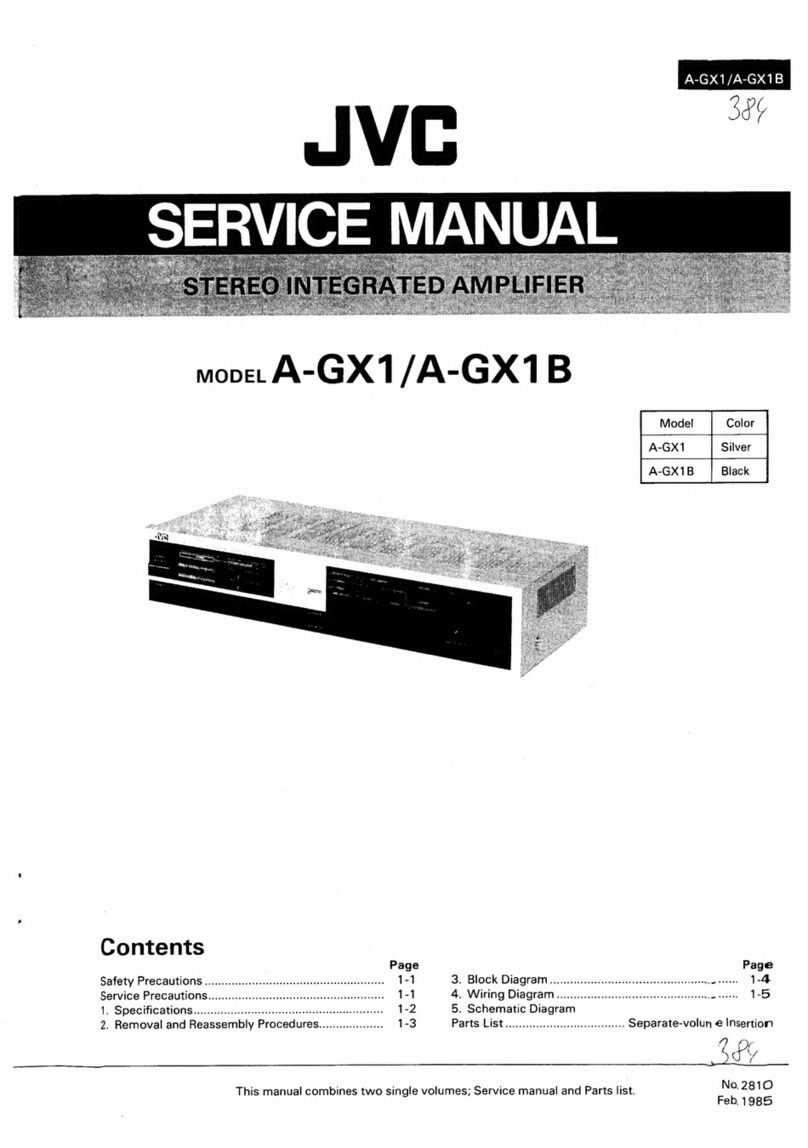
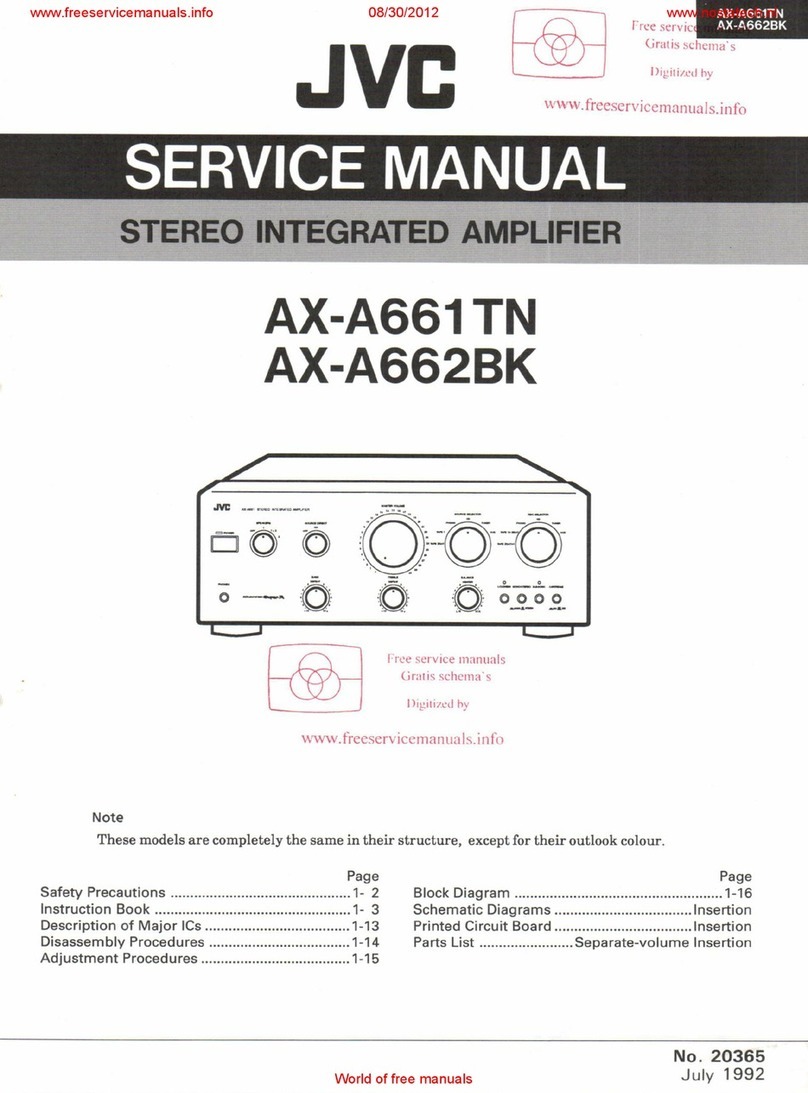
JVC AX-A661TN User manual

JVC

JVC AX-A661TN User manual

JVC KS-AX7300 User manual

JVC

JVC KS-AX7300 User manual

JVC KS-AX6700 User manual

JVC

JVC KS-AX6700 User manual

JVC KS-AR8002D User manual

JVC

JVC KS-AR8002D User manual

JVC AX-M9000 User manual

JVC

JVC AX-M9000 User manual

JVC AX-222BK User manual

JVC

JVC AX-222BK User manual

JVC AX-33BK User manual

JVC

JVC AX-33BK User manual

JVC KS-AX201 User manual

JVC

JVC KS-AX201 User manual

JVC 5100 User manual

JVC

JVC 5100 User manual

JVC KS-AX3101D User manual

JVC

JVC KS-AX3101D User manual

JVC VN-700 User manual

JVC

JVC VN-700 User manual

JVC KSAX3002 - Compact Power Amplifier User manual

JVC

JVC KSAX3002 - Compact Power Amplifier User manual

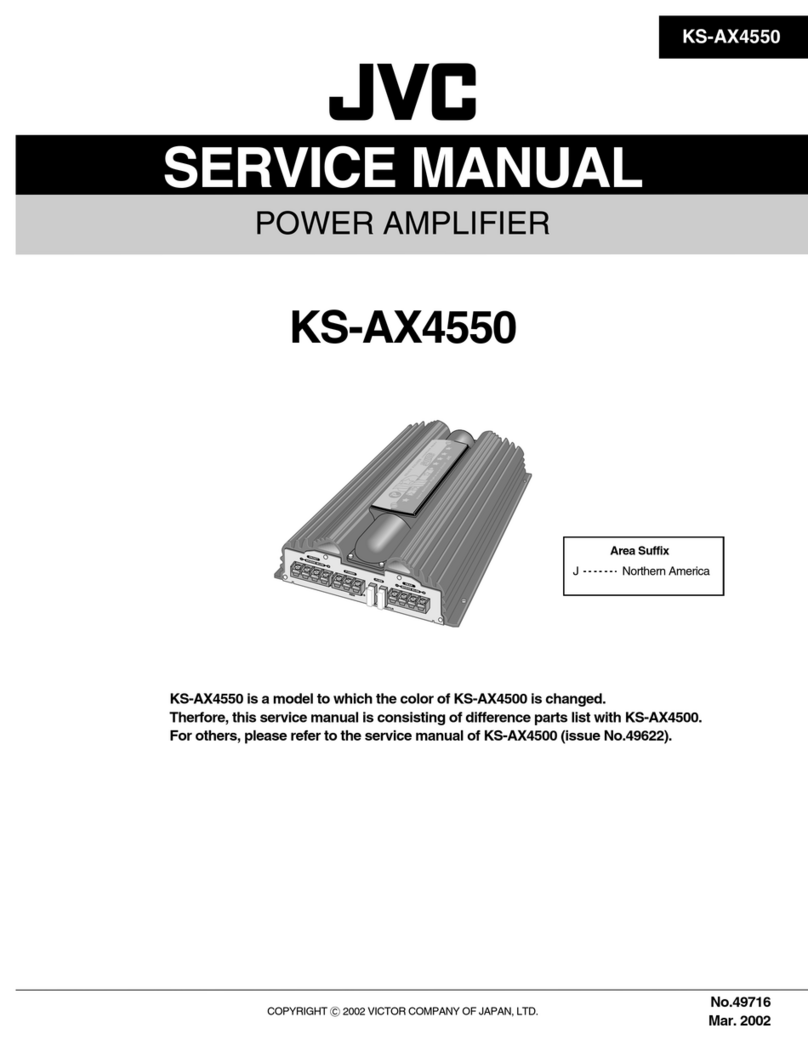
JVC KS-AX4500 User manual

JVC

JVC KS-AX4500 User manual

JVC KS-DR2004D User manual

JVC

JVC KS-DR2004D User manual

Popular Amplifier manuals by other brands

Magnat Audio EDITION FOUR Owner's manual/warranty document

Magnat Audio

Magnat Audio EDITION FOUR Owner's manual/warranty document

Inter-m PA-2000A Operation manual

Inter-m

Inter-m PA-2000A Operation manual

Yamaha TX6n owner's manual

Yamaha

Yamaha TX6n owner's manual

Peavey TNT 150 user guide

Peavey

Peavey TNT 150 user guide

Bosch LBB 1903/10 Installation and user instructions

Bosch

Bosch LBB 1903/10 Installation and user instructions

Avocent Emerge DA1200D Installer/user guide

Avocent

Avocent Emerge DA1200D Installer/user guide

Redgum RGi35 operating instructions

Redgum

Redgum RGi35 operating instructions

Cambridge Audio AXA25 user manual

Cambridge Audio

Cambridge Audio AXA25 user manual

Alpine MRP-M200 owner's manual

Alpine

Alpine MRP-M200 owner's manual

Technical Pro H1502UrBT user manual

Technical Pro

Technical Pro H1502UrBT user manual

FMS EMGZ307 operating manual

FMS

FMS EMGZ307 operating manual

Racal Instruments 5601 user manual

Racal Instruments

Racal Instruments 5601 user manual

Valcom V-1094A Technical specifications

Valcom

Valcom V-1094A Technical specifications

Cambridge Audio 851D user manual

Cambridge Audio

Cambridge Audio 851D user manual

QSC 3800 Specifications

QSC

QSC 3800 Specifications

NAD C300 owner's manual

NAD

NAD C300 owner's manual

Rotel RMB-1077 owner's manual

Rotel

Rotel RMB-1077 owner's manual

Peavey Monitor 300 Series operating guide

Peavey

Peavey Monitor 300 Series operating guide

manuals.online logo
manuals.online logoBrands
  • About & Mission
  • Contact us
  • Privacy Policy
  • Terms and Conditions

Copyright 2025 Manuals.Online. All Rights Reserved.

SERVICE MANUAL
No.20933
Apr.2001
COPYRIGHT 2001 VICTOR COMPANY OF JAPAN, LTD.
AX-M9000
AX-M9000
Area Suffix
E Continental Europe
MONAURAL INTEGRATED AMPLIFIER
Contents
Safety precautions --------------------------------------------------------1-2
Disassembly method -----------------------------------------------------1-3
Adjustment method -------------------------------------------------------1-10
Description of major ICs -------------------------------------------------1-11~21
PHASE SPEAKER
12 1
-180û 2 123
DOWN UP
45 6
PRESENCE EXT
PROCESSOR LINE
MUTE
GAIN CONTROL
ATT
SLEEP EACH
MONAURAL INTEGRATED AMPLIFIER
AX M9000
STANDBY/ON
All manuals and user guides at all-guides.com
all-guides.com
AX-M9000
1-2
1. This design of this product contains special hardware and many circuits and components specially for safety
purposes. For continued protection, no changes should be made to the original design unless authorized in
writing by the manufacturer. Replacement parts must be identical to those used in the original circuits. Services
should be performed by qualified personnel only.
2. Alterations of the design or circuitry of the product should not be made. Any design alterations of the product
should not be made. Any design alterations or additions will void the manufacturer`s warranty and will further
relieve the manufacture of responsibility for personal injury or property damage resulting therefrom.
3. Many electrical and mechanical parts in the products have special safety-related characteristics. These
characteristics are often not evident from visual inspection nor can the protection afforded by them necessarily
be obtained by using replacement components rated for higher voltage, wattage, etc. Replacement parts which
have these special safety characteristics are identified in the Parts List of Service Manual. Electrical
components having such features are identified by shading on the schematics and by ( ) on the Parts List in
the Service Manual. The use of a substitute replacement which does not have the same safety characteristics
as the recommended replacement parts shown in the Parts List of Service Manual may create shock, fire, or
other hazards.
4. The leads in the products are routed and dressed with ties, clamps, tubings, barriers and the like to be
separated from live parts, high temperature parts, moving parts and/or sharp edges for the prevention of
electric shock and fire hazard. When service is required, the original lead routing and dress should be
observed, and it should be confirmed that they have been returned to normal, after re-assembling.
5. Leakage currnet check (Electrical shock hazard testing)
After re-assembling the product, always perform an isolation check on the exposed metal parts of the product
(antenna terminals, knobs, metal cabinet, screw heads, headphone jack, control shafts, etc.) to be sure the
product is safe to operate without danger of electrical shock.
Do not use a line isolation transformer during this check.
Plug the AC line cord directly into the AC outlet. Using a "Leakage Current Tester", measure the leakage
current from each exposed metal parts of the cabinet, particularly any exposed metal part having a return
path to the chassis, to a known good earth ground. Any leakage current must not exceed 0.5mA AC (r.m.s.).
Alternate check method
Plug the AC line cord directly into the AC outlet. Use an AC voltmeter having, 1,000 ohms per volt or more
sensitivity in the following manner. Connect a 1,500 10W resistor paralleled by a 0.15 F AC-type capacitor
between an exposed metal part and a known good earth ground.
Measure the AC voltage across the resistor with the AC
voltmeter.
Move the resistor connection to eachexposed metal part,
particularly any exposed metal part having a return path to
the chassis, and meausre the AC voltage across the resistor.
Now, reverse the plug in the AC outlet and repeat each
measurement. voltage measured Any must not exceed 0.75 V
AC (r.m.s.). This corresponds to 0.5 mA AC (r.m.s.).
1. This equipment has been designed and manufactured to meet international safety standards.
2. It is the legal responsibility of the repairer to ensure that these safety standards are maintained.
3. Repairs must be made in accordance with the relevant safety standards.
4. It is essential that safety critical components are replaced by approved parts.
5. If mains voltage selector is provided, check setting for local voltage.
Good earth ground
Place this
probe on
each exposed
metal part.
AC VOLTMETER
(Having 1000
ohms/volts,
or more sensitivity)
1500 10W
0.15 F AC TYPE
!
Burrs formed during molding may
be left over on some parts of the
chassis. Therefore, pay attention to
such burrs in the case of
preforming repair of this system.
In regard with component parts appearing on the silk-screen printed side (parts side) of the PWB diagrams, the
parts that are printed over with black such as the resistor ( ), diode ( ) and ICP ( ) or identified by the " "
mark nearby are critical for safety.
When replacing them, be sure to use the parts of the same type and rating as specified by the manufacturer.
(Except the JC version)

All manuals and user guides at all-guides.com
AX-M9000
1-3
Remove the three screws A attaching the metal
cover on the back of the body.
Remove the four screws B attaching the metal cover
on both sides of the body using a hexagon wrench.
Draw the metal cover upward from the behind while
pulling the both sides of the lower part of the metal
cover outward.
1.
2.
3.
Disassembly method
Removing the metal cover (See Fig. 1)
Prior to performing the following procedure, remove
the metal cover.
Remove the six screws C attaching the top plate
using a hexagon wrench.
Remove the six screws D and tow screws D'
attaching the front panel assembly from the back of
the body.
Remove the four screws E attaching the front panel
assembly from the upper part of the body.
Remove the four screws F attaching the front panel
assembly on both sides of the body.
Disconnect the harness from the connectors CN601,
CN602, CN603, CN604 and CN605 of the system
control board assembly.
Remove the screw G attaching the earth wire.
* The front panel assembly of this machine
comprises the three sets - the front panel
(left), front panel (right) and sub-panel (center).
1.
2.
3.
4.
5.
6.
Removing the front panel assembly
(See Fig. 2 to 5)
Fig.2
Fig.3
B 2
A
C
E
D
Fig.4
CN602 CN603 CN604
CN601 CN605
Metal cover
Fig.1
Top plate
Front panel
assembly
Front panel assembly
System control board assembly
Fig.5
B 2
F 2F 2
G
Earth wire
D'
All manuals and user guides at all-guides.com
AX-M9000
1-4
Removing the rear panel (See Fig.6 to 9)
1.
2.
3.
4.
5.
Prior to performing the following procedure, remove
the metal cover and front panel assembly.
Remove the four screws H attaching the rear panel
on the back of the set.
Remove the eight screws I attaching the rear panel
on the upper part of the set.
Remove the six screws J, two screws K, nine screws
L and one screw M attaching the rear panel.
Draw the rear panel upward from the behind at the
legs while pulling the rear panel outward.
Remove the four screws N attaching the speaker
output cord.
* If necessary, remove the power plug, connector
clamp, etc.
Fig.6
Fig.7
Fig.8
H
Fig.9
I
I
J
L
J
K
J
Rear panel
L
M
NN
Rear panel
(Bottom)
All manuals and user guides at all-guides.com
AX-M9000
1-5
1.
2.
Prior to performing the following procedure, remove
the metal cover and front panel assembly.
Remove the ten screws O attaching the control
switch board assembly 1 & 2 on the back side of the
front panel assembly (left & right sides).
Remove the four screws P attaching the metal base
on the backside of the sub-panel assembly (center).
Remove the four screws Q on the backside of the
metal base. Then the display board assembly can be
removed.
1.
2.
3.
<Removing the front panel section>
Removing the control switch board
assembly 1 & 2 and display board
assembly (See Fig.10 to 11)
Prior to performing the following procedure, remove
the metal cover and front panel assembly.
Remove the four screws R attaching the system
control board assembly.
Disconnect the connectors CN611, CN612, CN613,
CN614, CN615 and CN616.
Removing the system control board
assembly (See Fig. 12)
Fig.12
Fig.10
PO
O
Q
R
R
CN611
CN614
CN613 CN616 CN612 CN615
Front panel (right)
Control switch board (1)
Front panel (left)
Control switch board (2)
Display board
System control board assembly
Fig.11
Sub-panel
Metal base
Metal base
All manuals and user guides at all-guides.com
AX-M9000
1-6
1.
2.
3.
4.
5.
6.
7.
8.
Prior to performing the following procedure, remove
the metal cover, system control assembly and rear
cover.
Remove the six through bolts S attaching the heat
sink and the heat sink cover.
Remove the eleven screws T attaching the power
AMP sub-board assembly.
Disconnect the harness, which is extending from
power transformer, from the connectors TB401,
TB402, TB403 and TB404.
Disconnect the harness, which is extending from the
power transformer for pre-AMP, from the connectors
CN401 and CN402.
Disconnect the harness, which is extending from the
fan, from the connector CN453.
Disconnect the harness, which is extending from the
signal processing board, from the connector CN301.
After removing each screw U attaching the power
AMP sub-board assembly (1) & (2), take off the
power AMP sub-board assembly from the heat sink.
Remove the seven screws V attaching transistor
Q335~Q340.
Removing the power AMP board
assembly / heat sink (See Fig. 13 to 15)
Fig.14
Fig.13
TB401
TB402
CN402
CN401
11
CN301
CN453
TB403
TB404
Power AMP sub-board
assembly (1) (2)
Heat sink cover
Power AMP board
Signal
processing
board
T
U
S
Fig.15
V
Transisitor Q335~Q340.
Power AMP board
Heat sink
All manuals and user guides at all-guides.com
all-guides.com
AX-M9000
1-7
Prior to performing the following procedure, remove
the metal cover and the rear panel.
Remove the current mode source selector board
assembly and the rear terminal panel.
Remove the five screws Y attaching the signal
processing board assembly.
Remove the connectors CN251 and CN252.
1.
2.
3.
Prior to performing the following procedure, remove
the metal cover and the rear panel.
Remove the six screws W attaching the RCA pins on
the current mode source selector board assembly.
Then, the current mode source selector board can
be removed.
Remove the four screws X attaching the cannon
connector on the signal processing board.
Then, the rear terminal panel can be removed.
1.
2.
3.
Removing the current mode source
selector board assembly and rear
terminal panel (See Fig. 16)
Removing the signal processing board
assembly (See Fig. 17)
Removing the power switch board
assembly (See Fig. 18)
Prior to performing the following procedure, remove
the metal cover.
Remove the four screws Z attaching the power
switch board assembly.
Remove the cable connecting to the transformer.
1.
2.
Fig.17
Fig.18
Fig.16
W
X
Current mode source selector board assembly
Rear terminal panel
Y
Y
Z
Signal processing board
Power
switch
board
All manuals and user guides at all-guides.com
AX-M9000
1-8
1.
Prior to performing the following procedure, remove
the metal cover.
Remove the two screws A attaching the power
transformer for pre-AMP.
1.
Removing the core transformer
for pre-AMP (See Fig. 19)
Removing the transformer
for power AMP (See Fig. 20)
Prior to performing the following procedure, remove
the metal cover and the front panel assembly.
Remove the four screws B attaching the power
transformer for power AMP.
Fig.20
Fig.19
A
B
Power transformer
for pre-AMP
Power transformer for power AMP
All manuals and user guides at all-guides.com
AX-M9000
1-9
CLAMP
WR104WR103
WR102
13P
12P
8P
CLAMP
CLAMP
CLAMP
Black wire
Purple wire
Red wire
Gray wire
Yellow, Brown wire
CN insertion
Orange, Blue wire
CN insertion
Red, Black wire
CN insertion
Fig 1.
Fig 2.
Arrangement drawings for the clamp binding
In order to secure the performance of the machine, refer to the following arrangement drawings
when the lines are clamped.
White wire 2
Red wire 2
White RED wire
Brown wire
S CLAMP
Red wire 2
Black wire
White wire
Red wire
S CLAMP
S CLAMP
S CLAMP
All manuals and user guides at all-guides.com
AX-M9000
1-10
100Hz More than 70dB
1kHz More than 70dB
10kHz More than 70dB
100Hz More than 70dB
1kHz More than 70dB
10kHz More than 70dB
Adjustment method
2. Adjustments and confirmation
Remarks
Five minutes later
after turning the
power on
Description
Standard
output
Total distortion
factor
Output level
Hum noise
Frequency
characteristics
AC voltage of
speaker terminal
Adjustments of
idling currency
Confirmation of
idling currency
Crosstalk
Adjusting method
1) INPUT LINE1 - Output at the time of THD0.5% at f=1kHz
1) INPUT LINE1 - Distortion factor at the time of
200W (40.0V) at 8 load
1) Output level at the time when inputting 1kHz 200mV
to LINE 1
1) Line 1
1) No signal, no load, Vol. 0.0
1) Prior to turning the power on, turn the R398
counterclockwise fully
2) After connecting the 3 pin and 4 pin of the CN303 to the
electronic voltmeter, adjust the voltage to 2-3mV.
3) After elapsing five minutes, adjust the voltage to
3.5+/-0.5mV. Since there is backlash, thoroughly adjust it.
4) After elapsing two minutes, make sure that the voltage
falls within 3.5-7mV. In case where the voltage does not
fall within the specified value, readjust it to the values
specified in 3) above.
1) No signal, no load, rated power
Confirm under the room temperature of 20-25
1) INPUT LINE 1 - The output at the
input terminal side shall be +20dBm
as a standard.
The CH to be measured shall be terminated at 10k
Standard value
More than
210W/8 (41.0V)
192mV +/- 10mV
Less than +/- 1mV
20Hz Less than 0.04%
1kHz Less than 0.04%
20kHz Less than 0.06%
Line1
to
Line2
Line1
to
Line5
100Hz
1kHz
10kHz
Vol. 99. 5
Vol. 99. 5
Vol. 69. 5
Vol. 44. 0
Vol. 99. 5
45.6dB 1dB
45.6dB 1dB
33.4dB 1dB ATT ON
31.0dB 1dB
5.8dB 1dB
45.6dB 1dB
Less than 10mV
Less than 0.4mV
1) Line 1
2) Base hum
Input short
Volume min.
1. List of measuring devices
Measuring devices : Electronic voltmeter
Oscilloscope
Low-frequency transmitter (50Hz-20 kHz of transmitting frequency and output of 0
dBs at the 600 terminal)
Distortion factor tester (with a built-in band path filter)
All manuals and user guides at all-guides.com