logo
Brands
  1. Home
  2. •
  3. Brands
  4. •
  5. LifeSize
  6. •
  7. Conference Phone
  8. •
  9. LifeSize Phone User manual

LifeSize Phone User manual

Other manuals for Phone

2

Other LifeSize Conference Phone manuals

LifeSize Phone HD User manual

LifeSize

LifeSize Phone HD User manual

LifeSize Phone HD User manual

LifeSize

LifeSize Phone HD User manual

LifeSize Phone HD Instruction Manual

LifeSize

LifeSize Phone HD Instruction Manual

Popular Conference Phone manuals by other brands

Polycom SoundStation 2W User and administrator guide

Polycom

Polycom SoundStation 2W User and administrator guide

Vixtel glass 1100 user guide

Vixtel

Vixtel glass 1100 user guide

Oregon Scientific OS200 user manual

Oregon Scientific

Oregon Scientific OS200 user manual

Polycom SoundStation IP 4000 user guide

Polycom

Polycom SoundStation IP 4000 user guide

AbleNet Prism C user guide

AbleNet

AbleNet Prism C user guide

Albrecht Multicom manual

Albrecht

Albrecht Multicom manual

Fortinet FortiFone FON-C70 user guide

Fortinet

Fortinet FortiFone FON-C70 user guide

Avaya B159 Series Quick setup guide

Avaya

Avaya B159 Series Quick setup guide

Konftel Konftel 55W Quick reference guide

Konftel

Konftel Konftel 55W Quick reference guide

Mitel 6867i Premium Quick reference guide

Mitel

Mitel 6867i Premium Quick reference guide

Polycom SoundStation 2W User and administrator guide

Polycom

Polycom SoundStation 2W User and administrator guide

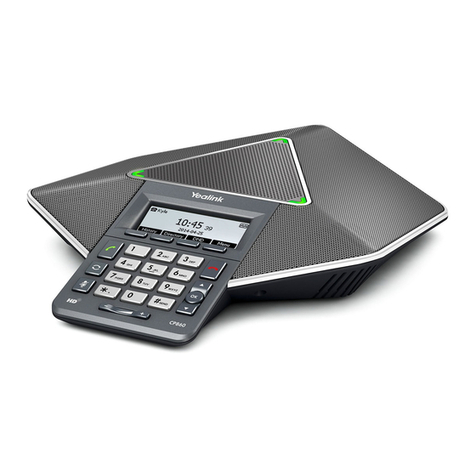
Yealink CP920 quick start guide

Yealink

Yealink CP920 quick start guide

Polycom SoundStation IP 6000 quick start guide

Polycom

Polycom SoundStation IP 6000 quick start guide

Mitel 6970 IP Quick reference guide

Mitel

Mitel 6970 IP Quick reference guide

Yealink CPE860 Quick start up guide

Yealink

Yealink CPE860 Quick start up guide

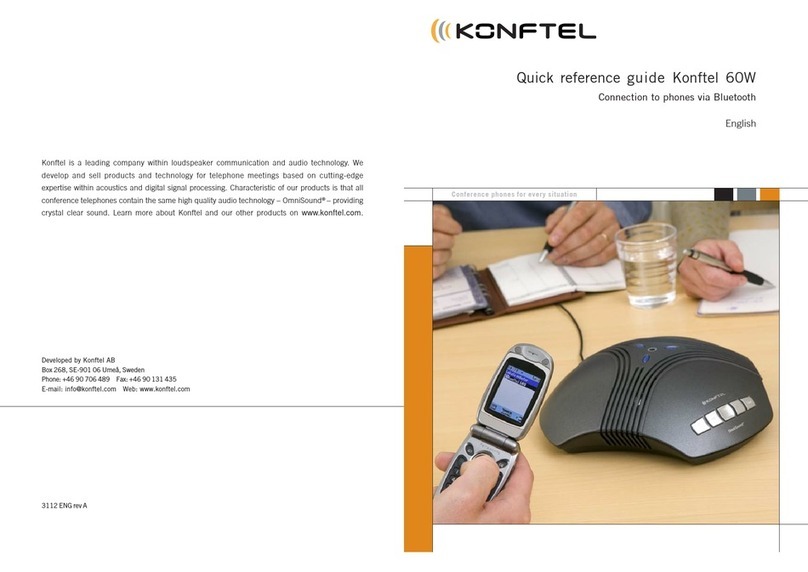
Konftel 60W Quick reference guide

Konftel

Konftel 60W Quick reference guide

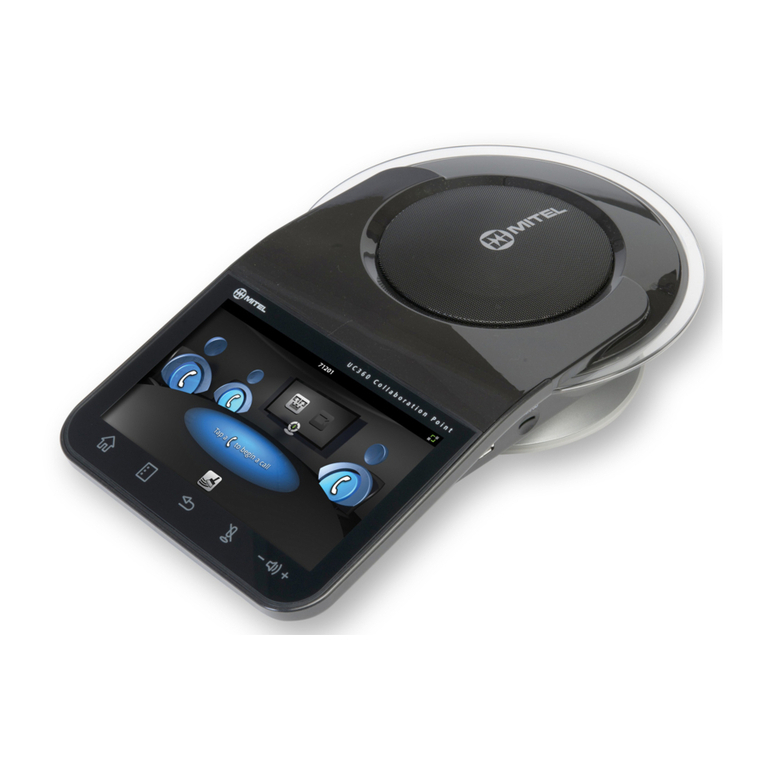
Mitel UC360 user guide

Mitel

Mitel UC360 user guide

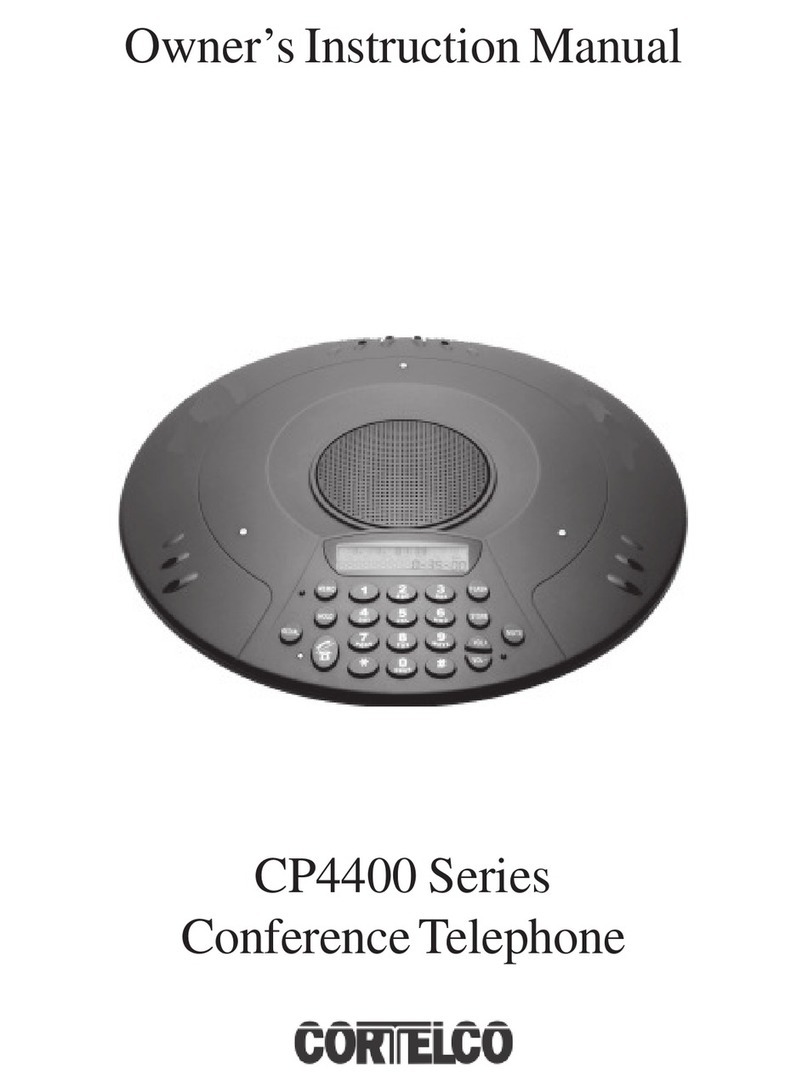
Cortelco CP4400 Series Owner's instruction manual

Cortelco

Cortelco CP4400 Series Owner's instruction manual

https://manuals.online logo
https://manuals.online logoBrands
  • About & Mission
  • Contact us
  • Privacy Policy
  • Terms and Conditions

Copyright 2026 Manuals.Online. All Rights Reserved.

LifeSize®Phone™
User Guide
2LifeSize Video Communications Systems User Guide
August 2007
Part Number 132-00003-003, Revision 1
Copyright Notice
©2005 - 2007 LifeSize Communications Inc, and its licensors. All rights reserved.
LifeSize Communications has made every effort to ensure that the information contained in this
document is accurate and reliable, but assumes no responsibility for errors or omissions. Information
in this document is subject to change without notice. Companies, names, and data used in examples
herein are fictitious unless noted. This document contains copyrighted and proprietary information,
which is protected by United States copyright laws and international treaty provisions. No part of the
document may be reproduced or transmitted, in any form or by any means, electronic or mechanical,
for any purpose, without the express written permission from LifeSize Communications.
Trademark Acknowledgments
LifeSize® is a registered trademark of LifeSize Communications Inc. All other trademarks are the
property of their respective owners.
Patent Notice
For patents covering LifeSize® products, refer to http://www.lifesize.com/support/legal.
Contacting Customer Support
If you have questions, concerns, or need assistance, contact your LifeSize Channel Partner.
Providing Customer Feedback
LifeSize Communications welcomes your comments regarding our products and services. If you have
feedback about this or any LifeSize product, please send it to [email protected]m. Contact
information for LifeSize Communications is as follows:
Method Address
Internet http://www.lifesize.com
E-mail [email protected]
Phone (877) LIFESIZE or (877) 543-3749
(512) 347-9300
Fax (512) 347-9301
LifeSize Video Communications Systems User Guide 3
Welcome to LifeSize Phone
LifeSize Phone is the high definition audio conference phone. Powered by 16 always-on
microphones, circular microphone array, and beam forming technology, the LifeSize Phone
delivers superior room coverage, speaker detection, clarity, and echo cancellation for
conferences in executive offices to large conference rooms. Its elegant, non-intrusive design
provides flexible connectivity.
You can use LifeSize Phone as a standalone audio conferencing device or fully integrated
with LifeSize video communications systems. LifeSize Phone is simple to use and provides
full function, multi-participant conferencing capabilities.
The LifeSize Phone meets the following environmental specifications:
Installing LifeSize Phone
Your LifeSize Phone package includes the following components:
• Tabletop console with integrated keypad and display
• Power over Ethernet cable
• Quick reference card
• Documentation CD, including this guide and the LifeSize End User License Agreement
in all supported languages. Refer to www.lifesize.com for product Release Notes.
• Safety and Regulatory Notices
Supported Configurations
LifeSize Phone is available in three configurations:
• LifeSize Phone for use with IP
Note: This configuration requires that you supply a power adapter that is IEEE 802.3af
compliant where Power over Ethernet (PoE) is unavailable. Refer to www.lifesize.com
for details or contact your LifeSize product reseller.
Operating Temperature 0°C to 40°C
Operating Humidity 10% to 85%, non-condensing
Storage Temperature -30°C to 55°C
Storage Humidity 10% to 90%, non-condensing
Altitude 0 to 10,000 feet
4LifeSize Video Communications Systems User Guide
• LifeSize Phone for use with LifeSize Room
Note: Refer to the LifeSize Room documentation for details about installing,
configuring, and using the speakerphone with LifeSize Room.
Setup for IP Use
To set up the LifeSize Phone for use with IP in your environment, follow these steps:
Note: Refer to the quick reference card included in your product package for a visual
depiction of the proper setup.
1. Insert the Ethernet cable into the port on the underside of the phone closest to the
center; this port is marked with the LAN symbol . The exterior port is reserved for
future use. Ensure the cables are secured into the guides to avoid damage to them.
2. Insert the opposite end of the Ethernet cable into the PoE adapter or the PoE port on the
wall. If using a PoE adapter, plug the remaining end into the network port on the wall.
You must supply a power adapter that is IEEE 802.3af compliant where PoE is
unavailable.
3. The LifeSize Phone boots, and you are prompted to configure it the first time.
Configuring Your LifeSize Phone
Once you have set up your LifeSize Phone in your environment, you are prompted to
configure the system for your locale and network. You can change preferences such as the
display language, administrator password (for accessing advanced preferences), dialing
options for use with IP connectivity, and other preferences. You can also change the phone
name and number that appears in the phone display.
Note: For security reasons, LifeSize recommends you change the default
administrator password during the initial configuration.
The following keys provide navigation during configuration:
Keypad
Key Function
Toggles values, activates the cursor in a field, and accepts changes to a field.
Behaves as up and down keys when scrolling through preferences.
Volume Down also changes the text entry mode when editing a text field.
LifeSize Video Communications Systems User Guide 5
Once you have completed the initial configuration, you can then place calls, receive calls, or
configure additional preferences by accessing the administrative menu.
Advanced Configuration
The administrator configuration provides access to advanced preferences. To access the
administrator configuration, follow these steps:
1. Press sequentially when the phone is idle.
2. Enter the default administrator password (1 2 3 4 by default) and press .
If you enter an incorrect password, the Login Failed message displays. After six
seconds you return to the main screen.
If you successfully enter the password, the Main Menu displays with the following
options:
• 1 - Preferences
• 2 - System Info (read only information)
• 3 - Maintenance
• 4 - Help
Behaves as Back when returning to a previous screen or Backspace during text entry.
Behaves as Cancel when changing preference values.
Moves a selected item down in an ordered list.
Moves a selected item up in an ordered list.
Keypad
Key Function
6LifeSize Video Communications Systems User Guide
3. Select an option and press the key to scroll through menu options.
4. Press the key to toggle values or to activate the cursor in a field. Press the key
again to accept your change.
Note: If you remain idle on any preference screen for two minutes, you return to the
main screen. If you remain idle on the Main Menu, you return to the main screen.
5. When you have finished setting preferences, press the key to save them.
6. Press to return to the previous screen.
Configuration from a Web Browser
You can also configure your LifeSize Phone from a web browser by navigating to the URL
displayed at the bottom of the administrator configuration Main Menu on your LifeSize
Phone. On the login screen, choose the language in which to display the interface, enter the
administrator password, and click Submit.
You must have Flash Player installed and configured on your web browser to access the
administrator configuration from a web browser. You can download the Flash Player from
www.macromedia.com. Refer to the LifeSize Phone Release Notes for required version
information.
Configuring Network Settings
To configure network settings, access the administrator preferences as described in
”Advanced Configuration” on page 5, or access these preferences from a web browser as
described in ”Configuration from a Web Browser” on page 6. From the Communications :
Network menu, you can establish DHCP or Static IP network settings.
Note: If you change IP settings, the system may automatically restart.
Dynamic Host Configuration Protocol (DHCP) is used to dynamically allocate and assign IP
addresses. DHCP allows you to move network devices from one subnet to another without
administrative attention. You can choose to enable DHCP if a DHCP server is present. If you
disable DHCP, you must identify an IP address (the locally configured IP address if not
assigned by a DHCP server), subnet mask (used to partition the IP address into a network
and host identifier), and gateway (IP address of the default gateway the system uses).
You can also define the hostname of the system and identify the IP addresses to configure
DNS servers.
As well, you can define the domain names to search when resolving hostnames. Domain
Name System (DNS) is used for translating names of network nodes into addresses; specify
this preference to use DNS to resolve the hostnames of devices to IP addresses.
LifeSize Video Communications Systems User Guide 7
Configuring Your Phone for Use with SIP
Session Initiation Protocol (SIP) is the Internet Engineering Task Force's (IETF's) standard
for multimedia conferencing over IP. SIP is an ASCII-based, application-layer control
protocol that establishes, maintains, and terminates calls between two or more devices.
To configure SIP as the protocol to use for placing calls, access the administrator
preferences as described in ”Advanced Configuration” on page 5, or access these
preferences from a web browser as described in ”Configuration from a Web Browser” on
page 6. From the Communications : SIP : General menu, enter the username, SIP server
authorization name, and password for the device, if required. The authorization name and
password are the values LifeSize Phone uses for authentication; these values are only
required if the registrar or proxy require authentication.
You can also configure the SIP registrar and proxy settings to enable and configure the SIP
proxy and SIP registrar (from the Communications : SIP : Proxy and Registrar menus).
SIP devices use register settings to dynamically register their current location. Advanced
SIP preferences enable you to change the SIP UDP or TCP signaling ports and the
communication path to use for SIP registration.
Configuring Your Phone for Use with H.323
To make a call using a name or extension with the H.323 protocol you must set the H.323
preferences (access the administrator preferences as described in ”Advanced
Configuration” on page 5, or access these preferences from a web browser as described in
”Configuration from a Web Browser” on page 6.). From the Communications : H.323 :
General menu, enter the name and extension of the device used when making calls with
H.323. These are optional values that identify the device to the gatekeeper. Any registered
device can dial another using this ID and phone number.
Set the Gatekeeper ID only if the gatekeeper requires it (for example, configurations with
multiple gatekeepers). The Gatekeeper ID must match the Gatekeeper ID configured on the
gatekeeper to which the system is registering. Do not configure this preference if the
gatekeeper does not require it as this may result in failure to register with the gatekeeper.
H.323 Name Also referred to as H.323 ID. This optional value is used when a
Gatekeeper is configured and requires the system to register with an
H.323 ID. If the Gatekeeper Administrator assigns an H.323 ID for the
system, this field should contain that ID.
H.323 Extension This optional value is used when a Gatekeeper is configured and requires
the system to register with an E164 number or extension. If the
Gatekeeper Administrator asCsigns an E164 number or extension for the
system, this field should contain that number.

8LifeSize Video Communications Systems User Guide
If the system is registered to a gatekeeper, the system displays its status. If you wish
LifeSize Phone to automatically discover an H.323 gatekeeper, set the Gatekeeper Mode
preference to Auto (from the Communications : H.323 : Gatekeeper menu). You can also
set the gatekeeper to Manual to manually choose a gatekeeper. If set to Manual, specify the
IP address and port for the primary gatekeeper. Configuration of a secondary H.323
gatekeeper is optional.
Configuring NAT/Firewall Settings
A firewall filters traffic coming into your private network from another network with a different
zone of trust, such as the Internet. Firewalls often include Network Address Translation
(NAT) to enable communication between devices on your LAN that have private IP
addresses and devices that are accessed through a public IP network. Static NAT ensures
that the same public IP address always maps to a system’s private IP address so that data
from the public network intended for the private system can be routed to it reliably.
You can configure the phone to communicate through your firewall with or without static NAT
by setting preferences in Communications : NAT/Firewall. If you configure your phone to
communicate through a firewall, you must configure your firewall to allow incoming and
outgoing traffic through:
• TCP port 1720
• UDP port 5060
Configuring Quality of Service
You can specify network Quality of Service (QoS) settings in the Communications :
Network QoS preferences. You should set these preferences according to the settings used
in your network.
Using Your LifeSize Phone
Before using your LifeSize Phone, familiarize yourself with its features. The display indicates
the phone status, displays configuration menus, and user input. Identification LEDs
illuminate or flash to indicate certain conditions.
LifeSize Video Communications Systems User Guide 9
Using the Keypad
The following table describes the keys on the phone keypad; some of these keys have dual
functions depending on when you invoke them.
Note: Refer to the help on the phone display for information about using these keys.
Placing a Call
To place a call, press and then enter the number using the numeric keys.
Note: When voice dialing (Preferences : Communications : General) is set to VoIP,
you can dial IP addresses as well as phone numbers.
To add another participant to the call, press , enter the new number, and press the
key.
To end the call, press .
Key Description
Answers an incoming call, initiates a call, obtains a dial tone, or ends the
current call.
Calls or allows additional participants to join the current call.
Behaves as Cancel during configuration.
Initiates a video conference.
Note: The Video key behaves as the Voice key on standalone phones.
Dials the previously dialed number.
Also serves as Back or Backspace during configuration.
Increases or decreases the speaker and ringer volume.
Also serves as scroll up and down during configuration.
Volume -changes text entry mode when editing a text field.
Enables or disables the mute feature.
Also toggles values or activates the cursor in fields during configuration.
10 LifeSize Video Communications Systems User Guide
Answering, Ignoring, or Rejecting a Call
When receiving an incoming call:
• Press to accept the call.
• Press to ignore the call.
• If you are in another call, you can also press (Do Not Disturb)which ignores the
new caller and prevents any other calls from interrupting.
Troubleshooting LifeSize Phone
The following sections describe symptoms, possible causes, and potential solutions for
common problems you may encounter with your LifeSize Phone.
When experiencing a problem, visually inspect the unit. Ensure the system has not been
exposed to water or heat sources or appears physically damaged.
For best performance, follow these guidelines:
• Position the LifeSize Phone in the center of the room.
• Avoid moving the LifeSize Phone during a call.
• Speak at normal conversation levels and direct your voice toward the phone.
Incorrect Cabling
Improperly connected or loose cables are common causes of problems with hardware units.
When investigating a system problem, first check all the external controls and cable
connections. Check that connections are correct and secure, and that nothing is obstructing
the cables.
Verify that power is supplied correctly to the unit through PoE adapter. The LEDs illuminate
and the display becomes active with sufficient power.
If connecting your phone with PoE and your network connection does not support PoE, you
must use a PoE adapter between the network connection and the phone to supply power.
You must supply a power adapter that is IEEE 802.3af compliant. Refer to www.lifesize.com/
support for more information.
Inspect connections to any system cables and ensure there are no obstructions or loose
cables at either end. Ensure you have connected the network cable correctly to the PoE
adapter, wall port, or interface module. Although it is possible to plug in the LAN end to the
phone, the phone will not work. Correct the connection by reversing the cable to obtain
connectivity to your LifeSize Phone.