Doc: RGK30 I122IGBPL11_02 p. 2 / 7
Metody działania
Przez ustawienie przycisku w pozycji RUN uruchamia sięzasilanie
RGK30. Kontrola silnika przeprowadza cykl testów LED i następnie
samodzielnie sięustawia do cyklu uruchomienia, który można rozpocząć
przez ustawienie przycisku w pozycji START.
Po uruchomieniu „Alarm inhibition delay” ochrona jest włączona i jeżeli
pojawiąsięwarunki niewłaściwego funkcjonowania, urządzenie zatrzyma
silnik. Aby rozpocząć cykl zatrzymania należy ustawićprzycisk w pozycji
OFF. Jeżeli silnik nie zostałuruchomiony w ciągu 2 minut od podania
zasilania zamyka sięelektryczny zawór paliwowy i aktywowany jest
przekaźnik „Global alarm”. Przycisk ustawiany na pozycji STOP jest
potrzebny do silników wyposażonych magnes hamujący w celu
umożliwienia wzbudzenia cewki. Porównaj z schematami połączeńdla
zastosowańw różnych rozwiązaniach.
Operating mode
By turning the external selector key to the “RUN” position, the RGK30
is powered up. The engine control conducts a LED test cycle and then
it sets itself up for the starting cycle which is operated by turning the
key to “START”.
After the “Alarms inhibition delay”, the protections are enabled and, if
there are malfunction conditions, the unit stops the engine.
To proceed with the stopping cycle, turn the key to “OFF”.
If the engine is not started after 2 minutes from the power up, the fuel
solenoid valve is de-energised and the “Global alarm” relay is
energised.
A key selector switch with a “STOP” position is needed for engines
equipped with stop magnet, to consent to the solenoid energising.
Refer to the application wiring diagrams for connections in various
solutions.
Wejście zdalnego uruchomienia
Sterowanie silnika poprzez wejście zdalnego uruchomienia wymaga
jednoczesnego zasilania urządzania razem z sygnałem uruchamiającym
(patrz schematy zastosowań).
Jeżeli ten warunek jest spełniony urządzenie może rozpocząć próby
uruchomienia silnika Automatycznie steruje silnikiem dźwigni poprzez
sygnałuruchomienia.
Zatrzymanie umożliwione jest przez rozłączenia napięcia na wejściu i
zasilaniu.
Remote starting input
The engine operation via “Remote starting” input requires the
simultaneous supply of the device (see application diagrams) along
with the starting signal.
If both are at hand, the unit can begin the starting attempts. It
automatically operates the starting motor disconnection via the engine
running signal.
Stopping is obtained by disconnecting the voltage at the input and supply.
Alarmy
Alarmy „Pressure” (Ciśnienie), Temperature” (Temperatura) i „Fuel level”
(poziom paliwa) sądostępne przy pracy silnika i po włączeniu opóźnienie
alarmów. Alarm RPM poza zakresem jest dostepny po wykryciu pracy
silnika. Jeżeli przekaźnik K1 jest ustawiony jako „Decelerator”
(Opóźniacz) to wzbudzenie przy niskim rmp silnka jest możliwe przy
płynięciu czasu spowalniania.
Przy zasilaniu urządzenia i zatrzymanym silniku lub jeżeli nie upłynął
czas wstrzymania alarmów LEDy na panelu wskazująstan wejścia bez
powodowania żadnych alarmów.
W czasie gdy silnik pracuje jakikolwiek alarm powoduje jego zatrzymanie.
Wzbudzenie jest wstrzymane i zapalane sąLEDy odpowiednie dla danej
dysfunkcji. W takich warunkach nie jest wyswietlany żaden inny alarm
oprócz tego, który spowodowałzatrzymanie silnika.
Można resetowaćten stan przez odłączenie zasilania od urządzenia lub
naciśnięcie jakiegokolwiek przycisku w czasie upływania czasu
zatrzymania.
Alarms
The “Pressure”, “Temperature” and “Fuel level” alarms are enabled
when the engine is running after the alarms inhibition delay . The
“RPM out of limits” alarm is enabled when engine running is detected.
If the K1 relay is set as “Decelerator”, the low engine rpm tripping is
enabled at the deceleration time lapsing.
With the unit supplied and the engine stopped or the alarms inhibition
time not lapsed, the front LEDs show the input state, without causing
any alarm event.
While operating, the engine will be stopped at any alarm event. The
tripping is stored and the relative malfunction LED remains switched
on. In these conditions, no other alarm is displayed except for the one
causing the engine to stop.
Resetting is obtained by removing power from the unit or by pressing
any of the keys at the lapsing of the Stop time.
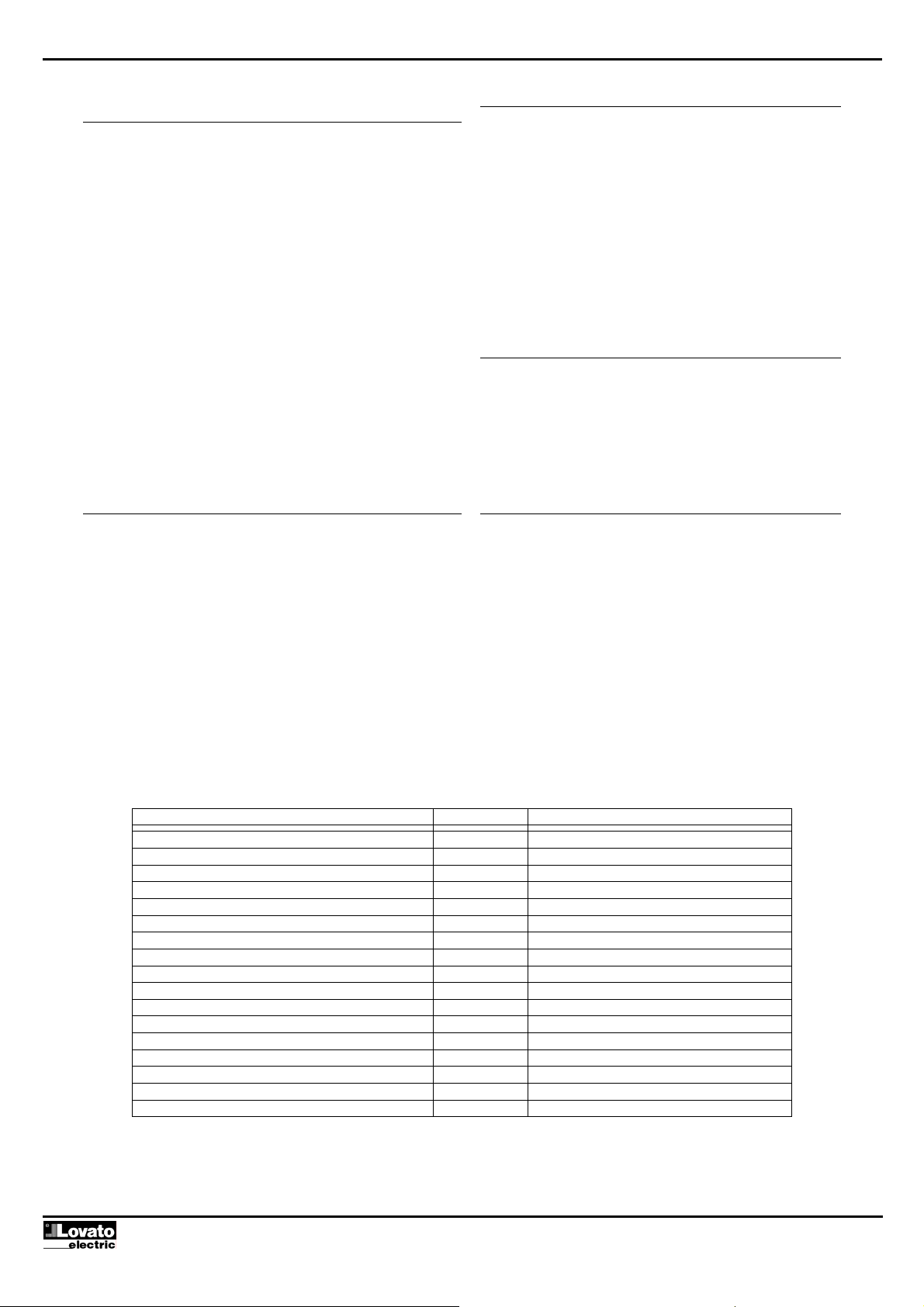
Opis Domyślny Description
Czas wstrzymania alarmu 8s Alarms inhibition time
Opóźnienie wywołania alarmu wysokiego rmp silnika 0,5s High engine rpm alarm enabling delay
Opóźnienie wzbudzenia przy wysokim rmp silnika 0,5s High engine rpm tripping delay
Opóźnienie wywołania alarmu niskiego rmp silnika 8s Low engine rpm alarm enabling delay
Opóźnienie wzbudzenia przy niskim rmp silnika 5s Low engine rpm tripping delay
Opóźnienie wzbudzenia przy niskim poziomie paliwa 10s Fuel alarm tripping delay
Opóźnienie alarmu D+ 2s D + alarm delay
Czas magnesu hamującego 25s Stop magnet time
Czas spowolniania 30s Deceleration time
Czas świec żarowych 10s Glow plugs time
Trwanie prób uruchomienia 5s Starting attempts duration
Czas między próbami uruchomienia 10s Starting attempts pause time
Ilość prób uruchomienia 5 Starting attempts
Napięcie D+ uruchomionego silnika 8VDC Running engine D+ voltage threshold
Napięcie AC uruchomionego silnika 10VAC Running engine AC voltage threshold
Opóźnienie alarmu błędu uruchomienia 120s Starting failure alarm delay
Czas wstrzymania alarmu 2s Pulse stop duration
Ustawianie parametrów
W celu uzyskanie dostępu do ręcznego ustawiania wciśnij P2 na 3
sekundy przed podłączeniem alarmów. Dostęp do ustawieńjest
Parameters setup
To have manual access to the setup, press P2 for 3 seconds before
the alarms are enabled. The Setup entry is indicated by the two