MVE CryoCubeTM Operating
Instruction Manual
MVE CryoCube is i eally suite for the transportation of biological
materials. The liqui nitrogen is retaine in an absorbent material
an the col nitrogen vapors maintain the CryoCube storage area at -
150°C. The absorbent material retains the liqui nitrogen an
prevents acci ental spills.
Liqui nitrogen is classifie as “Dangerous Goo s” by the
Department of Transportation (DOT). At least three regulatory
agencies publish angerous goo s regulations:
DOT - Department of Transportation
IATA - International Air Transportation Association
ICAO - International Civil Aviation Organization
Liqui nitrogen is classifie un er the name “Nitrogen, refrigerate
liqui ” an has a UN 1977 co e number. The name classification
an UN Co e Number must be in icate on the shipping carton in
a ition to a “Gas nonflammable” label. Packing an labeling
requirements can be obtaine from the above organizations. Also,
contact your carrier for any variances in the rules as they may apply
specifically to that company an /or the ultimate estination of the
shipment.
Be aware that the regulations un ergo perio ic revisions.
If you nee current information prior to the shipping of your
cryobiological specimen, please contact your air carrier for the
most recent regulations.
GENERAL DESCRIPTION:
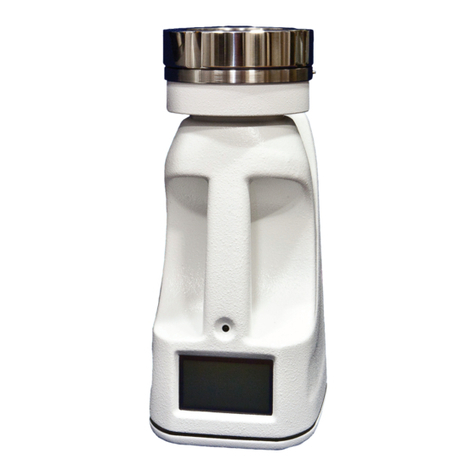
The CryoCube is a vacuum insulate aluminum
container with a fiberglass neck construction provi ing
the highest efficiency possible in nitrogen vapor
storage. The container is for use with inert flui s only.
Liqui oxygen is not compatible with this unit an
must not be store .
These high quality vacuum insulate units are
constructe of urable material, compatible with the
ivergent temperature extremes an broa applications
of cryobiology. The life expectancy of this pro uct is
one (1) year.
Upon receipt of the container, examine both the
container an packaging for any evi ence of amage
uring shipping. Contact the shipping agent if any
amage is apparent. Watch after the first fill for any
signs of vacuum loss, such as frost or sweating on the
outsi e jacket. (Some frost near the top just after filling
is normal).
A) SAFETY
To avoi injury by frostbite, use extreme care whenever
han ling
liqui nitrogen, liqui nitrogen storage or transfer
vessels or any objects which have come in contact with
liqui nitrogen.
• Leave no area of skin expose .
• Always wear proper safety attire over clothing:
face shiel , cryogenic gloves, cryogenic apron.
• Never overfill vapor shippers with liqui nitrogen.
Overfilling the tank may cause imme iate or
premature vacuum failure to occur.
• Always keep vapor shippers in upright position.
• Do not tightly seal liqui nitrogen container or
prevent nitrogen gas from escaping.
• Use extreme care to prevent spilling an
splashing liqui nitrogen uring transfer.
• Imme iately remove any clothing or safety
attire on which liqui nitrogen has spille .
• Get imme iate me ical attention for any
frostbite injuries ue to liqui nitrogen.
WARNING: The venting of nitrogen vapors will eplete
oxygen in the air, possibly lea ing to asphyxiation or even
eath. Do not store or use container in areas that have
poor ventilation.
B) CHARGING / FILLING INSTRUCTIONS
Note: Fill the container with a funnel when possible. Avoi
spilling liqui nitrogen on the neck. To ensure maximum
performance from
your MVE CryoCube simply follow the liste
steps just prior
to shipping to final estination:
•
Weight empty unit an recor . The unit shoul
weigh about 5.2 ± .2 lbs (2.4 ± .1kg)
•
Using a funnel pour 1 cup (8oz, 250ml) of LN2
•
Wait 5 minutes or until LN2is absorbe
•
Continue a ing 1 cup of LN2every few minutes
until 3.5 lb (1.6 kg) have been a e . This shoul
be ~10 cups.
•
Verify internal tank is ry, pour off any stan ing
liqui .
•
Insert contents into canister an canister into
ewar.
•
Insert cork half way into neck an allow to cool
for ~1 minute.
•
Push cork all the way into neck.
•
The container is now rea y for vali ation, labeling
an shipping.