10
Figure3.Thezheightofatypicalmicrocuvette
E.COOLINGWATERFORTHEPELTIER
ThePeltierelement(or“thermoelectriccooler”)isaheatpump.Whencooling,ittransfersheat
fromtheTurretbodytoaheatexchanger;whenheating,electricalpolarityisreversedandit
transfersheatfromtheheatexchangertothetower.Whencooling,itisparticularlyimportantto
transferthisheatawayfromthePeltier.Thisisaccomplishedwithflowingwaterthroughtheheat
exchanger.
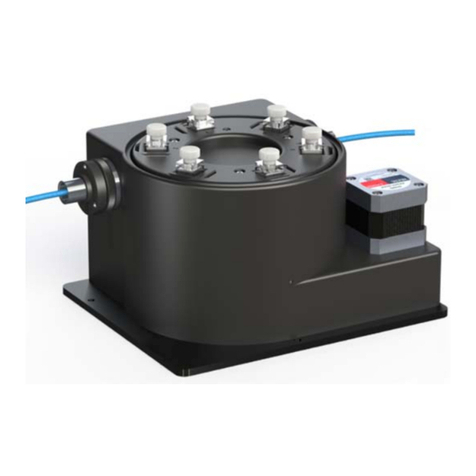
Asourceofwater(orothercoolingfluid)mustbeconnectedtothe⅛‐inchhosebarbsonthebackof
theTurret 6.IfyoupurchasetheBATH10fromus,youwillgetaninexpensivesubmersible
aquariumpump,theappropriatefittingsforconnectingtubing,andaplasticbucket.Connectthe
pumptotheTurret 6,placeitinthebucketwithwater,andrunareturntubetothebucket.Amore
robustpumpisavailableastheBATH100forahigherprice,althoughthelargerpumphasahigher
Wattageandtendstoheatthewaterwhenusedforextendedperiodsoftime.
Youmayalsoprovidethecoolingwaterfromanothersource,suchasarefrigeratedcoolingbathor
evenatapforbriefuse.
Youwillneedaflowof100‐300ml/minute.Thisflowshouldrequireapressureofabout3‐5psi
(0.2‐0.3bar).Donotexceedaninputwaterpressureof25psi(1.7bar),asdamagemayoccurinside
theTurret 6.Theheatexchangerandhosebarbsarebrass,andthetubinginsidetheTurret 6is
vinyl.Besurethatanycirculatingfluidused,otherthanwater,willnotcorrodethesematerials.
ThetemperatureoftheheatexchangerintheTurret 6ismonitoredusingathermistor.Ifthe
temperatureexceeds60°C,thentemperaturecontrolisshutdowntopreventdamagetothePeltier
elementandthewarning,“checkcoolantflow,”displayedontheTC1temperaturecontroller.This
willhappenifthecirculatingfluidgetstoowarmand/orisrestrictedinflow.Theheatexchanger
temperaturemaybeaccessedbycomputerthroughtheRS232orUSBconnectionsonthebackof
theTC1TemperatureController(seeExternalcomputercontrolbelow).
Temperatureincreaseswillbefasterwhenroomtemperaturewaterisusedinthecirculator.
Temperaturedecreaseswillbefasterwhenicewaterisused.Onlywatershouldbecirculatedusing
theBATH10.Whenusingarefrigeratedbath,circulatingpre‐cooledfluids(suchas30%methanolor
dilutedethyleneglycol)atbelow0°Cwillpermitmeasurementsbelowthespecifiedtemperature
range.