Page
10 Ascento Group Australia P: 1800 807 604 E: [email protected] WaterMark Quality System Doc # RQS.1059
2. Pump does not run or motor runs for a short time, then stops
1. Circuit breaker or Safety Switch is off or fuse has blown > in a SAFE manner investigate why this has occurred, by process of
elimination > do not assume it is the pump > if you cannot do this safely, have a licenced Electrician check and rectify it.
2. Water level in the tank is too low > Top up or use alternative supply > or turn pump off until the tank fills
To be sure there is rainwater in the tank > tap the side of the tank, does it sound hollow? Feel the side of the tank, you can
normally feel a temperature difference from where the water is to where there is none. If you cannot tell that way, get a torch and
look in through the tank opening. The pump generally needs 300-400mm of water to work properly. Be sure, if you call for service
and tank is found to be empty, you will be liable for the cost of the service call.
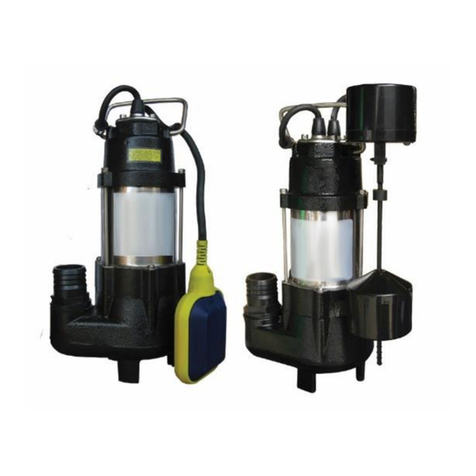
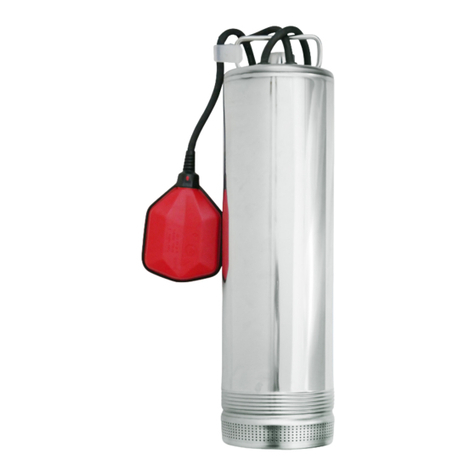
NOTE: Submersible Pumps with Float Switch may require up to 1200mm of water level to operate.
3. Electrical components have been flooded > in a SAFE manner investigate why this has occurred, by process of elimination > do
not assume it is the pump > if you cannot do this safely, have a licenced Electrician check and rectify it.
4. Pump plug is not connected properly, or has been flooded or wet > Isolate power at main switch, remove plug & allow to dry. If
the problem continues, contact a licenced electrician to check the cause.
5. Pump has an air-lock >Start and stop several times by turning the power off, wait 30 seconds, and turn on again, repeat if
necessary. NOTE: you might need to turn the Townwater supply OFF to make it easier to re-start the pump.
6. If all of the above are OK, the pump might have overheated and triggered the thermal overload switch > Turn it off and wait 30
minutes for it to cool down and turn it on again > If the pump does not operate normally, investigate why, it might be blocked with
debris, > flush clean and re-assemble.
3. Pump runs but does not deliver water or only a small amount of water
1. Water filters on the discharge (if fitted) are clogged > check / clean /replace the cartridges
2. Check valve is installed backwards, arrow on valve should point in direction of flow > have the installer fix this.
3. Discharge shut-off valve/ball-valve / gate-valve may be closed > open the valve.
4. Impeller or volute openings are fully or partially clogged or it might be blocked with debris > disconnect from the power supply,
and if you are competent to do so, disassemble the pump and clean. If not, have a pump technician do it for you.
5. Pump is air-locked > Start and stop several times by turning it on and off with 20 seconds between. If this does not work, see
below regarding re-priming the pump
6. Vertical pumping distance is too high - Reduce distance or upgrade to a larger pump.
7. Tank too low water level > Check the water level by looking inside the tank (Tank level indicators can be wrong)
4. Pump runs and does not stop or runs when no taps are in use
1. In most cases this situation it is due to a leak in pipework or leaking toilet cisterns or an underground pipe leak (wet soil, muddy,
grass growing well!) > it is not a pump fault > ascertain by process of elimination what is leaking > the quickest way to ascertain if it
is in the house is usually by checking the water meter, follow this process;
a) Turn the pump off, and turn off the valve between the RM4000 Valves and the pump (Ball-valve or Gate-valve)
b) Then ensure all water outlets in the house and garden etc are turned off, ensure that any garden taps are off and not dripping.
c) Check the water meter, is it turning at all? It may be very slow, so leave everything off, and re-check in an hour
d) If there is movement in the water meter this would indicate a leak somewhere in the piping, or toilet cisterns,
sometimes the toilet cisterns leak very slowly on the inside, but it can be enough to make the pump start & stop
e) Most toilets have a stop-cock under the cistern, so you can easily turn them off, and repeat the test, to see if it is the
cistern that is at fault
f) If you perform all of the above and no leaks are evident in the plumbing system, it might be a fault with the pump, this is
how to test that;
g) turn off the isolation valve on the discharge pipework > does the pump stop = the leak is further down the pipe-line
h) If you have proved there is no leaks in the house, it could be some grit or particle is caught in the check-valve of the Pump –open
all taps fully open and flush all toilets to try and flush the particles out, test again after doing this.