3/6
www.rhinomotive.com
5. OPERATING INSTRUCTIONS
6. MAINTENANCE
WARNING! Only use the vehicle positioning jack on a flat & leveled surface.
Ensure your work area is clean and tidy before use of the vehicle positioning jack.
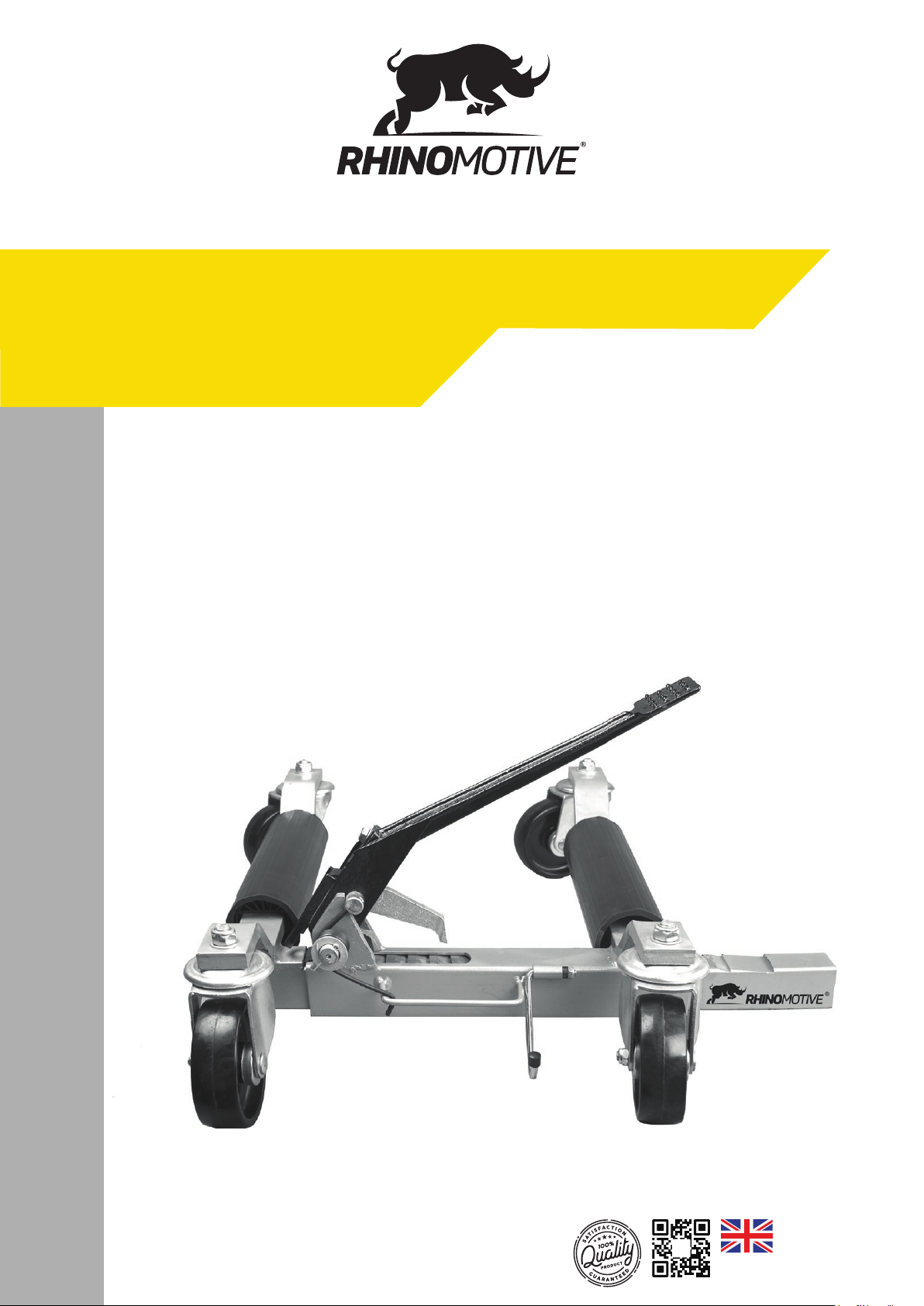
1. Position the Vehicle Positioning Jack beside the vehicles wheel
2. Remove the pedal retaining clip (3).
3.Ensure the rear locking castors (1) are UNLOCKED in the OFF position.
4. Ensure the pump release valve (4) is open, by rotating 1- 11/2 turns anti-clockwise.
5. Spread the jack arms apart until they fit the vehicle wheel.
Note: Ensure tyres are sitting on the steel rollers (6).
1. Close the pump release valve (4) by rotating clockwise, DO NOT overtighten
2. Pump the foot pedal (2) until the tire is raised from the ground, and the locking pin hole is exposed.
3. Install the safety locking pin (7) and LOCK the rear castors in the ON position.
4. Release pressure from the ram using the pump release valve (4), as locking pin will hold the weight.
Note: It is not recommended that you leave the ram pressurised while not in use, as it may lead to premature failure.
1. Repeat steps 1 - 8 on the remaining wheels you wish to lift.
2. Once the vehicles wheels are raised on both sides/or all four wheels (and the rear castors (1) are not locked), the
vehicle can easily be moved by pushing on the side of the vehicle to the desired position.
3. Once the vehicle has been located to the desired location, ensure both rear locking castors (1) are LOCKED.
4. To lower the vehicle, UNLOCK the rear locking castors (1) by putting them in the OFF position, remove the safety
locking pin (7) and open the pump release valve (4) by turning anti-clockwise 1- 11/2 turns.
5. Grasp the grab handle, located on the right of the pump release valve (4) and slide the jacks from underneath the
vehicles wheels.
Caution: Prior to making any adjustments ensure the pressure is removed from the hydraulic system.
Caution: These procedures are in addition to the regular checks and maintenance explained as part of the regular
operation of the hydraulically operated tool. Lubrication of this product is critical. Any contaminants such as dirt,
rust, etc. may damage internal components of the hydraulic assembly.
1. BEFORE EACH USE, inspect the general condition of the tool. Check for:
a. loose hardware or housing.
b. misalignment or binding of moving parts.
c. cracked or broken parts.
d. any other condition that may affect its safe operation.
2. When not in use, store the equipment in a dry location with the vehicle positioning jacks fully retracted with the
pressure released via the pump release valve (4).
3. Periodically check the unit for signs of rust or corrosion. Clean exposed areas with a clean oiled cloth.
4. Check and maintain the hydraulic oil level. Only use high quality Hydraulic Jack oil.
5. Lubricate the hydraulic piston, linkage, and foot pedal with a light machine oil.
6. Lubricate the castors and axles with bearing grease.
7. Clean all the surfaces regularly and maintain all labels and warnings on the vehicle positioning jacks.
8. Clean the castors regularly to ensure they are free from dirt etc. before use. Doing so will prevent
possible damage.