manuals.online logo
Brands
  1. Home
  2. •
  3. Brands
  4. •
  5. SAER Elettropompe
  6. •
  7. Engine
  8. •
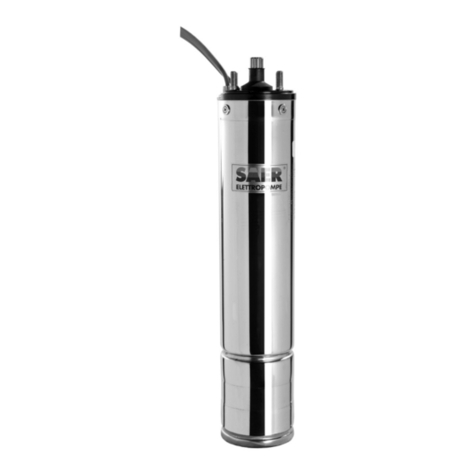
  9. SAER Elettropompe MS-300 User manual

SAER Elettropompe MS-300 User manual

This manual suits for next models

68

Other SAER Elettropompe Engine manuals

SAER Elettropompe CL95 User manual

SAER Elettropompe

SAER Elettropompe CL95 User manual

SAER Elettropompe MT User manual

SAER Elettropompe

SAER Elettropompe MT User manual

SAER Elettropompe MT Series User manual

SAER Elettropompe

SAER Elettropompe MT Series User manual

Popular Engine manuals by other brands

Nakanishi EM-3030T Operation manual

Nakanishi

Nakanishi EM-3030T Operation manual

Siemens COMBIMASTER CM12 operating instructions

Siemens

Siemens COMBIMASTER CM12 operating instructions

Bosch Rexroth Hagglunds CA Series Installation and maintenance manual

Bosch

Bosch Rexroth Hagglunds CA Series Installation and maintenance manual

Hyundai H170VC manual

Hyundai

Hyundai H170VC manual

Graco 273199 repair parts

Graco

Graco 273199 repair parts

MOTO GUZZI BREVA V1100 Workshop manual

MOTO GUZZI

MOTO GUZZI BREVA V1100 Workshop manual

Dualsky Track & Field Z5 instruction manual

Dualsky

Dualsky Track & Field Z5 instruction manual

Rotax 125 senior MAX evo installation manual

Rotax

Rotax 125 senior MAX evo installation manual

Kohler K361 Service manual

Kohler

Kohler K361 Service manual

MTD OHV Series user guide

MTD

MTD OHV Series user guide

Mercury D4.2L D-Tronic manual

Mercury

Mercury D4.2L D-Tronic manual

Perkins 1206E-E66TA Operation and maintenance manual

Perkins

Perkins 1206E-E66TA Operation and maintenance manual

Skov DA 174 Technical user guide

Skov

Skov DA 174 Technical user guide

Rotax 915 i A SERIES Maintenance manual

Rotax

Rotax 915 i A SERIES Maintenance manual

AL-KO PRO 350 Instructions for use

AL-KO

AL-KO PRO 350 Instructions for use

MTU 12 V 4000 Lx4 operating instructions

MTU

MTU 12 V 4000 Lx4 operating instructions

Nanni N3.30 Workshop manual

Nanni

Nanni N3.30 Workshop manual

Nanni N5.160 CR2 Operator's manual

Nanni

Nanni N5.160 CR2 Operator's manual

manuals.online logo
manuals.online logoBrands
  • About & Mission
  • Contact us
  • Privacy Policy
  • Terms and Conditions

Copyright 2025 Manuals.Online. All Rights Reserved.

Contiene DICHIARAZIONE CE DI CONFORMITA’
Contains CE DECLARATION OF CONFORMITY
Enthält die CE-KONFORMITÄTSERKLÄRUNG
Contiene DECLARACIÓN CE DE CONFORMIDAD
Contient DECLARATION DE CONFORMITE
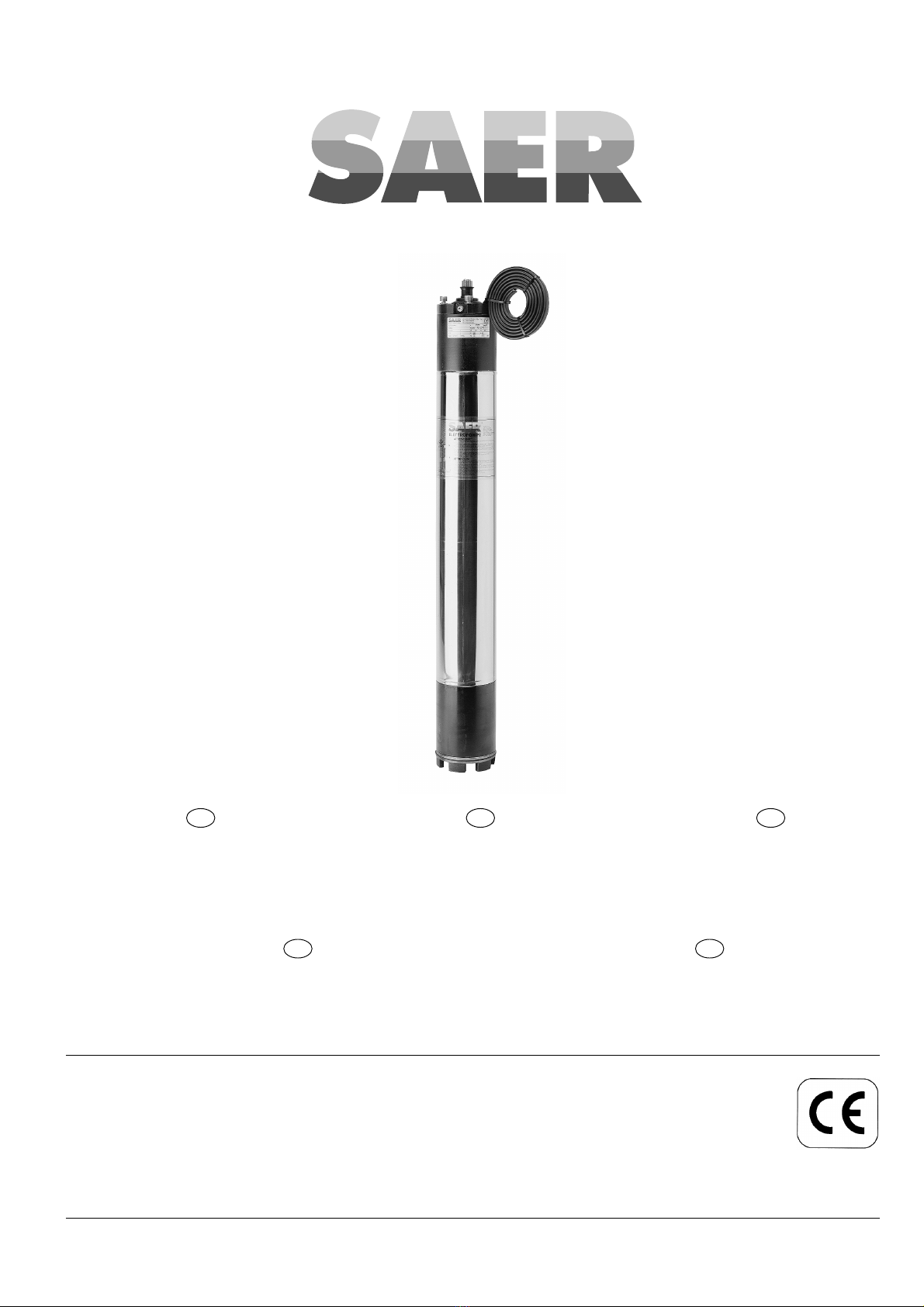
LIBRETTO ISTRUZIONI
MOTORI SOMMERSI
6” - 8” - 10” - 12”
INSTRUCTION MANUAL FOR
SUBMERSIBLE MOTORS
6” - 8” - 10” - 12”
BEDIENUNGSHANDBUCH
TAUCHMOTOREN
6” - 8” - 10” - 12”
NOTICE DE MODE D’EMPLOI POUR
MOTEURS ELECTRIQUES IMMERGES
6” - 8” - 10” - 12”
MANUAL DE INSTRUCCIONES PARA
MOTORES SUMERGIBLES
6” - 8” - 10” - 12”
ELETTROPOMPE
®
IGB D
EF
2
1. INFORMAZIONI SULLA SICUREZZA - SAFETY INFORMATION - SICHERHEITSINFORMATIONEN - INFORMACIONES SOBRE LA
SEGURIDAD - INFORMATIONS SUR LA SECURITE
Il trasporto, l’installazione, il collegamento, la messa in servizio, la conduzione e l’ eventuale manutenzione o messa fuori servizio, devono essere eseguiti da
personale esperto e qualificato e nel rispetto delle norme di sicurezza generali e locali vigenti. E’ vietato manomettere il prodotto. L’utente è responsabile di
pericoli o incidenti nei confronti di altre persone o loro proprietà. Utilizzare il motore solo per gli scopi descritti nel paragrafo 2.2. gni altro utilizzo può essere
causa di infortuni.
Each transport, installation, connection, setting at work, control and eventual maintenance or stop operation shall be executed by trained and qualified staff.
Furthermore, possible local regulations or directions not mentioned in this manual must be taken into consideration as well.Tampering with the product is
prohibited.The user is responsible for dangers or accidents in relation to other persons and their property. Use the motor only for the purposes described in
Paragraph 2.2. Any other use can be a cause of accidents.
Alle Maßnahmen hinsichtlich Transport, Installation, Anschluss, Inbetriebnahme, Bedienung und eventuelle Wartung bzw. Außerbetriebnahme müssen
durch erfahrenes Fachpersonal durchgeführt werden und unter Beachtung der allgemeinen und örtlich geltenden Sicherheitsvorschriften. Die Manipulierung
des Produktes ist untersagt. Der Benutzer ist anderen Personen oder ihrem Eigentum gegenüber für Gefahren oder Unfälle verantwortlich. Der Motor nur für
die im Abschnitt 2.2, beschriebenen Zwecke benutzen. Jeder andere Gebrauch kann Unfälle verursachen.
Los trabajos de transporte, instalación, conexión, puesta en función, utilización y mantenimento o puesta fuera de servicio deberán ser llevados a cabo por
personal experto y cualificado. Está prohibido modificar el produco. El usuario es responsable de los peligros o accidentes ocasionados a otras personas o
sus propiedades. No utilizar los motores para usos diversos de los especificados. Todo uso diverso deberà considerarse inapropriado y potenzialmente
peligroso para la incolumidad de los operadores.
Chaque intervention de transport, installation, connexion, mise en marche, contrôle et éventuel entretien ou mise hors service doit être exécutée par un
personnel expert et qualifié et conformément aux réglementations générales et locales en vigueur. Il est interdit d’apporter des modifications au produit.
L’utilisateur est responsable des dangers ou des accidents aux tiers ou à leurs biens. Utiliser le moteur uniquement dans les buts indiqués dans ce manuel.
Toute autre utilisation peut provoquer des accidents.
Prima di effettuare qualsiasi operazione, scollegare i cavi elettrici di alimentazione. Non toccare il motore quando è in funzione.
Before executing any operation, the feeder cables shall be disconnected. Never touch the motor while it is working.
Ziehen Sie vor jeglichen Arbeitsgängen die Stromversorgungskabel von den Motorklemmen ab. Berühren Sie der Motor nicht, solange er in Betrieb ist.
Antes de realizar cualquier operación, desconecte los cables eléctricos de alimentación. No toque el motor cuando esté funcionando.
Avant d’effectuer n’importe quelle opération, débrancher les câbles électriques d’alimentation. Ne pas toucher le moteur durant son fonctionnement.
Non utilizzare il motore in atmosfera esplosiva o con liquidi infiammabili o pericolosi. Non utilizzare il motore in zone frequentate da bagnanti.
Never use the motor in explosive atmospheres or to pump inflammable or dangerous liquids. Do not use motor in swimming areas.
Verwenden Sie der Motor nicht in Explosionsgefährdeter Umgebung oder zum Pumpen von entzündlichen oder gefährlichen Flüssigkeiten. Benutzen Sie
nicht der Motor in den Zonen von Badende besuchten.
No utilice el motor en atmósfera explosiva o para bombear líquidos inflamables o peligrosos. No utilice el motor en áreas por la natación.
Ne pas utiliser le moteur dans une atmosphère explosive ou pour pomper des liquides inflammables ou dangereux. Ne pas utiliser le moteur dans secteurs
pour la natation.
Il motore deve funzionare solo e sempre immerso in acqua.
The motor must only operate when submerged under water.
Der Motor darf nur und immer unter Wasser in Betrieb gesetzt werden.
El motor sólo deberá funcionar sumergido en agua.
Le moteur ne doit tourner qu’après avoir été immergé dans l’eau.
Verificare che i dati indicati sulla targa, ed in particolare potenza, frequenza, tensione, corrente assorbita,siano compatibili con le caratteristiche della linea
elettrica o del generatore di corrente disponibili.
Verify that the data shown on the plate, and in particular, power, frequency, voltage, absorbed current, are compatible with the characteristics of the electric
line or current generator available.
Prüfen, ob die auf dem Schild angegebenen Daten und insbesondere Leistung, Frequenz, Spannung und Stromaufnahme mit den Eigenschaften der
verfügbaren Stromleitung oder Stromgenerators kompatibel sind.
Verificar que los datos indicados en la placa, y más concretamente la potencia, la frecuencia, la tensión y la corriente absorbida, sean compatibles con las
características de la línea eléctrica o del generador de corriente a disposición.
Vérifier si les données indiquées sur la plaquette, et en particulier la puissance, la fréquence, la tension et le courant absorbé, sont compatibles avec les
caractéristiques de la ligne électrique ou du générateur de courant disponibles.
La sostituzione del cavo di alimentazione deve essere effettuata da un centro autorizzato
The replacement of the feeding cable must be done by an authorised distributor
Das Auswechseln der Speisekabel muss von einem autorisierten Zentrum gemacht werden.
El cambio del cable de alimentacion tiene que ser ejecutado por un centro de servicio autorizado.
Le replacement du câble d’alimentation doit être fait par un distributeur autorisé
Installare il motore fuori dalla portata dei bambini
Install the motor out of children’s reach
Instalar el motor fuera del alcance de ninos
Installer le moteur loin de la portée des enfants
Die Motor an der Stelle einsetzten, wo sie für die Kinder unzugänglich ist.
Installare un interruttore differenziale ad alta sensibilità (max 0,03 A)
Install a residual current device (RCD) with rated residual operating current not exceeding 0,03 A.
Instalar un interruptor diferencial de alta sensibilidad (max 0,03 A).
Monter un interrupteur différentiel d’ haute sensibilité (max 0,03 A).
Montieren Sie den hochempfindlichen Frequenzinverter (0, 03A).

ELETTROPOMPE
®
3
P ima di p ocede e all’ installazione legge e attentamente questo manuale che acchiude di ettive fondamentali da ispetta si du ante le fasi di instal-
lazione, funzionamento e manutenzione.
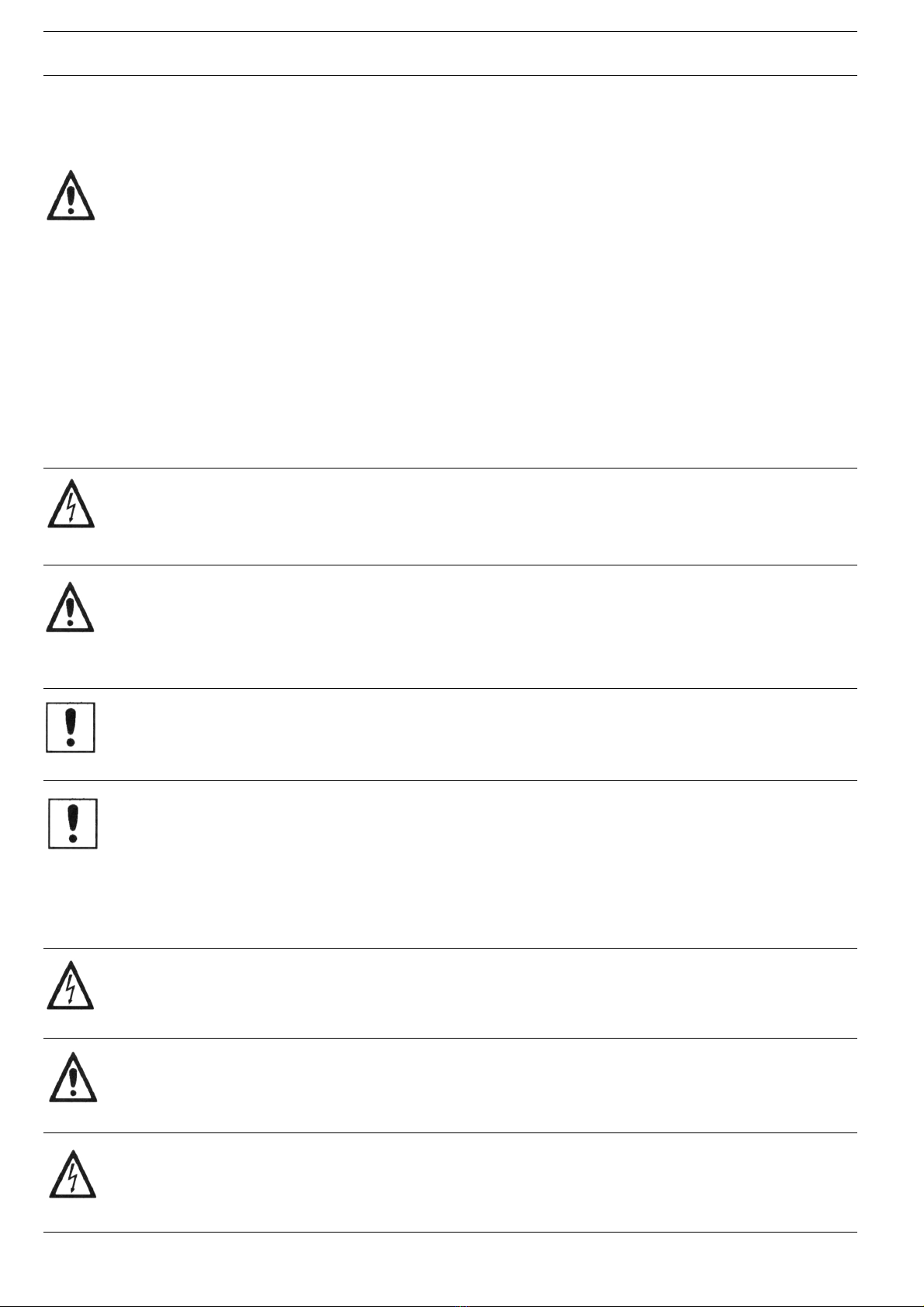
I simboli riportati unitamente alle diciture “PERIC L ” e “AVVERTENZA”, sono ad indicare la potenzialità del rischio derivante dal mancato rispetto della prescizione
alla quale sono stati abbinati.
Read this documentation ca efully befo e installation. It contains fundamental inst uctions fo installation, ope ation and maintenance.
The symbols shown below together with the words “DANGER” and “WARNING” indicate a risk of danger if instructions are not followed.
Die Installation sollte möglichst du ch kompetentes und qualifizie tes Pe sonal e folgen, das im Besitz de technischen Anfo de ungen laut de
einschlägigen No men ist.
Die untenstehenden Symbole weisen gemeinsan mit den Beschriftungen “GEFAHR” und ”WARNUNG” auf die potentielle Gefahr hin, der man sich bei Nichtbeachten
der jeweiligen Vorschriften aussetzt.
Antes de ealiza la instalación hay que lee detenidamente este manual, que contiene las di ectivas fundamentales a espeta en las fases de instalación,
funcionamiento y mantenimiento.
Los símbolos abajo citados junto a las palabras “PELIGR ” y ‘ADVERTENCIA’, sirven para indicar la potencialidad del riesgo que deriva del no respetar la
prescripción a la que han sido unidos.
Avant de p océde à l’ installation, li e attentivement ce manuel qui contient des di ectives fondamentales à especte pendant les phases d’ installation,
de fonctionnement et maintenance.
Les symboles indiqués plus bas, ainsi que les messages “DANGER” et “MISE EN GARDE” indiquent un danger découlant de la non observance de la consigne à
laquelle ils sont associés.
PERICOLO La mancata osservanza delle prescrizioni comporta un rischio di scosse elettriche.
DANGER Risk of electric shocks if instructions are not followed.
GEFAHR Das Nichttbeachten der Vorschriften führt zu Stromschlaggefahr.
PELIGRO El no respetar la prescripción comporta un riesgo de sacudidas eléctricas.
DANGER La non-observance des consignes comporte un risque de décharges électriques.
PERICOLO La mancata osservanza delle prescrizioni comporta un rischio di danno alle persone e/o cose.
DANGER Risk of injury and/or damage to person and/or property if instructions are not followed.
GEFAHR Das Nichtbeachten der Vorschriften kann zu Personen-und/oder Sachschäden führen.
PELIGRO El no respetar la prescripción comporta un riesgo de daño a las personas y/o las cosas.
DANGER La non-observance des consignes comporte un risque de blessures corporelles et ou dégâts matériels.
AVVERTENZA La mancata osservanza delle prescrizioni comporta un rischio di danno al motore pompa o all’ impianto.
WARNING Risk of damage to the pump and/or systems if instructions are not followed.
WARNUNG Das Nichtbeachten der Vorschriften kann zu einer Beschädigung der Motor und/oder der Anlage führen.
ADVERTENCIA El no respetar la prescripción comporta un riesgo de daño al motor y/o a la instalación.
MISE EN GARDE La non-observance des consignes comporte un risque de dégâts au moteur de la pompe ou à l’ installation.
2. MOTORE - MOTOR - MOTOR - MOTOR - MOTEUR
Typo / Type / Typ / Tipo / Type
Matricola / Serial No° / Kennummer / Matrícula / N. De série
Potenza / Power / Leistung / Potencia / Puissance
Tensione / Voltage / Spannung / Tensión / Tension
Velocità / Speed / Geschwindigkeit / Velocidad / Vitesse
Freqenza / Frequency / Frequenz / Frecuencia / Fréquence
Corrente assorbita / Absorbed current / Stromaufnahme / Corriente absorbida / Courant absorbé
Data / Date / Datum / Fecha / Date
n°
kW
V
1/min
Hz
A
Collegare l’ elettropompa alla rete tramite un interruttore omnipolare, in grado di interrompere tutti i fili di alimentazione, per isolare il motore in caso di
malfunzionamenti o piccoli interventi di manutenzione.
Connect the pump to the feeding line through an omni-polar switch that can disconnect all the feeding cables to insulate the motor in case of malfunction or
small maintenance operations
Conectar la electrobomba a la red de alimentacion atraves de un interruptor omnipolar, que sea en condicion de interrumpir todos los cables de alimentacion,
para aislar el motor en caso de falla y/o pequenas intervencion de manutencion
Connecter l’é lectropompe au réseau à travers un interrupteur omnipolaire, capable d’ interrompre tous les fils d’ alimentation, pour isoler le moteur en cas
de mauvais fonctionnement ou petits intervention d’ entretien
Die Elektropumpe ans Netz mit Hilfe eines Schalters anschließen, der die Netzkabel im Fall des Schlechtfunktionierens oder nicht bedeutender Wartungsarbeiten
unterbrechen könnte.
Eseguire il collegamento di messa a terra
Make the earthing connection
Ejecutar las conexiones con tierra
Executer la connection de mise à la terre
Erdungsanschluss ausführen.
4
2.1 INFORMAZIONI GENERALI - GENERAL INFORMATION - ALLGEMEINE INFORMATIONEN - INFORMACIONES GENERALES -
INFORMATIONS GENERALES
I motori sommersi SAER sono apparecchi affidabili progettati per poter funzionare molti anni senza richiedere alcuna manutenzione di tipo
ordinario, a condizione che vengano installati in modo corretto. Preghiamo pertanto di leggere questo libretto e di attenersi scrupolosamente a
quanto prescritto.
Decliniamo ogni responsabilità per danni a persone e/o cose derivanti dal mancato rispetto delle nostre prescrizioni.
Quanto prescritto nel seguente manuale è da intendersi per una esecuzione standard; riferirsi alla documentazione contrattuale di vendita per le
istruzioni delle versioni speciali.
Per qualsiasi problema di carattere tecnico/commerciale, rivolgersi al nostro servizio clienti.
SAER submersible motors are reliable apparatus designed to provide many years of operation without the need for routine maintenance, provided
they are installed correctly. We therefore recommend reading this manual carefully and following the instructions contained thoroughly.
We decline any responsibility for injury to persons and / or damage to property due to failure to follow our instructions.
This manual is for use in standard applications: please refer to your sales contract for instructions regarding special versions.
Please contact our customer care department for any technical or sales queries.
Die SAER-Tauchmotoren sind zuverlässige Geräte, die für einen Betrieb von vielen Jahren konzipiert worden sind, ohne Wartung erforderlich zu
machen, falls sie ordnungsgemäß installiert werden. Wir bittë Sie darum, das vorliegende Handbuch sorgfältig zu lesen und die Anweisungen
genau einzuhalten.
Für Personen- und/oder Sachschäden, die auf die Nichtbeachtung dieser Anweisungen zurückzuführen sind, lehnen wir jegliche Haftung ab.
Die Anweisungen des vorliegenden Handbuches beziehen sich auf Standardausführungen; bei Spezialausführungen siehe die Anweisungen in
den Vertragsunterlagen.
Wenden Sie sich bei allen technisch/handelstechnischen Problemen an unseren Kundendienst.
Los motores sumergibles SAER son aparatos fiables, diseñados para poder funcionar durante muchos años sin requerir mantenimiento alguno de
tipo ordinario, siempre que los mismos sean instalados correctamente. Se ruega leer este manual y respetar al pie de la letra lo prescrito en él.
El fabricante declina toda responsabilidad por daños causados a personas y/o cosas derivados del incumplimiento de las prescripciones aquí
detalladas.
Todo lo prescrito en este manual deberá considerarse para una ejecución estándar; consultar la documentación del contrato de venta para las
instrucciones de las versiones especiales.
Para cualquier problema de carácter técnico-comercial, diríjase a nuestro Servicio al Cliente.
Les moteurs immergés SAER sont des appareils fiables conçus pour fonctionner très longtemps sans aucun besoin d’entretien ordinaire, à
condition qu’ils soient montés correctement. Nous conseillons par conséquent de lire cette notice et de respecter scrupuleusement les prescriptions
qu’elle contient.
Nous déclinons toute responsabilité en cas de dégâts matériels et/ou blessures corporelles découlant de l’inobservation de nos prescriptions.
Tout ce qui est prescrit dans cette notice doit s’entendre pour une exécution standard ; pour les instructions des versions spéciales, consulter la
documentation contractuelle de vente.
Pour tout problème de caractère technique-commercial, contacter notre service clients.
ELETTROPOMPE
®
5
2.2 APPLICAZIONI E SERVIZIO - APPLICATIONS AND SERVICE - EINSATZ UNF BETRIEB - APPLICACIONES Y SERVICIO -
APPLICATIONS ET SERVICE
I motori sommersi SAER sono accoppiabili a pompe sommerse radiali e semiassiali di ogni tipo, che trovano impiego, in impianti civili, industriali
e agricoli, per il sollevamento di acque sostanzialmente pulite. Per particolari installazioni non menzionate nel presente libretto, siete pregati di
contattare il nostro servizio clienti.
SAER submersible motors have been designed to be connected to all types of radial and semi-impeller, submersible pumps for use in domestic,
industrial and agricultural systems for the lifting of substantially clean water. Please contact our customer care department for information regarding
other types of installation.
Die SAER-Tauchmotoren können mit Radialtauchpumpen sowie Halbaxialpumpen jedes Typs eingesetzt werden, die in zivilen Anlagen, in der
Industrie sowie in der Landwirtschaft für das Heben von im wesentlichen sauberen Flüssigkeiten Verwendung finden. Wenden Sie sich bei
besonderen, nicht erwähnten Anwendungen an unseren Kundendienst.
Los motores sumergibles SAER pueden ser acoplados a bombas sumergibles radiales y semiaxiales de todo tipo, empleadas en plantas civiles,
industriales y agrícolas para la elevación de aguas sustancialmente limpias. Para instalaciones especiales no mencionadas aquí, les rogamos
consulten con nuestro Servicio al Cliente.
Les moteurs immergés SAER peuvent s’accoupler avec des pompes immergées radiales et demi-axes de tout type, pour des applications civiles,
industrielles et agricoles, de levage d’eaux substantiellement claires. Pour les installations particulières qui ne seraient pas mentionnées ici,
contacter notre service clients.
3. CARATTERISTICHE TECNICHE - TECHNICAL SPECIFICATIONS - TECHNISCHE EIGENSHAFTEN - CARACTERÍSTICAS TÉCNICAS
- CARACTERISTIQUES TECHNIQUES
I motori sommersi SAER sono motori elettrici asincroni, con il rotore a gabbia di scoiattolo del tipo cosiddetto “bagnato” (wet-end), ciò significa che l’
avvolgimento del motore è completamente immerso in acqua, o in una miscela a base d’ acqua, che ne costituisce il liquido interno di raffreddamento.
I motori sommersi SAER sono riavvolgibili e impiegano il grado di protezione IP 68; motori protetti contro la polvere e contro l’accesso a parti
pericolose con filo protetto contro gli effetti della sommersione. Tutti i motori possono essere indifferentemente impiegati in entrambi i sensi di
marcia, destroso o sinistroso.
SAER submersible motors are asynchronous, electric motors with a squirrel-cage rotor and are the so called wet-end types, that is to say that the
winding of the motor is immerged completely under water, or under a water-based mix, and this acts as the motor’s internal liquid coolant.
SAER submersible motors are rewindable and offer IP68 grade of protection: motors are protected against dust and against access to dangerous
parts with wiring protected against the effects of the submersion. All the motors can operate indifferently in both left or right-handed directions.
Die SAER-Tauchmotoren sind asynchrone Elektromotoren mit Rotor in Kurzschlusskäfig und „wet-end“, das heißt die Wicklung des Motors ist
vollständig im Wasser oder in einem auf Wasserbasis eingetaucht; diese Flüssigkeit dient zur internen Kühlung des Motors.
Die SAER-Tauchmotoren können mit Schutzgrad IP68 neu gewickelt werden; die Motoren sind gegen Staub, gegen den Zugang zu den gefährli-
chen Bauteilen sowie gegen die Auswirkungen des Eintauchens geschützt. Alle Motoren können unterschiedslos in beiden Richtungen - linksdre-
hend oder rechtsdrehend - eingesetzt werden.
Los motores sumergibles SAER son motores eléctricos asíncronos, con el rotor de jaula de ardilla, de los denominados “mojados” (wet-end); ello
significa que el bobinado del motor se halla totalmente sumergido en agua, o en una mezcla a base de agua, que constituye el líquido interno de
enfriamiento del motor.
Los motores sumergibles SAER son rebobinables y emplean el grado de protección IP68; son motores protegidos contra el polvo y contra el
acceso a partes peligrosas, así como con hilo protegido contra los efectos de la inmersión. Todos los motores pueden emplearse indiferentemente
en ambos sentidos de marcha, a la derecha y a la izquierda.
Les moteurs immergés SAER sont des moteurs électriques asynchrones, avec rotor à cage d’écureuil du type humide, ce qui signifie que
l’enroulement du moteur est entièrement immergé dans l’eau, ou dans un mélange à base d’eau, qui constitue le liquide intérieur de refroidissement
du moteur.
Les moteurs immergés SAER peuvent être rébobinés et leur degré de protection est l’IP68; moteurs protégés contre la poussière et contre l’accès
à des pièces dangereuses, avec fil protégé contre les effets de l’immersion. Tous les moteurs peuvent être indifféremment utilisés dans les deux
sens de marche, droit et gauche.
6
3.1. SERVIZIO E TEMPERATURE - OPERATION AND TEMPERATURE - BETRIEB UND TEMPERATUREN-SERVICIO Y TEMPERATURAS
- SERVICE ET TEMPERATURES
I motori sommersi possono funzionare in servizio continuo fornendo la potenza nominale, purché alimentati con tensione e frequenza nominale e
temperatura dell’acqua esterna al motore non superiore ai 25° C, in conformità con le Norme NEMA.
La variazione della tensione di alimentazione deve essere contenuta entro più o meno il 10% della nominale. Il fattore di servizio è di 1 per i motori
a 50 Hz e di 1,15 per i motori a 60 Hz.
Nel caso di applicazioni dove l’acqua da trattare si presenti ad una temperatura superiore ai 25° C rimane comunque possibile l’utilizzo degli stessi
motori, ma si deve declassare la potenza secondo specifici coefficenti correttivi; vedi tab.1, oppure si possono costruire motori con fili di avvolgi-
mento specifici per alte temperature. Poniamo un esempio, un motore da 20 HP che deve lavorare con una temperatura esterna dell’acqua di 35°
C, nella sua versione standard, può essere utilizzato per una potenza resa massima di 20x0,80 = 16 HP.
Con i motori in versione “standard” possiamo così raggiungere, ovviamente declassati, temperature dell’acqua esterna di 40° C.
Con motori aventi filo di avvolgimento per alte temperature (PE2, polietilene irradiato), possiamo raggiungere i 50° C utilizzandoli a piena potenza;
oltre questa soglia anche per questi motori si rende necessario l’applicazione di un coefficiente correttivo che troviamo in tab.2.
The submersible motors can operate continuously to supply nominal power provided they are powered by nominal voltage and frequency and the
external water temperature outside the motor does not exceed 25°C, according to NEMA standards.
Variations in the power supply voltage must be contained to within roughly 10% of the nominal value. The service factor is 1 for 50 Hz motors and
1.15 for 60 Hz motors.
In applications where the water to be managed has a temperature in excess of 25°C, it is possible to use these motors but the power must be
down-graded according to a specific correction co-efficient; please refer to table 1. therwise, motors can be constructed with winding wires that
are specific for high temperatures. By way of example, a standard, 20 HP motor working with an external water temperature of 35°C, can be used
to deliver maximum power of 20 x 0.80 = 16 HP.
Standard version motors can be used with external water temperatures of up to 40°C provided they are down-graded correctly.
Motors with a high-temperature grade winding (PE2, radiated ethylene resin) can reach 50°C at full power: a correction co-efficient must also be
applied to these motors if this threshold is to be exceeded, please refer to table 2.
Die Tauchmotoren können gemäß NEMA-Norm im Dauerbetrieb mit der Nennleistung betrieben werden soweit sie mit Nennspannung und
Nennfrequenz gespeist werden und die Temperatur des Wassers außerhalb des Motors 25 °C nicht übersteigt.
Die Variation des Netzspannung muss innerhalb von ± 10% der Nennspannung liegen; der Betriebsfaktor ist 1 für Motoren mit 50 Hz und 1,1 für
Motoren mit 60 Hz.
Bei Anwendungen, bei denen das zu behandelnde Wasser eine Temperatur von mehr als 25 °C aufweist, bleibt die Benutzung des gleichen
Motors möglich; Die Leistung muss jedoch mit spezifischen Korrekturfaktoren deklassiert werden; siehe Tabelle 1. Außerdem können Motoren mit
Wicklungsdrähten für hohe Temperaturen konstruiert werden. Wenn zum Beispiel ein Motor mit 20 PS in der Standardversion mit einer
Außentemperatur des Wassers von 35 °C arbeiten muss, so kann er für eine max. Leistung von 20 x 0,80 = 16 PS eingesetzt werden.
Mit den Motoren der Standardversion können so bei entsprechender Deklassierung Temperaturen von bis zu 40 °C erreicht werden.
Mit Motoren mit Wicklungsdrähten für hohe Temperaturen (PE2, bestrahltes Polyäthylen) können Temperaturen von bis zu 50 °C unter Nutzung
der vollen Leistung erreicht werden; oberhalb dieser Schwelle müssen für alle Motoren die Korrekturfaktoren angewendet werden, die in Tabelle
2 angegeben werden.
Los motores sumergibles pueden funcionar en servicio continuo suministrando la potencia nominal, con tal de que estén alimentados con tensión
y frecuencia nominal y una temperatura del agua externa al motor no superior a los 25°C, de conformidad con las Normas NEMA.
La variación de la tensión de alimentación debe estar contenida dentro del 10% más o menos de la nominal. El factor de servicio es de 1 para los
motores a 50 Hz y de 1,15 para los motores a 60 Hz.
En caso de aplicaciones en las que el agua a tratar se encuentre a una temperatura superior a los 25°C, podrán utilizarse igualmente dichos
motores, pero deberá desclasarse la potencia según coeficientes específicos correctores (ver tab. 1), o bien podrán construirse motores con hilos
de bobinado específicos para altas temperaturas. Pongamos un ejemplo: un motor de 20 HP que deba trabajar con una temperatura externa del
agua de 35° C, en su versión estandard, podrá utilizarse para una potencia máxima de 20x0,80 = 16 HP.
Con los motores en versión “estandard”, obviamente desclasados, podremos alcanzar, por lo tanto, temperaturas del agua externa de 40°C.
Con motores con hilo de bobinado para altas temperaturas (PE2, polietileno irradiado), podremos alcanzar los 50° C utilizándolos a plena
potencia; por encima de este umbral, para estos motores deberá aplicarse también un coeficiente corrector, que puede encontrarse en la tab. 2.
ELETTROPOMPE
®
7
Les moteurs immergés peuvent fonctionner en service continu et fournir la puissance nominale maximale, pourvu qu’ils soient alimentés avec une
tension et une fréquence nominales et que la température de l’eau à l’extérieur du moteur ne dépasse pas 25° C, conformément aux normes
NEMA.
La variation de la tension d’alimentation ne doit pas dépasser +/- 10% de la nominale. Le facteur de service est de 1 pour les moteurs à 50 Hz et
de 1,15 pour ceux à 60 Hz.
Dans les applications où l’eau à traiter dépasse 25° C, on peut travailler avec les mêmes moteurs mais à condition de déclasser la puissance
selon des coefficients correctifs spécifiques (voir tableau 1) ou alors construire des moteurs avec des fils d’enroulement spécifiques pour températures
élevées. Prenons, par exemple, un moteur de 20 HP qui doit travailler avec une température extérieure de l’eau de 35° C : dans sa version
standard, il pourra être exploité pour une puissance utile maximale de 20 x 0,80 = 16 HP.
Ainsi, avec les moteurs version ‘’standard’’, naturellement déclassés, nous pouvons atteindre des températures de l’eau extérieure de 40° C.
Avec des moteurs ayant un fil d’enroulement pour températures élevées (PE2, polyéthylène irradié) nous pouvons atteindre 50° C en les
exploitant à pleine puissance ; au-delà de ce seuil, nous devons appliquer également à ces moteurs un coefficient correctif que nous trouvons
dans le tableau 2.
Temperatura acqua
Water Temperature
Wassertemperatur
Temperatura del agua
Température de l’eau
25° C
30° C
35° C
40° C
Coefficiente correttivo
Correction coefficient
Korrekturfaktor
Coeficiente corrector
Coefficient correctif
1.00
0.90
0.80
0.70
Temperatura acqua
Water Temperature
Wassertemperature
Temperatura del agua
Température de l’eau
50° C
55° C
60° C
65° C
Coefficiente correttivo
Correction coefficient
Korrekturfaktor
Coeficiente corrector
Coefficient correctif
1.00
0.90
0.80
0.70
TAB. 1 TAB. 2
3.2 AVVOLGIMENTO - WINDING - WINCKLUNG - BOBINADO - ENROULEMENT
Le norme internazionali non prevedono la codifica della Classe di Isolamento dei motori sommersi del tipo a bagno d’acqua. La Classe di
Isolamento di un motore elettrico è definita dai materiali isolanti con cui è costruito, per i motori sommersi, in mancanza di una normativa
internazionale, viene precisato il materiale isolante dei fili di avvolgimento: PVC oppure PE2.
Il filo di avvolgimento è in rame isolato con particolari resine termoplastiche, quello normalmente utilizzato è in PVC (cloruro di polivinile), trattato
in modo da essere perfettamente igroscopico e avere una notevole capacità d’isolamento elettrico. La temperatura massima consigliata per
questo filo è di 70° C, oltre la quale perde le sue caratteristiche maccaniche.
In casi particolari viene impiegato un filo di avvolgimento in PE2 (polietilene irradiato) che offre ottime propietà dieletriche resistendo fino a
temperature di 95° C.
International standards do not envisage a code for the Insulation Class of wet-end type, submersible motors. The Insulation Class of an electric
motor is defined according to the insulating materials used to construct it. As an international standard is not available for submersible motors, the
specification considers the insulating material used for the winding wires: PVC or PE2.
The winding wire is in insulated copper with particular thermoplastic resins, usually PVC (polyvinyl chloride) is used, which has been treated so
that it is perfectly waterproof and can offer significant electrical insulation. The maximum recommended temperature for this wire is 70°C, as its
mechanical specifications fail above this.
For particular applications, PE2 (radiated ethylene resin) is used for the winding wire as this offers excellent dielectric properties and resists
temperatures up to 95°C.
Die internationalen Normen sehen keine Kodierung der Isolierungsklasse für Tauchmotoren in Wasserbad vor. Die Isolierungsklasse eines
Elektromotors wird durch das Isolierungsmaterial bestimmt, aus dem er gebaut ist, und da keine internationale Norm vorhanden ist, wird für die
Tauchmotoren das Isolierungsmaterial der Wicklungsdrähte angegeben: PVC oder PE2.
Der Wicklungsdraht besteht aus Kupfer, der mit besonderen thermoplastischen Harzen isoliert ist, normalerweise wird PVC (Polyvinylchlorid)
verwendet, das so behandelt wird, dass es vollkommen hygroskopisch ist und eine beträchtliche Isolierungsleistung aufweist. Die empfohlene
max. Temperatur für diesen Draht beträgt 70 °C, oberhalb dieses Werts verliert er seine mechanischen Eigenschaften.
In besonderen Fällen wird ein Wicklungsdraht mit PE2-Isolierung (bestrahltes Polyäthylen) verwendet, der bis zu Temperaturen von 95 °C einen
ausgezeichneten dielektrischen Widerstand bietet.
8
Las normas internacionales no prevén la codificación de la Clase de Aislamiento de los motores sumergibles de tipo “mojado”. La Clase de
aislamiento de un motor eléctrico es definida por los materiales aislantes con los que está fabricado; para los motores sumergibles, ante la falta
de una normativa internacional, se especifica el material aislante de los hilos de bobinado: PVC o bien PE2.
El hilo de bobinado es de cobre aislado con resinas termoplásticas especiales; normalmente suele utilizarse el PVC (cloruro de polivinilo), tratado
para ser perfectamente higroscópico y tener una notable capacidad de aislamiento eléctrico. La temperatura máxima aconsejada para este hilo es
de 70°C; por encima de esta temperatura pierde sus características mecánicas.
En casos especiales se emplea un hilo de bobinado de PE2 (polietileno irradiado), que ofrece óptimas propiedades dieléctricas, resistiendo hasta
temperaturas de 95°C.
Les normes internationales ne prévoient pas de codification de la Classe d’Isolation des moteurs immergés du type à bain d’eau. La Classe
d’Isolation d’un moteur électrique est définie par les matériaux isolants avec lesquels le moteur est construit. Pour les moteurs immergés, faute
d’une norme internationale, on précise le matériau isolant des fils d’enroulement : PVC ou PE2.
Le fil d’enroulement est en cuivre isolé au moyen de résines thermoplastiques spéciales. Celui qui est normalement utilisé est en PVC (Chlorure
de polyvinyle) traité de manière à être parfaitement hygroscopique et à posséder une excellente capacité d’isolation électrique. La température
maximale conseillée pour ce fil est de 70° C ; au-delà de ce seuil, il perd ses caractéristiques mécaniques.
Dans des cas particuliers, on utilise un fil d’enroulement en PE2 (polyéthylène irradié) offrant d’excellentes propriétés diélectriques et capable de
résister à des températures atteignant 95° C.
3.3 RAFFREDDAMENTO - COOLING - KÜHLUNG - ENFRIAMIENTO - REFROIDISSEMENT
La classe del metodo di raffreddamento è: IC40: macchina a raffreddamento superficiale utilizzante il flusso circostante, con libera convenzione.
Il raffreddamento del motore è assicurato dal flusso dell’acqua esterna che ne lambisce la superficie, perciò l’efficacia del raffreddamento è in
funzione della temperatura del fluido e della velocità con la quale questo lambisce la superficie esterna del motore.
I motori SAER, nella loro costruzione standard, utilizzati in condizioni normali alla loro potenza nominale, non necessitano di particolari accorgi-
menti per assicurarsi il giusto regime termico, in quanto, il naturale flusso di acqua provocato dal risucchio della pompa ed in parte dai movimenti
convettivi dovuti al riscaldamento del fluido all’esterno del motore, ne garantiscono il raffreddamento dello stesso. Nelle applicazioni dove l’acqua
si trova a temperature elevate, un modo per poter raffreddare al meglio il motore è quello di aumentare artificialmente la velocità del fluido che
corre sulle parti esterne del motore. Generalmente ad ogni raddoppio della velocità del fluido stesso corrisponde un miglioramento termico di circa
5° C.
The class of the method used for cooling is IC40: machine with surface cooling using the surrounding flow, with free convection.
The cooling of the motor is provided by the flow of the external water, which touches its surface, therefore the efficiency of cooling depends on the
temperature of the liquid and its speed as its touches the external surface of the motor.
In normal conditions of use at nominal power, standard-construction SAER motors have no particular requirements to ensure that they operate at
the correct temperature; the natural flow of the water created by the suction of the pump and partly by the convective movement caused by the
heating of the external liquid around the motor, guarantee that it is cooled correctly. In applications where the water has a high temperature, a
method to cool the motor efficiently is to artificially increase the speed of the flow of the liquid that runs over the external parts of the motor.
Generally, each time the speed of the liquid is doubled there is an improvement in temperature of approximately 5°C.
Die Klasse des Kühlungsverfahrens ist: IC40; Maschine mit berflächenkühlung unter Nutzung des umgebenden Flusses mit freier Konvektion.
Die Kühlung des Motors wird durch den Fluss des externen Wassers gewährleistet, das über die berflächen fließt und deshalb ist die Wirksamkeit
der Kühlung von der Temperatur der Flüssigkeit sowie von der Geschwindigkeit abhängig, mit der sie über die Außenflächen des Motors fließt.
Die SAER-Motoren benötigen in ihrer Standardversion unter normalen Bedingungen bei Nennleistung keine Maßnahmen zur Gewährleistung des
richtigen Temperaturbereiches, da der natürliche Fluss des von der Pumpe angesaugten Wassers sowie zum teil die Konvektionsbewegung durch
die Erwärmung der Flüssigkeit außerhalb des Wassers die Kühlung des Motors sicherstellt. Bei Anwendungen, bei denen das Wasser hohe
Temperaturen aufweist, besteht eine Möglichkeit zur Verbesserung der Kühlung des Motors in der künstlichen Steigerung der Geschwindigkeit der
Flüssigkeit, die außen um den Motor fließt. Im Allgemeinene entspricht die Verdoppelung der Fließgeschwindigkeit einer thermischen Verbesserung
von ca. 5 °C.
ELETTROPOMPE
®
9
La clase del método de enfriamiento es: IC40; máquina de enfriamiento superficial que utiliza el flujo circundante, con libre convención.
El enfriamiento del motor es asegurado por el flujo del agua exterior que lame su superficie; por ello la eficacia del enfriamiento depende de la
temperatura del fluido y de la velocidad con la que éste lame la superficie exterior del motor.
Los motores SAER, en su fabricación estandard, utilizados en condiciones normales de acuerdo con su potencia nominal, no necesitan demasiadas
medidas para asegurarse el régimen térmico justo, ya que el flujo natural de agua provocado por el remolino de la bomba y, en parte, por los
movimientos convectivos, debidos al calentamiento del fluido exterior de motor, garantizan el enfriamiento del mismo. En aquellas aplicaciones
en las que el agua se encuentre a temperaturas elevadas, un modo para poder enfriar mejor el motor es el de aumentar artificialmente la velocidad
del fluido que corre sobre las partes exteriores del motor. A cada intensificación de la velocidad del fluido suele corresponder una mejora térmica
de unos 5°C.
La classe de la méthode de refroidissement est IC40 : machine à refroidissement superficiel utilisant le flux environnant, à libre convection.
Le refroidissement du moteur est assuré par le flux d’eau extérieure qui mouille sa surface, par conséquent, l’efficacité du refroidissement dépend
de la température du fluide et de la vitesse à laquelle il mouille la surface extérieure du moteur.
Utilisés dans des conditions normales, à leur puissance nominale, les moteurs SAER standard n’ont besoin d’aucun système particulier pour
s’assurer un bon régime thermique car le flux d’eau naturel provoqué par le remous de la pompe et en partie par les mouvements convectifs dus
au réchauffage du fluide à l’extérieur du moteur assurent le refroidissent de celui-ci. Dans les applications où l’eau a une température élevée, il
existe un moyen de refroidir au mieux le moteur : augmenter artificiellement la vitesse du fluide qui coule sur l’extérieur du moteur. En général, à
chaque redoublement de la vitesse du fluide correspond une amélioration thermique de 5° C environ.
AVVERTENZA Verificare che il motore sia pieno del liquido refrigerante.
WARNING Check that the motor is filled with liquid coolant.
WARNUNG Sicherstellen, dass der Motor mit Kühlflüssigkeit.
ADVERTENCIA Verificar que el motor esté lleno de líquido refrigerante.
MISE EN GARDE S’assurer que le moteur est plein de liquide réfrigérant.
4. INSTALLAZIONE - INSTALLATION - INSTALLATION - INSTALACIÓN - INSTALLATION
I motori sommersi vengono generalmente installati in posizione verticale o leggermente inclinati, in pozzi aventi diametro minimo il diametro di
ingombro del motore e a una profondità che risulti compatibile con le prestazioni della pompa da accoppiare.
Con opportune cautele questi motori possono essere installati anche in orizzontale, applicazione che solitamente trova impiego in serbatoi o
vasche. Fondamentale è garantire al motore un buon raffreddamento, (vedi paragrafo precedente), per questo il motore deve essere totalmente
immerso nell’ acqua e questa deve fluire liberamente.
L’accoppiamento con la pompa sommersa varia a secondo della dimensione del motore:
MS 152 6” l’accoppiamento avviene tramite flangia ed estremità albero conformi alle Norme NEMA MG1 - 18.413 aventi tolleranze conformi alle
stesse;
MS 201 8” l’accoppiamento avviene tramite flangia ed estremità albero conformi alle Norme NEMA MG1 - 18.424 aventi tolleranze conformi alle
stesse;
MS 251 10” motore costruito in forma IM V3 ha flangia di centraggio con quattro viti di fissaggio e sporgenza albero cilindrica o dentata, le tolleranze
sono conformi alle Normative IEC72 e NEMA MG1;
MS 300 12” motore costruito in forma IM V3 ha flangia di centraggio con quattro viti di fissaggio e sporgenza albero cilindrica o dentata, le
tolleranze sono conformi alle Normative IEC72 e NEMA MG1.
Submersible motors are generally installed in a vertical, or slightly inclined, position in wells whose minimum diameter is equal to the diameter of
the bulk of the motor and whose depth is compatible with the capacity of the pump that it is connected to.
With adequate caution, these motors can also be installed horizontally; this application is usually used in tanks and basins. It is essential to ensure
that the motor is sufficiently cooled (see previous paragraph); therefore make sure that the motor is completely immerged under water and that the
water is flowing freely.
The connection with the submersible pump varies according to the size of the motor:
MS 152 6”: connection by means of flange and shaft end, according to NEMA MG1 – 18.413 standards, with toleration according to the same
standards.
10
MS 201 8”: connection by means of flange and shaft end, according to NEMA MG1 – 18.424 standards, with toleration according to the same
standards.
MS 251 10”: construction of motor in IM V3 format; has centring flange with four installation screws and cylindrical or toothed shaft lug bolt, tolerance
values are according to IEC72 and NEMA MG1 standards.
MS 300 12”: construction of motor in IM V3 format; has centring flange with four installation screws and cylindrical or toothed shaft lug bolt,
tolerance values are according to IEC72 and NEMA MG1 standards.
Die Tauchmotoren werden normalerweise in einer vertikalen oder leicht geneigten Position in Schächte mit einem Mindestdurchmesser eingebaut,
der den Abmessungen des Motors entspricht, sowie mit einer Tiefe, die mit den Leistungen der anzuschließenden Pumpe kompatibel ist.
Mit entsprechenden Vorsichtsmaßnahmen können diese Motoren auch in horizontaler Lage installiert werden, ein Anwendung, die normalerweise
in Tanks oder Becken Einsatz findet. Es ist von grundlegender Bedeutung, dass eine gute Kühlung gewährleistet wird (siehe vorausgehenden
Abschnitt) und dazu muss dieser Motor vollständig in das Wasser eingetaucht werden und dieses muss ungehindert fließen.
Die Kupplung mit der Tauchpumpe variiert in Abhängigkeit von den Abmessungen des Motors:
MS 152 6“: Die Kupplung erfolgt mit Flansch und Wellenende gemäß Norm NEMA MG1 – 18.413 mit Toleranzen gemäß der gleichen Norm.
MS 201 8“: Die Kupplung erfolgt mit Flansch und Wellenende gemäß Norm NEMA MG1 – 18.424 mit Toleranzen gemäß der gleichen Norm.
MS 251 10“: Motor in Form IM V3 mit Zentrierflansch mit vier Befestigungsschrauben und vorstehender zylindrischer Welle oder Zahnwelle mit
Toleranzen gemäß den Normen IEC72 und NEMA MG1;
MS 300 12“: Motor in Form IM V3 mit Zentrierflansch mit vier Befestigungsschrauben und vorstehender zylindrischer Welle oder Zahnwelle mit
Toleranzen gemäß den Normen IEC72 und NEMA MG1.
Los motores sumergibles suelen instalarse en posición vertical o ligeramente inclinados, en pozos con un diámetro mínimo igual al diámetro del
motor y a una profundidad que resulte compatible con las prestaciones de la bomba a acoplar.
Estos motores, con las oportunas medidas de cautela, pueden instalarse también en horizontal; dicha aplicación suele emplearse en depósitos o
cubas. Es fundamental garantizar al motor un buen enfriamiento (ver apartado anterior), para ello el motor deberá sumergirse totalmente en el
agua y ésta deberá fluir libremente.
El acoplamiento con la bomba sumergible varía según la dimensión del motor:
MS 152 6” el acoplamiento es llevado a cabo por medio de brida y extremo del eje según las Normas NEMA MG1 – 18.413, con tolerancias de
acuerdo con las mismas.
MS 201 8” el acoplamiento es llevado a cabo por medio de brida y extremo del eje según las Normas NEMA MG1 – 18.424, con tolerancias de
acuerdo con las mismas.
MS 251 10” motor fabricado en forma IM V3, con brida de centraje, cuatro tornillos de fijación y parte saliente del eje cilíndrica o dentada; las
tolerancias están de acuerdo con las Normativas IEC72 y NEMA MG1.
MS 300 12” motor fabricado en forma IM V3, con brida de centraje, cuatro tornillos de fijación y parte saliente del eje cilíndrica o dentada; las
tolerancias están de acuerdo con las Normativas IEC72 y NEMA MG1.
Les moteurs immergés sont généralement montés à la verticale ou légèrement inclinés, dans des puits d’un diamètre minimal égal au gabarit du
moteur et à une profondeur compatible avec les performances de la pompe à accoupler.
En prenant certaines précautions, ces moteurs peuvent s’installer également à l’horizontale, application qui généralement concerne les réservoirs
ou les vasques. Il est fondamental d’assurer au moteur un bon refroidissement (voir paragraphe précédent) c’est pourquoi le moteur doit être
complètement immergé dans l’eau et celle-ci doit couler librement.
L’accouplement avec la pompe immergée dépend des dimensions du moteur :
MS 152 6" : l’accouplement s’effectue avec bride et extrémité de l’arbre conformes aux normes NEMA MG1-18.413 et ayant des tolérances
conformes à celles-ci ;
MS 201 8" : l’accouplement s’effectue avec bride et extrémité de l’arbre conformes aux normes NEMA MG1-18.424 et ayant des tolérances
conformes à celles-ci ;
MS 251 10" : moteur construit en forme IM V3 avec bride de centrage à 4 quatre vis de fixation et extrémité de l’arbre cylindrique ou dentée ; les
tolérances sont conformes aux normes IEC72 et NEMA MG1 ;
MS 300 12" : moteur construit en forme IM V3 avec bride de centrage à 4 quatre vis de fixation et extrémité de l’arbre cylindrique ou dentée ; les
tolérances sont conformes aux normes IEC72 et NEMA MG1.