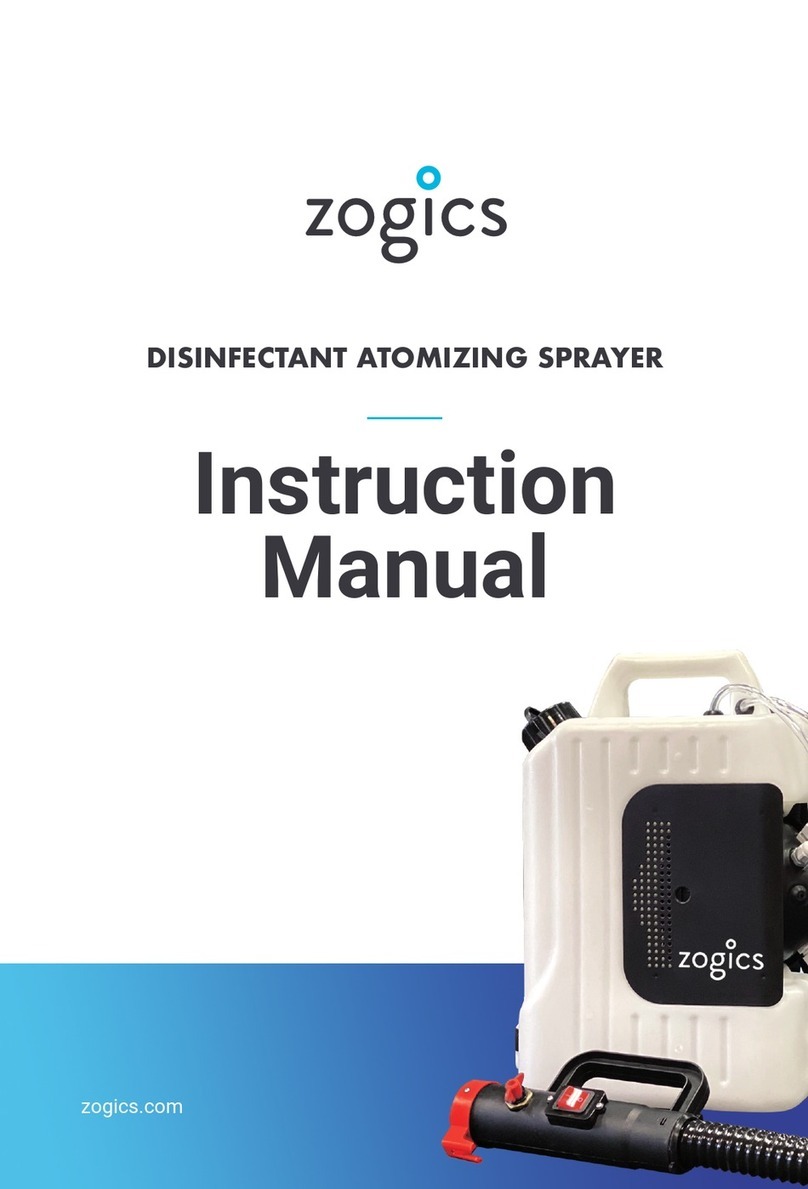
Sanosil Q-Jet C10 Operating Manual
Des M03 –operating manual Q-Jet C10 10/20
5. Room Preparations prior room disinfection
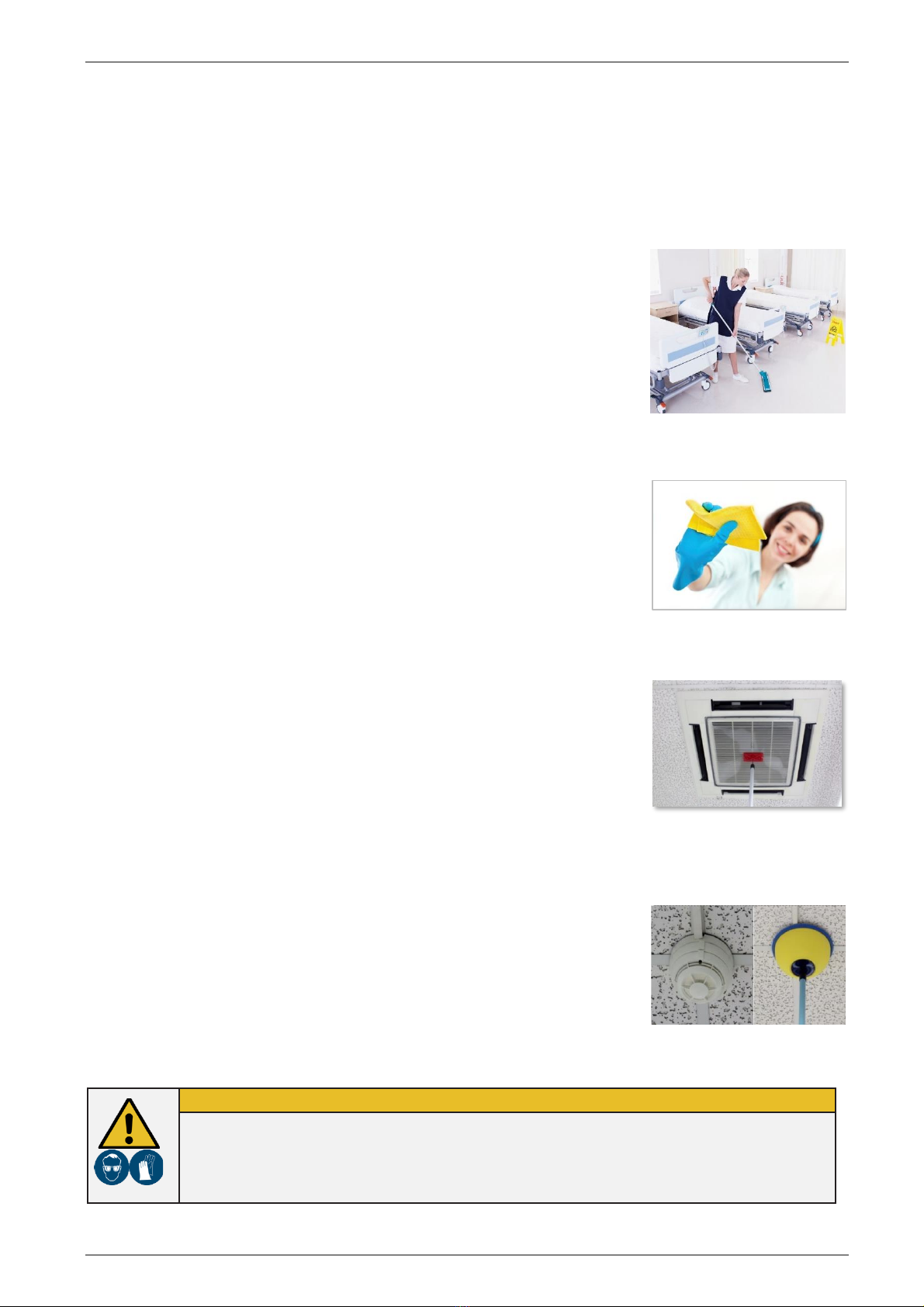
5.1. Cleaning
Aerosol disinfection covers every inch of all surfaces in a room, though the pen-
etration of fogged disinfectant is limited. Organic residues not only have a cata-
lytic effect by breaking down the hydrogen peroxides quicker, they also have
the effect of physically blocking the fogging disinfectant. In the worst-case sce-
nario, a poorly cleaned room with visible soiling can therefore render any efforts
at disinfection using aerosols useless. Thorough cleaning of all surfaces (esp.
transfer points such as handles, light switches, etc.) by vacuuming and wet
cleaning is therefore vital for aerosol disinfection to work.
5.2. Manual spray and-wipe disinfection
Since aerosol disinfection is not designed to replace cleaning, but as an enhance-
ment in the form ofan additional bio-security step, it is recommended that heavily
contaminated surfaces (transfer points, sanitation facilities, equipment, etc.) are
cleaned using classic spray-wipe disinfection. Disinfectant cleaners such as e.g.
wipes soaked in Sano Clean AR could be used as an alternative.
5.3. Closing and sealing openings
In order to prevent the aerosol concentration from being accidentally reduced
or to stop it escaping from the room, all connections to other rooms or the out-
side must be closed and sealed with tape if possible. These include windows,
skylights, hatches, service ducts, etc., and all doors, apart from the one needed
to enter or leave the room after starting the unit. If necessary, openings for air
conditioning and ventilation systems can be sealed using HVAC cover plates.
Ventilation and air conditioning systems must of course be switched off.
5.4. Covering the fire alarm
Modern fire alarms react to smoke (particles) AND a rise in temperature. They
are less likely to sound false alarms than older models. These older models
mostly react to just one parameter, meaning that they may interpret the disin-
fectant fog as smoke and trigger the alarm. False alarms caused by the aerosol
disinfectant can be avoided by covering the alarms with telescopic fire alert co-
vers. If the room needs to be monitored by fire alarms for insurance purposes,
portable CO/CO2detectors with an alarm function can be used. In the event of a fire, these react to increased
combustion gas levels, but without being affected and triggered by the aerosol fog.