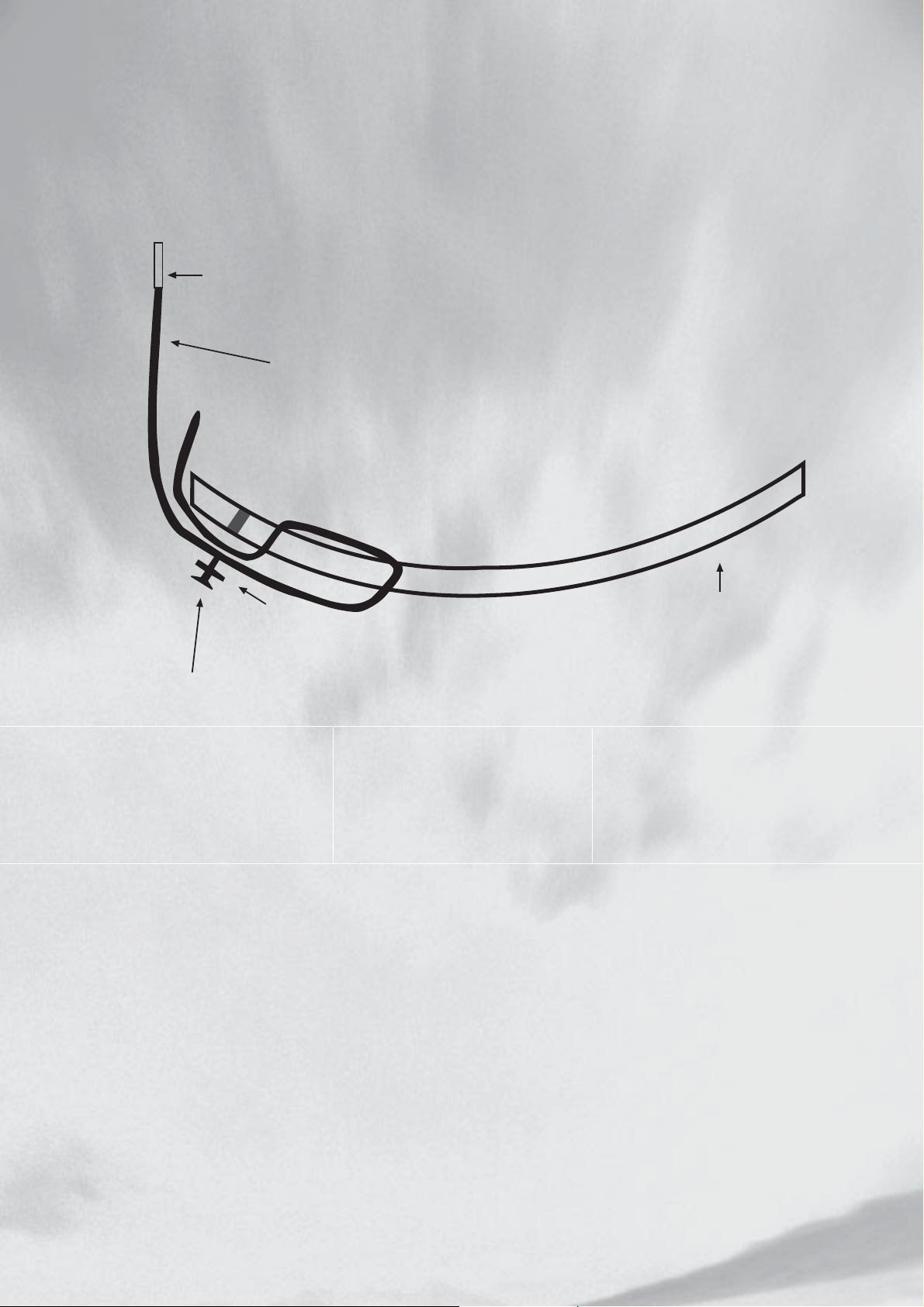
Lower the device onto your
shoulders allowing the yoke to
straddle your neck and rest on
the upper portion of your chest.
The device should sit
comfortably on your chest and
shoulders without rocking or
digging into your body when
you are in your racing seat.
Make sure there is space in
your seat and cockpit for the
HANS®. Even if it is perfectly
comfortable when you try the
device on outside of the car,
true fit cannot be judged until
you are strapped into your
vehicle as you would be during
a race.
Depending on clearance inside
your vehicle and the ease of
entry, you may put on the
HANS®before or after entering
the cockpit. Once inside, put on
your harness as usual, making
sure that the shoulder belts run
down over the yoke of the
HANS®on each side of your
neck. The entire length of the
belt bearing surface down to
the yoke tips shall be in contact
with the shoulder strap.
The inner edges of the
shoulder belts must be in
contact with the HANS®outer
edges of the collar. Due to the
shaping of the yokes, the belt
bearing surface might not be
fully covered by the webbing.
Securely tighten the belts so
that you and your HANS®are
held securely in place.
The shoulder belt length
adjusters must be positioned
on the lower yoke legs of the
HANS®. They never must be
positioned further up on the
HANS®, e.g. interfering with the
yoke/collar or helmet lip.
Verify that you have sufficient
freedom of movement to
operate all controls, view the
road ahead and to the side, and
view the instrument panel. The
device should not cause any
discomfort or force you into an
unnatural seating position.
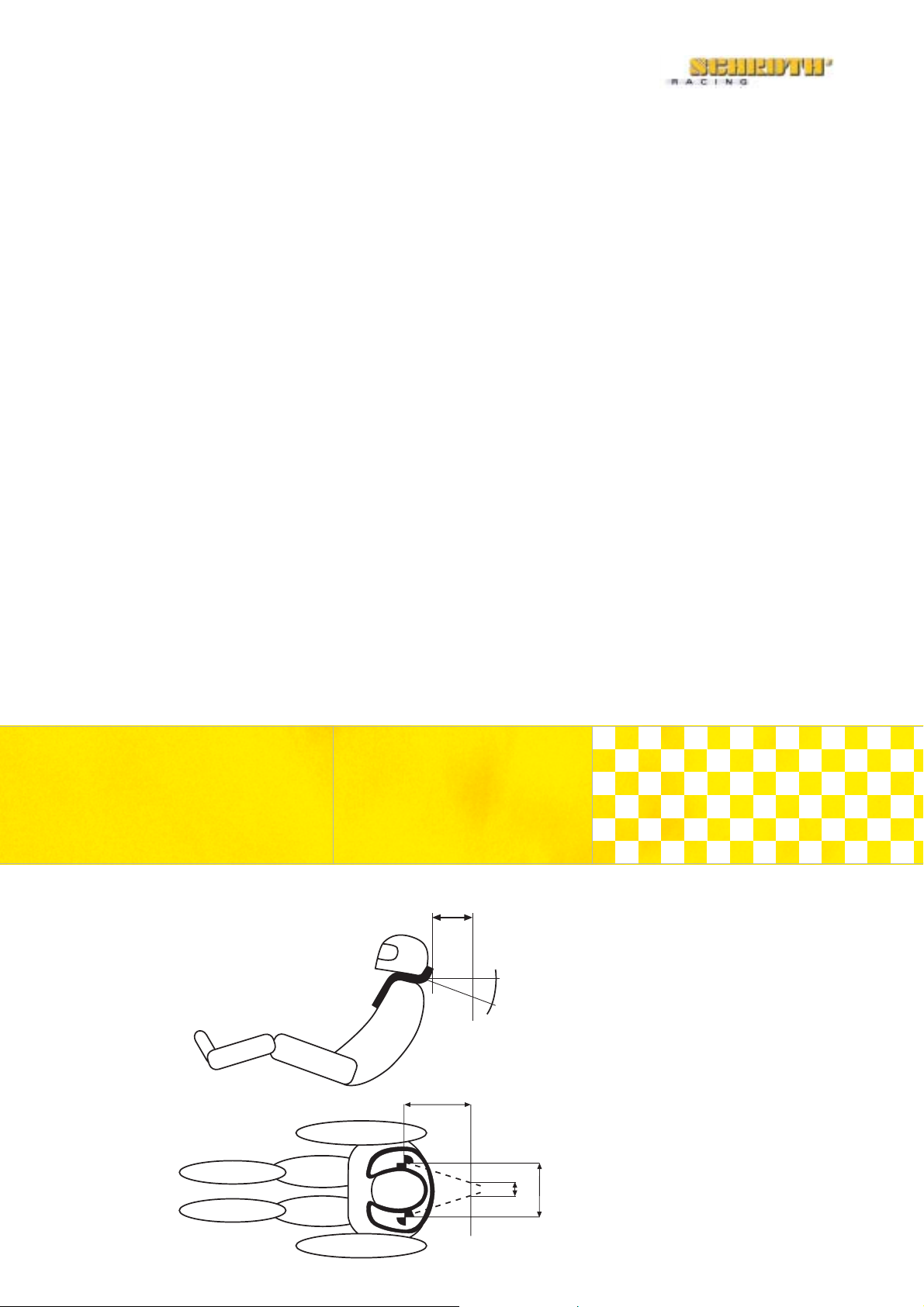
While seated normally you
should have 450of head move-
ment to both the right and left;
you should have nearly the
same movement up and down
as you would without the
device. It may take a few laps
to get used to the device but
most drivers soon forget that
they are wearing their HANS®.
Wearing HANS®
So trägt man HANS®
06
Setzen Sie HANS®auf Ihre Schultern so auf,
dass das Joch rechts und links am Nacken
anliegt und auf dem oberen Teil der Brust
aufliegt.
Wenn Sie in Ihrem Rennwagen sitzen, soll die
Vorrichtung komfortabel auf Ihrer Brust und
den Schultern aufliegen ohne zu kippen oder
einzudrücken.
Stellen Sie sicher, dass in Ihrem Sitz und/oder
Cockpit Platz für das HANS®-System ist. Auch
wenn es sich außerhalb Ihres Rennwagens
absolut komfortabel anfühlt, so können Sie die
wirkliche Situation erst feststellen, wenn Sie in
Ihrem Rennwagen wie während eines Rennens
fest angeschnallt sind.
Je nachdem wie die Platzverhältnisse und der
Einstieg ins Cockpit sind, setzen Sie HANS®vor
oder nach dem Einstieg auf. Legen Sie dann den
Renngurt wie gewohnt an. Stellen Sie sicher,
dass die Schultergurte auf beiden Seiten des
HANS®voll auf den Jochenden aufliegen. Die
gesamte Länge der Kontaktfläche muss mit dem
Gurtband Kontakt haben.
Die Innenkanten der Gurte müssen am HANS®-
Kragenansatz anliegen! Durch die Form des
Jochs kann stellenweise die Kontaktfläche neben
dem Gurtband herausschauen.
Ziehen Sie die Gurte stramm, damit Sie und das
HANS®System sicher gehalten werden.
Die Längenverstellung der Schultergurte müssen
ganz unten auf den Jochenden liegen. Sie dürfen
keinesfalls höher auf dem HANS®oder gar
im Bereich des Joch/Kragenansatzes positioniert
sein.
Stellen Sie sicher, dass sie genügend Bewegungs-
freiheit haben, um alle Bedieneinrichtungen zu
erreichen, die Straße nach vorn und seitlich zu
beobachten, und die Instrumententafel einsehen
zu können. HANS®sollte nicht unbequem sein
oder Sie in eine ungewohnte Sitzposition zwin-
gen. Normal sitzend sollte eine Kopfrotation
nach links und rechts von je 45° möglich sein,
und annähernd die gleiche Nickmöglichkeit wie
ohne HANS®haben. Sie werden ein paar
Runden brauchen, um sich an HANS®zu
gewöhnen, aber die meisten Fahrer haben dann
auch schon vergessen, dass sie HANS®tragen.