When an engine is running, many parts (such as the coolant fan,
pulleys, fan belt, etc.) turn at high speed. To avoid serious injury,
always be aware of moving parts. Keep a safe distance from these
parts as well as other potentially moving objects.
Engine parts become very hot when the engine is running. To
prevent severe burns, avoid contact with hot engine parts.
Before starting an engine for testing or troubleshooting, make sure
the parking brake is engaged. Put the transmission in park (for
automatic transmission) or neutral (for manual transmission).
Block the drive wheels with suitable blocks.
Connecting or disconnecting test equipment when the ignition is
ON can damage test equipment and the vehicle's electronic
components. Turn the ignition OFF before connecting the Scan
Tool to or disconnecting the Scan Tool from the vehicle’s Data
Link Connector (DLC).
To prevent damage to the on-board computer when taking vehicle
electrical measurements, always use a digital multimeter with at
least 10 megohms of impedance. Fuel and battery vapors are
highly flammable.
To prevent an explosion, keep all sparks, heated items and open
flames away from the battery and fuel / fuel vapors. DO NOT
SMOKE NEAR THE VEHICLE DURING TESTING.
Don't wear loose clothing or jewelry when working on an engine.
Loose clothing can become caught in the fan, pulleys, belts, etc.
Jewelry is highly conductive, and can cause a severe burn if it
makes contact between a power source and ground.
Use extreme caution when working around the ignition coil,
distributor cap, ignition wires and spark plugs. These components
create hazards voltages when the engine is running.
Keep a fire extinguisher suitable for gasoline/chemical/electrical
fires nearby
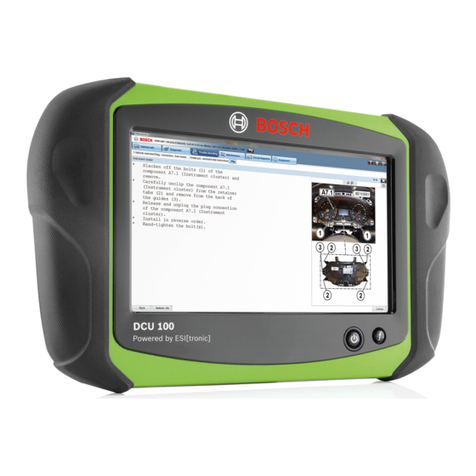
Keep the scan tool dry, clean, free from oil/water or grease. Use a
mild detergent on a clean cloth to clean the outside of the scan
tool, when necessary.
Do not drive the vehicle and operate the scan tool at the same time.
http://www.carsets.co.uk/