manuals.online logo
Brands
  1. Home
  2. •
  3. Brands
  4. •
  5. UnionSpecial
  6. •
  7. Sewing Machine
  8. •
  9. UnionSpecial Advanced 56100 Series Setup guide

UnionSpecial Advanced 56100 Series Setup guide

Other manuals for Advanced 56100 Series

3

This manual suits for next models

1

Other UnionSpecial Sewing Machine manuals

UnionSpecial 80800 Setup guide

UnionSpecial

UnionSpecial 80800 Setup guide

UnionSpecial PT0102 Setup guide

UnionSpecial

UnionSpecial PT0102 Setup guide

UnionSpecial 51300 Series Instruction sheet

UnionSpecial

UnionSpecial 51300 Series Instruction sheet

UnionSpecial BC200 User manual

UnionSpecial

UnionSpecial BC200 User manual

UnionSpecial 51300 Series Instruction sheet

UnionSpecial

UnionSpecial 51300 Series Instruction sheet

UnionSpecial 39600 CU Instruction sheet

UnionSpecial

UnionSpecial 39600 CU Instruction sheet

UnionSpecial 81300A Setup guide

UnionSpecial

UnionSpecial 81300A Setup guide

UnionSpecial Picoetta G79000 Series Instruction Manual

UnionSpecial

UnionSpecial Picoetta G79000 Series Instruction Manual

UnionSpecial 81300A Setup guide

UnionSpecial

UnionSpecial 81300A Setup guide

UnionSpecial BC100 User manual

UnionSpecial

UnionSpecial BC100 User manual

UnionSpecial BC200 User manual

UnionSpecial

UnionSpecial BC200 User manual

UnionSpecial 50000 Series Setup guide

UnionSpecial

UnionSpecial 50000 Series Setup guide

UnionSpecial 3000 Setup guide

UnionSpecial

UnionSpecial 3000 Setup guide

UnionSpecial 80800R Setup guide

UnionSpecial

UnionSpecial 80800R Setup guide

UnionSpecial CS100 series User manual

UnionSpecial

UnionSpecial CS100 series User manual

UnionSpecial 56100MB Setup guide

UnionSpecial

UnionSpecial 56100MB Setup guide

UnionSpecial 54200A Setup guide

UnionSpecial

UnionSpecial 54200A Setup guide

UnionSpecial 80800 User manual

UnionSpecial

UnionSpecial 80800 User manual

UnionSpecial 4500A User guide

UnionSpecial

UnionSpecial 4500A User guide

UnionSpecial 54200J-12-16 User manual

UnionSpecial

UnionSpecial 54200J-12-16 User manual

UnionSpecial 56200 Setup guide

UnionSpecial

UnionSpecial 56200 Setup guide

UnionSpecial 39500AC-060 Instruction sheet

UnionSpecial

UnionSpecial 39500AC-060 Instruction sheet

UnionSpecial Advanced 56100 Series User manual

UnionSpecial

UnionSpecial Advanced 56100 Series User manual

UnionSpecial 57100 Series Instruction sheet

UnionSpecial

UnionSpecial 57100 Series Instruction sheet

Popular Sewing Machine manuals by other brands

Brother PE-180D Service manual

Brother

Brother PE-180D Service manual

Singer 569U1100 Operator's guide

Singer

Singer 569U1100 Operator's guide

ELNA 2002 instruction manual

ELNA

ELNA 2002 instruction manual

Siruba DL7200D-NM1 Instruction book

Siruba

Siruba DL7200D-NM1 Instruction book

Silver Viscount 9500e instruction manual

Silver

Silver Viscount 9500e instruction manual

Pfaff 3588-05/020 instruction manual

Pfaff

Pfaff 3588-05/020 instruction manual

JUKI DDL-9000A instruction manual

JUKI

JUKI DDL-9000A instruction manual

Pfaff 284 Instruction book

Pfaff

Pfaff 284 Instruction book

Reliable MSK-335B Specification sheet

Reliable

Reliable MSK-335B Specification sheet

Kenmore 385. 19000 owner's manual

Kenmore

Kenmore 385. 19000 owner's manual

Brother FD4-B271 instruction manual

Brother

Brother FD4-B271 instruction manual

Brother Computerized Embroidery Machine Operation manual

Brother

Brother Computerized Embroidery Machine Operation manual

Husqvarna Viking Designer SE user guide

Husqvarna Viking

Husqvarna Viking Designer SE user guide

Singer 645 owner's manual

Singer

Singer 645 owner's manual

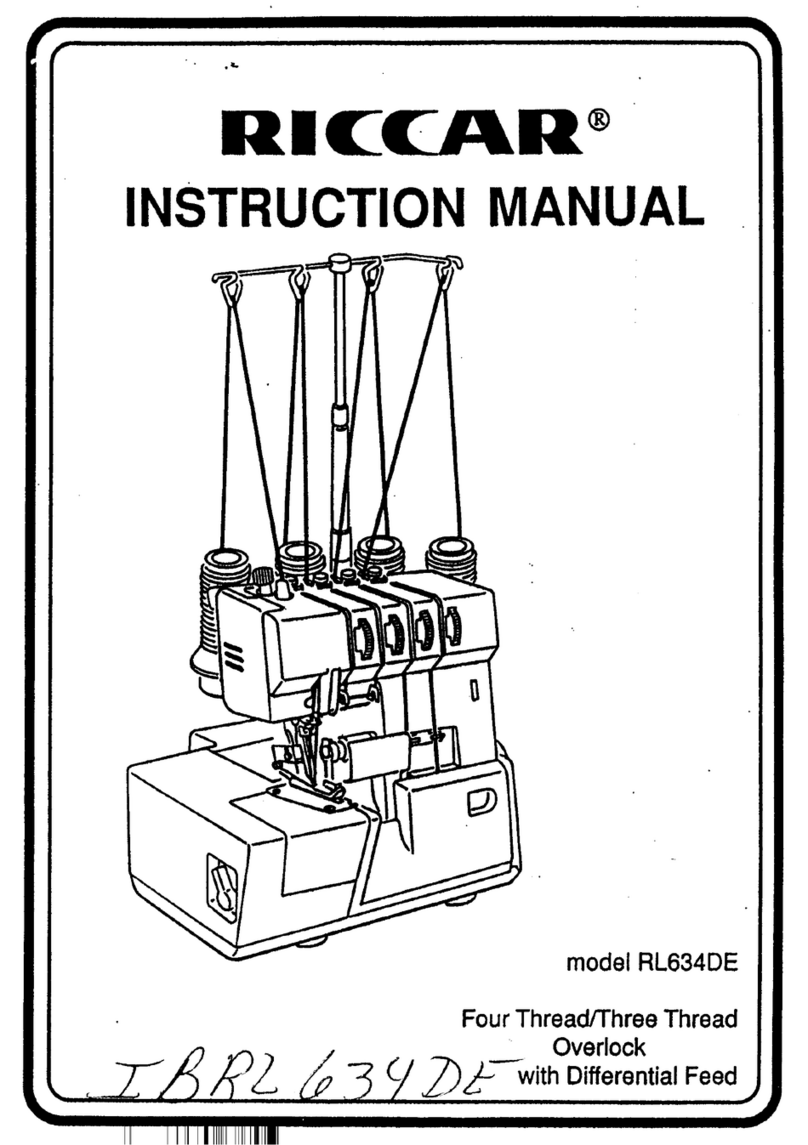
Riccar RL634DE user manual

Riccar

Riccar RL634DE user manual

ZOJE ZJ9800 Operation manual

ZOJE

ZOJE ZJ9800 Operation manual

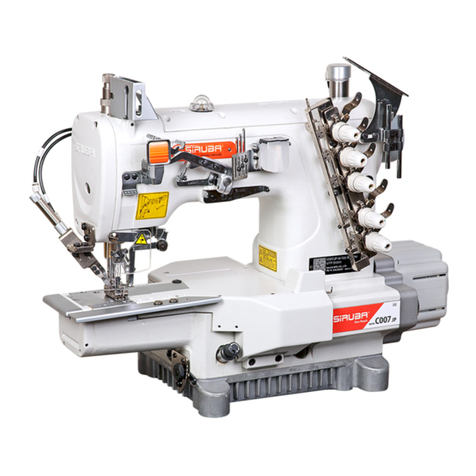
Siruba C007JP Instruction book

Siruba

Siruba C007JP Instruction book

IKEA SY user guide

IKEA

IKEA SY user guide

manuals.online logo
manuals.online logoBrands
  • About & Mission
  • Contact us
  • Privacy Policy
  • Terms and Conditions

Copyright 2025 Manuals.Online. All Rights Reserved.

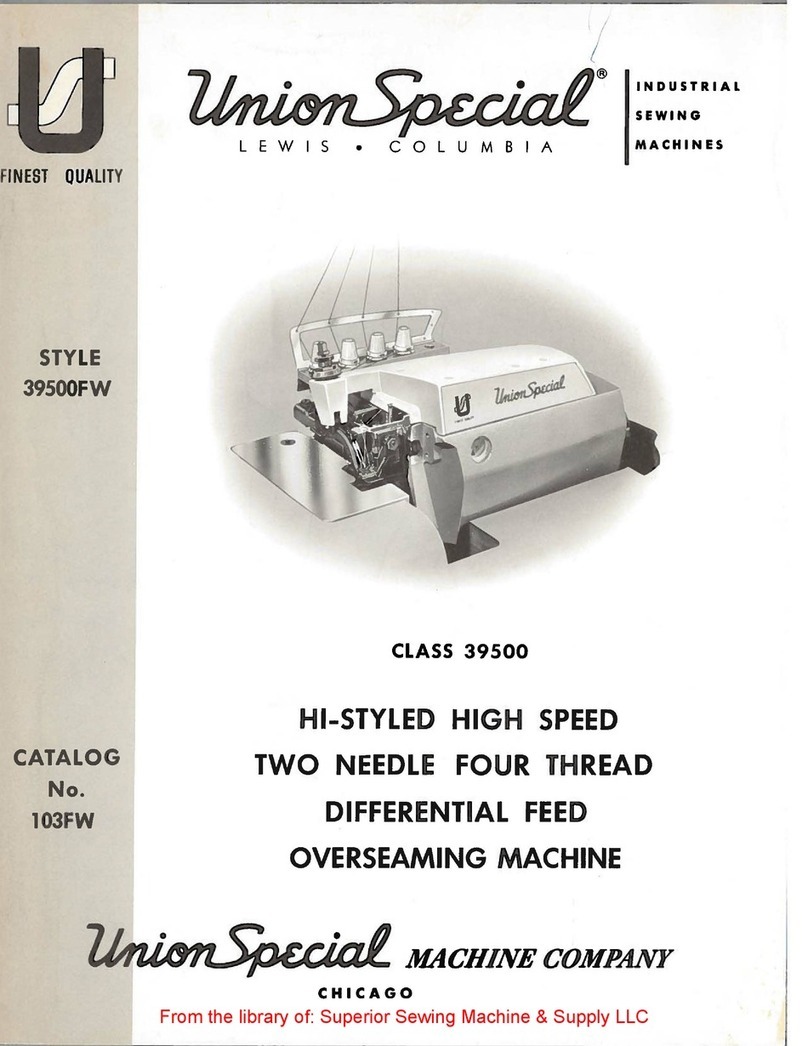
CATALOG NO.
130M
Fourth
Edition
STY
LE
58100
M
\
I
®
Finest Quality
Adjusting instructio s and
illustrated parts list
Class
56100
-
Advanced
Series,
bag
seaming
machines
From the library of: Superior Sewing Machine & Supply LLC

CATALOG
NO.
130M
ADJUSTING
INSTRUCTIONS
AND
ILLUSTRATED
PARTS
LIST
FOR
CL.ASS
56100
ADVANCED
SERIES
BAG
SEAMING
MACHINE
STYLE
56100
M
Fourth
Edition
© 1965'
1981
By
Union
Special Corporation
Rights
Reserved
in
All
Countries
December.
1981
2
From the library of: Superior Sewing Machine & Supply LLC
IDENTIFICATION
OF
MACHINES
Each
UNION
SPECIAL
machine
carries
a Style
number,
which
on
this
Class
machine
is
stamped into the
style
plate
affixed to the
right
front
of machine.
The
serial
number
is
stamped
in the casting
at
the
right
rear
base of
machine.
Reference to
directions,
such
as
right,
left,
front
or
rear,
are given
relative
to
the operator•s position while seated
at
the machine.Operating direction of the hand-
wheel
is
counterclockwise,
as
viewed
from
the
right
end
of
machine.
CLASS
DESCRIPTION
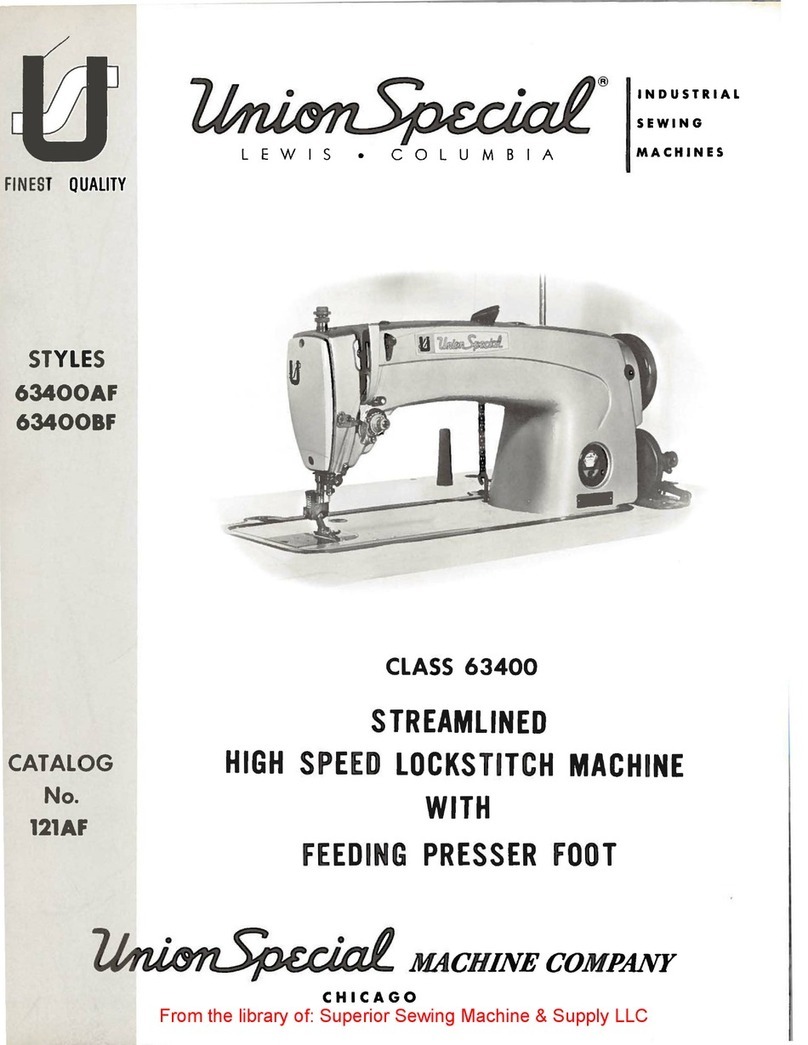
Advanced
high speed, single needle,
flat
bed
machine.
High
throw, needle bearing
needle bar drive,
light
weight presser bar
and
needle bar driving
mechanism,
enclos-
ed
automatic
lubricating
system,
filtered
oil
return
pumps
for
head
and
base,
later-
al looper
travel.
Maximum
work
space to
right
of
needle bar, 8
l/4
inches
(209.6mm).
MACHINE
STYLE
56100
M Typical application -
For
seaming
medium
and
large
size
cotton,
light
and
medium
weight burlap bags.
Stitch
range 3 1/2 to 7;
set
at
3
l/2
S.P.I.
Seam
specification
401-SSa-1.
Maximum
recommended
speed
6000
R.P.M.
sewing
at
3
l/2
to 5
S.P.I.
and
6500
R.P.M.
sewing
at
more
than 5
S.P.I.
Recommended
speed
for
machines
operating
on
a duty cycle of
50%
or
more
is
10%
less than
maximum.
NEEDLES
Each
needle
has
both a type
and
size
number.The
type
number
denotes the kind
of
shank, point, length, groove,
finish
and
other
details.
The
size
number,
stamped
on
the needle shank, denotes
largest
diameter of blade,
measured
midway
between
shank
and
eye. Collectively, type
and
size
number
represent the complete symbol,
which
is
given
on
the label
of
all
needles
packaged
and
sold
by
UNION
SPECIAL.
Recommended
needle for Style
56100
M
is
Type
144
G.
It
has
a
round
shank,
round
point,
No.
2
bag
length, double groove, spotted, short point,
chromium
plated,
and
is
available in sizes -054, 200/080, 230/090, 250/100.
Selection of proper needle
size
is
determined
by
size
of thread used.
Thread
should pass freely through needle
eye
in order to produce a
good
stitch
formation.
To
have
needle orders promptly
and
accurately
filled,
an
empty
package,a sample
needle, or the type
and
size
number
should
be
forwarded.
Use
description
on
label.
A
complete order
would
read:
11
1000
Needles,
Type
144
G,
Size 200/080
11
•
3
From the library of: Superior Sewing Machine & Supply LLC
•
Fig. 1
THREADING
AND
OILING
DIAGRAM
FOR
STYLE
56100
M
Thread
machine
as
indicated above.
The
looper threading
has
been
enlarged for
clarity.
The
oil
has
been
drained
from
the
machine
before shipping
and
the reservoir
must
be
filled
before
starting
to operate. Maintain
oil
level in
11
0PERATE
11
position
and
add
oil
when
needle
is
to the black
line
located to the
left
of the
11
0PERATE
11
zone
marked
''LOW
11
•
The
machine
is
automatically lubricated
and
no
oiling
other than
keeping the
main
reservoir
filled
is
necessary.
For
further
lubricating
instructions
refer
to paragraph
on
11
LUBRICATION
11
•
4
From the library of: Superior Sewing Machine & Supply LLC
SAFETY
RULES
A
CAUTION
THIS
SAFETY
SYMBOL
INDICATES
YOUR
PERSONAL
SAFETY
IS
INVOLVED.
TO
PREVENT
PERSONAL
INJURY:
-
All
power
sources to the
machine
MUST
be
TURNED
OFF
before threading,
oiling,
ad-
justing
or replacing
parts.
-
Wear
safety glasses.
-
All
shields
and
guards
MUST
be
in position before operating machine.
-DO
NOT
tamper
with safety
shields,
guards,
etc.,
while
machine
is
in operation.
LUBRICATION
Use
a
straight
mineral
oil
with a Saybolt
viscosity
of
90
to
125
seconds
at
100
degrees
F.
This
is
equivalent to
UNION
SPECIAL
Specification
No.
175.
Before operating,
fill
machine
with
oil
at
plug
screw
(A,
Fig. 2).
While
filling
machine
with
oil,
check
gauge
(B).
When
proper
oil
level
is
reached,
gauge
needle will
register
on
black
line
marked
11
FULL
11
•
Oil
must
be
added
when
gauge
needle
registers
on
black
line
marked
11
LOW
11
•
Al-
though
the
machine
can
be
operated
safetly
when
gauge
needle
registers
in the
11
0PERATE
11
zone,
it
is
recommended
to
always
check
oil
level before
operating to
be
sure
machine
is
filled
with
oil
to the
11
FULL
11
mark.
CAUTION:
DO
NOT
over
fill
machine.
To
drain
oil,
remove
plug screw (C), or
low-
er
crank
chamber
cover
on
back
of machine.
Oil
must
be
changed
every
2000
operating hours to
minimize
wear.
On
new
machines, or a
machine
out of service
for
an
extended period of time;
lubricate
machine
as follows:
Remove
head
cover, clean out
lint,
then
di-
rectly
oil needle bar link
and
needle bar.
Re-
place
head
cover
and
fill
machine
with
oil
to
proper level.
Run
machine
at
low
RPM
to ensure
proper lubrication of
components
preventing
any
damage
which
may
occur
from
lack
of
oil
distri-
bution.
5
From the library of: Superior Sewing Machine & Supply LLC
OIL
GAUGE
CALIBRATION
To
recalibrate
oil
gauge, follow
instructions
in sequence
as
listed:
-Place
machine
upright
on
a level surface.
-
Remove
plug
screw
(C,
Fig.
2)
and
tip
machine
forward to drain
all
oil
from
reser-
voir.
-
Remove
lower crank
chamber
cover
on
back
of machine.
-
Fill
reservoir until
oil
is
even
with
bottom
of
knee
press
shaft
bushing
(D).
-
Loosen
locknut
(E)
and
rotate
calibrating
screw
(F)
as
required
until
gauge
needle
registers
on
the black
line
marked
11
LOWU.
-Tighten locknut (E), then replace plug screw
(C)
and
lower crank
chamber
cover.
-
Fill
machine
with
oil
until
gauge
needle
registers
on
black
line
marked
11
FULL
11
•
SYNCHRONIZING
LOOPER
AND
NEEDLE
MOTIONS
Turn
handwheel
in the operating
di-
rection
until
the point of the looper
(A,
Fig.
3)
mov
i
ng
to the
left,
is
even
with the
left
side of needle (B).
Note
the height
of
the
eye
of the needle with
respect to the looper point
(See
Fig. 4).
Turn
the
handwheel
in the reverse direc-
tion
until
the point of the looper again
moving
to the
left,
is
even
with the
left
side of needle
(See
Fig.
4).
If
the
height of the
eye
of the needle with
re-
spect to the looper point are the
same,
looper
and
needle motions are synchroniz-
ed-
a variation of .005 inch
(.127mm)
is
allowable.
If
the distance
from
the
eye
of the needle to the point
of
the looper
Fig. 3
is
greater
when
the
handwheel
is
turned
in the operating
direction,
the looper
drive lever rocker
shaft
will
have
to
be
moved
slightly
towards the
rear.
Moving
the
shaft
towards the front acts the reverse.
For
Prop
er SYNCHRONIZATION of
Looper
& Needle
these
two Dimen
si
ons
will be the
same
J
~
J
~
~
1/84"
1/84"
(.4mm) (.4mm)
-r
-f~~~-l
----
Looper
in
FRONT of
Needle Needle
in in
OPERATING REVERSE
Di
rection
Direction
Fig. 4
NOTE:
The
1/64 inch
(.4mm)
dimension
shown
in
Fig. 4
is
for final
setting
of
needle bar
height.
Adjust looper drive rocker
lever
shaft
as
follows:
Loosen
screw
(C,
Fig.
3)
in looper drive
lever (D). A
rod
of .146-40 thd. or
Union
Special
Screw
No.
22870
A
can
be
threaded into the looper
drive lever rocker
shaft
through the center of
thrust
adjusting screw (E).
Tap
or pull
slightly
as
required to position
shaft
for
proper synchro-
nization. Tighten screw
{C)
securely
and
remove
rod
or
screw
used
to position
shaft.
6
From the library of: Superior Sewing Machine & Supply LLC
SYNCHRONIZING
LOOPER
AND
NEEDLE
MOTIONS
(Continued)
Loosen
lock nut
(F)
and
TORQUE
thrust
adj-
justing
screw
(E)
to 6 in. lbs. (7cm/kg);
re-tighten
lock nut
(F)
securely.
With
the looper
at
extreme
right
end
of
travel,
check
location of the
right
looper connecting
rod
bearing using
gauge
No.
21227
ex.
Remove
nut
(A,
Fig.
5)
and
place hole of
gauge
over threaded stud.
The
left
end
of
gauge
should locate again-
st
the
RIGHT
side of looper rocker
cone
(B).
If
adjustment
is
necessary, loosen
clamp
screw
(C)
and
reposition looper
drive lever
(D)
as required, then tighten
screw (C).
If
gauge
is
not
available,
check
set-
Fig. 5
ting with a
scale.
Distance
between
the
centerline
of rocker
cone
and
centerline
of looper drive lever stud should
be
4 1/16
inch
(103.2mm)
as
shown
in
Fig.
5;when
looper
is
at
its
extreme
right
end
of
travel.
LOOPER
AND
LOOPER
NEEDLE
GUARD
SETTINGS
Insert
a
new
needle, type
and
size
spec-
ified.
Looper
gauge
is
5/32 inch
(4.0mm)
which
is
the distance
from
point of looper
(A,
Fig.
6)
to
centerline
of needle
(B)
when
looper
is
at
extreme
right
end
of
its
travel.
Looper
gauge
No.
21225-5/32
(C)
is
available
for
this
setting.
Adjustment
can
be
made
by
loosening nut
(D),(it
has
a
left
hand
thread)
and
nut (E); turn connecting
rod
(F)
as
re-
quired to
attain
specified dimension.
Hold
connecting
rod
in position
and
tighten nut
(E), then nut (D).
NOTE:
Be
sure
that
the
left
ball
joint
is
in a
vertical
position
and
does
not bind
after
adjustment.
Fig. 6
While
turning
handwheel
in operating direction
and
the looper
(A,
Fig.
7)
moves
to the
left,
its
point should
be
set
to brush but not pick
at
rear
of
needle (B). Adjustment
can
be
made
by
loosening screw
(G,
Fig.
6),
turn stop screw
(H)
clockwise to
move
looper towards the
rear,
counterclockwise acts the reverse.
It
is
suggested to hold looper
towards the front while
making
this
adjustment. Tighten screw
(G)
after
adjustment
has
been
made
and
recheck
movement
of
looper.
Looper
needle guard (attached to looper) should
be
set
to
barely contact the
front
of needle without deflecting as looper
moves
to
left.
NEEDLE
BAR
HEIGHT
Turn
handwheel
to position point
of
looper flush with the
left
side
of
needle.
7
Fig. 7
From the library of: Superior Sewing Machine & Supply LLC
NEEDLE
BAR
(Continued)
Height of needle bar
(A,
Fig.
8)
is
correct
when
the top of the
eye
of needle
(B)
is
Fig. 8
Fig.
10
1/64 inch
(.4mm)
below
the underside of looper
as
shown
in
Fig. 4.Adjustment
can
be
made
by
loosening screw
(C,
Fig.
8),
move
needle bar
(A)
up
or
down
as required, retighten screw.
FEED
DOG
SETTINGS
Feed
dog
(A,
Fig.
9)
should
be
centered in
throat
plate
(B)with equal clearance
on
all
sides
and
ends
with feed
trav-
el
set
to desired
stitch
length.
At
highest point of
travel,
tips
of feed
dog
teeth should extend the depth of a tooth
or
approximately 3/64 inch
(1.2mm)
above
throat
plate
and
paral-
lel
to
same.
Screw
(C)
should
be
set
to support feed
dog
after
screw
(D)
has
been
loosened
which
secures feed
dog
in
position.
Parallel adjustment
can
be
made
by
loosening nut(A, Fig.
10)
and
turn sc·
rew
(B)
clockwise to lower
front
of feed dog,
counterclockwise acts the reverse.
When
properly
set,
re-
tighten nut
(A).
Right to
left
adjustment
can
be
made
by
loosening screws
(A,
Fig.
11)
and
slightly
move
feed rocker
(B)
on
feed rocker
shaft
(C)
as
required, then retighten screws.
Check
to ensure
that
feed rocker
arm
(D)
does
not bind
after
adjustment.
Forward
or rearward centering of feed
dog
can
be
accomplished
by
loosening nut
(E,
Fig. 11),
move
feed rocker
(B)
as
required
and
retighten nut.
CHANGING
STITCH
LENGTH
Set the
stitch
to required length.This
is
accomplished
by
loosening lock nut(F,
Fig.ll)
Fig. 9 1/2 turn,
(it
has
a
left
hand
thread)
on
the
end
of the
stitch
regulating stud
and
turning
stitch
adjusting screw
(G)
located under the
left
end
of the
cloth plate in the
head
of the mainshaft (H),
which
is
marked
with
11
L
11
and
11
S
11
• Turning the screw in a clockwise direction
shortens the
stitch
(moves
stitch
regulating stud
toward
the
11
S
11
)
and
turning
it
in a counterclockwise direction lengthens
the
stitch
(moves
stitch
regulator stud
toward
the
11
L
11
).
Re-
tighten the lock nut securely.
To
prevent destructive
damage
to the feed drive bearing,
key
screw
(J)
must
engage the
11
U
11
shaped
key
slot
in
ferrule
(K).
The
feed rocker assembly
may
require
lubrication
and
re-
pair
after
years of operation. This
can
be
accomplished
as
follows:
Loosen
nut
(E,
Fig.
11)
and
remove
nut (F).
Remove
feed rocker
arm
(D)
from
machine
by
rocking s·
lightly.
Loosen
screws
(A)
and
remove
stop
collar
on
right
end
of
shaft
(C).
Shaft
can
now
be
withdrawn.
Loosen
Allen screw
(L)
and
remove
shaft
(M).
Now
repack bearings.
8
From the library of: Superior Sewing Machine & Supply LLC
CHANGING
STITCH
LENGTH
(Continued)
When
packing bearings,
parts
must
be
clean
and
grease should
be
applied
directly
from
the tube to avoid contamination.
Tube
of grease
can
be
supplied under
part
No.
28604
P.
Greased bearings are located
at
(N,
P, Fig. 11).
If
grease sealed bearings
are
replaced, they should
be
pressed in flush with the
casting.
To
assemble,
start
tapered
end
of
shafts
first,
twisting
slightly
when
entering the grease
seals
to pre-
vent
damage.
Check
for
proper adjustment
of
feed
dog
as
described under the
11
Feed
Dog
Settings
11
•
Also
check to see
that
there
is
no
binding
at
any
point.
Fig.
11
Fig.
12
REAR
NEEDLE
GUARD
Set
rear
needle guard
(A,
Fig.
12)
horizontally
so
that
it
does
not
quite
con-
tact
the
rear
of needle (B). A clearance of .005 inch
(.127mm)
is
permissible.
It
should
be
set
vertically
so
that
its
vertical
face
is
even
with the top of the
needle eye, with needle bar in
low
position.
To
adjust
needle guard, loosen
clamp
screw (C),
move
the needle guard
on
its
holder
as
required
and
retighten
screw.
Stitch
length
can
be
changed without a change in the
rear
needle guard because
it
is
not attached to the feed bar.
THREADING
Draw
looper
and
needle threads
into
the
machine
and
start
operating
on
a piece of
fabric.
Refer to
threading diagram (Fig.
1)
for
manner
of
threading
this
machine.
LOOPER
THREAD
CAST-OFF
WIRE
Looper
thread
cast-off
wire
(A,
Fig. 13)
locat-
ed
on
the take-up
shield
(B)
controls
the
amount
of
slack
thread in the system
and
can
be
moved
to
any
position.
It
should
be
set
laterally
so
that
it
is
midway
between
the
two
discs
of
take-up
(C)
and
the
tip
parallel
with the
discs.
9
Fig.
13
From the library of: Superior Sewing Machine & Supply LLC
LOOPER
THREAD
CAST-OFF
WIRE
(Continued)
It
is
usually
set
towdrd
the take-up to almost the
limit
of
its
slot
so
that
it
bare-
ly
clears
the highest point of the take-up.
The
height
and
lateral
adjustment of the
retainer
affects
the control of looper thread as looper
moves
to the
left.
Ordinarily
it
will
be
set
in approximately a horizontal position.
More
looper thread
is
given to
the
stitch
when
the
retainer
is
raised
and
set
towards the take-up.
However,
if
the
retainer
is
raised too high, the looper thread
triangle
may
be
wiped
under the blade
of the looper, causing
traingle
skips or pulled
down
stitches.
This
can
be
checked
by
observing the action of the looper thread as the looper
moves
to the
left.
THREAD
TENSIONS
Tension
on
the needle thread should
be
only
sufficient
to produce uniform
stitch-
es
on
the under surface of the
fabric.
Tension
on
the looper thread should
be
just
sufficient
to steady the thread.
PRESSER
BAR
HEIGHT
Height of presser bar
(D,
Fig. 8)
is
set
correctly
if
it
is
possible to
remove
the presser foot
when
the foot
lifter
lever,
located
at
the
back
of
the
machine
and
extending
above
the upper crank
chamber
cover
is
fully
actuated (pulled to the
right).
There should
be
approximately l/16 inch
(l.6mm)
clearance
between
lower surface of the
presser bar connection
and
guide
(E)
and
bottom surface of
head
opening in the
bed
when
foot
lifter
lever
is
released
and
presser foot lying
flat
on
the
throat
plate
with feed
dog
below
throat
plate.
Adjustment
can
be
made
by
turning
handwheel
to position needle bar
at
bottom
of
stroke.
Loosen
screw
(F)
and
while holding presser foot
down
on
throat
plate,
posit-
ion presser bar connection
and
guide
as
required to
attain
specified clearance
and
re-
tighten screw.
PRESSER
FOOT
PRESSURE
Regulate the presser spring regulating screw
(A,
Fig.
14)
so
that
it
exerts only
enough
pressure
on
the presser foot to feed the
work
uniformly
when
a
slight
tension
is
placed
on
the
fabric.
Turning
it
clockwise increases the pressure, counterclock-
wise acts the reverse.
SETTING
NEEDLE
THREAD
GUIDE
AND
FRAME
EYELET
Turn
handwheel
in operating
~irection
until
the needle bar reaches
its
lowest position. Set
needle thread take-up wire (8, Fig.
14)
so
that
its
thread contact surface
is
approximately 3/16
inch
(4.8mm)
above
the center of the needle bar
thread
eyelet
(C).
Lower
this
setting
for a
smaller needle thread loop,
raise
for
a
larger
loop. Set needle thread
frame
eyelet
(D)
so
that
it
is
approximately 7/8 inch
(22.2mm)
above
centerline
of
its
attaching screw (Fig. 14).
TORQUE
REQUIREMENTS
Fig.
14
Torque
specifications
given in
this
catalog
are
measured
in inch-pounds or centimeter/kilo-
grams.
All
straps
and
eccentrics
must
be
tightened to
19-21
in.
lbs.
(22-24cm/kg)
unless otherwise noted.
10
From the library of: Superior Sewing Machine & Supply LLC