manuals.online logo
Brands
  1. Home
  2. •
  3. Brands
  4. •
  5. Velleman
  6. •
  7. Remote Control
  8. •
  9. Velleman High-Q-kit K8051 User manual

Velleman High-Q-kit K8051 User manual

Other manuals for High-Q-kit K8051

1

Other Velleman Remote Control manuals

Velleman High-Q-kit K8051 User manual

Velleman

Velleman High-Q-kit K8051 User manual

Velleman VRC801D User manual

Velleman

Velleman VRC801D User manual

Velleman VM130 User manual

Velleman

Velleman VM130 User manual
Velleman VM130V2SET User manual

Velleman

Velleman VM130V2SET User manual

Velleman CAMB29 User manual

Velleman

Velleman CAMB29 User manual

Velleman WRS3B User manual

Velleman

Velleman WRS3B User manual

Velleman HAA80MK User manual

Velleman

Velleman HAA80MK User manual

Velleman CTC1000RC User manual

Velleman

Velleman CTC1000RC User manual
Velleman MK160 User manual

Velleman

Velleman MK160 User manual

Velleman WRP3B User manual

Velleman

Velleman WRP3B User manual

Velleman VRC1001 User manual

Velleman

Velleman VRC1001 User manual

Velleman HAMGSM133 User manual

Velleman

Velleman HAMGSM133 User manual
Velleman High-Q Velleman-kit K8023 User manual

Velleman

Velleman High-Q Velleman-kit K8023 User manual

Velleman CAMCOLVC8N1 User manual

Velleman

Velleman CAMCOLVC8N1 User manual

Velleman VRC801D2 User manual

Velleman

Velleman VRC801D2 User manual
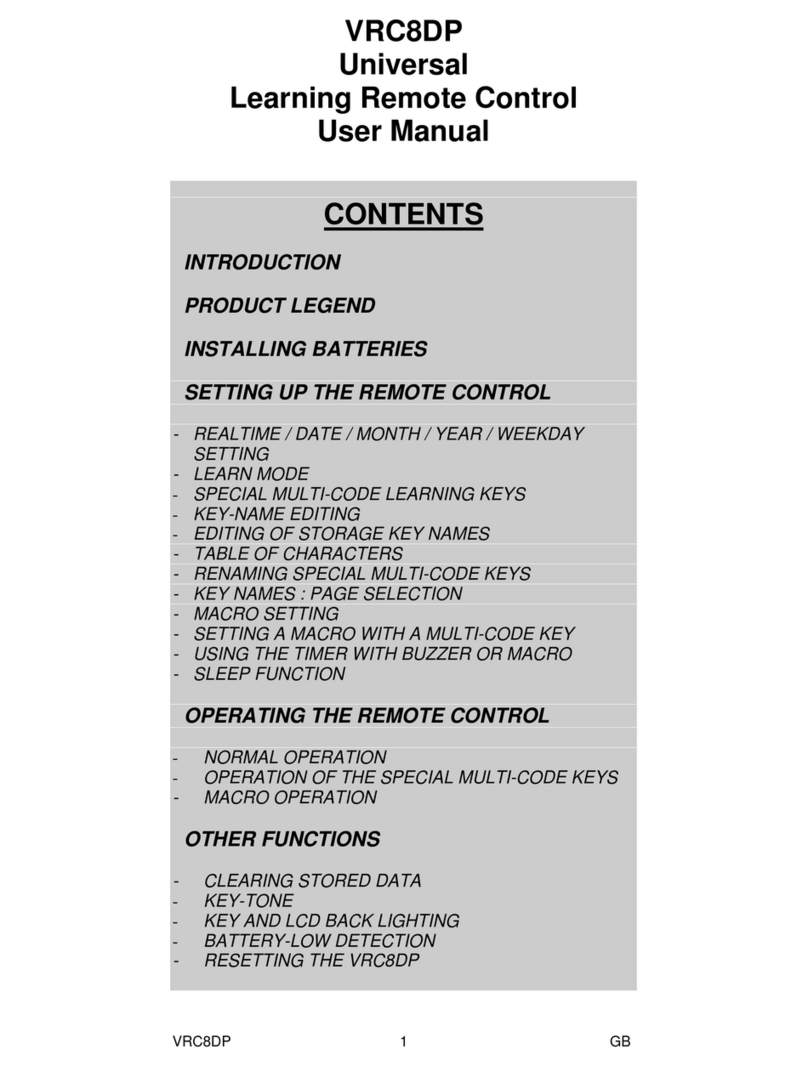
Velleman VRC8DP User manual

Velleman

Velleman VRC8DP User manual

Velleman vm118 User manual

Velleman

Velleman vm118 User manual
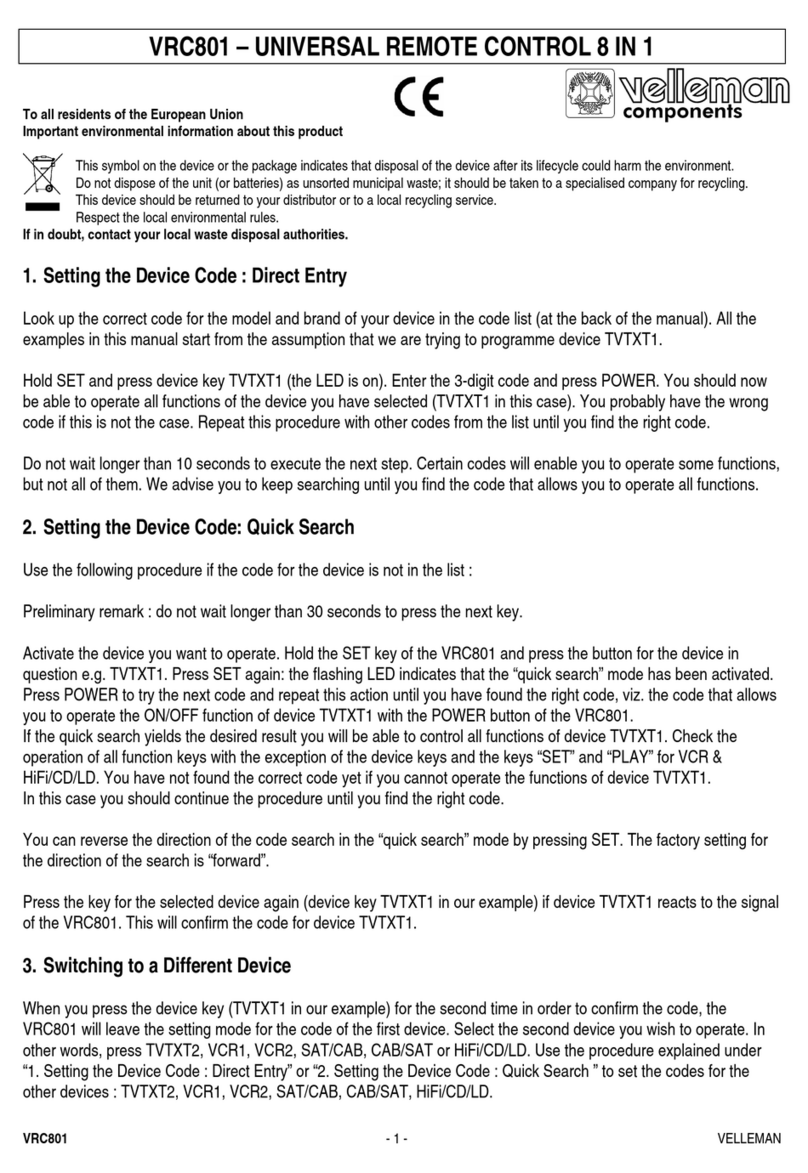
Velleman VRC801 User manual

Velleman

Velleman VRC801 User manual

Velleman CTC1000RC User manual

Velleman

Velleman CTC1000RC User manual
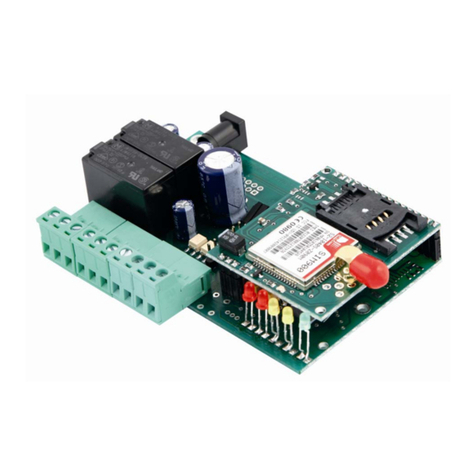
Velleman HAMGSM133 User manual

Velleman

Velleman HAMGSM133 User manual

Velleman VRC1601D User manual

Velleman

Velleman VRC1601D User manual

Velleman VM130 User manual

Velleman

Velleman VM130 User manual

Velleman IREXT User manual

Velleman

Velleman IREXT User manual

Velleman K6501 User manual

Velleman

Velleman K6501 User manual

Popular Remote Control manuals by other brands

Bircher Reglomat RC Duo 2 user guide

Bircher Reglomat

Bircher Reglomat RC Duo 2 user guide

Emerson RCBT100 owner's manual

Emerson

Emerson RCBT100 owner's manual

BILDA Element-6 user manual

BILDA

BILDA Element-6 user manual

Absima CR7P manual

Absima

Absima CR7P manual

Mitsubishi Electric PAR-32MAAG Instruction book

Mitsubishi Electric

Mitsubishi Electric PAR-32MAAG Instruction book

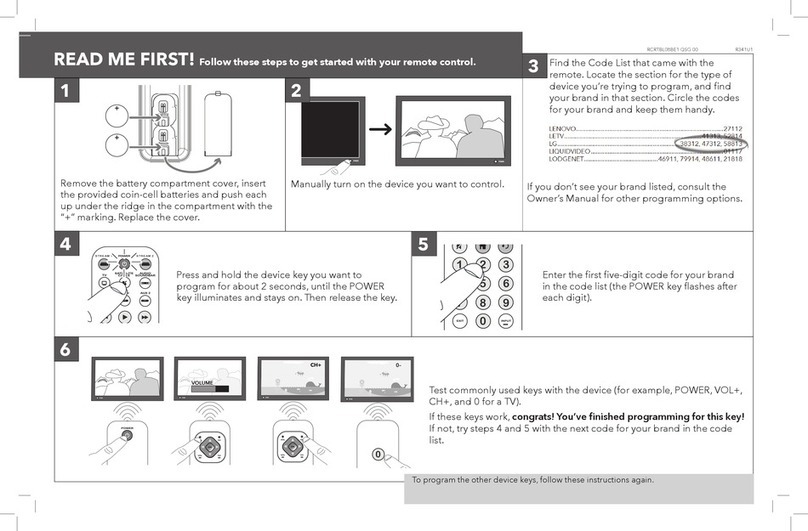
RCA RCRTBL08BE1 quick start guide

RCA

RCA RCRTBL08BE1 quick start guide

US Electronics NOVARI user guide

US Electronics

US Electronics NOVARI user guide

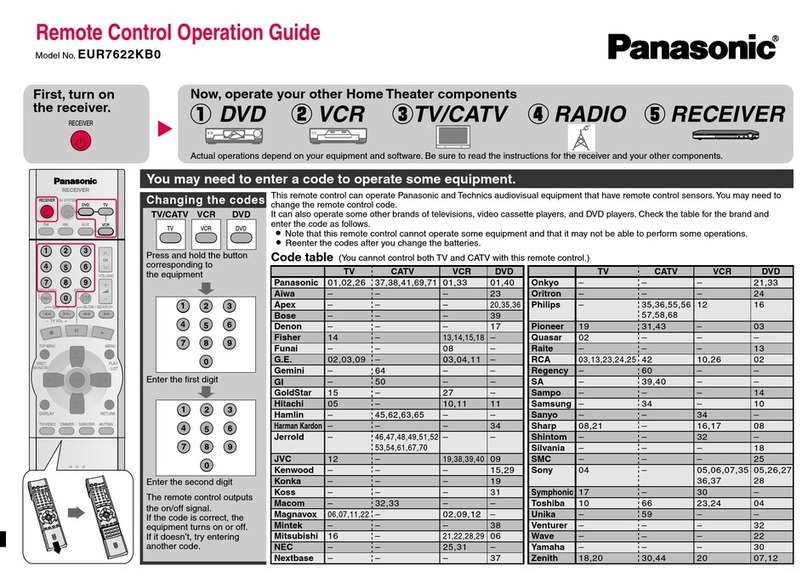
Panasonic EUR7622KB0 Operation guide

Panasonic

Panasonic EUR7622KB0 Operation guide

Bang & Olufsen Beo4 user manual

Bang & Olufsen

Bang & Olufsen Beo4 user manual

Marantz RC101 user guide

Marantz

Marantz RC101 user guide

FUTABA 9ZAP - PART2 manual

FUTABA

FUTABA 9ZAP - PART2 manual

HR Matic HR MULTI 3 quick start guide

HR Matic

HR Matic HR MULTI 3 quick start guide

Anritsu MP1777A Operation manual

Anritsu

Anritsu MP1777A Operation manual

Niles WVC100 Installation & operating guide

Niles

Niles WVC100 Installation & operating guide

Bang & Olufsen BEO6 Getting started

Bang & Olufsen

Bang & Olufsen BEO6 Getting started

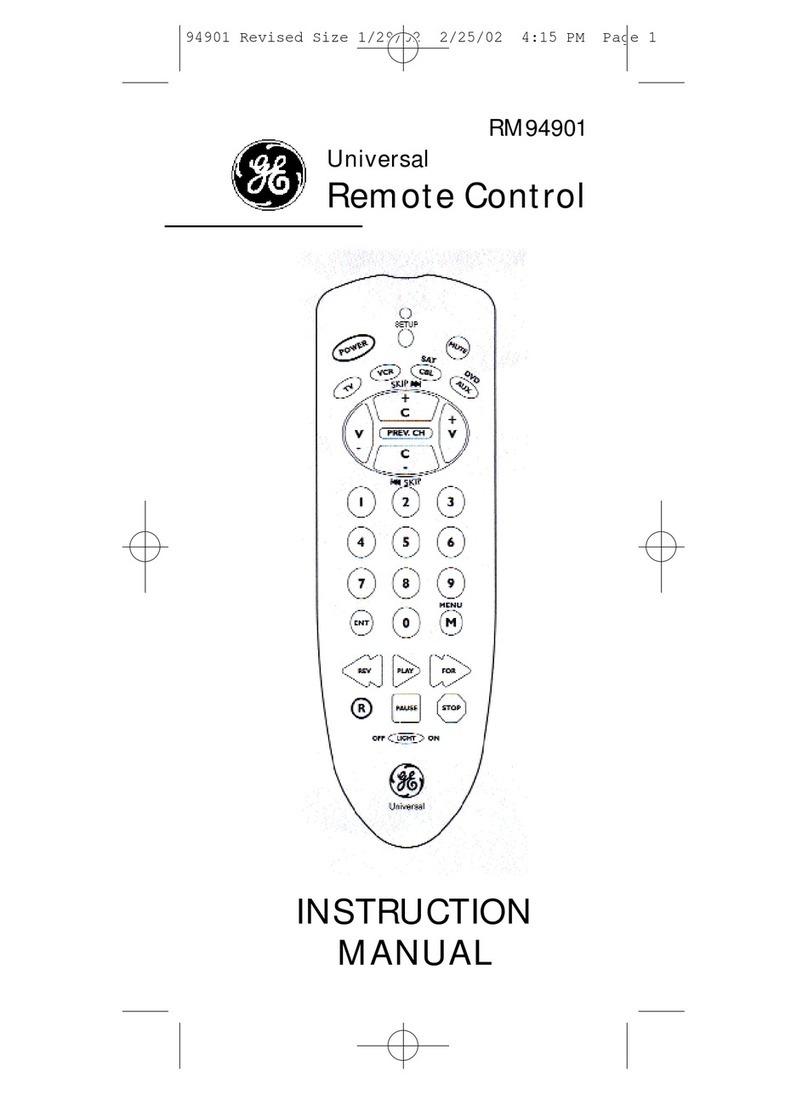
GE 94901 instruction manual

GE

GE 94901 instruction manual

FUTABA R7108SB Full manual

FUTABA

FUTABA R7108SB Full manual

Invacare G91S user manual

Invacare

Invacare G91S user manual

manuals.online logo
manuals.online logoBrands
  • About & Mission
  • Contact us
  • Privacy Policy
  • Terms and Conditions

Copyright 2025 Manuals.Online. All Rights Reserved.

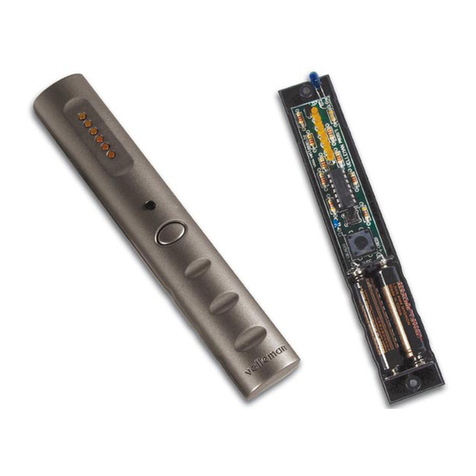
15 Channel IR remote stick
ILLUSTRATED ASSEMBLY MANUAL H8051IP-1
K8051
Specifications:
•Power supply : 2 x AAA battery (not included).
•Dimensions : 160x27x23mm / 6,3x1x0,9”
•Range : up to 20m (K8050 / indoors)
Features:
þSlim designer enclosure.
þ2-button operation.
þBuilt-in ‘all clear’ function
þ3 addresses with 15 channels each.
þEasy channel and address selection.
þCompatible with most current and upcoming IR kits.
þLow power consumption.
Total solder points: 66
Difficulty level:
beginner 1o2o3 þ4o5 oadvanced
2
VELLEMAN Components NV
Legen Heirweg 33
9890 Gavere
Belgium Europe
www.velleman.be
www.velleman-kit.com
3
1. Assembly (Skipping this can lead to troubles ! )
Ok, so we have your attention. These hints will help you to make this project success-
ful. Read them carefully.
1.1 Make sure you have the right tools:
•A good quality soldering iron (25-
40W) with a small tip.
•Wipe it often on a wet sponge or cloth, to keep it clean; then apply solder to the
tip, to give it a wet look. This is called ‘thinning’ and will protect the tip, and
enables you to make good connections. When solder rolls off the tip,
it needs cleaning.
•Thin raisin-core solder. Do not use
any flux or grease.
•A diagonal cutter to trim excess wires. To avoid injury
when cutting excess leads, hold the lead so they
cannot fly towards the eyes.
•Needle nose pliers, for bending leads, or to hold components in
place.
•Small blade and Phillips screwdrivers. A basic range is fine.
For some projects, a basic multi-meter is required, or
might be handy
1.2 Assembly Hints :
⇒Make sure the skill level matches your experience, to avoid disappointments.
⇒Follow the instructions carefully. Read and understand the entire step before you
perform each operation.
⇒Perform the assembly in the correct order as stated in this manual
⇒Position all parts on the PCB (Printed Circuit Board) as shown on the drawings.
⇒Values on the circuit diagram are subject to changes.
⇒Values in this assembly guide are correct*
⇒Use the check-boxes to mark your progress.
⇒Please read the included information on safety and customer service
* Typographical inaccuracies excluded. Always look for possible last minute manual
updates, indicated as ‘NOTE’ on a separate leaflet.
0.000
Assembly hints
4
1.3 Soldering Hints :
Mount the component against the PCB surface and carefully solder the
leads
Make sure the solder joints are cone-shaped and shiny
Trim excess leads as close as possible to the solder joint
REMOVE THEM FROM THE TAPE
ONE AT A TIME !
AXIAL COMPONENTS ARE TAPED IN THE CORRECT
MOUNTING SEQUENCE !
Assembly hints
IPESF SDK NDGB FNL
C
O
D
E
CODICE
COLORE CODIGO
DE CORES CODIGO
DE COL-
ORES
VÄRI
KOODI FÄRG
SCHEMA FARVE-
KODE FARGE-
KODE FARB
KODE COLOUR
CODE CODIFI-
CATION
DES COU-
LEURS
KLEUR
KODE C
O
D
E
0Nero Preto Negro Musta Svart Sort Sort Schwarz Black Noir Zwart 0
1Marrone Castanho Marrón Ruskea Brun Brun Brun Braun Brown Brun Bruin 1
2Rosso EncarnadoRojo Punainen Röd Rød Rød Rot Red Rouge Rood 2
3Aranciato Laranja Naranjado Oranssi Orange Orange Orange Orange Orange Orange Oranje 3
4Giallo Amarelo Amarillo Keltainen Gul Gul Gul Gelb Yellow Jaune Geel 4
5Verde Verde Verde Vihreä Grön Grøn Grønn Grün Green Vert Groen 5
6Blu Azul Azul Sininen Blå Blå Blå Blau Blue Bleu Blauw 6
7Viola Violeta Morado Purppura Lila Violet Violet Violet Purple Violet Paars 7
8Grigio Cinzento Gris Harmaa Grå Grå Grå Grau Grey Gris Grijs 8
9Bianco Branco Blanco Valkoinen Vit Hvid Hvidt Weiss White Blanc Wit 9
AArgento Prateado Plata Hopea Silver Sølv Sølv Silber Silver Argent Zilver A
BOro Dourado Oro Kulta Guld Guld Guldl Gold Gold Or Goud B
COLOR= 2...5
6
qR1 : 4E7 (4-7-B-B)
qR2 : 330 (3-3-1-B)
qR3 : 330 (3-3-1-B)
qR4 : 330 (3-3-1-B)
qR5 : 330 (3-3-1-B)
qR6 : 330 (3-3-1-B)
qR7 : 330 (3-3-1-B)
qR8 : 330 (3-3-1-B)
qR9 : 47K (4-7-3-B)
qR10 : 47K (4-7-3-B)
1. Resistors
R...
Construction
qC1 : 100nF (104,u1)
2. Ceramic Capacitor
C...
qIC1 : 14p
4. IC socket. Watch the
position of the notch!
qSW1 : Transmit
(KRS1243)
3. Transmit button
SW...
qT1 : BC639
5. Transistor
Place the IC SVK8051
(Programmed PIC16F630-I/P) into
itssocket
Pay attention to the posi-
tion of the notch!
6. IC mounting
PIN 1
1
7
1. Stick a piece of tape over the LED mounting holes. This
allows you to level the LEDs before soldering them.(see
fig.1.0).
Complete the assembly as follows :
2. Insert the LEDs BUTDO NOT SOLDER
THEM YET! Mind the polarity ! (fig 2.0)
MIND THE POLARITY !
!
Construction
7. Mounting the LED readout
FIG 1.0
FIG 2.0
qLD1
qLD2
qLD3
qLD4
qLD5
qLD6
CATHODE
8
3. Flip the PCB and guide all LEDs trough their holes
(fig 3.0).
=> Make sure that all LEDs touch the tape!
4. Solder the connections (fig 4.0).
5. Remove the tape.
Construction
FIG 4.0
FIG 3.0
9
2 Holes must be drilled into the enclosure.
GFollow next steps exactly!
GPay attention to the correct diameter.
Make sure the holes are free of burrs.
STEP 1
Drawing 5.0 provides a drill pattern for the ‘select’ button.
•Mark the centre of the hole with a pencil.
•Drill the hole using a 3.5mm drill.
Enclosure preparation
8. Enclosure preparation
FIG 5.0
10mm
10mm
10
STEP 2
Drawing 7.0 provides a drill pattern for the IR-LED.
•Close the enclosure with the 2 supplied screws. Mark
the centre of the hole to be drilled on the top of the
enclosure (Fig 6.0). Make sure that the centre of the
hole is in the middle of the housing and 7mm from the
left hand side (Fig 7.0)
LEDs
•Drill the hole with a 5,5mm drill.
GMake sure the edges of the holes are
completely smooth!
Dia 5.5
7mm
FIG 6.0 FIG 7.0
Enclosure preparation
TOP
BOTTOM