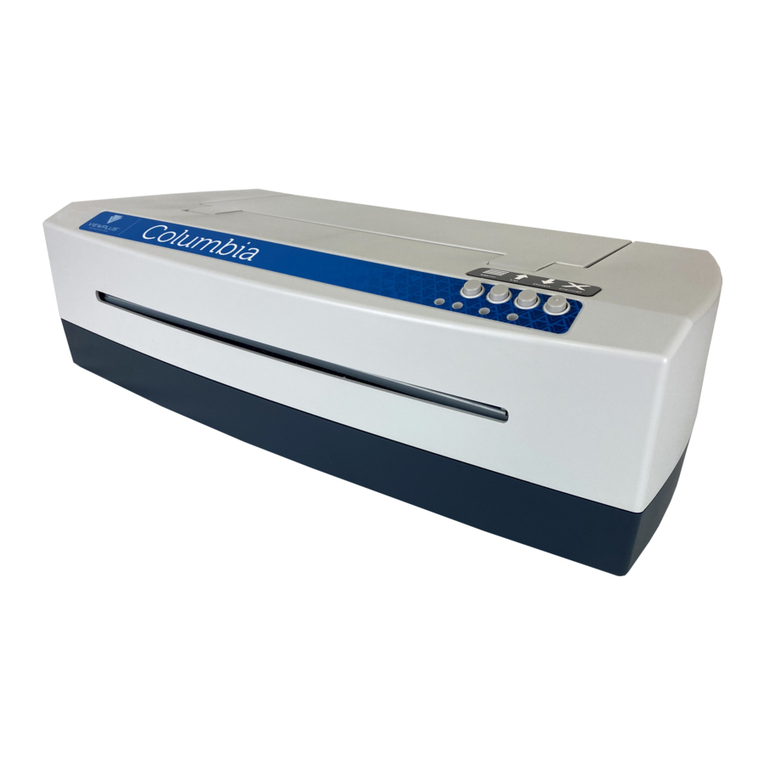
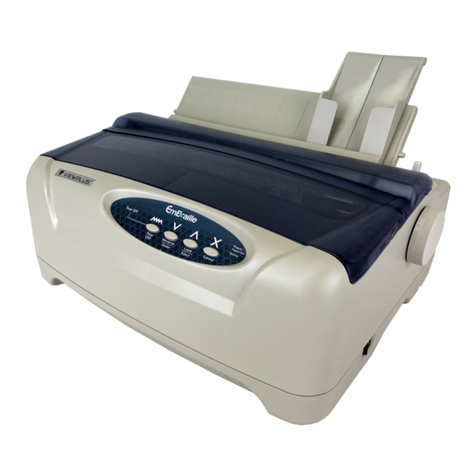
ViewPlus Emprint VPT1300-00 User manual


!"
# "
$ %"&
&'"
(
# &""
$ &)
# *"+,
$ -.!/!
0'
) #"-
&
% +!,
( #,
0
# %"
$ )'
1!,

# /!,
$ 2
$
# %
$ ,&&
,!
# !"
$ ,
/,"'
) &"
,%)"
# ,
$
3 #""!&"+,
# #""
$ 0-&"+,
,!&"+,
3 "!4'
# "
$ 4'
.!!4'!"

!"
# "
"(-"!$,5!',
06
Congratulations on purchasing a ViewPlus Emprint haptic color printer Powered by Tiger! Share
documents with virtually anyone using color and tactile printouts. The ViewPlus Emprint combines reliable
Tiger Technology with HP uality color ink resolution. The ViewPlus Emprint Powered by Tiger is the first
full-color ink Braille and tactile graphics printer.
The ViewPlus Emprint Powered by Tiger adds color ink print to a tactile output using a user-friendly USB
interface. Print on many different types of media, from lightweight copy paper to heavy cardstock, up to 9
inches wide.
Patented roller-die technology means ViewPlus embossers print at a 20 dots-per-inch graphic resolution
and automatically convert colors and gray scale into variable dot heights. The sound-absorbing roller die
makes Powered by Tiger embossers much uieter than other Braille printers.
ViewPlus embossers use the standard Windows printer driver to mix text and graphics in mainstream
Windows software like Word and Excel. Use the computer to adjust settings and preferences. Print
documents exactly how they appear on the screen.
Use the Tiger Software Suite to take braille translation and tactile graphics to a new level. The Tiger
Formatter is a Microsoft add-in that gives you advanced tools for translation and embossing. Tiger
Designer enables basic editing of documents for uick drawing and braille needs. Translator serves as a
basic translation tool for almost any Windows software- including PowerPoint and Corel Draw.
Keep up to date by checking the ViewPlus Technologies, Inc. Internet site at:
http://www.ViewPlus.com
ViewPlus Emprint Model Number:
VPT1300-00
USER'S Manual
$ %"&
%"&7*
This e uipment has been tested and found to comply with the limits for a Class B digital device, pursuant
to Part 15 of the FCC Rules. Operation is subject to the following two conditions: (1) this device may not
cause harmful interference, and (2) this device must accept any interference received, including
interference that may cause undesired operation. If this e uipment does cause harmful interference to
radio or television reception, which can be determined by turning the e uipment off and on, the user is
encouraged to try to correct the interference by one or more of the following measures:

Reorient or relocate the receiving antenna.
Increase the separation between the e uipment and receiver.
Connect the e uipment to an outlet on a circuit different from that to which the receiver is
connected.
Consult the dealer or an experienced radio/TV technician for help.
FCC Warning: Changes or modifications not expressly approved by the party responsible for compliance
could void the user's authority to operate the e uipment.
Note the following:
The use of a non-shielded interface cable with the referenced device is prohibited.
The length of the power cord must be 3 meters (10 feet) or less.
"&7!8
This digital apparatus is in conformity with standard NMB-003 of Canada.
Cet appareil num?ri ue est conforme à la norme NMB-003 du Canada.
"&7('8
Bescheinigung des Herstellers/Importeurs:
Hiermit wird bescheinigt, dass der Drucker der Maschinenlärminformationsverordnung 3. GSGV,
18.01.1991 entspricht: Der höchste Schalldruckpegel beträgt 70 dB(A) oder weniger gemä?? EN27779-
1991.
"&78
Warning: This product meets the interference re uirements of EN55022. In a domestic environment, this
product may cause radio interference in which case, the user may be re uired to take ade uate
measures.
"&798
This apparatus complies with CISPR22 re uirements.
"
EN55022 ClassB:1998 Emissions series
EN55024:1998 Immunity characteristics
EN61000- -2:2000 Power line harmonics
EN61000- - :2001 Power line flicker
EN61000-4-2:2001-04 Electrostatic discharge
EN61000-4- :2002-09 Radiated susceptibility
EN61000-4-4:2004 Electrical fast transient/burst

EN61000-4-5:2005-11 Surge
EN61000-4-6:2004-11 Conducted immunity
EN61000-4-8:2001-0 Magnetic Field Immunity
EN61000-4-11:2004 Input voltage interruptions/DIPS
&'"
Read all of these safety instructions before using the embossing printer. In addition, follow all warnings
and instructions marked on the embossing printer itself.
Do not place embossing printer on an unstable surface.
Do not place embossing printer near a radiator or heat source.
Do not block or cover slots and openings in the embossing printer's cabinet; do not insert objects
through slots.
Use only the type of power source indicated on embossing printer's label.
Connect all e uipment to properly grounded electrical outlets.
Do not use frayed or damaged power cord.
The use of an extension cord with the embossing printer is not recommended.
Unplug embossing printer before cleaning it; always clean it with a piece of damp cloth only.
Do not spill li uid into embossing printer.
Except as specifically explained in the user's manual, do not attempt to service the embossing
printer by yourself.
Detach the embossing printer from power source and refer to ualified service personnel under
the following conditions:
oIf the power cord or plug is damaged.
oIf li uid has entered the embossing printer.
oIf the embossing printer has been dropped or the cabinet is damaged.
oIf the embossing printer does not operate properly or exhibits a distinct change in
performance.
Only adjust those controls that are covered by the operating instructions.
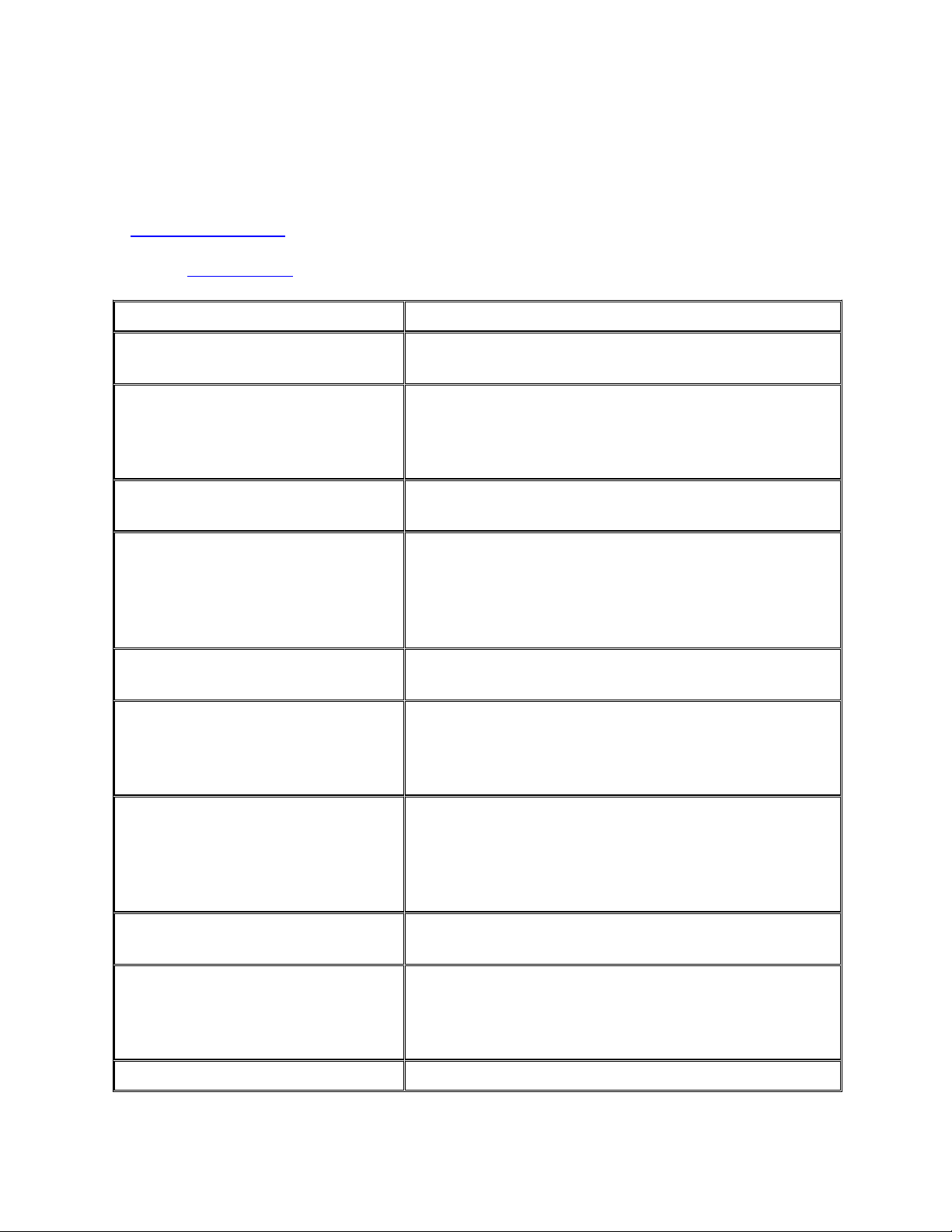
(
# &""
ViewPlus Emprint
Character Sets DotsPlus
Braille - free programmable character sets
Paper Feed Method single sheet
150 sheet input tray (copy paper) or 60 sheet for braille
paper or card stock or up to 20 envelopes, labels or
banners.
Paper Size A4, US Letter (8.5 x 11in.), Legal (8.5 x 14in.),
envelopes
Paper Weight Letter 20-28 lb (75 to 105 g/m2)
Envelopes 20 to 24 lb (75 to 90 g/m2)
Banner 15 to 24 lb (60 to 90 g/m2)
Card Stock up to 110 lbs (200 g/m2)
Photo paper up to 1 0 lbs (2 0 g/m2)
Power Supply
100 - 240 VAC (? 10%)
Frequency: 50/60 (? %)
Power Consumption Standby 21 W
Average Ink Print 26 W
Average Emboss Print 64 W
Heavy Embossing 110 W
Embosser Dimensions
Width
Depth
Height
Weight
2 .5 in. (597 mm)
16.8 in. (427 mm) - incl. Extension and Input tray
6.7 in. (170 mm)
24.4 lbs. (11 kg)
Connectivity
1 USB (1.1, 2.0)
Operating Conditions
Operating Temperature
Storage Temperature
Relative Humidity
59 to 95 ?F (15 to 5 ?C)
-4 to 158 ?F (-40 to 70 ?C)
20 to 80% RH (non condensing)
Duty Cycle up to 000 pages per month

Lifetime 15,000 hours at 15% duty cycle
$ &)
Tiger drivers for Windows 2000/XP (Home, Professionsl, Tablet) and Windows 2003 Server are included
with your printer. Follow the instructions from the installation program.
# *"+,
Remove the embossing printer and all its accessories from its packaging.
Inspect the ViewPlus embossing printer and its packaging for any damage.
&-"+,!. If any damage occurred during shipping, most shipping
companies re uire the box and the packing material in order to settle the insurance claim. The
packing material must also be used to ship the ViewPlus embosser for warranty maintenance
service.
Follow the ViewPlus Emprint Setup Instructions included with your other materials.
$ -.!/!
An HP duplexer (rear paper path extension) is mounted in the back of the ViewPlus Emprint. It is
mounted with snap locks which can be released by pressing the two buttons on either side of the
extension. Make sure the duplexer is firmly attached before operating the embossing printer.
The lid on top of the embossing printer lifts up and can easily be taken off without any hooks or
snaps. During operation of the ViewPlus Emprint make sure the lid is in place and is closed.
0'
The paper output tray has been removed prior to shipment in order to prevent damage. The tray has a
pull out extension which is lighter grey colored. The extension slides out and then the upper portion folds
out to extend the tray to its full length. There are metal brackets with pins on either side of the front
opening of the case above the paper input tray. Line up the slots on the side of the tray over the pins and
slide the tray in until it drops into place. For convenience the output tray can be removed to load new
media on the input tray. An optional stack paper tray is available for larger stacks of paper. This can be
purchased separately.
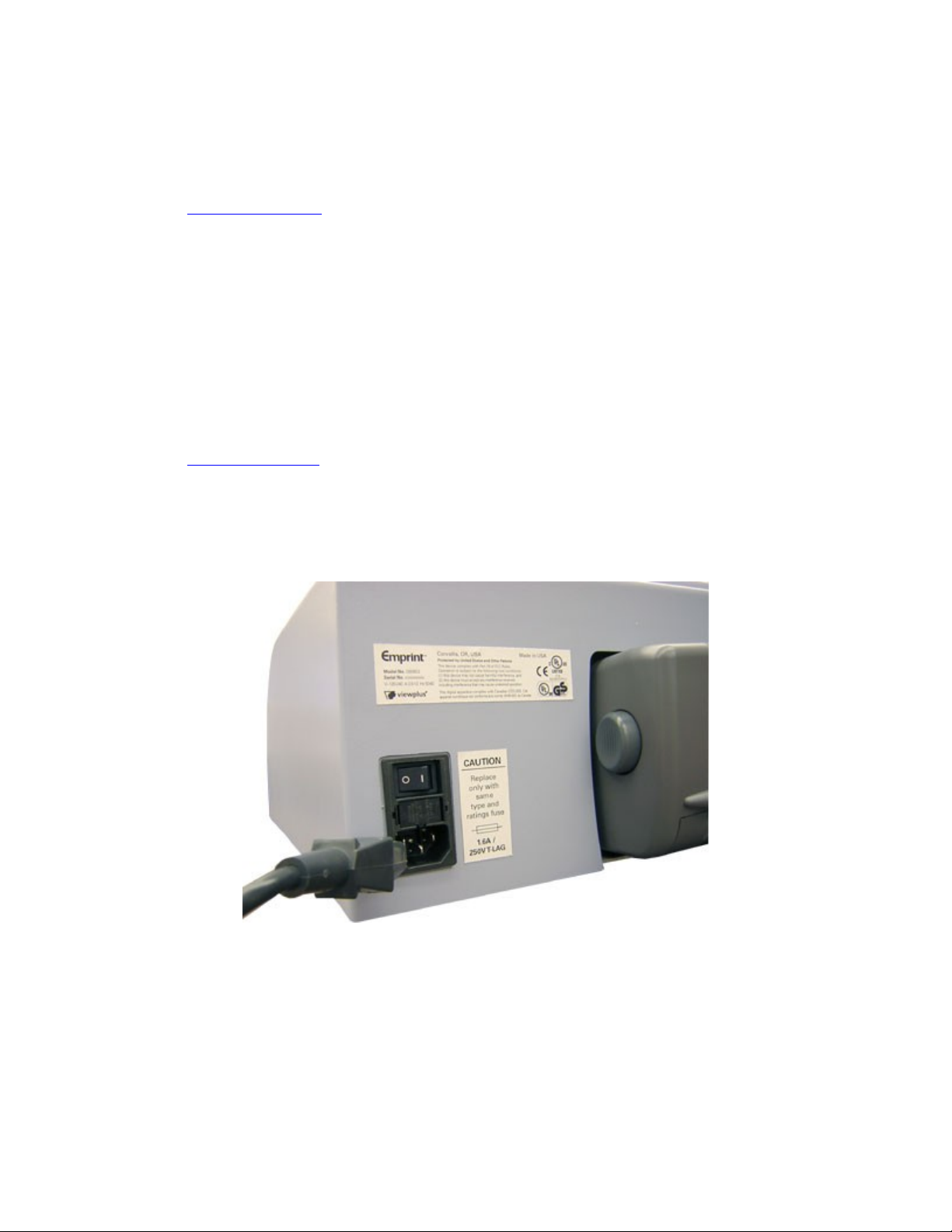
) #"-
The ViewPlus Emprint has a power module with a power socket, on/off switch, and a
compartment holding two fuses on the back side. A sticker next to the power module indicates
what specific fuses are re uired for the embossing printer. If the embossing printer will not power
on, it might be necessary to replace the fuses.
Shows the power module in the back of the embossing printer
Insert the power cable plug into the Emprint power connector and the other end of the power
cable into a grounded outlet or ViewPlus recommends connecting to a surge protector.
Turn the embosser on by pressing the power switch to the On or "I" position. The part of the
switch towards the center of the embossing printer should be pressed down.
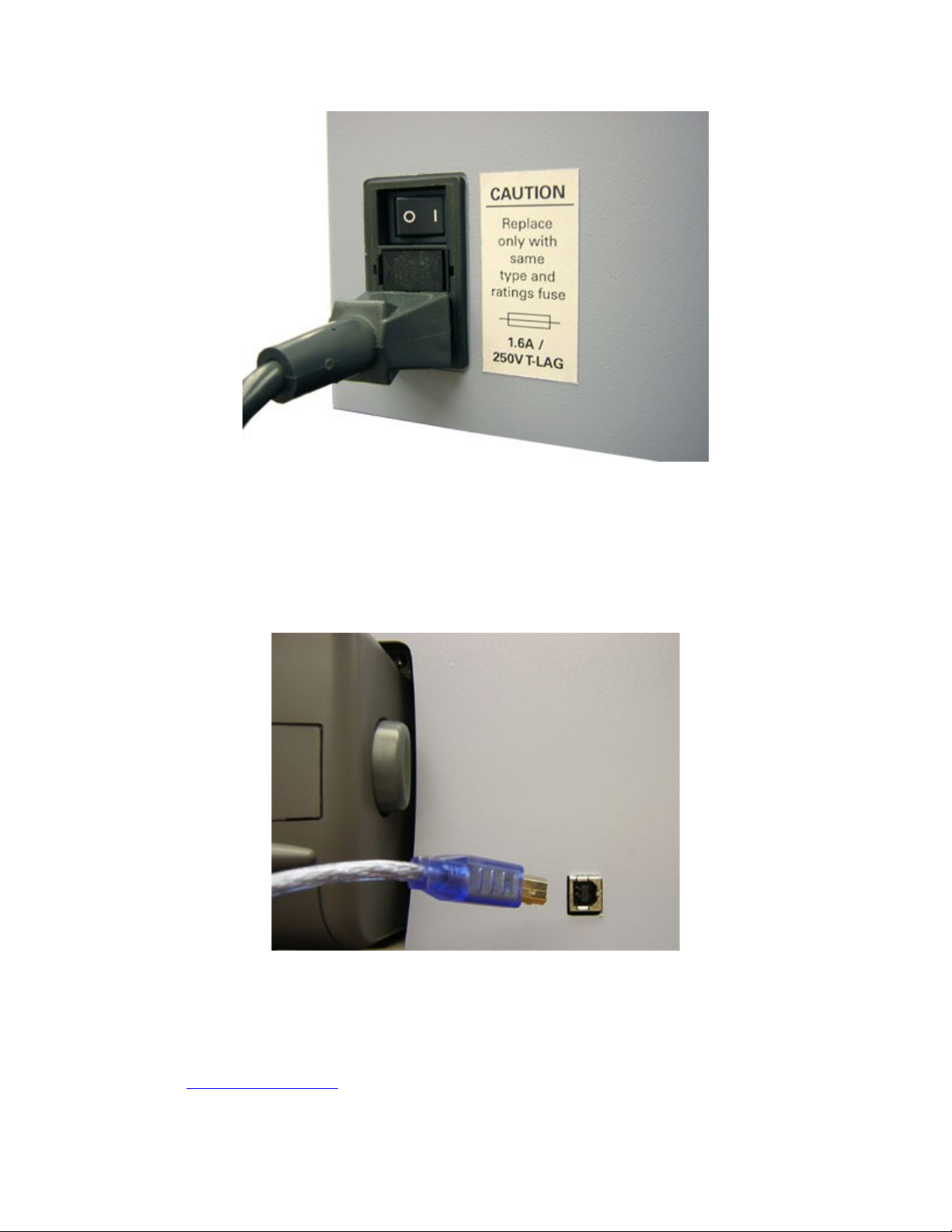
Shows the power switch in the back of the embossing printer
Attach data cable.
oA USB printer cable was included in your box.
oAttach the flat end of the USB data cable to the USB port of the host computer, and then
attach the other end to the embossing printer. The USB connection is located on the back
side of the embossing printer.
Shows the USB connector in the back of the embossing printer
&
Table of contents
Other ViewPlus Printer manuals