4www.WalkinPets.com
Teach Your Pet to Use the Walkin’ Wheels®
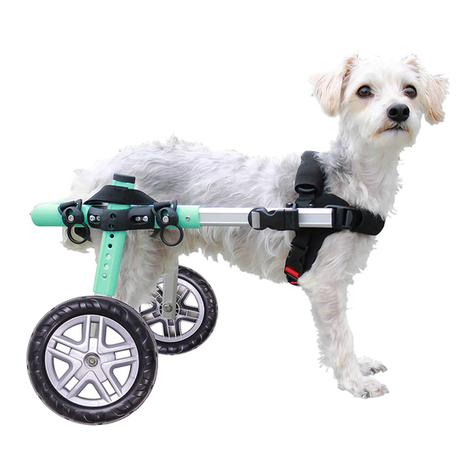
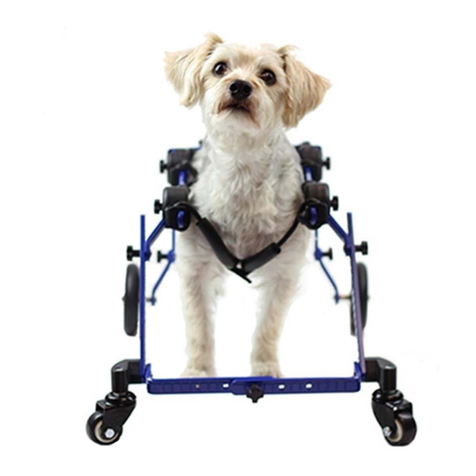
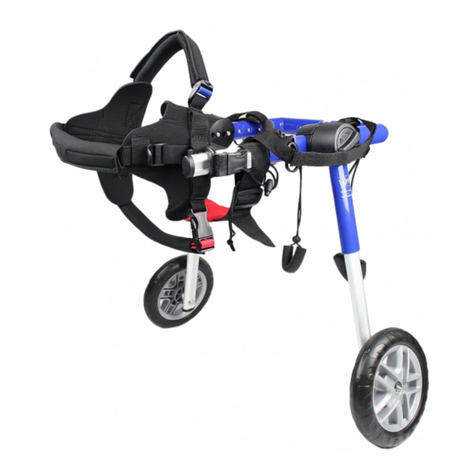
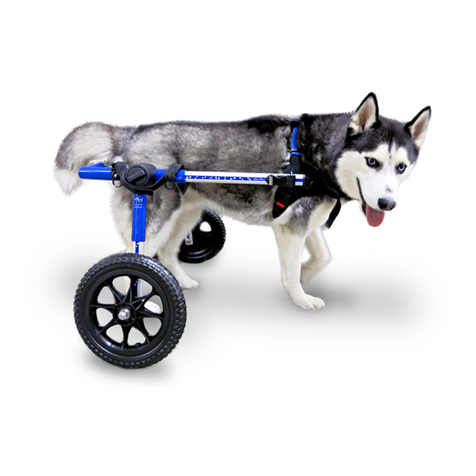
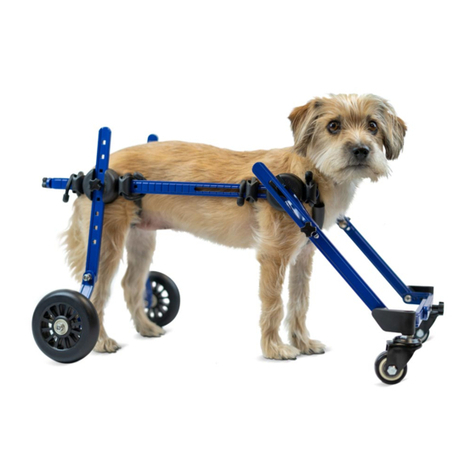
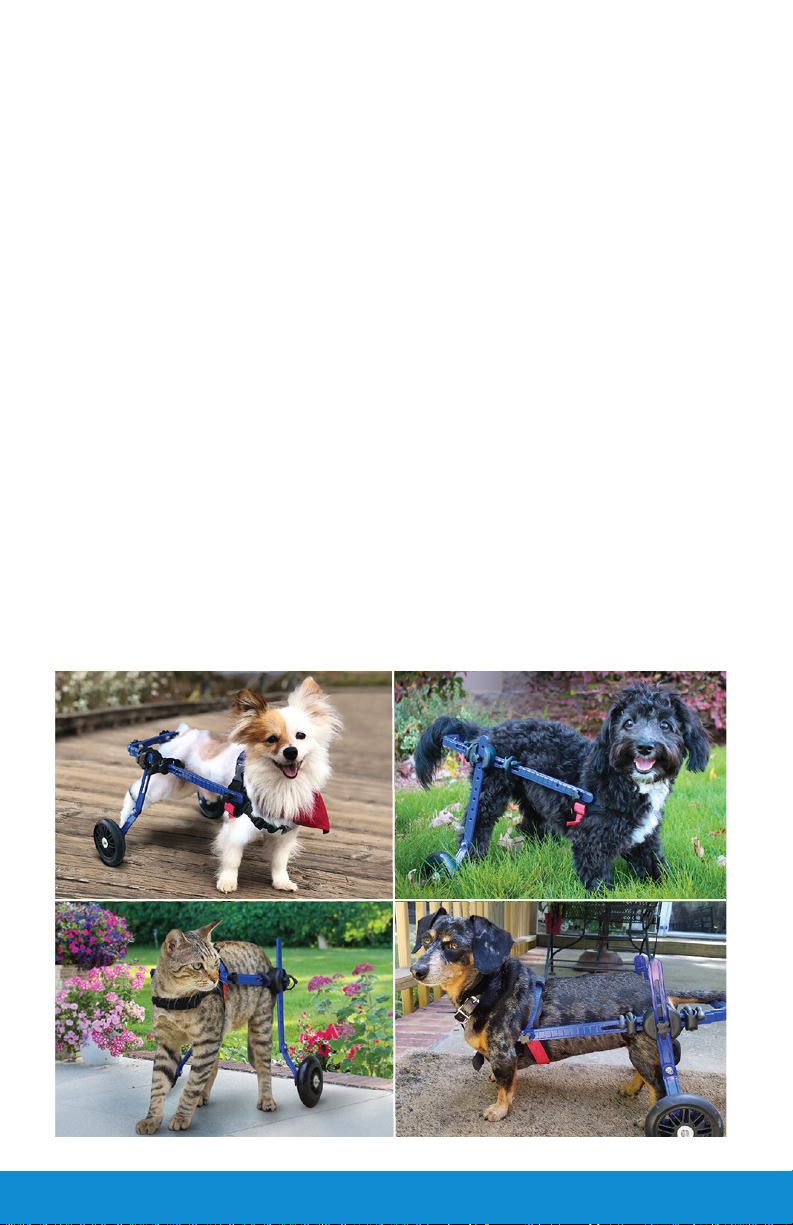
We created the Walkin’ Wheels®with the intention that you will adjust the
wheelchair, put your pet in it, and in a few moments watch him/her run-
ning and playing again. It can happen that way, but it doesn’t always.
A wheelchair can be an adjustment for an animal. To some, there is a
strange device following him/her around making odd noises and
getting caught on furniture and doorways. They will adapt to these chang-
es, but need a little time.
We recommend you be calm, quiet, and slow when putting on the wheel-
chair for the first time. Give your pet lots of stroking and
reassurance. Treats help, too!
1. When starting this process we suggest that you use really good
treats to reward your pet for positive reinforcement/behavior.
Dog biscuits are usually not good enough for him/her to get
excited about. You won't need to keep using extra special treats
every day, just in the beginning of the training process.
A hungry pet is a motivated pet! Work with your pet before you
have fed him/her a meal. She/he will be more eager to pay atten-
tion and earn the food reward if he is hungry.
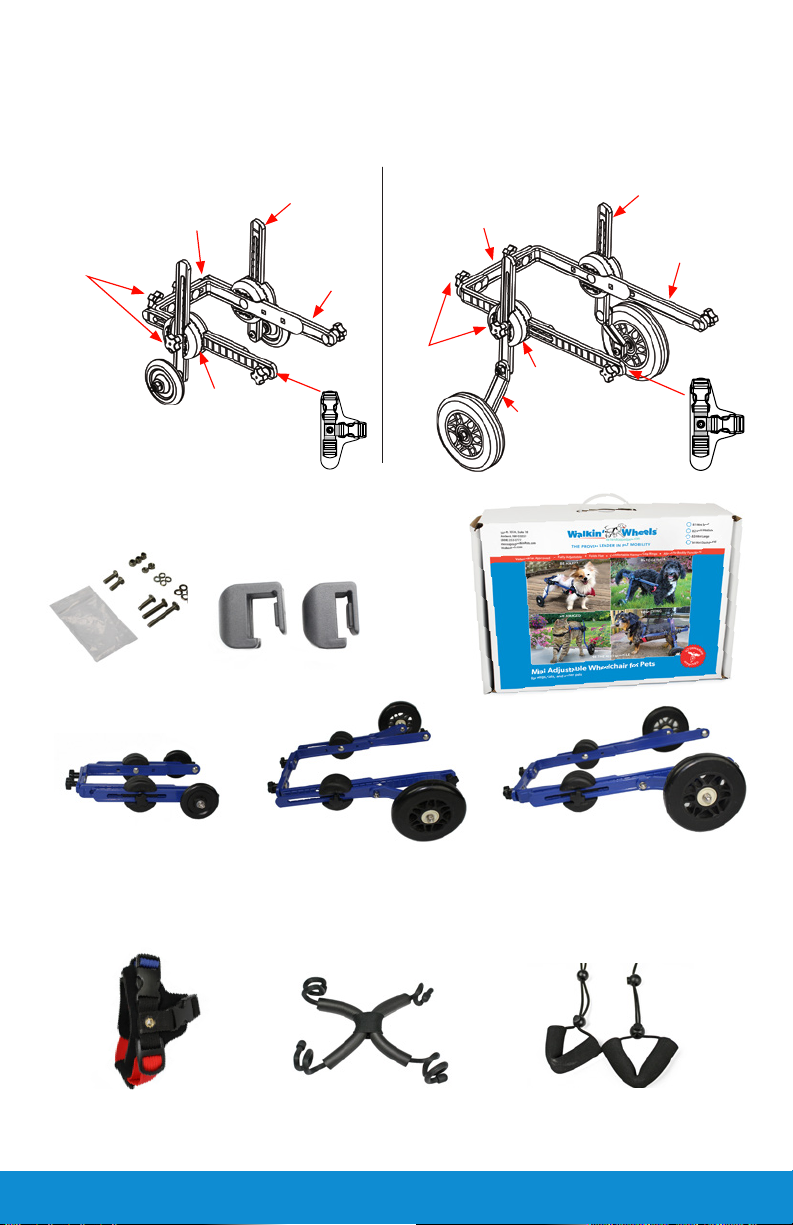
2. Do not immediately put your pet in the wheelchair. Assemble
the wheelchair and leave it in an area where your pet can see it,
smell it, and touch it.
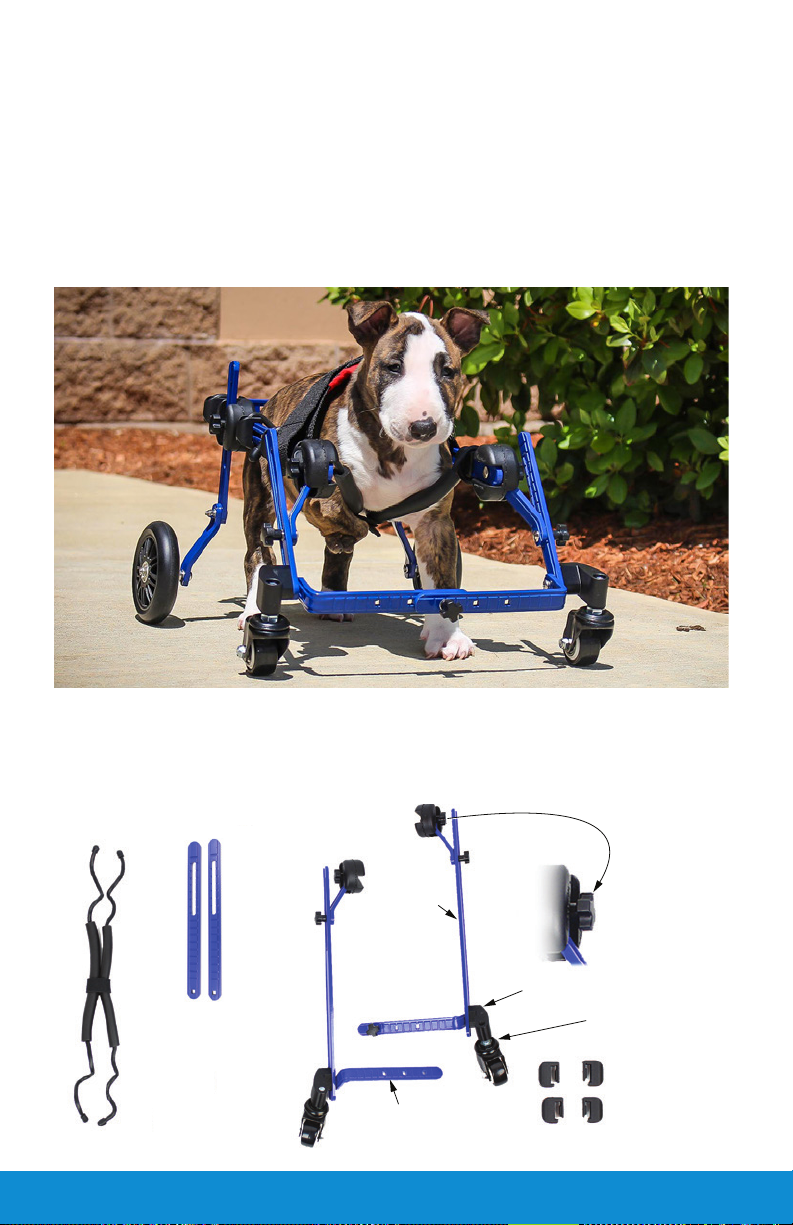
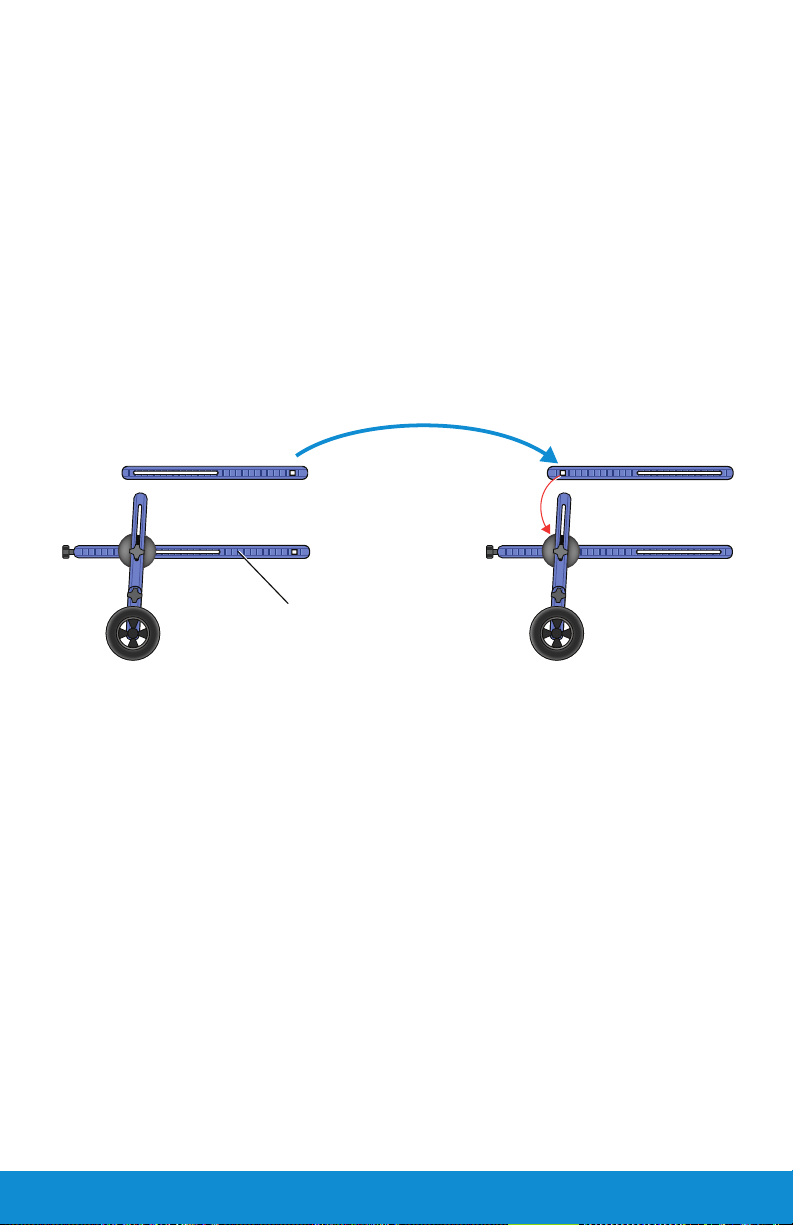
3. Use Quick Start Guide on next page.
4. Aer your pet is in the wheelchair hold the food reward right at his/
her nose level, and feed several pieces. Then you can move one
foot backwards, again holding the food reward in front of you.
She/he should then walk toward you to get the treat. Before you
know it, she/he is walking in the Walkin' Wheels! Again, give him/
her a treat and positive praise, along with when you see him/her
pee or poo outside in wheelchair.
5. Work in very short (5-10) minute sessions, several times a day to
start off. Give your pet rest periods between each session.
Note: Please do not leave your pet unattended in the wheelchair. Do not
leave your pet in it all day. One hour is recommended.