6 Confidential
3Overview
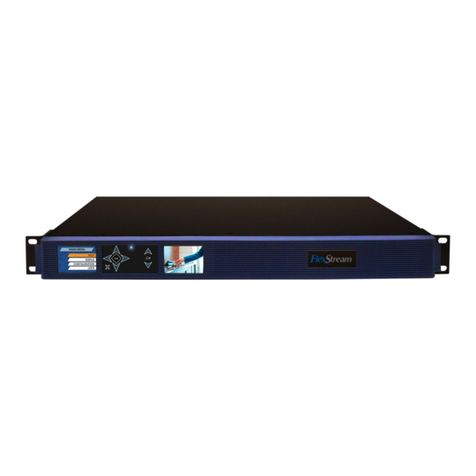
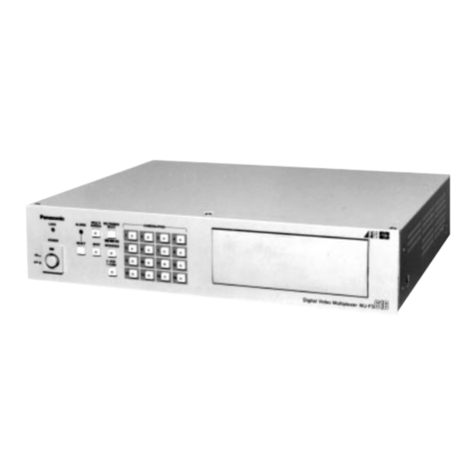
The MX-GS200 combines A/V programming, digitalsignage data, device commands & controls, and
other content onto a single Multi-program MPEGTransport Stream (MPTS) for distribution over coax or
wireless networks. The input streams are eithergenerated by the MX-GS200 streamer/data carousels or
provided as an input to the MX-GS200 over the gigabit Ethernet connections. As shown in Figure 1, the
output of the MX-GS200 is modulated onto a single carrierfrequency and combined with other signals
on the RF network where it is delivered to TVs, computers, the RX-WP100digital signage receiver, and
other Flex-DK enabled devices. The integrated broadcast quality multiplexer ensures A/V compatibility
with consumer and commercial TVs.
Broadcast transports, such as satellite, terrestrial TV, and cable TV distribute one transport stream per
broadcast frequency. Devices that create transport streams typically create one audio/video (A/V)
program per transport stream. A multiplexer, such as the one in the MX-GS200, can combine multiple
transport streams containing one A/V program into one transport stream containing many A/V
programs, thus enablingthe distribution of multiple A/V programs in asingle frequency. This increases
the program distribution capability of the satellite, cable, orterrestrial broadcast transports.
A programstream within the MPTS can also contain one or more streams of data. Data streamscan be
used to deliver files to enabled receivers. The RX-WP100receives commands, configuration, software
updates, display controls,and digital signage content usinga datastream. The FlexDK SDK can be
integrated into TVs, computers, orother embedded devices to enablefile reception and other features.
Broadcast transports, such as cable and terrestrial TV, are used distribute programming in stadiums,
hotels, hospitals, houses of worship, large retail stores, apartment buildings, education facilities and
commercial office space. All of these venuescan take advantage of the MX-GS200 features.
The multiplexer input streams cancome from a numberof sources that support the MPEG2 Transport
Stream as an output. This includes:
Commercial media players such as those from BrightSign®
Video capture devices which capture HDMI or VGA images and convert to a transport stream.
I.e. Epiphan VGA/DVI Broadcaster
Digital video encoders both professionaland consumer
Personal computersoftware suchas VLC or ffmpeg
Data from othermultiplexers.
These streams enter multiplexer over the gigabit Ethernet ports using the UDP or UDP RTP protocols.
The MPTS output can be USB or Ethernet. It can be consumed directly by LAN based computers, IPTV
set top boxes, or network TVs, or delivered to TVs or traditional broadcast receivers when output to a
modulator.
When usingtraditional broadcast receivers, the MPTS must be encoded, signaled, and modulated so as
to be compatible with the receiving equipment. For example, the ATSC transport cannot exceed 19.29
mb/s, the videomustbe MPEG2 encoded, the audio AC3format, and PSIP signaling mustbe included.