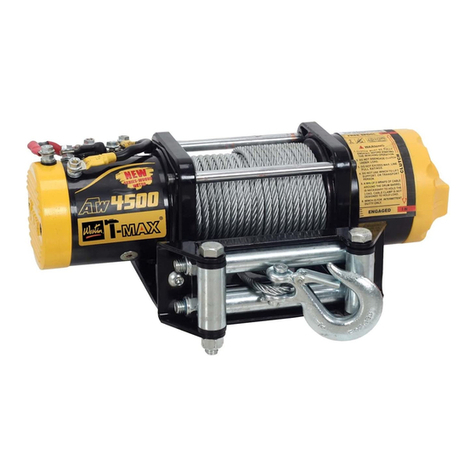
VEHICLE RECOVERY ELECTRIC WINCH FITTING INSTRUCTIONS
T-MAX
PERFORMANCE SERIES
snatch block and double line arrangement.
12. Draping a heavy blanket or similar object over the extended winch cable is recommended as it will dampen any back
lash should a failure occur.
13. Neat, tight spooling avoids cable blinding, which is caused when a load is applied and the cable is pinched between
the others. If this happens, alternatively power the winch in and out. Do not attempt to work a bound cable under load,
free by hand.
14. Apply blocks to wheels when vehicles are on an incline.
15. Battery:
- Be sure that the battery is in good condition.Avoid contact with battery acid or other contaminants.
- Always wear eye protection when working around a battery.
- Have the engine running when using the winch, to avoid attening the battery.
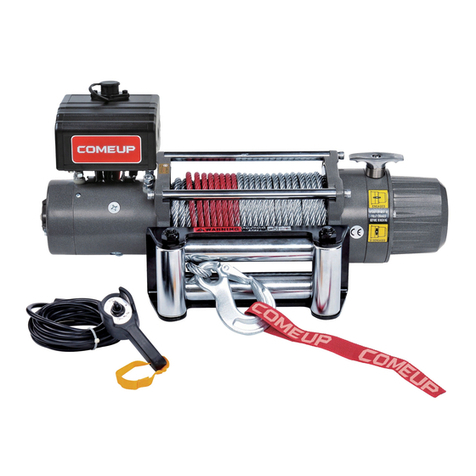
16. Winch cable:
- Be sure that the cable is in good condition and is attached properly.
- Do not use the winch if cable is frayed.
- Do not move the vehicle to pull a load.
- Do not replace the cable with a cable of lesser strength.
- The life of cable is directly related to the use and care it receives. Following its rst and subsequent uses, a cable
must be wound onto the drum under a load of at least 500lbs (230kg) or the outer wraps will draw into the inner wraps
and severely damage the cable during winching. The rst winch use should be a familiar run while in a relaxed,non-
recovery situation. Spool out the cable until the red cable mark appears (about ve wraps on the drum), when rewind
the cable onto the drum under a load of 500lbs (230kg) or more. This will slightly tension and stretch the new cable
and create a tight cable wrap around the drum. Failure to do so may result in cable damage and reduced cable life.
- When the cable is replaced, be sure to apply locktite, or the cable clamp thread. Tighten the clamp screw properly but
do not over-tighten. The locktite will prevent loosening of the screw in arduous conditions.Locktite 7471 primer and 222
Thread Locker are recommended.
- When replacing the steel wire rope or the ber rope, be sure to disconnect the winch cable to "+" (positive) of the
battery, and disengage the clutch by move the clutch handle to the "OUT" position.
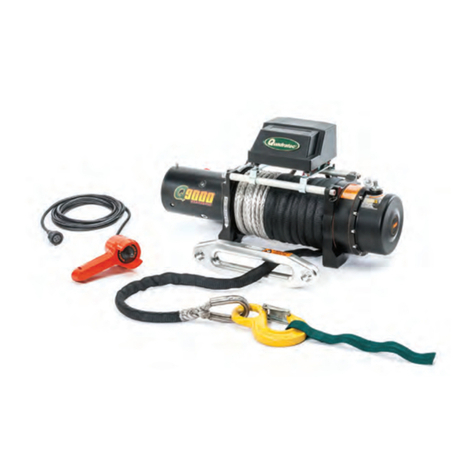
Should you choose ber rope to take place of the winch steel wire rope,
- Please make sure this ber rope preferred can with stands the maximum capacity of your winch. Always bear in mind
the working load limitation of this ber rope, and never exceed the working load limitation or
Shock load of your rope.
- Fiber rope should be attached to winch drum properly, always remain enough wraps on the winch drum when
extending rope. Failure to do this could result in rope parting from the drum. Serious personal injury or property
damage may result.
- Please make sure the ber rope in good condition, without cuts or pulled strands. Fiber rope will fail in case worn,
damaged, overloaded, or not properly maintained.
- Do not stand within the lash-back area.
- Do not use over rough surfaces without chafe protection.
- Do not bend around unprotected, sharp corners.
T-MAX manufactures high performance winch synthetic ropes, which are made with Dyneema SK-75 ber.
Please contact T
-MAX ofcial distributors or write to
[email protected] for more information.
17. Do not attempt to exceed the pulling limits of this winch.
18. Do not drive your vehicle to assist the winch in any way. Vehicle movement in combination with winch operation may
overload the cable, the winch itself or cause damaging shock loads.
19. Shock loads when winching are dangerous! A shock load occurs when an increased force is suddenly applied to the
cable. A vehicle rolling back on a slack cable may induce a damaging shock load.
3