manuals.online logo
Brands
  1. Home
  2. •
  3. Brands
  4. •
  5. Analytic Systems
  6. •
  7. Batteries Charger
  8. •
  9. Analytic Systems BCD180 Series User manual

Analytic Systems BCD180 Series User manual

Other manuals for BCD180 Series

1

Other Analytic Systems Batteries Charger manuals
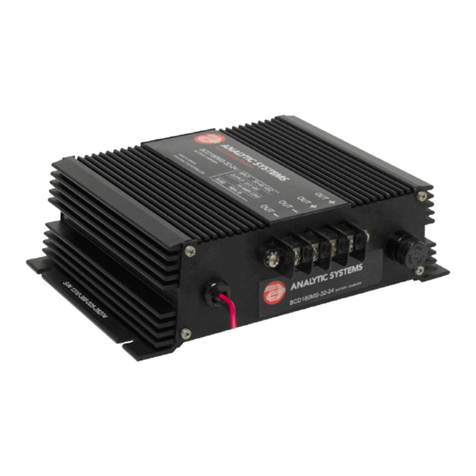
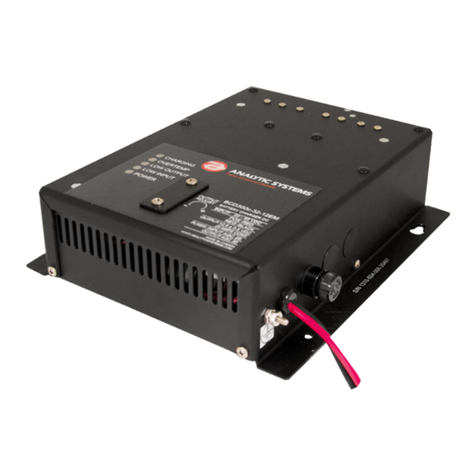
Analytic Systems BCD180 Series User manual
Analytic Systems

Analytic Systems BCD180 Series User manual

Analytic Systems BCD605 User manual

Analytic Systems

Analytic Systems BCD605 User manual

Analytic Systems 99381 User manual

Analytic Systems

Analytic Systems 99381 User manual
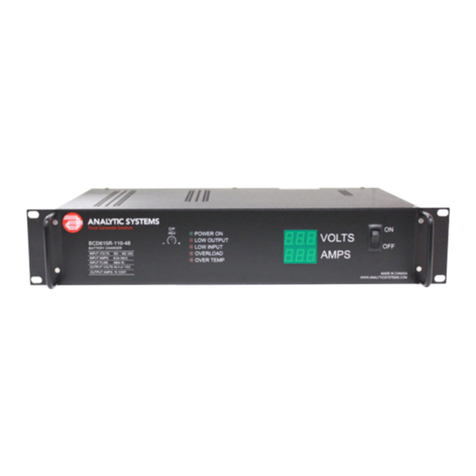
Analytic Systems BCD615R User manual

Analytic Systems

Analytic Systems BCD615R User manual
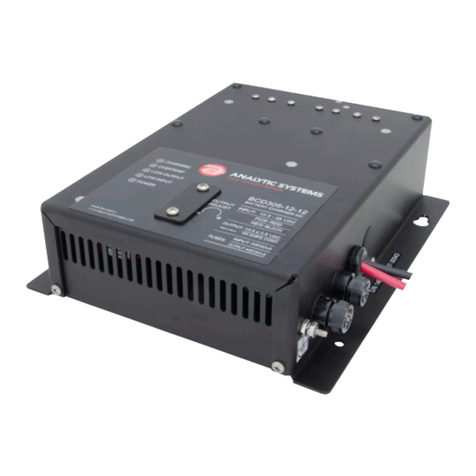
Analytic Systems BCD305 Series User manual

Analytic Systems

Analytic Systems BCD305 Series User manual

Analytic Systems BCA1505U-24DW User manual

Analytic Systems

Analytic Systems BCA1505U-24DW User manual

Analytic Systems BCD615-48-48 User manual
Analytic Systems

Analytic Systems BCD615-48-48 User manual

Analytic Systems BCD310 Series User manual
Analytic Systems

Analytic Systems BCD310 Series User manual

Analytic Systems BCD305-12-24 User manual
Analytic Systems

Analytic Systems BCD305-12-24 User manual

Analytic Systems BCA1510MS-24 User manual

Analytic Systems

Analytic Systems BCA1510MS-24 User manual

Analytic Systems BCA310-110-48 User manual
Analytic Systems

Analytic Systems BCA310-110-48 User manual

Analytic Systems BCD90 User manual

Analytic Systems

Analytic Systems BCD90 User manual

Analytic Systems BCA1550MW User manual
Analytic Systems

Analytic Systems BCA1550MW User manual

Analytic Systems BCA150 User manual

Analytic Systems

Analytic Systems BCA150 User manual
Analytic Systems BCA610V Series User manual
Analytic Systems

Analytic Systems BCA610V Series User manual

Analytic Systems BCDi320 User manual

Analytic Systems

Analytic Systems BCDi320 User manual
Analytic Systems BCD805W-24-24 User manual
Analytic Systems

Analytic Systems BCD805W-24-24 User manual

Analytic Systems BCA1000V User manual

Analytic Systems

Analytic Systems BCA1000V User manual
Analytic Systems BCA1000R User manual

Analytic Systems

Analytic Systems BCA1000R User manual
Analytic Systems BCA1000 User manual

Analytic Systems

Analytic Systems BCA1000 User manual
Analytic Systems BCD1050-32 User manual

Analytic Systems

Analytic Systems BCD1050-32 User manual

Analytic Systems BCA310 Series User manual

Analytic Systems

Analytic Systems BCA310 Series User manual

Analytic Systems BCD300 series User manual

Analytic Systems

Analytic Systems BCD300 series User manual

Analytic Systems BCA610 Series User manual

Analytic Systems

Analytic Systems BCA610 Series User manual

Popular Batteries Charger manuals by other brands

EVBox BusinessLine manual

EVBox

EVBox BusinessLine manual

Goobay 71808 user manual

Goobay

Goobay 71808 user manual

Kogan KACRDQIS4XA user manual

Kogan

Kogan KACRDQIS4XA user manual

Sealey WCB3 quick start guide

Sealey

Sealey WCB3 quick start guide

Vanner SP00143/181 owner's manual

Vanner

Vanner SP00143/181 owner's manual

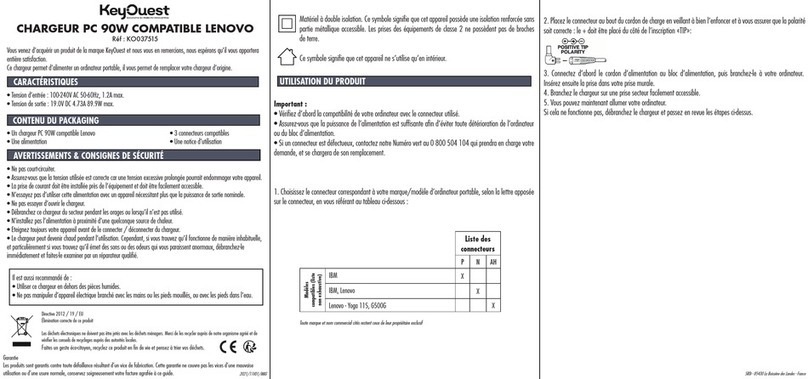
KeyOuest KO037515 quick start guide

KeyOuest

KeyOuest KO037515 quick start guide

Enplus Silk Series user manual

Enplus

Enplus Silk Series user manual

Intermec SF51 user guide

Intermec

Intermec SF51 user guide

Colorovo PowerBox 6800 user guide

Colorovo

Colorovo PowerBox 6800 user guide

Smartech WBC-250 Operator's manual

Smartech

Smartech WBC-250 Operator's manual

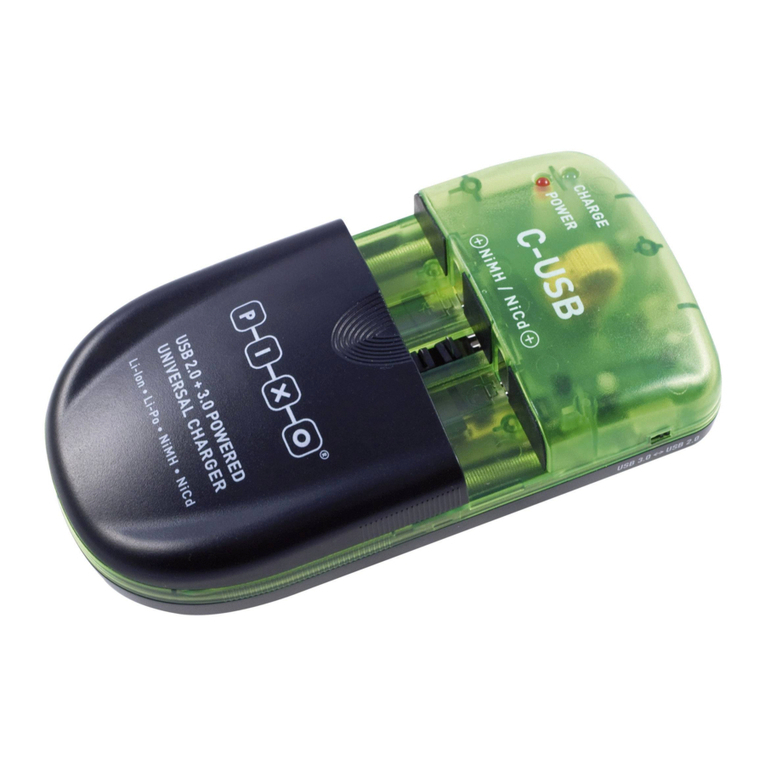
PIXO C-USB instruction manual

PIXO

PIXO C-USB instruction manual

Gunson G4104 quick start guide

Gunson

Gunson G4104 quick start guide

Dometic NDS SCE320 Short Operating Manual

Dometic

Dometic NDS SCE320 Short Operating Manual

ABB HT572708 Operation manual

ABB

ABB HT572708 Operation manual

EVOline Square80 manual

EVOline

EVOline Square80 manual

Redarc SBC24025 Operating instructions and owner's manual

Redarc

Redarc SBC24025 Operating instructions and owner's manual

Absaar HV04 manual

Absaar

Absaar HV04 manual

DazeTechnology Cover Dazebox Home installation manual

DazeTechnology

DazeTechnology Cover Dazebox Home installation manual

manuals.online logo
manuals.online logoBrands
  • About & Mission
  • Contact us
  • Privacy Policy
  • Terms and Conditions

Copyright 2025 Manuals.Online. All Rights Reserved.

INSTALLATION &
OPERATION MANUAL
BCD180 SERIES
DC BATTERY CHARGER
8128 River Way, Delta B.C. V4G 1K5 Canada T. 604.946.9981 F. 604.946.9983 TF. 800.668.3884 (US/CANADA)
www.analyticsystems.com
An ISO9001 Registered Company Battery Chargers •Inverters •Power Supplies •Voltage Converters
Copyright (2005-2019) Analytic Systems Ware (1993) Ltd.
Revised Jan 7, 2019
3
SAVE THESE INSTRUCTIONS — This manual contains important safety and operating
instructions for the battery charger.
BATTERY CHARGER PRECAUTIONS
1. Do not expose the battery charger to rain or snow unless it is a sealed model.
2. Use of an attachment not recommended or sold by the battery charger manufacturer may
result in a risk of re, electric shock, or injury to persons.
3. Do not disassemble the battery charger; return it to the manufacturer or an authorized
service center when service or repair is required. Incorrect reassembly may result in a risk
of electric shock or re. Voltages in excess of 350 volts are present inside the charger any
time it is plugged into a power source, even if it is switched off.
4. To reduce risk of electric shock, unplug the battery charger from the power source before
attempting any maintenance or cleaning. Turning off controls will not reduce this risk.
5. Never place battery charger directly above battery; gases from battery will corrode and
damage battery charger.
6. Never allow battery acid to drip on to the battery charger.
1. WARNING — RISK OF EXPLOSIVE GASES
i. WORKING IN VICINITY OF A LEAD-ACID BATTERY IS DANGEROUS. BATTERIES
GENERATE EXPLOSIVE GASES DURING NORMAL BATTERY OPERATION. FOR THIS
REASON, IT IS OF UTMOST IMPORTANCE THAT EACH TIME BEFORE SERVICING
EQUIPMENT IN THE VICINITY OF THE BATTERY, YOU READ THIS USER GUIDE AND
FOLLOW THE INSTRUCTIONS EXACTLY.
ii. To reduce risk of battery explosion, follow these instructions and those published by
the battery manufacturer and manufacturer of any equipment you intend to use in
vicinity of battery. Review the cautionary marking on these products.
2. PERSONAL PRECAUTIONS
i. Someone should be within range of your voice or close enough to come to your aid
when you work near a battery.
ii. Have plenty of fresh water and soap nearby in case battery acid contacts skin,
clothing, or eyes.
iii. Wear complete eye protection and clothing protection. Avoid touching eyes while
working near battery.
DC SOURCE BATTERY CHARGER
IMPORTANT SAFETY INSTRUCTIONS
BATTERY SAFETY
54
Medical Equipment Notice
Analytic Systems does not recommend the use of their products in life support
applications where failure or malfunction of this product can be reasonably
expected to cause failure of the life support device or to signicantly affect its
safety or effectiveness. Analytic Systems does not recommend the use of any
of its products in direct patient care. Examples of devices considered to be life
support devices are neonatal oxygen analyzers, nerve stimulators (whether used
for anesthesia, pain relief, or other purposes), auto-transfusion devices, blood
pumps, debrillators, arrhythmia detectors and alarms, pacemakers, hemodialysis
systems, peritoneal dialysis systems, neonatal ventilator incubators, ventilators
for both adults and infants, anesthesia ventilators, and infusion pumps as well as
any other devices designated as “critical” by the U.S. FDA
iv. If battery acid contacts skin or clothing, wash immediately with soap and water. If
acid enters eye, immediately ood eye with running cold water for at least 10
v. NEVER smoke or allow a spark or ame in the vicinity of a battery.
vi. Be extra cautious to reduce risk of dropping a metal tool onto battery. It might spark
or short-circuit the battery or other electrical part that may cause a re or explosion.
vii. Remove personal metal items such as rings, bracelets, necklaces, and watches
when working with a lead-acid battery. A lead-acid battery can produce a short-
circuit current high enough to melt metal, causing a severe burn.
viii. NEVER charge a frozen battery.
ix. If it is necessary to remove a battery from service, always remove grounded terminal
from battery rst. Make sure all accessories connected to the battery are off, to
prevent an arc when reconnecting the new battery.
x. Be sure area around battery is well ventilated.
xi. Clean the battery terminals. Be careful to keep corrosion from coming in contact
with eyes.
xii. Study all the battery manufacturer’s specic precautions such as removing or not
removing cell caps while charging and recommended rates of charge
54
TABLE OF CONTENTS
• Front Cover, Product Photo and Title
• Product Warnings and advisories
• Table of Contents
• Introduction
• Box Contents
• Main Parts
• Operation Instructions
• Installation Instructions
• Troubleshooting
• Specications
• Warranty
Copyright (2005-2018) Analytic Systems Ware (1993) Ltd.
Revised - October 9 ,2018
6
Introduction
The BCD180 Series Battery Charger is a constant voltage oat charger with a precision linear
regulator output. It can be congured to run from a 32, 48 or 72 VDC power system to provide
output voltages as specied in the specications.
Designed for optimal safety and efciency, this unit features reverse input connection protec-
tion, current limiting, output over-voltage protection, ultra quiet low EMI operation and a wide
operating temperature range.
This oat charger will provide 15 amps maximum current at 12 volts or 7.5 amps at 24 volts
nominal. The charger maintains a constant output voltage. When battery voltage reaches the
charger voltage charge current is discontinued. This unit can be used as a voltage converter in
order to power a passive load.
Box Contents
The box you have received should contain the following:
• One BCD180 DC Source Battery Charger
• This manual
• One Warranty Card
If anything is missing or damaged please contact your dealer or Analytic Systems for a replacement
7
1. Input and Output Connection:
4-pin Phoenix connector
2. Output Power LED
3. Input Power LED
23
Main Parts
Front Panel
1
8
Operation
The BCD180 is designed for simple and intuitive operation. Before this unit can be put into
operation, it must be properly installed and connected. For more information, see Installation.
To turn the unit on
1. When properly connected to a power source and battery, the unit will automatically begin
charging the battery.
2. The Power LED on the top of the chassis will glow green. The Charging LED will then
glow green indicating it is charging the battery,
To turn the unit off
1. Disconnect the battery and power and source. The Power LED and charging LED will stop
glowing indicating end of operation.
Troubleshooting
Below is a list of common malfunctions and the suggested course of action for xing the
issues causing them.
The unit is not supplying the listed voltage to the device(s)
Issue: If the current demanded by the load exceeds the maximum current
rating of the unit. The unit will drop the output voltage to maintain the
current at its maximum level.
Fix: Disconnect some devices from the converter to reduce the load.
The input fuse blows with the unit is turned ON
Issue: The power source is likely connected in the reverse polarity.
Fix: Check the input connection and correct the polarity if connected in
reverse. If the connection is correct, the cause is likely an internal
component failure and the unit must be returned for service.
The input LED does not turn glow when the input power source is connected.
Issue: The unit is not receiving the minimum voltage required for normal
operation.
Fix: Check the input power source using a multimeter to ensure it is
supplying the rated voltage. Check your input power connections to make
sure they are not damaged or discontinuous. If there are no problems
with the power source or input connection, the cause is likely an internal
component failure and the unit must be returned for service.
98
Installation
MOUNTING
Mount the unit in a DRY and WELL VENTILATED location. Allow at least 1 inch of clearance
around the unit for adequate cooling.
POWER CONNECTION
This unit is equipped with a 4-pin Phoenix connector to serve as both an input and output
connection.The wiring of this connection can be found on top panel label.
IMPORTANT: Ensure that the wiring used for the input and output connections is of a suit-
able gauge for the input current rating and output current rating, respectively. See Specica-
tions for more details.
1110
Designed and manufactured by: ANALYTIC SYSTEMS WARE (1993) LTD.
8128 River Way, Delta, BC V4G 1K5
Canada
p. 604.946.9981 f. 604.946.9983 tf. 800.668.3884 US/Canada
www.analyticsystems.com [email protected]
* 30 - 45 Vdc input range for 24Vdc output
** 7.6A for 24Vdc output
* Specications subjects to change without notice.
General
Noise on Input < 10 milli-Volts
Noise on Output < 10 milli-Volts
Transient Response < 1V for 50% Surge (Output Amps/2)
Efciency > 90 % @ maximum output
Temp. Range -25 to +50 deg. C @ maximum output
Isolation 1500Vdc from Input to Case (500Vdc for 32V input)
500Vdc from Output to Case
Length 7.9 in / 20.1 cm
Width 6.0 in / 15.2 cm
Height 2.4 in / 6.1 cm
Clearance 1 Inch (2.5 cm) all around
Material Marine Grade Aluminium
Finish Black Anodize / Black Powder Epoxy
Fastenings 18-8 Stainless
Weight 2.6 lb / 1.1 kg
Specications
Input Voltages
Nominal (i/p) 32 48 72
Actual (Vdc) * 20 – 45 40 – 65 65 – 100
Input Amps (max) ** 11.3 6.8 4.3
Input Fuse MDA-15 MDA-10 MDA-5
Output Voltages
Nominal (op) 12 24
Actual (Vdc) 13.6 ± 0.05 27.2 ± 0.05
Output Crowbar 16.0 ± 0.5 V 32.0 ± 1.0 V
Output Amps (cont) 15 7.5
Output Fuse AGC-20 AGC-20