ARP Control v5x General Installation Guide 20 ©2013 - 2020 ARPC L.L.C. All rights reserved. 8
04/20/20
ARP Installation Search Engine
3. Push the insulation aside so you can
identify the various tubes. Sections of
insulation may also be removed to gain
access to the tubing inside.
4. Be sure to mount the sensor to the boiler
tube. This tube is most easily identified by the
fact that the electrical heater holders are
welded directly to the boiler tube. It is up to
the installer to confirm the correct tube. As a
rule of thumb, but not always, Dometic
cooling units generally have the boiler tube
behind the flue tube and Norcold boiler tubes
are in front of the flue tube as seen looking
into the cooling unit compartment door. In the
following drawings the flue tube is red for
identification.
5. Referencing Figures 3 thru 4, the RTD and
clip are shown, where the RTD has been
super glued to the clip for ease of installation.
Note that the alignment of the clip depends
on the boiler tube arrangement for the
particular boiler assembly, see RTD and clip
next to boiler assembly in Figures 3 thru 4.
Also note that the wires exiting the RTD
housing are aligned away from the center of
the clip so that insulation can be placed
between the boiler process tube and the RTD
wires as seen in Fig. 2.
If the clip is glued in the wrong position, use
Acetone to release the supper glue. Do not
get Acetone on the wire end of the RTD.
6. Determine the position of the RTD so that
it meets the following criteria:
•The sensor tip is touching the boiler
process tube.
•The sensor is mounted away from the flue
tube.
•The sensor is a least 1” above the electric
heating elements, anywhere in the range
of 1" to 3" above heating elements.
The maximum sensor height is below the 2
nd
from top absorber coil as seen in Fig. 3a.
Fig. 3a and b show typical Dometic left and
right-hand boiler installation of the ARP RTD.
The red tube seen in these figures is the gas
flue tube, make sure the RTD is not in
contact with this tube, and the RTD is very
well insulated from this heat source.
7. Once the position of the RTD has been
determined, rub silicone grease on the clip
and the boiler tube to aid with step 8 below.
Snap the RTD around the boiler process tube
very near the location you determined in step
6.
8. Position the RTD to meet the criteria in
step 6 above by sliding the RTD from side to
side or up and down.
9. Repack the insulation into the boiler. Pack
extra insulation around the sensor and
between the sensor and any heat sources
such as the flue tube and the electric heaters.
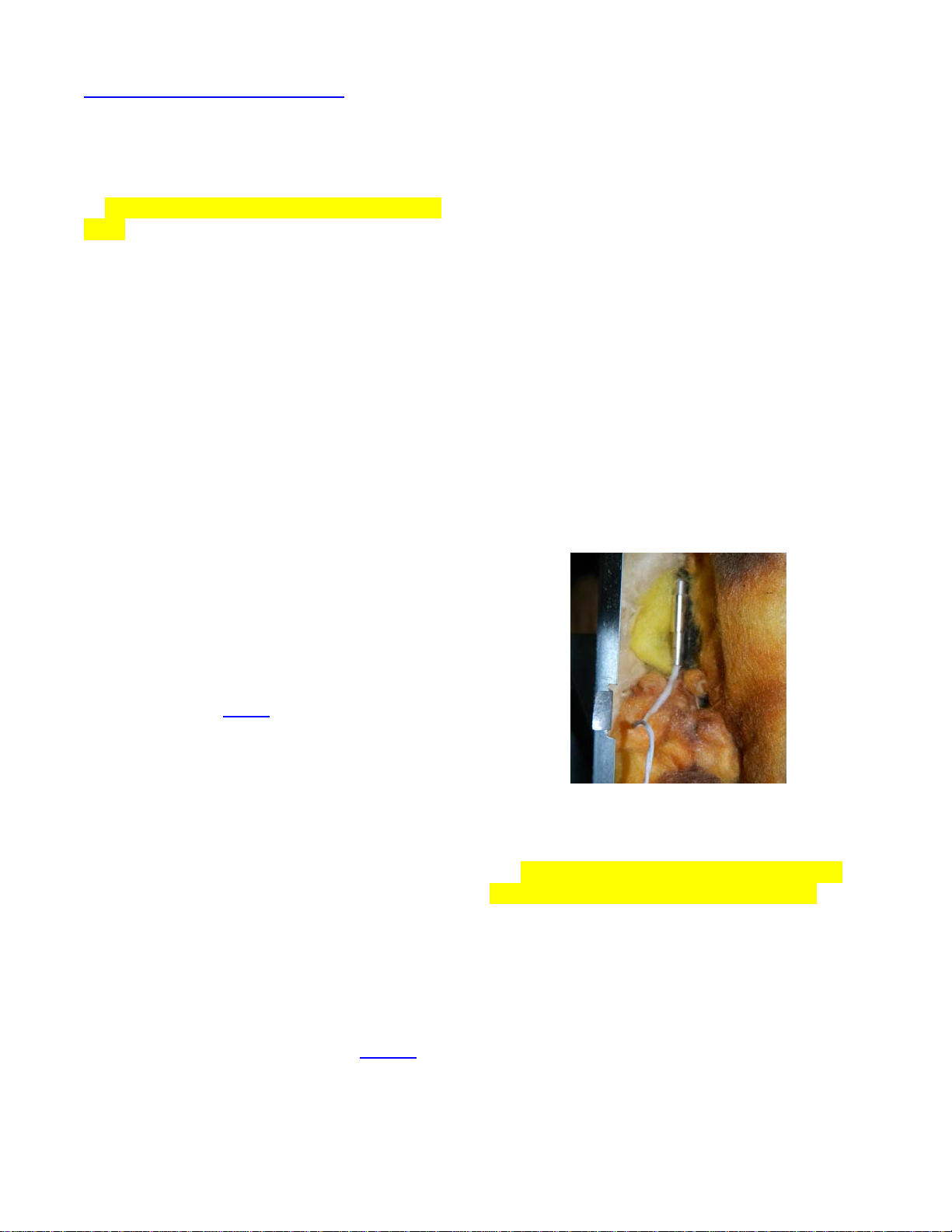
Referencing Fig. 2, pack insulation between
the flue and the sensor, and under the sensor
wire. This will help prevent the heat from flue
tube and electric heaters from affecting the
RTD measurement and insure an accurate
measurement of the boiler tube.
Fig. 2 –Insulate around RTD and Between
Wire and Boiler Tube; Be Sure to Insulate
between Flue Tube and Sensor.
10. Sharp objects, such as the sheet metal
boiler housing can cut the sensor wires. The
result is the ARP will detect an open or short
of the sensor and report an error. Where
applicable, to eliminate this issue, wrap
insulation around the sensor wire where it
exits the sheet metal boiler housing and use
wire ties to secure the wiring so that vibration
cannot cause wiring issues.
4.2 Dometic Temperature Sensor
Dometic has two types of boilers as seen in
Fig 3a and 3b, the right-hand boiler and the
left-hand boiler. Please note the different