manuals.online logo
Brands
  1. Home
  2. •
  3. Brands
  4. •
  5. Bakers Pride
  6. •
  7. Convection Oven
  8. •
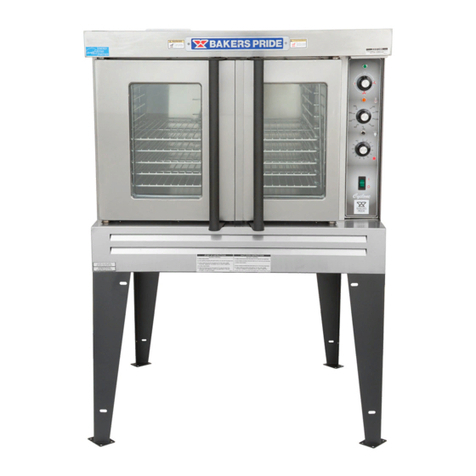
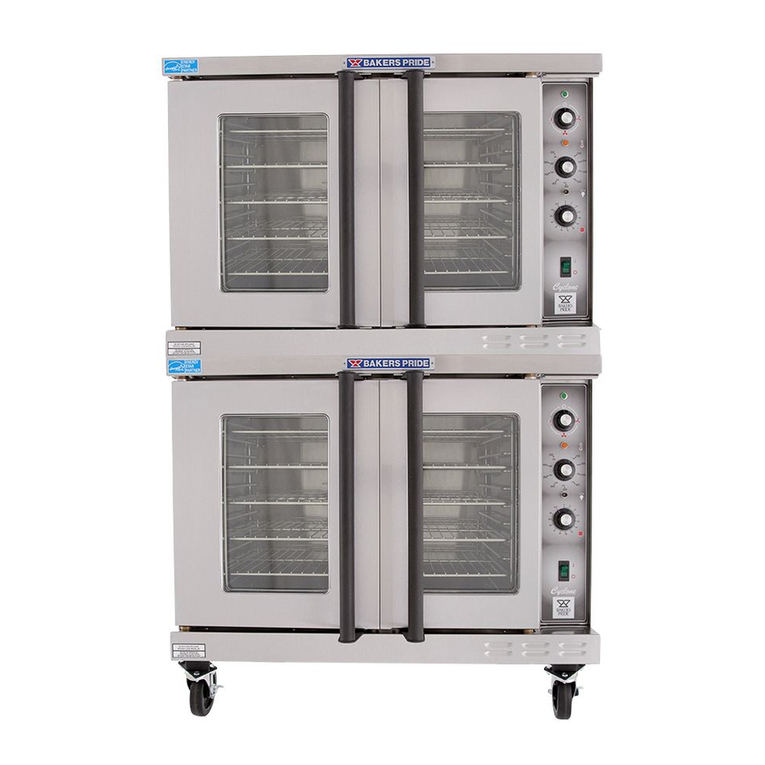
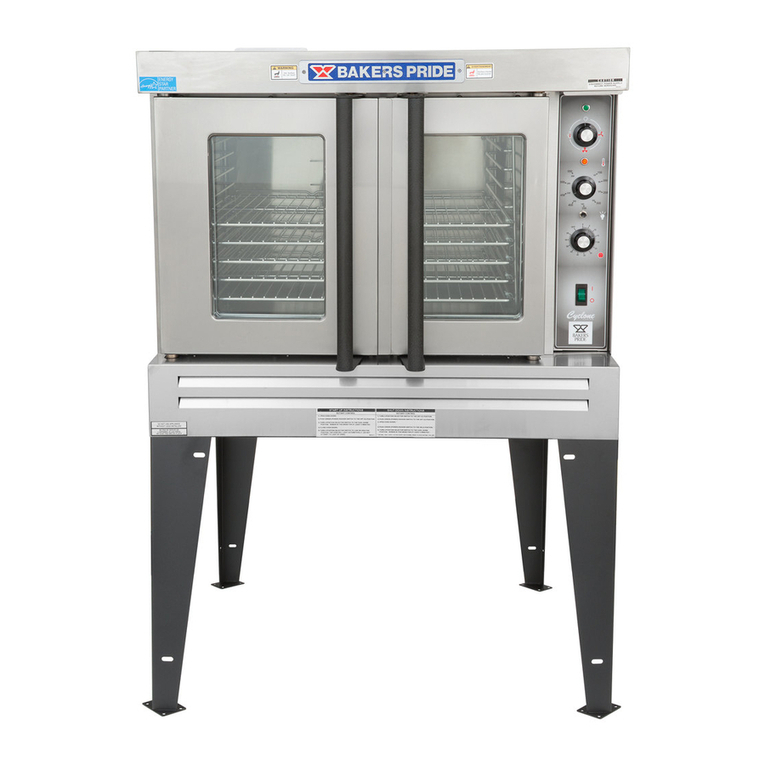
  9. Bakers Pride BCO-G User manual

Bakers Pride BCO-G User manual

Other manuals for BCO-G

2

This manual suits for next models

5

Other Bakers Pride Convection Oven manuals

Bakers Pride C011-G1 User manual

Bakers Pride

Bakers Pride C011-G1 User manual

Bakers Pride BCO-E User manual

Bakers Pride

Bakers Pride BCO-E User manual

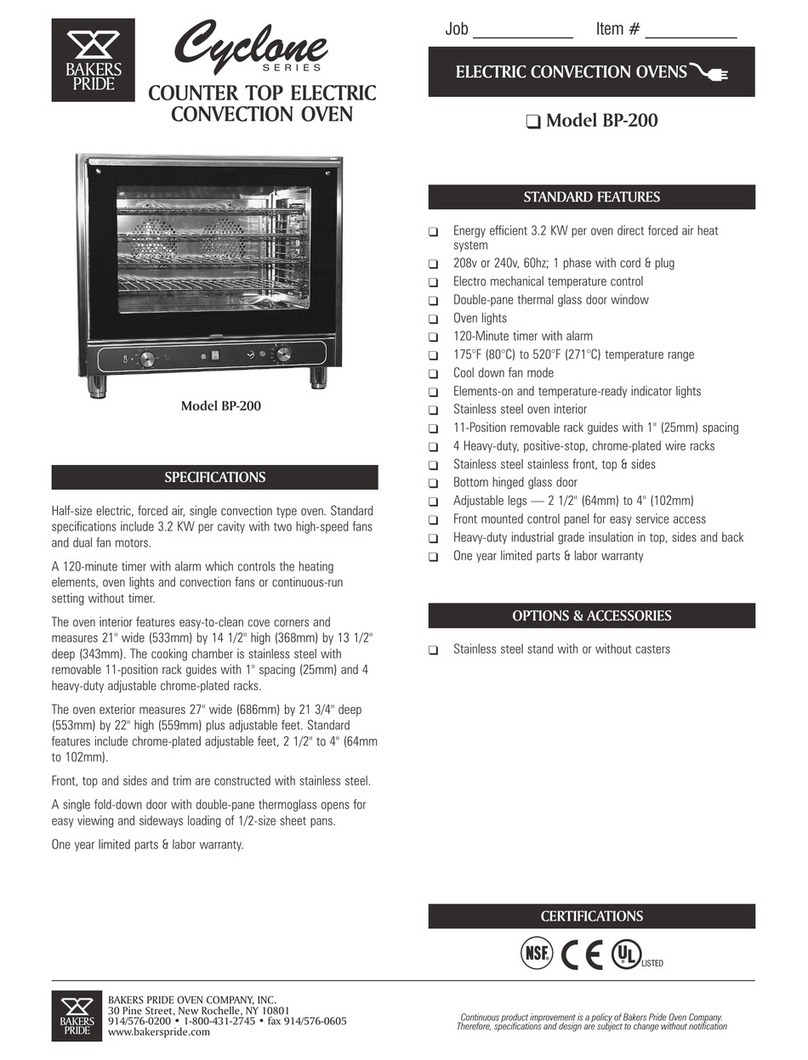
Bakers Pride Cyclone BP-200 User manual

Bakers Pride

Bakers Pride Cyclone BP-200 User manual

Bakers Pride Cyclone BCO-E1 User manual

Bakers Pride

Bakers Pride Cyclone BCO-E1 User manual

Bakers Pride GDCO-G User manual

Bakers Pride

Bakers Pride GDCO-G User manual

Bakers Pride Cyclone GDCO-G1 User manual

Bakers Pride

Bakers Pride Cyclone GDCO-G1 User manual

Bakers Pride Cyclone BCO-E1 Use and care manual

Bakers Pride

Bakers Pride Cyclone BCO-E1 Use and care manual

Bakers Pride Convection-Flo 101 User manual

Bakers Pride

Bakers Pride Convection-Flo 101 User manual

Bakers Pride Cyclone BCO-G1 User manual

Bakers Pride

Bakers Pride Cyclone BCO-G1 User manual

Bakers Pride Cyclone CO11-G User manual

Bakers Pride

Bakers Pride Cyclone CO11-G User manual

Bakers Pride Cyclone BCO-G1 Quick start guide

Bakers Pride

Bakers Pride Cyclone BCO-G1 Quick start guide

Bakers Pride Cyclone BCO-E1 User manual

Bakers Pride

Bakers Pride Cyclone BCO-E1 User manual

Bakers Pride Cyclone CO11-G User manual

Bakers Pride

Bakers Pride Cyclone CO11-G User manual

Bakers Pride Cyclone CO11-G User manual

Bakers Pride

Bakers Pride Cyclone CO11-G User manual

Bakers Pride Cyclone CO11-E1 User manual

Bakers Pride

Bakers Pride Cyclone CO11-E1 User manual

Bakers Pride Cyclone CO11-G1 User manual

Bakers Pride

Bakers Pride Cyclone CO11-G1 User manual

Bakers Pride BCO-E User manual

Bakers Pride

Bakers Pride BCO-E User manual

Bakers Pride BCO-E User manual

Bakers Pride

Bakers Pride BCO-E User manual

Bakers Pride Cyclone BCO-E1 User manual

Bakers Pride

Bakers Pride Cyclone BCO-E1 User manual

Bakers Pride COC-E User manual

Bakers Pride

Bakers Pride COC-E User manual

Bakers Pride Cyclone BP-200 User manual

Bakers Pride

Bakers Pride Cyclone BP-200 User manual

Bakers Pride Cyclone CO11-E1 User manual

Bakers Pride

Bakers Pride Cyclone CO11-E1 User manual

Bakers Pride Cyclone CO11-G User manual

Bakers Pride

Bakers Pride Cyclone CO11-G User manual

Bakers Pride Cyclone BP-200 User manual

Bakers Pride

Bakers Pride Cyclone BP-200 User manual

Popular Convection Oven manuals by other brands

Goldair GOV300 operating instructions

Goldair

Goldair GOV300 operating instructions

Aroma ABT-266SC instruction manual

Aroma

Aroma ABT-266SC instruction manual

Dometic DOTRC11B owner's guide

Dometic

Dometic DOTRC11B owner's guide

Smeg ALFA341VE user manual

Smeg

Smeg ALFA341VE user manual

homark 01-711000 Instruction manual and guarantee

homark

homark 01-711000 Instruction manual and guarantee

Vulcan-Hart C4ED Installation and operation manual

Vulcan-Hart

Vulcan-Hart C4ED Installation and operation manual

Jenn-Air SVE47600 use and care manual

Jenn-Air

Jenn-Air SVE47600 use and care manual

Waring WCO500 instructions

Waring

Waring WCO500 instructions

Moffat turbofan E25 Service manual

Moffat

Moffat turbofan E25 Service manual

Deni Quick-n-Easy 10400 Instructions for proper use and care

Deni

Deni Quick-n-Easy 10400 Instructions for proper use and care

Sharp R-980J Operation manual

Sharp

Sharp R-980J Operation manual

Whirlpool OBI M50 Use & care guide

Whirlpool

Whirlpool OBI M50 Use & care guide

Wells WVOC-4HF Operation manual

Wells

Wells WVOC-4HF Operation manual

LG LSWS306ST Service manual

LG

LG LSWS306ST Service manual

Convotherm The MINI OES-6.08 Operator's manual

Convotherm

Convotherm The MINI OES-6.08 Operator's manual

Lang GCSF-ES Installation and operation instructions

Lang

Lang GCSF-ES Installation and operation instructions

Electrolux 6 GN1/1 Short form specification

Electrolux

Electrolux 6 GN1/1 Short form specification

Unox BAKERLUX SPEED.Pro Use and maintenance

Unox

Unox BAKERLUX SPEED.Pro Use and maintenance

manuals.online logo
manuals.online logoBrands
  • About & Mission
  • Contact us
  • Privacy Policy
  • Terms and Conditions

Copyright 2025 Manuals.Online. All Rights Reserved.

INSTALLATION AND OPERATING INSTRUCTIONS
Cyclone SERIES
GAS CONVECTION OVENS
Models: BCO-G and GDCO-G
INTENDED FOR OTHER THAN HOUSEHOLD USE. RETAIN THIS MANUAL FOR FUTURE
REFERENCE. OVEN MUST BE KEPT CLEAR OF COMBUSTIBLES AT ALL TIMES.
This equipment has been engineered to provide you with year round dependable service when used
according to the instructions in this manual and standard commercial kitchen practices.
P/N 8898500 5/08
BAKERSBAKERS
PRIDEPRIDE
IMPORTANT INSTRUCTIONS: After the gas supply has been connected to your unit, it is
extremely important to check piping for possible leaks. To do this, use soap and water solution
or solutions that are expressly made for this purpose. DO NOT USE matches, candles,
flames, or other sources of ignition since these methods are extremely dangerous.
Instructions to be followed in the event you smell gas should be posted in a prominent
location. Obtain these instructions from your local gas supplier.
!
!
!
!WARNING: Initial heating of oven may generate smoke or fumes and must be done
in a well-ventilated area. Overexposure to smoke or fumes may cause nausea or
dizziness.
BAKERS PRIDE OVEN CO., INC.
30 Pine Street
New Rochelle, NY 10801
+1 (800) 431-2745 US & Canada
+1 (914) 576-0200 Phone [email protected] E-Mail
+1 (914) 576-0605 Fax www.bakerspride.com Web Address
1
FOR YOUR SAFETY: Do not store or use gasoline or other flammable vapors and
liquids in the vicinity of this or any other appliance. !
!
WARNING: Improper installation, adjustment, alteration, service or maintenance
can cause property damage, injury or death. Read the Installation, Operating and
Maintenance Instructions thoroughly before installing or servicing this equipment. !
!
I. INSTALLATION INSTRUCTIONS
Section Item Page
A Receiving 2
B Set Up / Mounting 2
C Installation with Casters (Optional) 3
D Location & Minimum Clearances 4
E Gas Connections 4
F Electrical Connection 5
G Flue Connection Ventilation 5
H Burner Operation 5
I System Check Rotary Control 5
J Programming Menus 6
II. OPERATING INSTRUCTIONS
A General Instructions 6
B Operation Sequence Rotary Control 6
Cook only Rotary Control 6
2
I. INSTALLATION INSTRUCTIONS
A. RECEIVING
Read the notice on the outside carton regarding damage in transit. Damage discovered after opening the
carton is “CONCEALED DAMAGE.” Carrier must be notified immediately to send an inspector and to
furnish forms for claims against the carrier.
When the oven arrives, it should consist of:
!A crate or carton containing your new oven (two for a stacked unit).
!A carton containing four 31” legs with mounting hardware (set of four 6” legs is supplied for stacked
installations).
!A carton containing a Flue Adapter and a Draft Hood. Optional: for Direct Venting (Not available for
European Community Countries).
B. SET UP / MOUNTING:
NOTE:
This appliance must be installed by competent personnel in accordance with the rules in force.
In the U.K., Corgi registered installers (including the regions of British Gas) undertake to work to safe and
satisfactory standards. This appliance must be installed in accordance with the current Gas Safety
(Installation and Use) Regulations and the relevant Building Regulations/IEE Regulations. Detailed
recommendations are contained in the British Standard Codes of Practice B.S. 6172, B.S. 5440: Part 2 and
B.S. 6891.
Your oven will be packed sitting on its bottom. The skid may be left under the oven for convenience in further
handling. Unpack carefully, avoiding damage to the Stainless Steel front and/or trim. If concealed damage
is found, follow the instructions detailed in Section A (Receiving). Keep the area around the ovens free and
clear of combustible materials. Do not store any materials on top of or under any oven. The provision for
adequate air supply to your oven for ventilation and proper gas combustion is essential. As a minimum,
observe the clearances detailed in Section D (Location). Provide adequate ventilation and make up air in
accordance with local codes. Servicing your oven is done through the front control panel and right side
access cover. Ensure that these areas are kept unobstructed for easy access.
In MASSACHUSETTS: All gas products must be installed by a “Massachusetts” licensed plumber or gas
fitter. Ventilation hoods must be installed in accordance with NFPA-96, current edition, with interlocks as
described in that standard.
INDEX
Section Item Page
Timed Cooking Rotary Control 6
Cook and Hold Rotary Control 7
Optional Steam Injection Rotary Control 7
To Cool Down the Oven Quickly 7
C Cleaning 7
D Servicing 8
Stacking Instructions 9
Leg Assembly Instructions 9
Wiring Diagrams 10
Helpful Hints 12
Troubleshooting Chart 12
Parts List & Exploded View 13
Warranty 16
3
For a single unit: Refer to Figure 4
(1) Tilt Oven over to left-hand side and attach two 31” legs on the right-hand side with three ½” bolts and
washers. Tighten firmly.
(2) Using proper lifting equipment, lift up the left-hand side and attach two 31” legs on the left-hand side
the same way.
For a stack of two ovens: Refer to Figure 3
(1) Remove flue from bottom oven prior to stacking. When top oven is properly positioned on bottom
oven, re-install the flue back on the bottom oven.
(2) Tilt lower unit over to the left-hand side and position two 6” legs on the right side (one for front and
one for back), secure in place by using 4 bolts (3/8”-16) per leg. Tighten firmly.
(3) Using proper lifting equipment, lift up the left side of the unit and attach the other two legs in the same
way.
(4) Using the lifting equipment, raise the top oven to proper height and slide on top of the bottom oven.
Line up sides and front and fasten to each other at the rear of the units by using a mounting bracket
supplied in the stacking kit.
To assemble an open rack stand: Refer to Figure 1
(1) Loosen 12 bolts (attaching 31” legs) slightly.
(2) Remove 4 inner bolts, 1 from each of the 4 legs, place top right angle and top left angle underneath
and tighten these 4 bolts.
(3) Insert “Open Rack Shelf” and tighten into place with eight 3/8-16 screws, washers and nuts.
(4) Position “Rack Supports” and tighten in place using 4 each of flat washers and 5/16-18 Hex Nuts.
Fit the Standard Flue Diverter supplied into the hole in the top of the oven for under ventilation hood
installation and secure with screws. For direct venting, Flue Adapter and Draft Hood must be placed into the
hole on top of the oven.
C. INSTALLATION WITH CASTERS (OPTIONAL): Refer to Figure 4
Four casters (two with wheel brakes) and the mounting hardware are packed and included in the shipment if
ordered. Install casters with wheel brakes on the front of the unit. Installation of the unit should be made with
a connector that complies with the latest edition of the Standard for Connectors for Movable Gas
Appliances ANSI Z21.69 in the USA (CAN CSA-6.16 in Canada) and a quick-disconnect device that
complies with the latest edition of the standard for quick disconnect devices for use with gas fuel ANSI
Z21.41 in the USA (CSA 6.9 in Canada). Adequate means must be provided to limit the movement of the
appliance without depending on the connector and any quick disconnect device or its associated piping to
limit appliance movement.
The restraint should be attached to the rear legs of the oven on which casters are mounted. If disconnect of
the restraint is necessary, the restraint should be immediately reconnected after the appliance has been
returned to its originally installed position.
Figure 1 OPEN RACK STAND ASSEMBLY INSTRUCTIONS: BCO-G & GDCO-G
Assembly Instruction
1. Place undershelf (6) between legs & secure
with 1/4-20 UNC screws (4), flat washers (3) &
locknuts (2). The holes for mounting the wire
racks should be toward the front of the oven.
2. Place open rack supports (1) between legs &
secure with 1/4-20 UNC screws (4), flat
washers (3) & locknuts (2).
3. Slide wire rack supports (5) into position using
the holes in the undershelf (6) as a guide.
1
2
3
4
5
6
Open Style Support Leg Not Supplied With Kit
1 21818222 Support, Open Rack 2
2 770504 Lock Nut 1/4-20 12
3 8519600 Washer, Flat 1/4” 12
4 8208200 Screw, 1/4-20 x 3/4” 12
5 21816807 Support, Wire Rack 2
6 21818231 Undershelf, Gas Oven 1
Item P/N Description Quan

D. LOCATION AND MINIMUM CLEARANCES:
Move the oven to its final location keeping the minimum clearance from the back of the oven to the wall. This
clearance is necessary for safe operation and to provide proper air flow to the burner chamber.
MINIMUM CLEARANCES FROM COMBUSTIBLE AND NONCOMBUSTIBLE CONSTRUCTION
Under Ventilation Hood Direct Venting
RIGHT WALL 1” 1”
LEFT WALL 1” 3”
REAR WALL 3” 3”
E. GAS CONNECTION:
The ovens should not be installed on the same gas supply line with space heaters, boilers or other gas
equipment with high intermittent demand.
The installation of the oven must conform to the latest local codes or National Fuel Gas Code, ANSI Z223.1,
Natural Gas Installation Code, CAN/CGA-B149.1, or the Propane Installation Code, CAN/CGA-B149.2.
The appliance must be isolated from the gas supply piping system by closing its manual shut-off valve
during any pressure testing of the gas supply piping system at test pressures equal to or less than ½ psig
(3.45kpa). The appliance and its shut-off valve must be disconnected from the gas supply piping system
during any pressure testing of that system at test pressures in excess of ½ psig (3.45kpa).
Use a pipe joint compound that is resistant to the action of liquefied petroleum gases when making gas
connections. For Propane gas, use at least ½” (13 mm) pipe or tubing with a 5/8” (16 mm) inside diameter.
For Natural gas, use ¾” (19 mm) pipe.
The gas pressure regulator is part of the combination valve and is adjusted to yield a pressure of 3.5” water
column (9 mbar) for Natural Gas. If the oven is ordered for use on Propane Gas or Butane, the pressure
regulator in the combination valve is preset at the factory to yield a pressure of 10” water column (25 mbar).
NOTE: No external regulator is required.
Gas supply pressure in the European Community countries should be as below.
Gas Type Supply Pressure Gas Type Supply Pressure
G20 20 mbar G30 30 or 50 mbar depending on country
G25 25 mbar G31 30, 37, or 50 mbar depending on country
G20/25 20/25 mbar
A separate shut-off valve for each oven must be provided. It should be as close as possible to the place
where the gas line goes into the oven. It must be located such that it is easily accessible. When stacking with
another oven, two shut-off valves, one for each of the two ovens, must be provided.
After the Gas Supply has been connected, it is extremely important to check all the piping for leaks.
Use a soap and water solution or a product expressly made for this purpose. Do not use matches,
candles or a flame and so forth to check leaks since these methods are extremely dangerous.
4
CAUTION: Do not set the oven with its back flat against the wall. It will not operate
properly unless there is at least three inches breathing space behind the oven !
!
Suitable for installation on combustible floor when installed with legs or casters
provided. !
!
CAUTION: Do not store combustible items or materials on racks. !
!
F. ELECTRICAL CONNECTION:
The oven, when installed, must be electrically grounded in accordance with local codes and/or the latest
edition of the National Electrical Code ANSI/NFPA No. 70 in the USA (Canadian Electrical Code CSA
Standard C22.1, Part 1 in Canada).
In Europe, the appliance must be connected by an earthen cable to all other units in the complete
installation and, thence, to an independent earth connection in compliance with EN 60335-1 and/or local
codes.
The electric motor, all the related switches, interior lights, and the timer/buzzer are all connected through
the 6-foot (1829 mm) power supply cord located at the rear of the oven. The supply cord must be plugged
into a properly grounded, three-prong receptacle. DO NOT CUT OR REMOVE THE GROUNDING PRONG
FROM THE PLUG.
Normal factory connections are made for 120 volts A.C., 60 hz, Service in USA and Canada or 240 volts
A.C., 50 hz service in European community countries. Other voltages can be supplied upon request.
Electrical characteristics of this unit can be found on the rating plate located on the right side of the unit.
This unit is provided with a permanently lubricated electric motor. A wiring diagram may be found on the
back of the service panel on the right-hand side and in this manual.
G. FLUE CONNECTION VENTILATION:
Installation under ventilation hood (standard):
If the oven is not vented directly and is installed under a ventilation hood, the unit is ready to be installed as
is. Local inspectors and ventilation specialists should be consulted so that the design and the installation of
the hood conform to local/municipal codes. In the U.K., follow ventilation requirements as detailed in B.S.
5440.
Optional direct venting (not available for European community countries):
If direct venting, a flue adapter and a draft hood are required to be installed. They prevent the flue gases
leaving the oven to be affected by the air pressure changes on the outside of the flue stack extending out of
the building. The flue pipe from the draft hood must not run downwards at any point from the oven to the final
outlet. It should always slant slightly upwards. For best results, is should rise straight up. The venting
system shall be in accordance with the National Fuel Gas Code, ANSI Z223.1 / NFPA 54 and or the CSA
B149.1, Natural Gas and CSA B149.2, Propane Installation Codes, and local codes.
NOTE: DO NOT PUT A DAMPER IN THE FLUE AND DO NOT CONNECT A BLOWER DIRECTLY TO
THE FLUE.
If the flue runs directly to the free air outside the building, use a wind deflector or a UL listed vent cap at the
end of the pipe. Termination of the vent must be at least two feet above the highest part of the roof within ten
feet. REF: AGA CATALOG NO. XH0474.
H. BURNER OPERATION:
The oven burner flame should always have a blue appearance. This indicates a good mixture of air and gas.
When using LP gas, the flame will have a blue-yellow appearance. There may be intermittent yellow-orange
flame noticed. This is caused by dust particles burning in the flame.
I. SYSTEM CHECK- ROTARY CONTROL:
(1) Open the oven door.
(2) Turn Selector Switch to “HI.” The indicator light near Selector Switch and oven light will
illuminate.
(3) Close the door. Oven lights will go off and fan will run. Make sure fan is rotating clockwise
looking from front.
5
(4) Press Oven Light switch. Oven light will go on and will go off when switch is released.
(5) Turn Gas Cock Dial to “ON” position (only for USA and Canada).
(6) Turn the thermostat knob. The indicator light near the thermostat will illuminate and the burners
will come on.
(7) Turn the Timer Knob and set a time of 2 minutes. At the end of 2 minutes, you should hear the
buzzer. Turn the timer knob to “0”, to stop the buzzer.
(8) Open the oven doors. Oven lights will go on and burners and fan will go off.
(9) Turn Selector Switch to “Cool Down” position. The fan will run to cool down the oven.
(10) Turn Selector Switch to “0” position.
(11) Close the oven doors.
NOTE: OVEN STARTS HEATING AS SOON AS THE SET TEMPERATURE IS HIGHER THAN THE
OVEN TEMPERATURE WITH THE OVEN DOORS CLOSED AND THE SELECTOR SWITCH NOT IN “0”
POSITION.
THERMOSTAT INDICATOR LIGHT GOES OUT WHEN OVEN REACHES SET TEMPERATURE AND
COMES ON WHEN OVEN IS HEATING UP.
IN THE EVENT OF POWER FAILURE, THE OVEN WILL NOT OPERATE. RESTORATION OF POWER
AFTER ANY DURATION, WILL RETURN UNIT TO NORMAL OPERATION.
J. PROGRAMMING MENUS (for units with digital controls):
Refer to C&H - 3 Plus Controller Operating/Programming Instructions Manual.
II. OPERATING INSTRUCTIONS
A. GENERAL INSTRUCTIONS:
(1) This equipment has an Electronic Temperature Control and Electronic Hot Surface Direct Ignition
System.
(2) Due to increased efficiency of this oven, the temperature of standard recipes may be reduced 50°F
(30°C).
(3) Always load each shelf evenly. Space pans away from each other and from sides and back of oven to
allow maximum air flow between them.
(4) Large tempered glass windows and interior lights allow a close check on the product, making it
unnecessary to frequently open the doors. Products cook faster in a convection oven as compared
to a conventional oven. Depending on the product and the type of pans used, time saving may run
from 20 percent to as high as 50 percent.
B. OPERATION SEQUENCE ROTARY CONTROL:
Cook only rotary control:
(1) Close the oven doors.
(2) Turn Selector Switch to “HI” or “LO” position. The indicator light near the Selector Switch will be
illuminated.
(3) Turn the thermostat knob to the desired cooking temperature.
(4) Upon reaching the set temperature, the indicator light near the thermostat will go out.
(5) Load the oven with product to be cooked.
(6) Remove the product from the oven when done.
Timed cooking rotary control:
(1) Close the oven doors.
(2) Turn Selector Switch to “HI” or “LO” position. The indicator light near the Selector Switch will be
illuminated.
(3) Turn the thermostat knob to the desired cooking temperature.
(4) Upon reaching the set temperature, the indicator light near the thermostat will go out.
(5) Load the oven with product to be cooked.
6
(6) Turn the timer knob to the desired bake time and timer will start counting down.
(7) When timer reaches zero, a buzzer will sound.
(8) Turn the timer knob to “O” position.
(9) Remove the product from the oven.
NOTE: TIMER IS A SIGNAL DEVICE ONLY AND DOES NOT CONTROL THE OVEN.
Cook and Hold Rotary Control:
(1) Close the oven doors.
(2) Turn Selector Switch to “HI” or “LO” position. The indicator light near the Selector Switch will be
illuminated.
(3) Turn the thermostat knob to the desired cooking temperature.
(4) Upon reaching the set temperature, the indicator light near the thermostat will go out.
(5) Load the oven with product to be cooked.
(6) Turn the timer knob to the desired bake time and timer will start counting down.
(7) When timer reaches zero, a buzzer will sound.
(8) Turn the Timer knob to “O” position.
(9) Turn the thermostat knob to the desired hold temperature.
(10) Remove the product from the oven when needed.
Optional steam injection: Rotary control:
The solenoid valve for steam injection is mounted behind the service panel on the right-hand side of the unit.
The electronic timer is preset at the factory. A ¼” copper tubing is provided on the Solenoid Valve for water
hookup with a compression fitting. After the water hookup is made, make sure that there are no leaks. For
steam injection, press the Steam switch momentarily.
NOTE: DO NOT USE STEAM INJECTION AT TEMPERATURES BELOW 275°F (135°C).
Oven cool down Rotary control:
To cool down the oven to a lower desired temperature, follow the steps detailed below.
(1) Open the oven doors.
(2) Turn Selector Switch to “oven cool down” position. Fan will now operate and cool down the oven.
(3) When the oven has cooled down to the desired temperature, turn the Selector Switch to “O” position.
7
!
!
CAUTION: Use mild detergent or soap solution for best results. Abrasive cleaners could scratch
the finish of your unit, marring it’s appearance and making it susceptible to dirt accumulation. DO
NOT use abrasive cleaners or cleaners/sanitizers containing chlorine, iodine, ammonia or bromine
chemicals as these will deteriorate the stainless steel and glass material and shorten the life of the
unit. Use nylon scouring pads. DO NOT use steel wool.
!
!
WARNING: To avoid any injury, turn the power switch off at the fuse disconnect switch/circuit
breaker or unplug the unit from the power source and allow to cool completely before performing
any maintenance or cleaning.
!
WARNING: Unit is not waterproof. To avoid electrical shock or personal injury, DO NOT submerge
in water. DO NOT operate if it has been submerged in water. DO NOT clean the unit with a water jet.
DO NOT steam clean or use excessive water on the unit.
!
Always clean equipment thoroughly before first use. Clean unit daily.
C. CLEANING
OVEN INTERIOR:
Clean The Racks And Rack Support Guides:
Open the doors and remove all wire racks and rack support guides. Take them to the sink and thoroughly
clean in warm water with mild detergent or soap. Use a nylon scouring pad or stiff nylon brush.
DO NOT USE STEEL WOOL.
8
Clean The Stainless Steel Interior:
Baked on splatter, oil, grease or discoloration on the stainless steel inside of the oven may be removed with
stainless steel cleaner, or any other similar cleaning agent. NEVER use vinegar or any corrosive cleaner.
Use only cleaners approved for stainless steel. NEVER use cleaning solvents with a hydrocarbon base.
NEVER use a wire brush, steel or abrasive scouring pads, scraper, file or other steel tools.
NOTE: ALWAYS RUB THE STAINLESS STEEL ALONG THE GRAINS.
Clean The Blower Wheel:
To clean the blower wheel, remove and immerse in ammoniated water for 20 to 25 minutes. Then, scrub it off
with a small, stiff brush. The same procedure can be followed for wire racks and rack supports. To remove
the blower wheel, loosen the set screws (2) on the hub of the blower wheel and tighten the 3/8” wheel puller
bolt (supplied) in center of hub (See Fig. 1).
Clean The Porcelain Interior:
Porcelain enamel interiors are designed to be as maintenance free as possible. However, for best results,
the oven should be cleaned regularly. Enameled interiors can be easily cleaned with oven cleaners. KEEP
CLEANING FLUIDS AWAY FROM ELECTRICAL WIRES, LIGHT SOCKETS, SWITCHES AND
CONTROL PANEL.
OVEN EXTERIOR:
Clean The Exterior Stainless Steel:
To remove normal dirt or product residue from stainless steel, use ordinary soap and water (with or without
detergent) applied with a sponge or cloth. Dry thoroughly with a clean cloth. Never use vinegar or corrosive
cleaner. Do not use chorine based cleaners.
To remove grease and food splatter or condensed vapors that have baked on the equipment, apply cleaners
to a damp cloth or sponge and rub cleanser on the metal in the direction of the polished lines on the metal.
Rubbing cleanser as gently as possible in the direction of the polished lines will not mar the finish of the
stainless steel. To remove discoloration, use a non-abrasive cleaner. NEVER use a wire brush, steel or
abrasive scouring pads, scraper, file or other steel tools. NEVER RUB WITH A CIRCULAR MOTION.
D. SERVICING:
NOTE: THIS APPLIANCE MUST BE SERVICED BY AN AUTHORIZED SERVICE AGENT.
(1) Power supply to the unit must be disconnected before any service is performed.
(2) Most of the service on the unit can be performed from the front and/or control panel side.
(3) For proper servicing, access to the control panel side of the unit will be required.
(4) It will be necessary to have access to the back of the oven for service needs related to the gas supply
and electric power supply.
(5) A system wiring diagram is provided in this manual and on the back of the service panel on the right
side of the oven.
(6) This unit is provided with a permanently lubricated electric motor.
(7) All servicing should be performed by a factory-authorized technician only.
(8) For proper maintenance and repairs, call the factory toll free (800-431-2745) for an authorized
service agency in your area.
NOTE: THE VENTILATION SYSTEM MUST BE INSPECTED AT LEAST EVERY SIX MONTHS AND
MAINTAINED CLEAN AND FREE OF OBSTRUCTIONS.
FRONT TRIM REMOVAL INSTRUCTIONS
(1) Remove the two screws holding the top of the front panel in place.
(2) Tilt the front panel forward.
(3) Remove the tab at the bottom of the front panel from the slot in the bottom trim.
(4) Open the doors.
(5) Remove the screws in the top of the bottom trim.
(6) Lift the bottom trim straight up approximately 1/4".
(7) After the bracket on the inside of the front trim has cleared the flange on the base, pull the bottom
trim away from the oven to remove.
9
Motor
Blower
Wheel
Set Screw (2)
Wheel Puller
Bolt 3/8” Hex
Item 1
Item 2
Item 3
E3770A
E3771A
3/8”-16 Bolt
1. Attach two item 2 to two
item 1 using item 3, 4 and 5.
2. Attach two item 7 to two
item 1 using item 3, 4 and 5.
3. U s i n g p r o p e r li f t i n g
equipment attach item 1 to
the corresponding hole
patterns located in the
bottom of the oven with
item 6.
1 21796810 Weldment, Oven Leg
2 8633102 Caster, 5” Swivel W/Top Plate
3 8227700 Hex Hd 5/16-18 X ¾ Bolt #5 Zn
4 8509300 Washer, Flat SAE, 5/16
5 8435000 Hex-nut 5/16-18
6 82447-00 Hex Hd. 3/8-16 X .750 #5
7 8633101 Caster, 5" Swivel W/Plate & Brake
With Plate Caster
LEG ASSEMBLY INSTRUCTIONS - MODEL:BCO-E & GDCO-E
1 21796810 Weldment, Oven Leg
2 8633515 Foot Insert, Adjustable
3 8227700 Hex Hd 5/16-18 X 3/4 Bolt #5 Zn
4 8509300 Washer, Flat, SAE, 5/16
5 8435000 Hex-Nut 5/16-18
6 82447-00 Hex Hd. 3/8-16 X .750 #5
1. Attach four item 2 to four
item 1 using item3, 4 & 5.
2. Using proper lifting
equipment attach i t e m 1
to the corresponding hole
patterns located in th e
bottom of the oven with
item 6.
Without Plate Caster
Item P/N Description Item P/N Description
Figure 4
Figure 3 STACKING INSTRUCTIONS FOR: BCO-G & GDCO-G CONVECTION OVENS
CLEANING THE BLOWER WHEEL
Figure 2
Attach part # 21818062 with 6
each 8-32 stainless screws
Material: 14 ga201 Stainless
Remove the outer and inner flue from the
bottom oven before placing the top oven (to
prevent damaging the bottom oven’s flue). Re-
install after top oven is positioned.
2
1
3
22
1
77
6
44
3
55
4
66
5
33
2
22
1
77
6
44
3
55
4
66
5
88
7
BLACK
P1P2P3P4
COM
NC
NO
T6 T7 T8 T9 T10T11
BLUE YELLOW
GROUND STUD
POWER
LIGHT
T-STAT
LIGHT
SWITCH
LIGHTS
60 MIN
TIMER
POWER
SWITCH
DOOR SWITCH
FLAME SENSOR
IGNITER
HIGH
LOW
CENTRIFUGAL
SWITCH
FAN
MOTOR
COM
120V WHITE
GROUND
24V
4 POS
SWITCH
T-STAT LIGHT
GROUND
STUD
GROUND
STUD
PROBE
TRANSFORMER
13 12
2
32
33
15
15
2
31
33
23
22
12
7
14
111
3
9
414
5
39
36 38
16
17
32
10
4
13
28
8
29
21
18
19
37
23
COMBINATION VALVE
31
MOT
21
16
19
20
17
18
35
29
11
20
26
34
10
17
3
9
BUTT
SPLICE
L1-24VAC
GROUND
FLAME
SENSE
VALVE
HOT
THERMOSTAT
IGNITOR
22
40
41
BUTT SPLICE
GROUND STUD
32
14
26
IGNITION
CONTROL
7
6
4
3
2
1
BLUE PURPLE
WHITE
BLACK
RED
WIRING DIAGRAM - BCO-G & GDCO-G 120V, 1 PHASE (DIAL CONTROL)
WIRING DIAGRAM - GDCO-G 120V, 1 PHASE (PUSH-BUTTON CONTROL)
10
8806657
8806659
GROUND STUD
P1 P2P3 P4
T2 T3 T4 T5
T1 T8
T9
T7
T6
T12
T13
T11
T10 DOOR
SWITCH
PROBE
21 20
23
22
LIGHTS
120V
LOW
HIGH
120V
24V
PROBE
IGNITER
FLAME SENSOR
TRANSFORMER
RELAY
4 POSTION SWITCH
DOOR SWITCH
POWER SWITCH
PUSH BUTTON
SWITCH
CH100
CONTROL
COMBINATION VALVE
GREEN LIGHT
CENTRIFUGAL
SWITCH
FAN
MOTOR MOT
1
2
3
COM
2
1
3
29
30
30
4
6
11
18
18
15
15
26
17
17
5
4
5
6
7
8
7
8
27
28
9
10
10
9
11
12
12
13
13
14
14
16
16
19
19
32
32
25
25
24
YELLOW BLUE
BLACK
WHITE
29
33
33
31
34
35
BLUE
PURPLE
WHITE
BLACK
RED
GROUND STUD