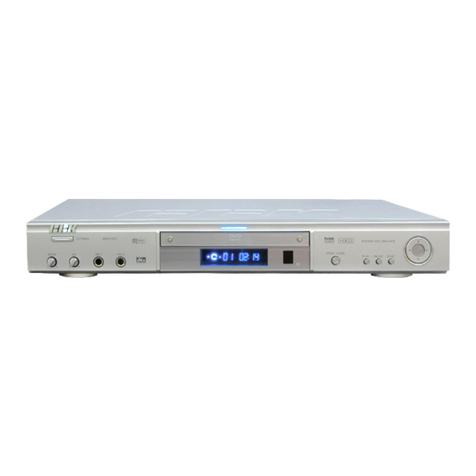
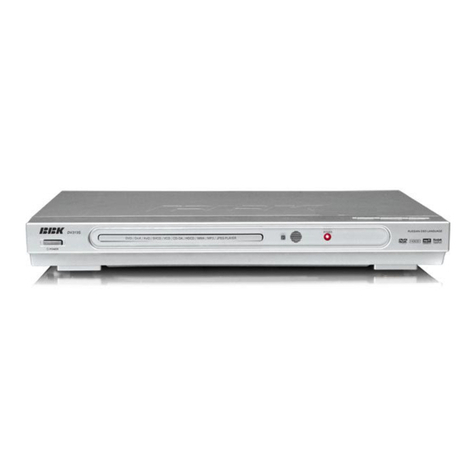
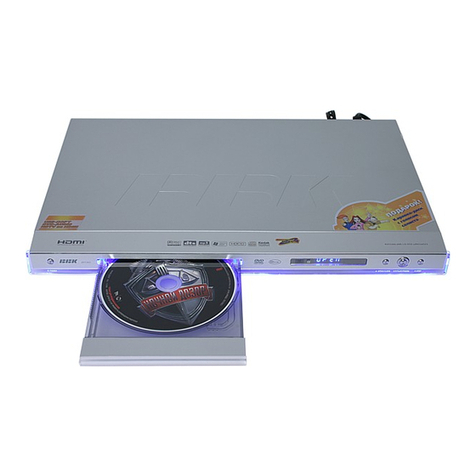
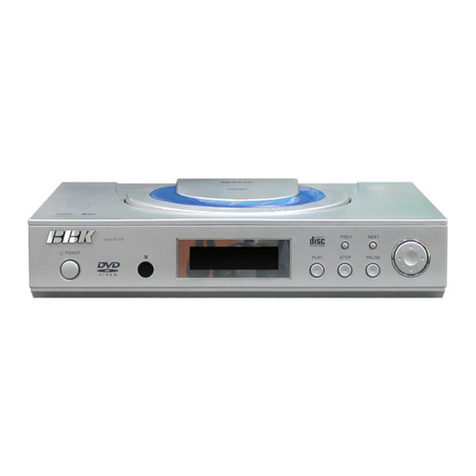
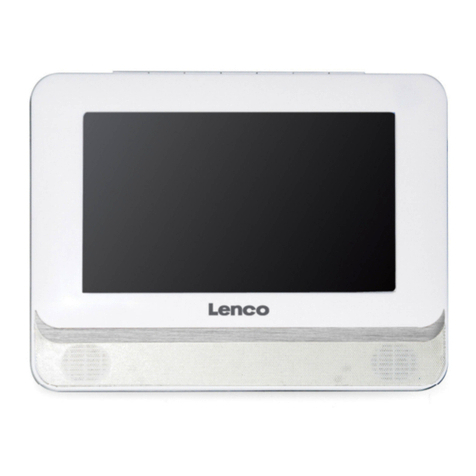
BBK DL385DC User manual

SERVICE MANUAL
DL385DC

CONTENTS
1. SAFETY PRECAUTIONS 1
2. PREVENTION OF ELECTRO STATIC DISCHARGE(ESD)TO ELECTROSTATICALLY
SENSITIVE(ES)DEVICES 1
4. PREVERTION OF STATIC ELECTRICITY DISCHARGE 4
5.ELECTRICALCONFIRMATION5
5.1VIDEOOUTPUT(LUMINANCESIGNAL)CONFIRMATION5
5.2VIDEOOUTPUT(CHROMINANCESIGNAL)CONFIRMATION6
6.MPEGBOARDCHECKWAVEFORM7
8.SCHEMATIC&PCBWIRINGDIAGRAM
17
9.SPAREPARTSLIST33
7.2MT13898
7.3HY29LV160 11
7.4HY57V641620HG
14
3. CONTROL BUTTON LOCATIONS AND EXPLANATIONS 2

1.1 GENERAL GUIDELINES
1. When servicing, observe the original lead dress. if a short circuit is found, replace all parts which have
been overheated or damaged by the short circuit.
2. After servicing, see to it that all the protective devices such as insulation barrier, insulation papers
shields are properly installed.
3. After servicing, make the following leakage current checks to prevent the customer from being exposed
to shock hazards.
Some semiconductor(solid state)devices can be damaged easily by static electricity. Such components
commonly are called Electrostatically Sensitive(ES)Devices. Examples of typical ES devices are integrated
circuits and some field-effect transistors and semiconductor chip components. The following techniques
should be used to help reduce the incidence of component damage caused by electro static discharge(ESD).
1. Immediately before handling any semiconductor component or semiconductor-equipped assembly, drain
off any ESD on your body by touching a known earth ground. Alternatively, obtain and wear a commercially
availabel discharging ESD wrist strap, which should be removed for potential shock reasons prior to
applying power to the unit under test.
2. After removing an electrical assembly equipped with ES devices,place the assembly on a conductive
surface such as alminum foil, to prevent electrostatic charge buildup or exposure of the assembly.
3. Use only a grounded-tip soldering iron to solder or unsolder ES devices.
4. Use only an anti-static solder removal device. Some solder removal devices not classified as anti-static
(ESD protected)can generate electrical charge sufficient to damage ES devices.
5. Do not use freon-propelled chemicals. These can generate electrical charges sufficient to damage ES
devices.
6. Do not remove a replacement ES device from its protective package until immediately before you are
ready to install it.(Most replacement ES devices are packaged with leads electrically shorted together by
conductive foam, alminum foil or comparable conductive material).
7. Immediately before removing the protective material from the leads of a replacement ES device, touch
the protective material to the chassis or circuit assembly into which the device will be installed.
Caution
Be sure no power is applied to the chassis or circuit, and observe all other safety precautions.
8. Minimize bodily motions when handling unpackaged replacement ES devices. (Otherwise harmless motion
such as the brushing together of your clothes fabric or the lifting of your foot from a carpeted floor can
generate static electricity(ESD).
notice (1885x323x2 tiff)

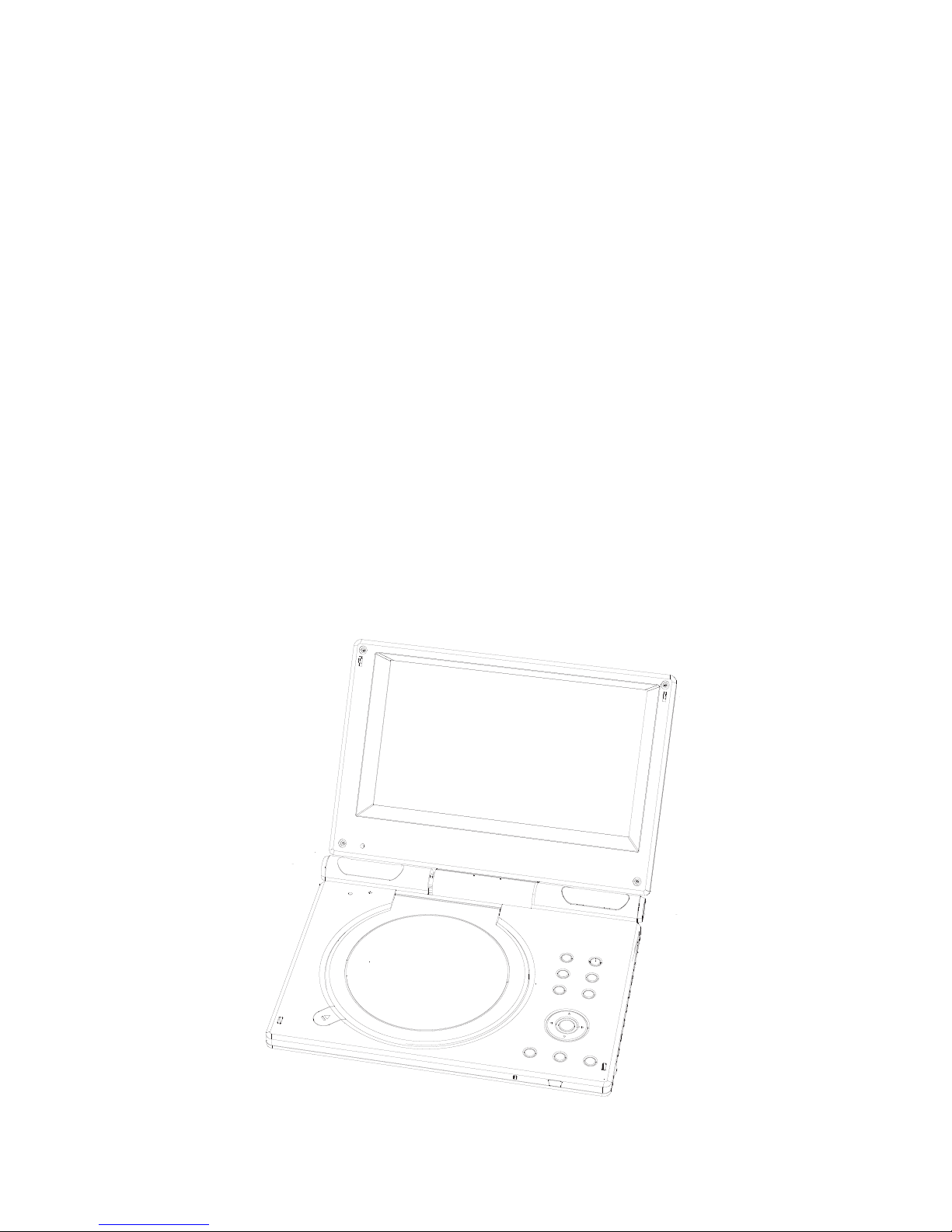
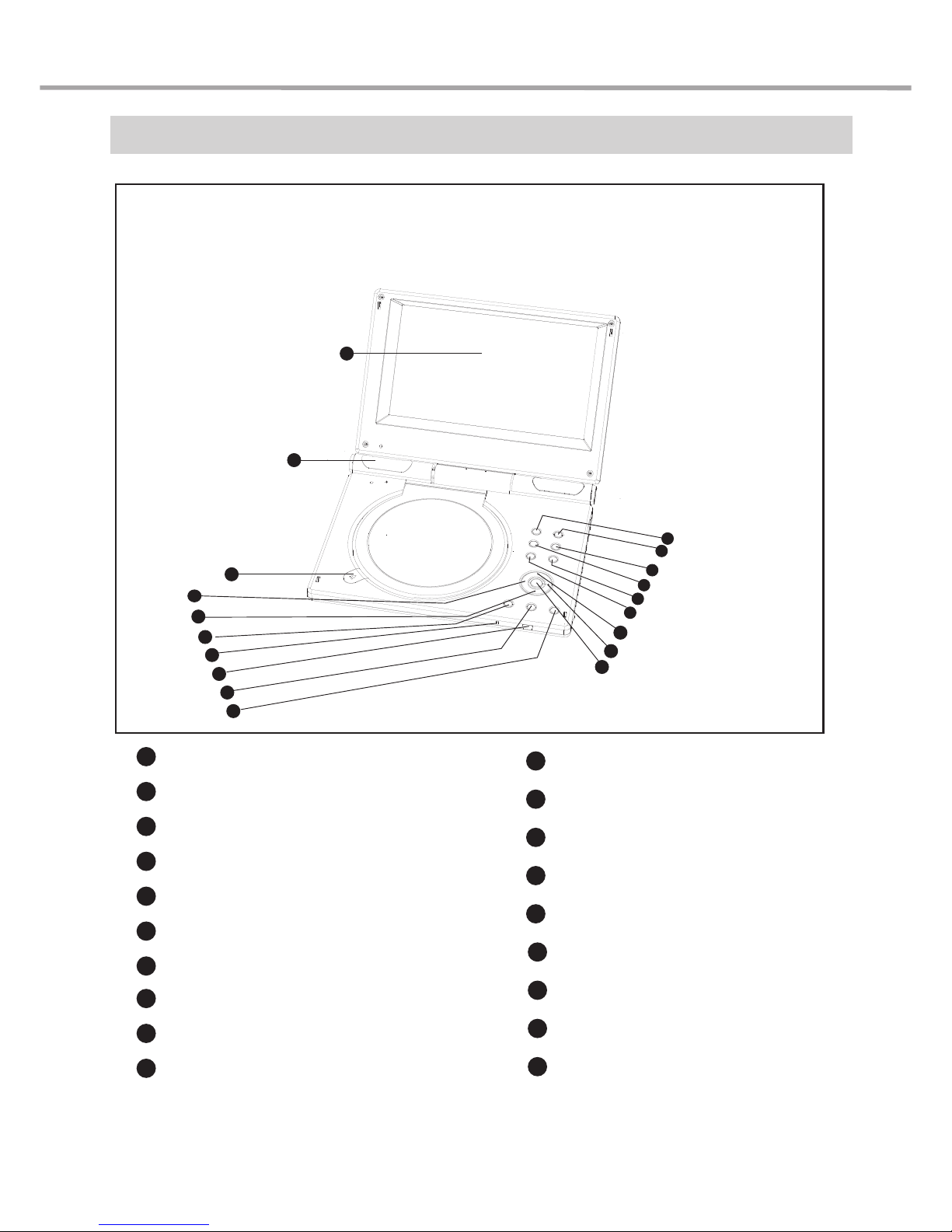
Control Button Locations and Explanations
1
Color TFT LCD
2
Speakers
3
4
LEFT direction arrow
5
6
9
IR sensor
7
Power indicator
8
PREV Button
10
PLAY button / PAUSE button
11
RIGHT direction arrow
12
UP direction arrow
15
13
14
2
1
3
514
17
16
15
18
19
7
9
6
8
10
11
1134
12
OPEN/CLOSE button
DVD/READER button
DOWN direction arrow
17
P/N button
18
MENU Button
19
SETUP Button
NEXT Button
STOP button
4
Panel Button
16
DVD/AUXIN Button

3
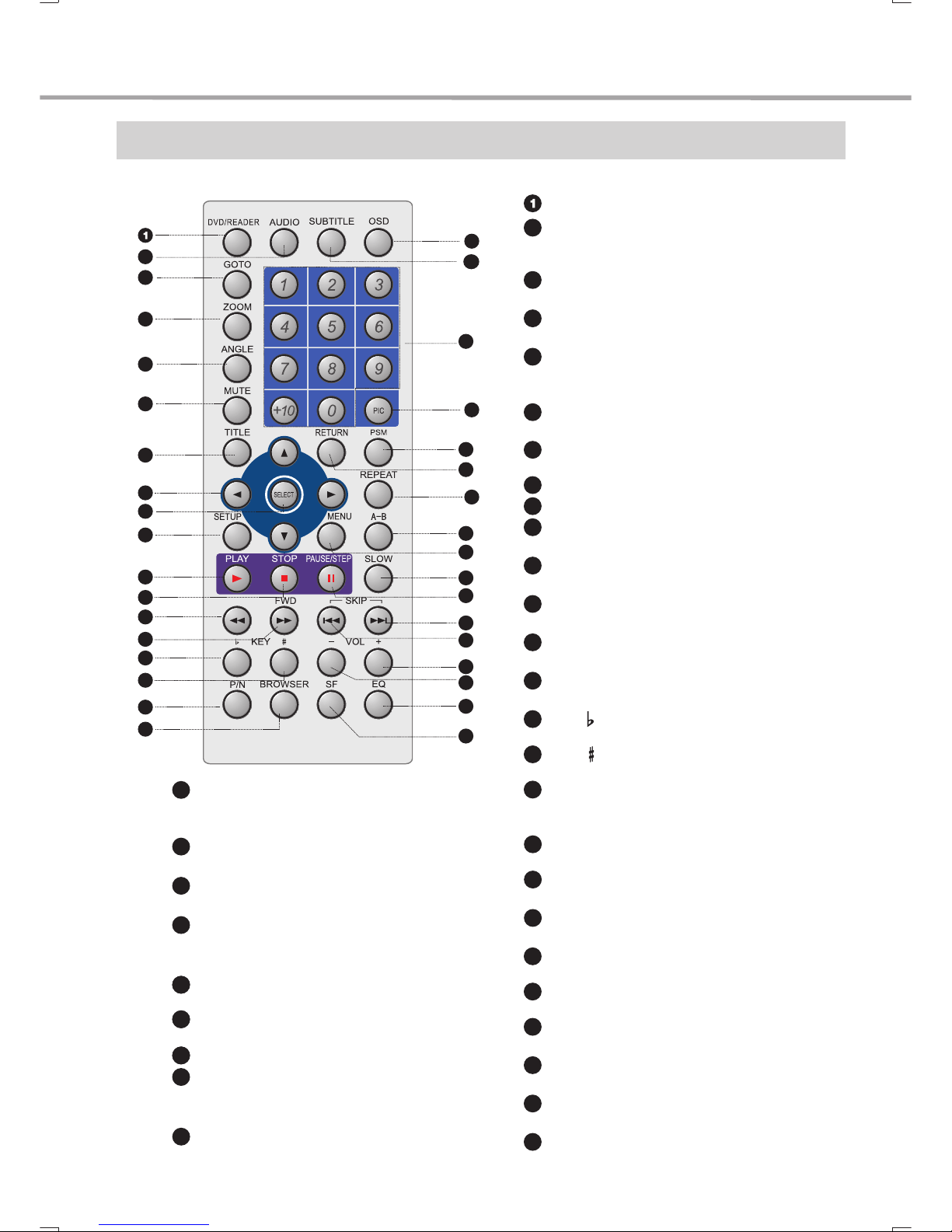
Remote Control Illustration
6
3
2
5
7
8
9
12
11
13
14
16
33
22
20
18
21
19
23
24
28
27
25
26
15
17
4
31
32
30
29
10
35
34
Switch new user interface.
BROWSER
18
DVD/READER Button
Change the audio language or
audio channel.
AUDIO Button
2
Play from the desired location.
GOTO button
3
Zoom in /out the displayed frame.
ZOOM Button
4
Fast forward play.
FWD Button
14
Change camera angles, MP3/JPEG
playback modes switch.
ANGLE Button
5
Press once to mute, twice to unmute.
6MUTE button
DVD titles.
TITLE button
7
Fast backward play.
REW Button
13
Function setup.
10 SETUP Button
Normal playback.
PLAY Button
11
Stop playback.
STOP Button
12
8CURSOR Buttons
SELECT Button
9
Fall tone.
KEY Button
15
Switch the TV system between
PAL, NTSC and AUTO.
P/N Button
17
Rise tone.
KEY Button
16
Adjusting sound field effects.
SF Button
19
Adjusting equalization effects.
EQ Button
20
Decrease volume.
VOLUME-
21
Increase volume.
VOLUME+
22
Slow play.
SLOW Button
26
Skip forward.
NEXT Button
24
25 PAUSE/STEP Button
Pause or play frame by frame.
Skip backward.
PREV Button
23
A-B Button
28
Repeat the select.
Display DVD menu or open/close
PBC.
27 MENU Button
Display or hide disc information.
OSD Button
35
REPEAT Button
29
Repeat play.
27
31
NUMBER Buttons
27
33
Change subtitle languages/
Switch JPEG display modes.
SUBTITLE Button
34
Back to the previous menu/
Clearing input numbers.
30 RETURN Button
Set video.
27
32 PIC Button
REW
Power Spectrum Meter on/off.
PSM Button

The laser diode in the traverse unit (optical pickup)may brake down due to static electricity of clothes or human
body.Use due caution to electrostatic breakdown when servicing and handling the laser diode.
4.1.Grounding for electrostatic breakdown prevention
Some devices such as the DVD player use the optical pickup(laser diode)and the optical pickup will be damaged
by static electricity in the working environment.Proceed servicing works under the working environment where
grounding works is completed.
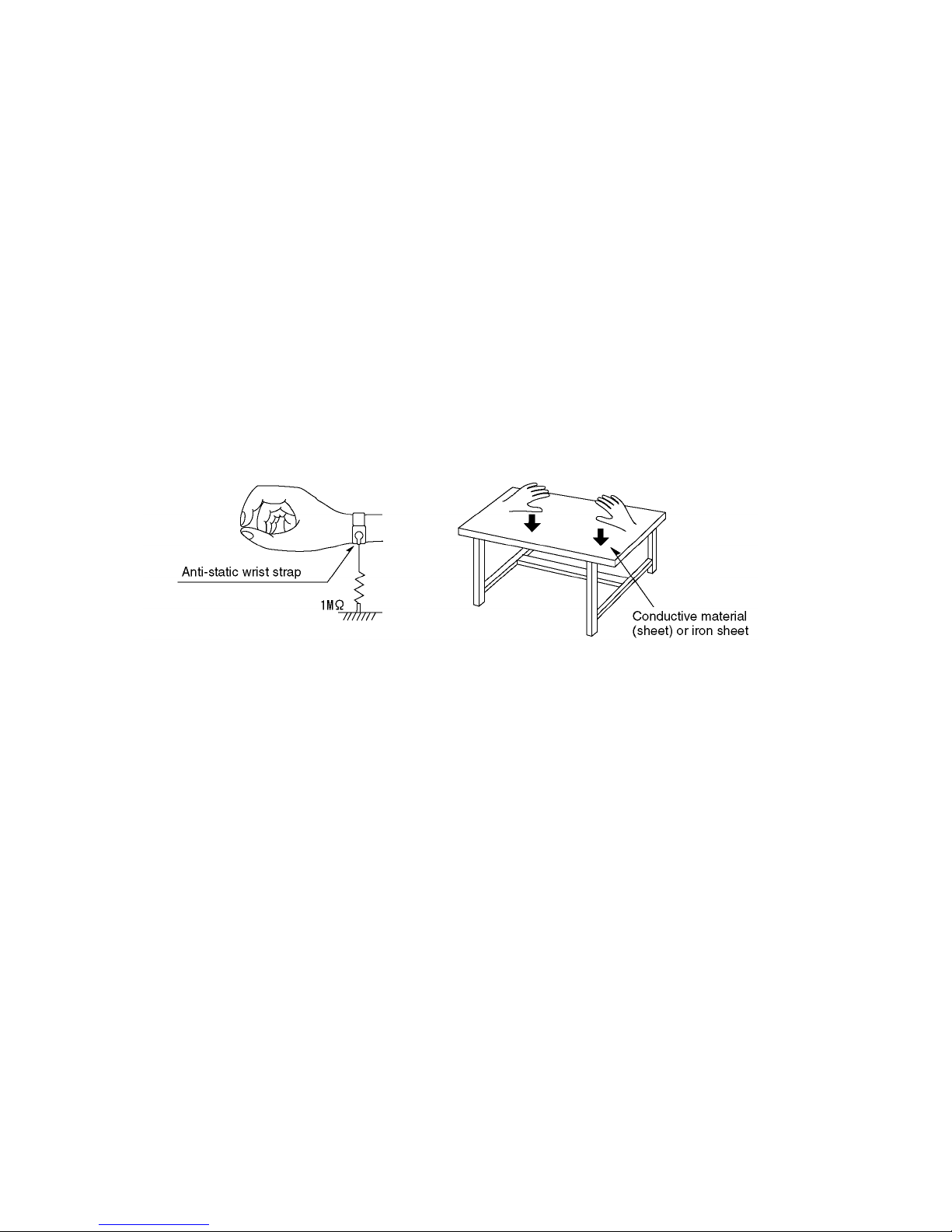
4.1.1. Worktable grounding
1. Put a conductive material(sheet)or iron sheet on the area where the optical pickup is placed,and ground the
4.1.2.Human body grounding
1 Use the anti-static wrist strap to discharge the static electricity from your body.
4.1.3.Handling of optical pickup
1. To keep the good quality of the optical pickup maintenance parts during transportation and before
installation, the both ends of the laser diode are short-circuited.After replacing the parts with new ones,
remove the short circuit according to the correct procedure. (See this Technical Guide).
2. Do not use a tester to check the laser diode for the optical pickup .Failure to do so willdamage the laser
diode due to the power supply in the tester.
4.2. Handling precautions for Traverse Unit (Optical Pickup)
1. Do not give a considerable shock to the traverse unit(optical pickup)as it has an extremely high-precise
structure.
2. When replacing the optical pickup, install the flexible cable and cut is short land with a nipper. See the
optical pickup replacement procedure in this Technical Guide. Before replacing the traverse unit, remove
the short pin for preventingstatic electricity and install a new unit.Connect the connector as short times as
possible.
3. The flexible cable may be cut off if an excessive force is applied to it.Use caution when handling the cable.
4. The half-fixed resistor for laser power adjustment cannot be adjusted. Do not turn the resistor.
safety_3 (1577x409x2 tiff)
sheet.

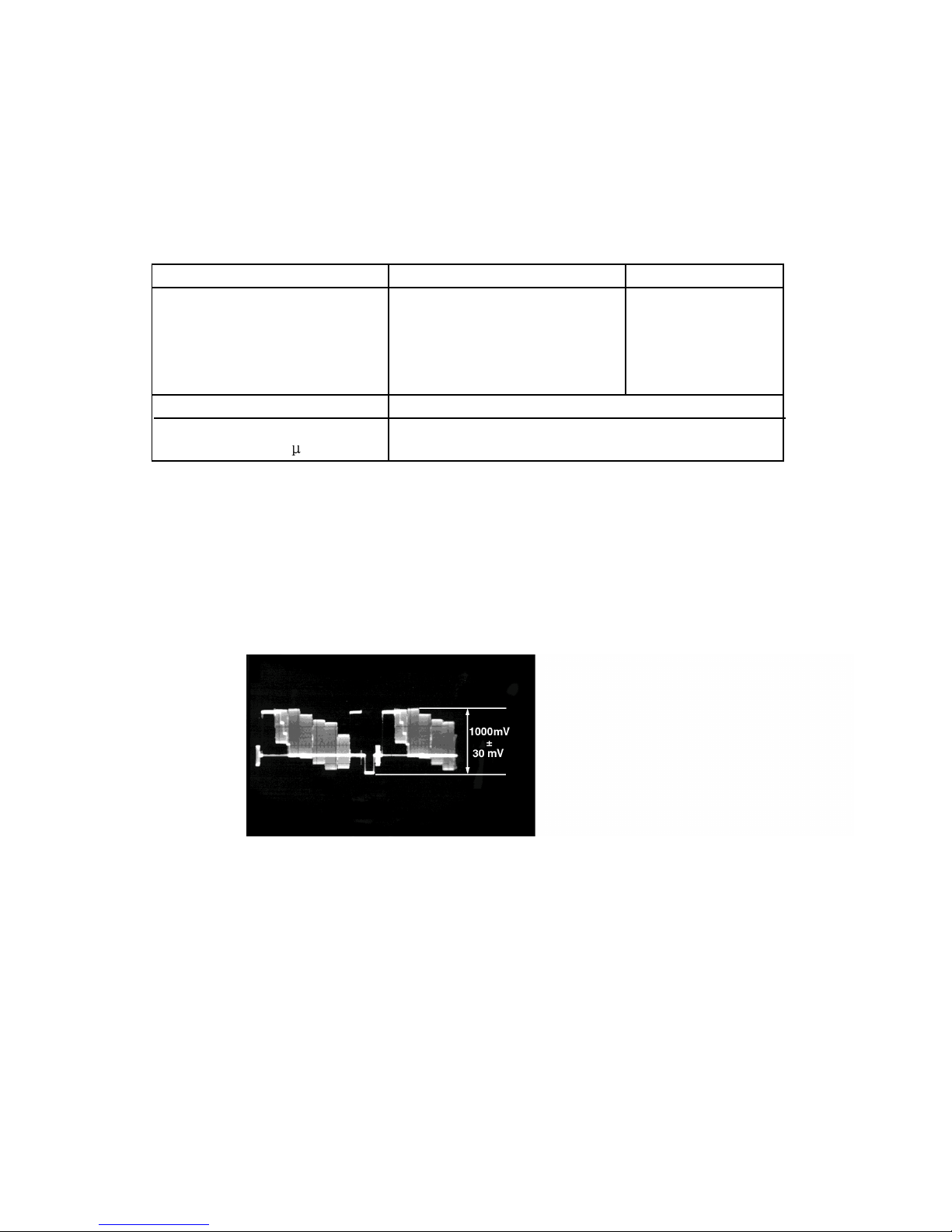
5.1. Video Output (Luminance Signal) Confirmation
DO this confirmation after replacing a P.C.B.
Purpose:To maintain video signal output compatibility.
1.Connect the oscilloscope to the video output terminal and terminate at 75 ohms.
2.Confirm that luminance signal(Y+S)level is 1000mVp-p±30mV
Measurement point
Video output terminal
Color bar 75%
PLAY(Title 46):DVDT-S15
PLAY(Title 12):DVDT-S01
DVDT-S15
or
DVDT-S01
Mode Disc
Measuring equipment,tools
200mV/dir,10 sec/dir 1000mVp-p±30mV
Confirmation value

Do the confirmation after replacing P.C.B.
Purpose:To maintain video signal output compatibility.
1.Connect the oscilloscope to the video output terminal and terminate at 75 ohme.
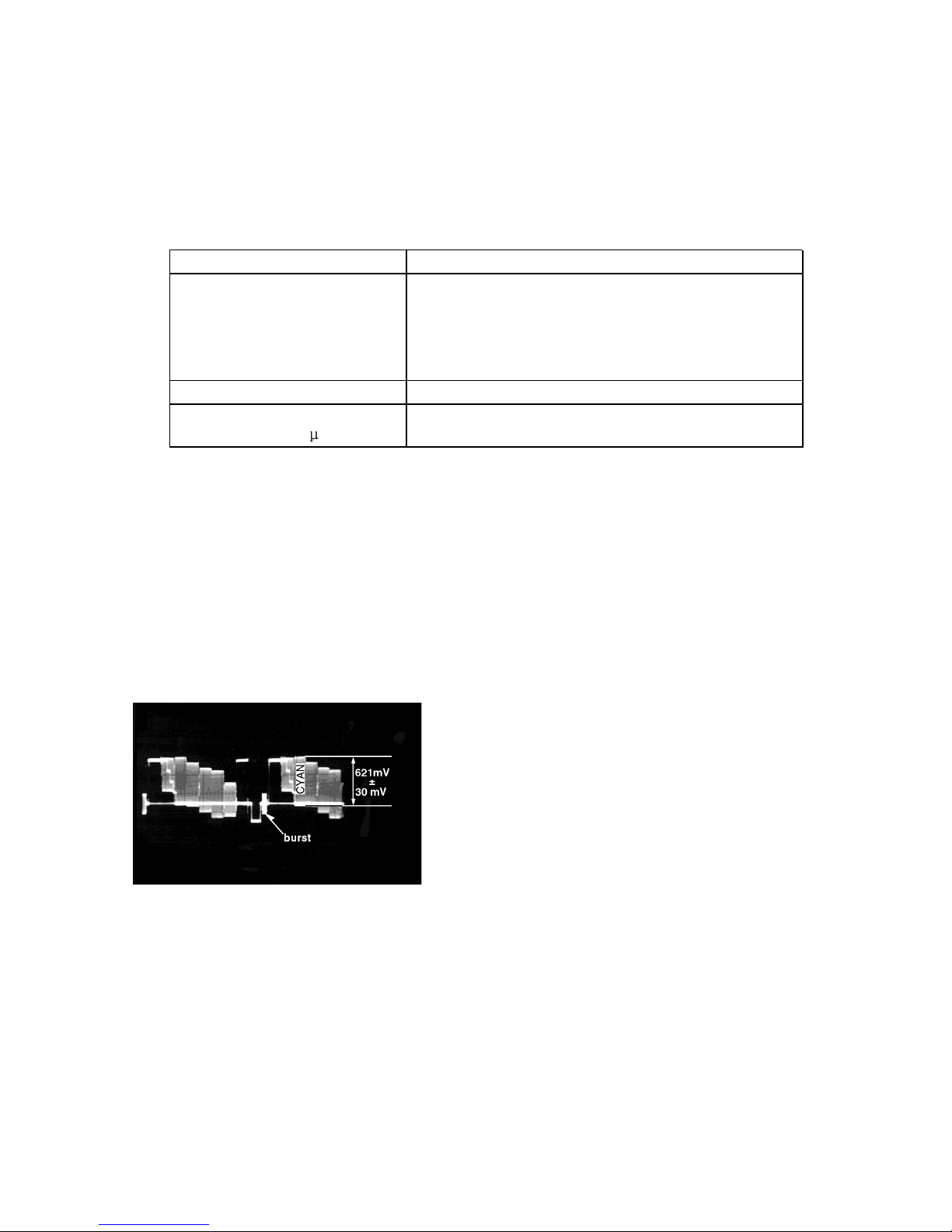
2.Confirm that the chrominance signal(C)level is 621 mVp-p±30mV
Measurement point
Video output terminal
Color bar 75%
PLAY(Title 46):DVDT-S15
PLAY(Title 12):DVDT-S01
DVDT-S15
or
DVDT-S01
Mode Disc
Measuring equipment,tools Confirmation value
Screwdriver,Oscilloscope
200mV/dir,10 sec/dir 621mVp-p±30mV


MT1389
Progressive-Scan DVD Player SOC
Specifications are subject to change without notice
MediaTek MT1389 is a DVD player system-on-chip (SOC) which incorporates advanced features like high
quality TV encoder and state-of-art de-interlace processing. The MT1389 enables consumer electronics
manufacturers to build high quality, cost-effective DVD players, portable DVD players or any other home
entertainment audio/video devices.
Based on MediaTek’s world-leading DVD player SOC architecture, the MT1389 is the 3rd generation of the DVD
player SOC. It integrates the MediaTek 2nd generation front-end analog RF amplifier and the Servo/MPEG AV
decoder.
The progressive scan of the MT1389 utilized a proprietary advanced motion-adaptive de-interlace algorithm to
achieve the best movie/video playback. It can easily detect 3:2/2:2 pull down source and restore the correct
original pictures. It also supports a patent-pending edge-preserving algorithm to remove the saw-tooth effect.
MT1389L
DVD
PUH
Module
FLASH
DRAM
CVBS, Y/C,
Component
SDPIF
Front-panel
Remote
Audio DAC
DVD Player System Diagram Using MT1389
Key Features
RF/Servo/MPEG Integration
High Performance Audio Processor
Motion-Adaptive, Edge-Preserving De-interlace
108MHz/12-bit, 6 CH TV Encoder
Applications
Standard DVD Players
Portable DVD Players
Table of contents
Other BBK DVD Player manuals