manuals.online logo
Brands
  1. Home
  2. •
  3. Brands
  4. •
  5. BENDIX
  6. •
  7. Air Compressor
  8. •
  9. BENDIX BX-2150 User manual

BENDIX BX-2150 User manual

Other manuals for BX-2150

1

Other BENDIX Air Compressor manuals

BENDIX BA-921 COMPRESSOR-STD-CLOSED ROOM User manual

BENDIX

BENDIX BA-921 COMPRESSOR-STD-CLOSED ROOM User manual

BENDIX BA-921 COMPRESSOR-STD-CLOSED ROOM Mounting instructions

BENDIX

BENDIX BA-921 COMPRESSOR-STD-CLOSED ROOM Mounting instructions

BENDIX TU-FLO 400-500-1000 AIR COMPRESSOR User manual

BENDIX

BENDIX TU-FLO 400-500-1000 AIR COMPRESSOR User manual

BENDIX TU-FLO 600 AIR COMPRESSOR User manual

BENDIX

BENDIX TU-FLO 600 AIR COMPRESSOR User manual

BENDIX 360CC User manual

BENDIX

BENDIX 360CC User manual

BENDIX TU-FLO 700 COMPRESSOR User manual

BENDIX

BENDIX TU-FLO 700 COMPRESSOR User manual

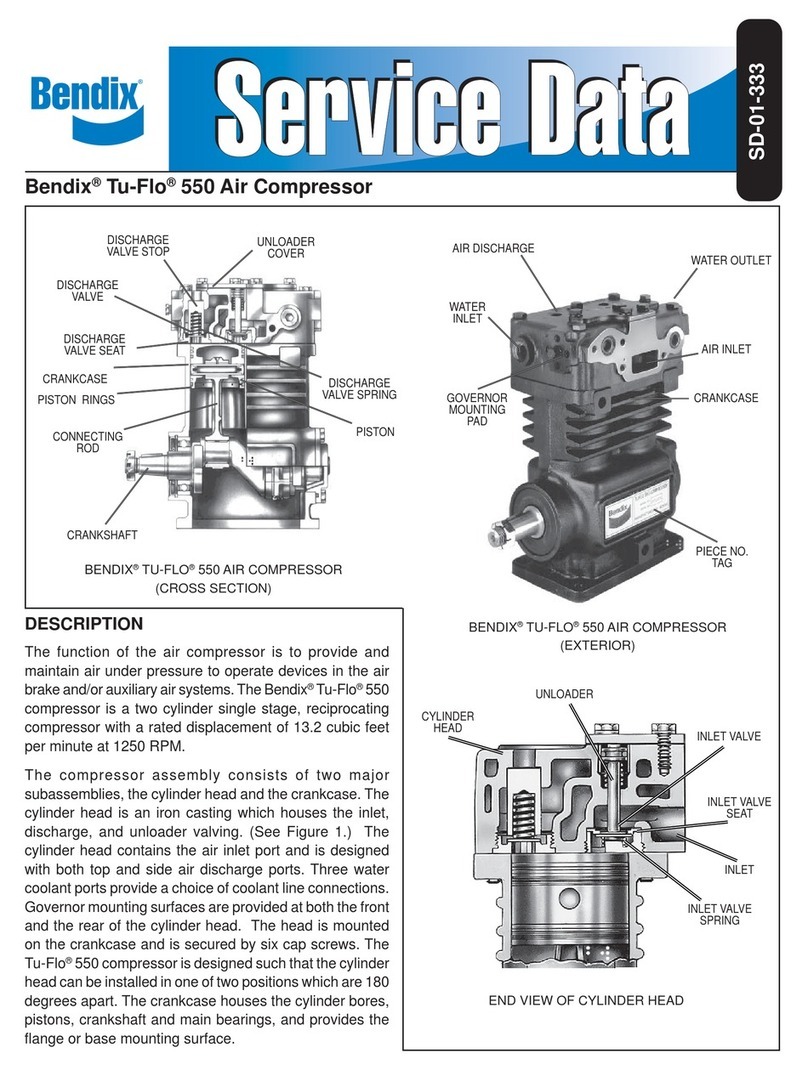
BENDIX TU-FLO 550 COMPRESSOR User manual

BENDIX

BENDIX TU-FLO 550 COMPRESSOR User manual

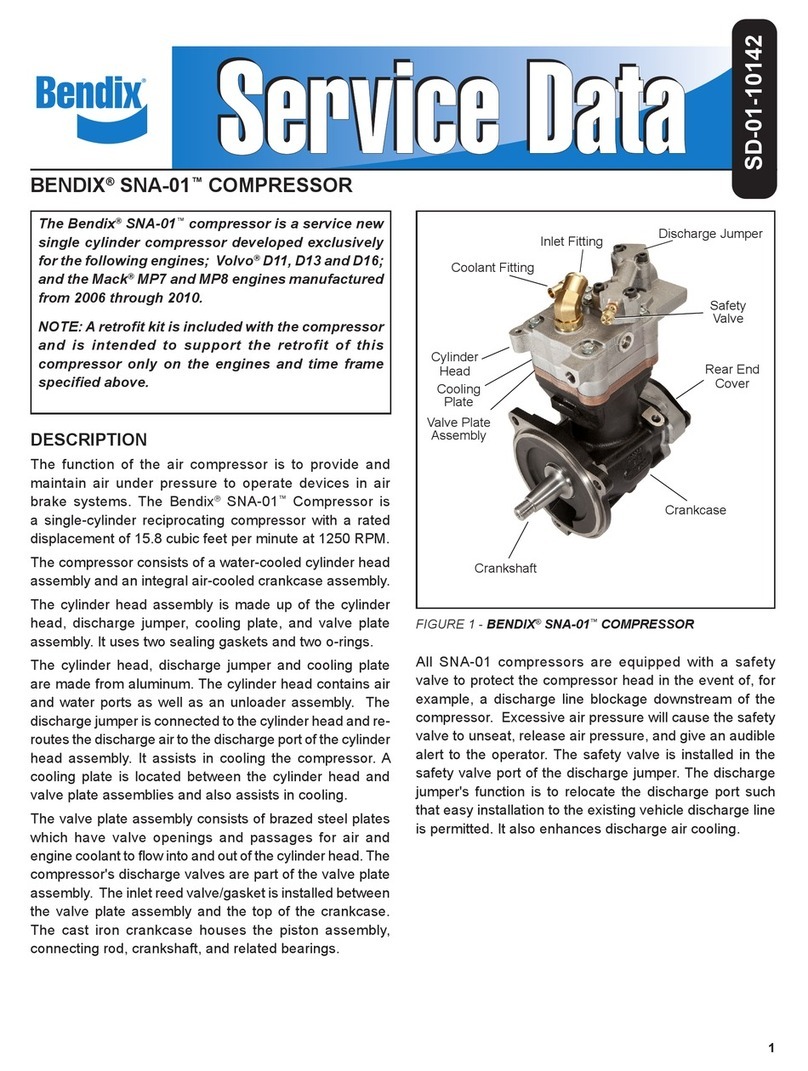
BENDIX SNA-01 Mounting instructions

BENDIX

BENDIX SNA-01 Mounting instructions

BENDIX TU-FLO 750 COMPRESSOR User manual

BENDIX

BENDIX TU-FLO 750 COMPRESSOR User manual

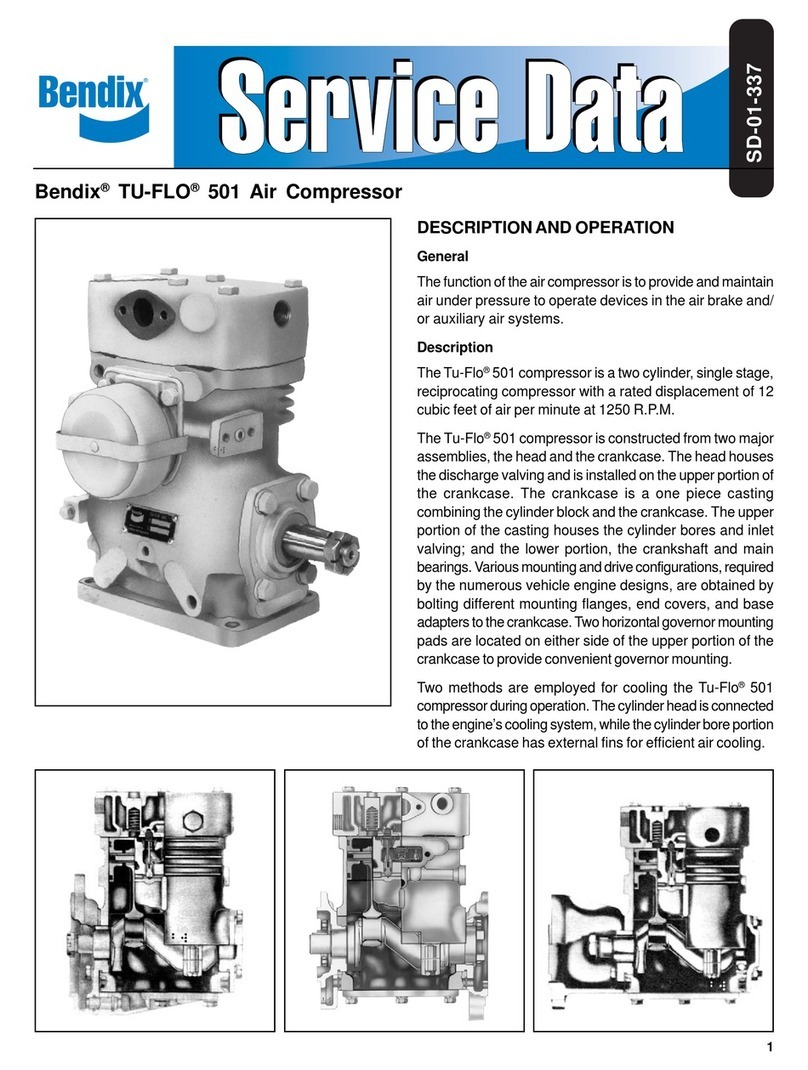
BENDIX TU-FLO 501 AIR COMPRESSOR User manual

BENDIX

BENDIX TU-FLO 501 AIR COMPRESSOR User manual

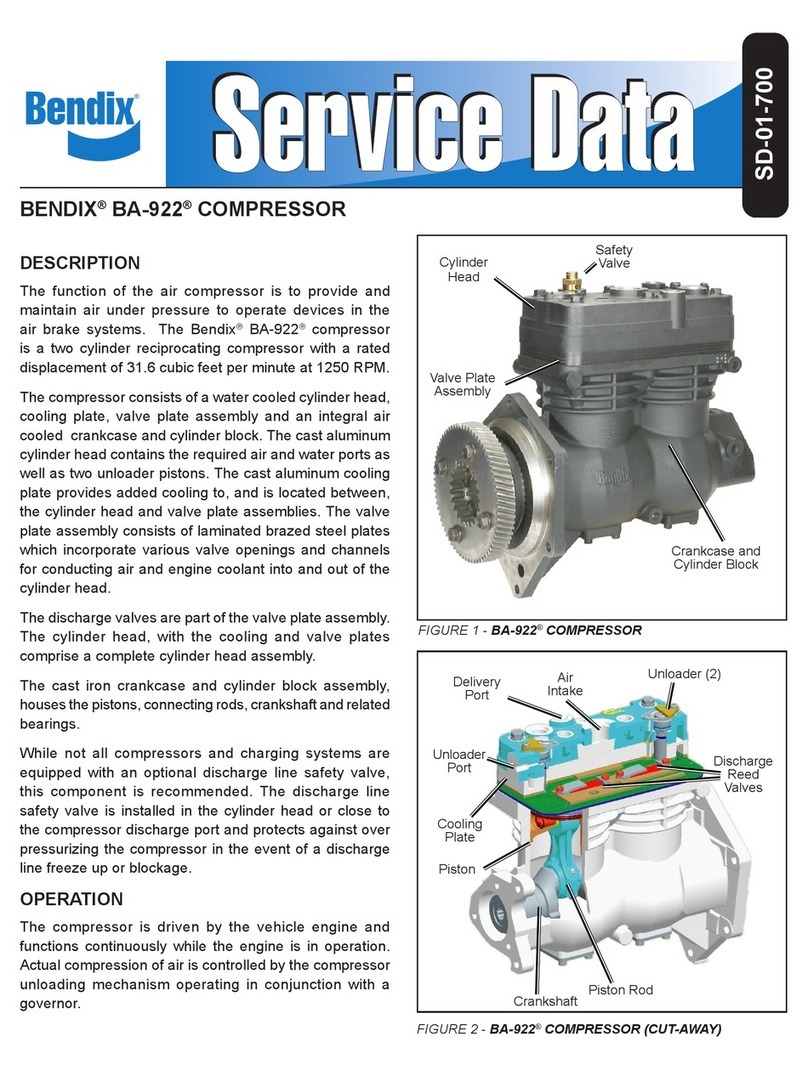
BENDIX BA-922 COMPRESSOR User manual

BENDIX

BENDIX BA-922 COMPRESSOR User manual

BENDIX BX-2150 User manual

BENDIX

BENDIX BX-2150 User manual

BENDIX BX2150 AIR COMP-BW1424- User manual

BENDIX

BENDIX BX2150 AIR COMP-BW1424- User manual

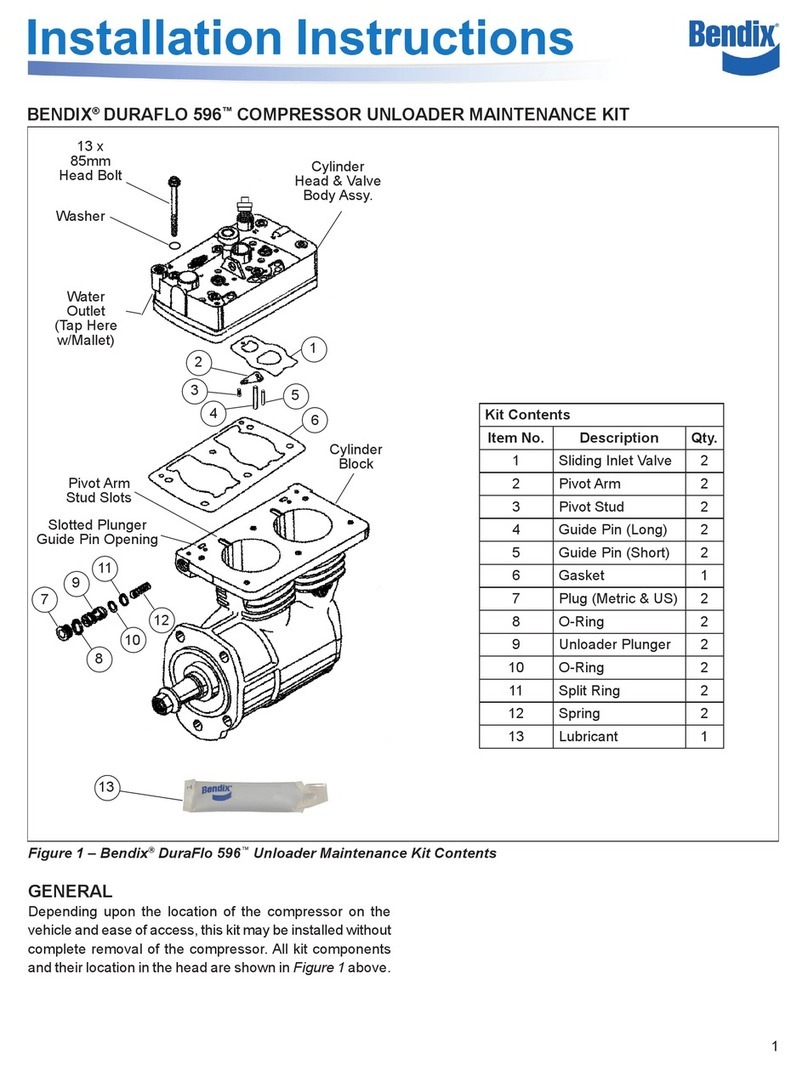
BENDIX DURAFLO 596 COMPRESSOR User manual

BENDIX

BENDIX DURAFLO 596 COMPRESSOR User manual

BENDIX TU-FLO 750 COMPRESSOR Mounting instructions

BENDIX

BENDIX TU-FLO 750 COMPRESSOR Mounting instructions

BENDIX DURAFLO 596 COMPRESSOR User manual

BENDIX

BENDIX DURAFLO 596 COMPRESSOR User manual

Popular Air Compressor manuals by other brands

Craftsman 919.724591 owner's manual

Craftsman

Craftsman 919.724591 owner's manual

Atlas Copco GA 30+ Instruction book

Atlas Copco

Atlas Copco GA 30+ Instruction book

Hitachi Highly WHP11500VSDPC9EQ installation manual

Hitachi

Hitachi Highly WHP11500VSDPC9EQ installation manual

Craftsman 919.167810 owner's manual

Craftsman

Craftsman 919.167810 owner's manual

Yamato 24/2 M1CD instruction manual

Yamato

Yamato 24/2 M1CD instruction manual

Clarke 2242117 Operation & maintenance instructions

Clarke

Clarke 2242117 Operation & maintenance instructions

Sparmax DC-25XR user manual

Sparmax

Sparmax DC-25XR user manual

Briggs & Stratton Air Compressor Operator's manual

Briggs & Stratton

Briggs & Stratton Air Compressor Operator's manual

Fini F3GST2TK Operator's manual

Fini

Fini F3GST2TK Operator's manual

Campbell Hausfeld RP3300 Easy setup guide

Campbell Hausfeld

Campbell Hausfeld RP3300 Easy setup guide

Ingersoll-Rand UP6 20 HP Option manual

Ingersoll-Rand

Ingersoll-Rand UP6 20 HP Option manual

Parkside PKO 270 A1 operating instructions

Parkside

Parkside PKO 270 A1 operating instructions

Clas Ohlson QIE-ZTH-15 manual

Clas Ohlson

Clas Ohlson QIE-ZTH-15 manual

Ferm CRM1046 Original instructions

Ferm

Ferm CRM1046 Original instructions

BE AC153 Operation manual

BE

BE AC153 Operation manual

RIDGID OF25150A Operator's manual

RIDGID

RIDGID OF25150A Operator's manual

Johnson Controls QUANTUM LX Setup

Johnson Controls

Johnson Controls QUANTUM LX Setup

Ring Automotive RAC700 instructions

Ring Automotive

Ring Automotive RAC700 instructions

manuals.online logo
manuals.online logoBrands
  • About & Mission
  • Contact us
  • Privacy Policy
  • Terms and Conditions

Copyright 2025 Manuals.Online. All Rights Reserved.

1
BENDIX®BX-2150™COMPRESSOR MAINTENANCE KIT
Figure 1 – Bendix®BX-2150™Compressor Maintenance Kit Contents
Kit Contents
Item No. Description Qty.
1* Unloader Stop 1
2* O-Ring 1
3* Unloader Piston 1
4* O-Ring 1
5 Inlet Valve Stop 1
6 Inlet Valve Spring 1
7 Inlet Valve Seat 1
8 Discharge Valve 1
9 Governor Gasket 1
10 Strainer Gasket 1
11 Discharge Valve Spring 1
12 Cylinder Head Gasket 1
13 Inlet Valve Gasket 1
14 Discharge Valve Seat 1
15 Inlet Valve 1
16 Unloader Spring 1
Bendix®BX-2150™
Compressor
1*
2*
3*
4*
5
6
7
8
9
10
11
12
13
14
15
16
Hex Head
Cap Screws
* Included in the compressor unloader kit
contained in this kit.
2
DISASSEMBLY
1. Remove the discharge line from the discharge port of
the cylinder head and push the discharge line out of the
way.
2. Remove the governor or the air line from the governor
mounting pad on the head of the compressor. Remove
and discard the governor mounting gasket (9) if the
governor is mounted on the head.
3. Removetheinletttingorairstraineranddiscardthe
gasket (10).
4. Remove the inlet and outlet water lines after draining
the radiator.
5. Remove and retain the four hex head cap screws from
the head. Tap the head with a mallet to break the gasket
seal and remove the head. Remove the head gasket (12).
6. Before disassembling the discharge valve mechanism,
measure and record the discharge valve travel (from
closed to completely open). If the measured discharge
valve travel DOES NOT EXCEED .032 inches,
the discharge valve stop need not be removed. It
is recommended that the cylinder head assembly
be replaced if the discharge valve stop requires
replacement. Using a 9/16" Allen®wrench, remove
the discharge valve seat (14), valve (8), and valve
spring (11).
7. With a 3/16" Allen®wrench remove the unloader stop
and o-ring assembly (1 & 2). (Refer to the unloader kit
instruction sheet included in this kit).
8. Insert the lugs of a spanner wrench into the holes of
the inlet valve stop (5) and remove the inlet valve stop
along with the inlet valve spring (6), inlet valve (15),
valve seat (7), inlet valve gasket (13), and unloader
spring (16). (NOTE: Reference Williams®adjustable
face spanner #483.)
9. With a pair of needle nose pliers remove the unloader
piston and o-ring assembly (3 & 4).
10.Discard components 1 through 16.
CLEANING
Remove all carbon deposits, rust, and scale from all cavities
in the cylinder head. Use shop air to clear any loose particles
from these recesses. Scrape the gasket surfaces of the
head and the crankcase taking care not to allow foreign
material to fall into the cylinder.
INSPECTION
Inspect the inlet bushing and discharge valve stop for
excessive wear, nicks, and scratches. These surfaces
can be "dressed" with a lapping stone to improve their
condition.
GENERAL SAFETY GUIDELINES
WARNING! PLEASE READ AND
FOLLOW THESE INSTRUCTIONS
TO AVOID PERSONAL INJURY OR DEATH:
When working on or around a vehicle, the following
guidelines should be observed AT ALL TIMES:
▲Park the vehicle on a level surface, apply the parking
brakes and always block the wheels. Always wear personal
protection equipment.
▲Stop the engine and remove the ignition key when working
under or around the vehicle. When working in the engine
compartment, the engine should be shut off and the ignition
key should be removed. Where circumstances require that
the engine be in operation, EXTREME CAUTION should be
used to prevent personal injury resulting from contact with
moving, rotating, leaking, heated or electrically-charged
components.
▲Do not attempt to install, remove, disassemble or
assemble a component until you have read, and thoroughly
understand, the recommended procedures. Use only the
proper tools and observe all precautions pertaining to use
of those tools.
▲If the work is being performed on the vehicle’s air brake
system, or any auxiliary pressurized air systems, make
certain to drain the air pressure from all reservoirs before
beginning ANY work on the vehicle. If the vehicle is
equipped with a Bendix®AD-IS®air dryer system, a Bendix®
DRM™dryer reservoir module, or a Bendix® AD-9si®air
dryer, be sure to drain the purge reservoir.
▲
Following the vehicle manufacturer’s recommended
procedures, deactivate the electrical system in a manner
that safely removes all electrical power from the vehicle
.
▲Never exceed manufacturer’s recommended pressures.
▲Never connect or disconnect a hose or line containing
pressure; it may whip and/or cause hazardous airborne
dust and dirt particles. Wear eye protection. Slowly open
connections with care, and verify that no pressure is
present. Never remove a component or plug unless you are
certain all system pressure has been depleted.
▲Use only genuine Bendix®brand replacement parts,
components and kits. Replacement hardware, tubing, hose,
fi ttings, wiring, etc. must be of equivalent size, type and
strength as original equipment and be designed specifi cally
for such applications and systems.
▲Components with stripped threads or damaged parts should
be replaced rather than repaired. Do not attempt repairs
requiring machining or welding unless specifi cally stated
and approved by the vehicle and component manufacturer.
▲Prior to returning the vehicle to service, make certain all
components and systems are restored to their proper
operating condition.
▲For vehicles with Automatic Traction Control (ATC), the ATC
function must be disabled (ATC indicator lamp should be
ON) prior to performing any vehicle maintenance where
one or more wheels on a drive axle are lifted off the ground
and moving.
▲The power MUST be temporarily disconnected from the
radar sensor whenever any tests USING A DYNAMOMETER
are conducted on a vehicle equipped with a Bendix®
Wingman®system.
▲You should consult the vehicle manufacturer's operating
and service manuals, and any related literature, in
conjunction with the Guidelines above.

3
ASSEMBLY
Use contents contained in both kits.
1. Install the unloader stop and o-ring assembly (1 & 2)
into the threaded port on the top of the head above the
air inlet cavity. Torque to 175-225 in-lbs.
2. Turn the head over and install the unloader piston and
o-ring assembly (3 & 4) into the unloader cavity (short
stemrst).Installtheunloaderspring(16)(smallend
rst)overthelongstemoftheunloaderpiston(4).Install
the inlet valve gasket (13) over the unloader spring and
rest it on the shoulder of the hole in the inlet cavity. Install
the inlet valve seat (7) on top of the inlet valve gasket
(bevel side of the valve seat up). Install inlet valve (15)
on the valve seat. Install inlet valve spring (6) on the
inlet valve. Retain with the inlet valve stop (5). Using a
spanner-type wrench torque to 840-1080 in-lbs.
3. Install the discharge valve spring (11) into the cavity of
the discharge valve stop. Install the discharge valve (8)
on top of the discharge valve spring and retain with the
discharge valve seat (14). Using a 9/16" Allen®wrench,
torque to 840-1080 in-lbs.
4. Test the head for air leakage prior to installing the head
onto the compressor. Refer to "Air Leakage Tests"
section.
5. Install the cylinder head gasket (12) onto the crankcase.
Place the head in the proper position onto the crankcase
and retain with the four 5/16" cap screws. Snug all four
cap screws prior to torquing in a cross pattern to 175-
225 in-lbs.
6. Installtheinletttingorairstrainerontothecompressor.
Install the strainer gasket (10) between either
component and the compressor.
7. Replace the governor or air line from the governor onto
the compressor. If the governor is direct mounted onto
the mounting pad of the compressor, install the governor
gasket (9) between the mounting pad and the governor.
8. Connect the discharge air line to the discharge port on
the top of the head.
9. Connect the inlet and outlet water lines to the head and
relltheradiator.
CHECK FOR COMPRESSOR OPERATION
1. Start the engine and observe the system pressure
gauge to ensure the compressor is pumping. Observe
that the compressor unloads (stops pumping) at the
governor cut-out setting.
2. Make several light brake applications until the governor
cut-in setting is reached. Observe that the compressor
again begins to pump.
COMPRESSOR TESTING
Vehicles manufactured after the effective date of FMVSS
121, with the minimum required reservoir volume, must have
a compressor capable of raising air system pressure from
85-100 psi in 25 seconds or less. This test is performed
with the engine operating at maximum recommended
governed speed. The vehicle manufacturer must certify this
performance on new vehicles with appropriate allowances
for air systems with greater than the minimum required
reservoir volume.
AIR LEAKAGE TESTS
Leakage past the discharge valve can be detected as follows:
Remove the discharge line and cylinder head from the
compressor and apply shop air back through the discharge
port. Coat the discharge valve seat with soapsuds. Bubble
leakage is permitted.
The unloader piston can be checked for leakage as follows:
Build up the air system to governor cut-out and shut off the
engine. Listen for escaping air at the compressor intake.
To pinpoint leakage, apply a small amount of oil around the
unloader piston. No leakage is permitted. Apply oil or soap
solution around the threads of the unloader stop assembly
on the top of the head.
4
S-0891 Rev. 002 © 2017 Bendix Commercial Vehicle Systems LLC, a member of the Knorr-Bremse Group • 10/17 • All Rights Reserved
Log-on and Learn from the Best
On-line training that's available when you are – 24/7/365.
Visit www.brake-school.com.