www.bluegrassliving.com 164003-01A6
AIR FOR COMBUSTION AND VENTILATION
WARNING: If the area in which
the heater may be operated does
not meet the required volume for
indoor combustion air, combus-
tion and ventilation air shall be
provided by one of the methods
described in the National Fuel
Gas Code, ANSI Z223.1/NFPA
54, the International Fuel Gas
Code, or applicable local codes.
Today's homes are built more energy ecient
than ever. New materials, increased insula-
tion, and new construction methods help
reduce heat loss in homes.
WARNING: Before installing
in a solid fuel burning replace,
the chimney ue and rebox
must be cleaned of soot, creo-
sote, ashes, and loose paint by
a qualified chimney cleaner.
Creosote will ignite if highly
heated. A dirty chimney ue may
create and distribute soot within
the house. Inspect chimney ue
for damage.
NOTICE: Installation, service, and repair
of this appliance must be performed by a
qualied installer, service agency, company
or gas supplier experienced with this type of
gas appliance. Only factory authorized com-
ponents listed in these instructions may be
used in accordance with the manufacturer's
instructions and all codes and requirements
of the authority having jurisdiction. Any
modications to this kit, or use of unauthorized
components, or accessory items, will void the
manufacturer's warranty, and may result in a
hazardous condition.
CAUTION: Do not remove
the metal data plates attached to
the burner pan. The data plates
contain important warranty in-
formation.
Home owners weather strip and caulk around
windows and doors to keep the cold air out
and the warm air in. During heating months,
home owners want their homes as airtight
as possible.
While it is good to make your home energy
ecient, your home needs to breathe. Fresh
air must enter your home. All fuel-burning ap-
pliances need fresh air for proper combustion
and ventilation.
Exhaust fans, replaces, clothes dryers, and
fuel burning appliances draw air from the
house to operate. You must provide adequate
fresh air for these appliances. This will en-
sure proper venting of vented fuel-burning
appliances.
INSTALLATION
WARNING: A qualied ser-
vice person must connect log
set to gas supply. Follow all
local codes.
Installation Items Needed
Before installing log set, make sure you have
the items listed below.
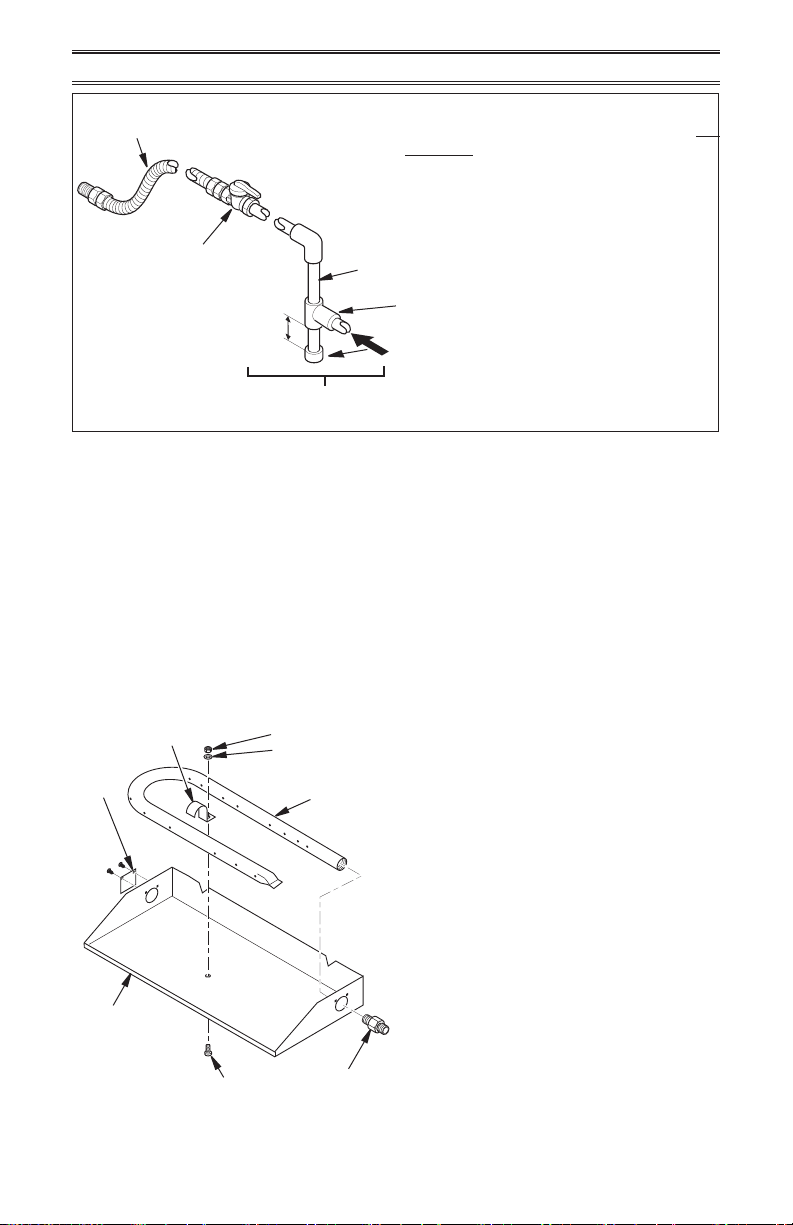
• piping (check local codes)
• sealant (resistant to natural gas)
• equipment shuto valve
• test gauge connection
• adjustable (crescent) wrench or pliers
• sediment trap
• tee joint
• pipe wrench
CAUTION: Only use a new,
black iron or steel pipe. Inter-
nally-tinned copper tubing may
be used in certain areas. Check
your local codes. Use pipe of
1/2" diameter or greater to allow
proper gas volume to log set. If
pipe is too small, loss of pres-
sure will occur.
Installation must include an equipment shut-
o valve, union, and plugged 1/8" NPT tap.
Locate NPT tap within reach for test gauge
hook up. NPT tap must be upstream from log
set (see Figure 3).