PG.3
© 2016 Celina Tent Inc.
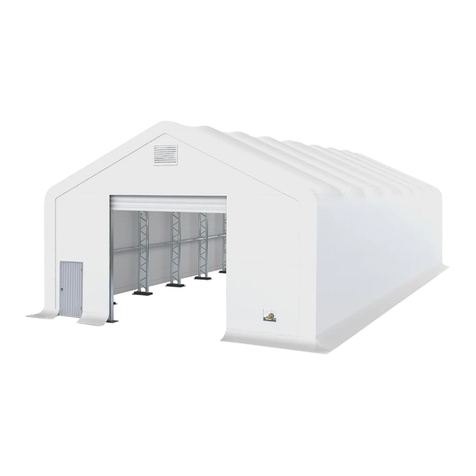
33’(10.1m)W X 40’(12.1m)L X 16’4”(4.9m)H Crestline Single Truss Arch Container, Arch Side www.GetTent.com / www.CelinaTent.com
Site selecon is extremely important. The installer must adhere to local building codes and re regulaons. The
installer must evaluate each installaon site and determine the proper securing and anchoring method and
device appropriate for the condions. Some soils require dierent staking or securing methods than what may
be/have been purchased with the standard tent package. Celina Tent’s instrucons, YouTube videos, and Layout
Handbook summarize all the funcons of each product, the rules for using them and suggesons for their use.
However, eld situaons, site condions, weather and local experience may mandate other methods. Review
the following condions at the proposed site and plan accordingly.
The best site qualies are:
• Locaon: Elevated, level, and clear of debris
• Soil Condions: Adequate for stable anchoring
• Space: Adequate space for the perimeter and stake lines
• Surface Type: Grass, Gravel, Concrete, Asphalt, Wood
• Site Access: Materials and services can easily be delivered to the site
Also allow for:
• Overhead Obstrucons: Electrical/telephone lines, tree branches
• Underground Ulies: Electric, Gas, Oil, Steam, Telephone, CATV, Water, Sewer
• Weather Eects: Monitor for extreme weather condions and evacuate if necessary
• Emergency Exit Capabilies: Provide evacuaon routes in case of a re or bad weather
SITE SELECTION
STAY ALERT: Watch what you are doing, and use common sense when installing/striking a tent, canopy,
structure, or shelter. Do not setup/strike while under the inuence of drugs, alcohol, or medicaon. A
moment of inaenon may result in serious personal injury.
DO NOT OVER LIFT: The equipment may be heavy and may require 2 or more people to li and move.
DO NOT OVERREACH: Keep proper foong and balance at all mes. Use a ladder when necessary.
DRESS PROPERLY: Do not wear loose clothing or jewelry. Contain long hair. Keep hair, clothing, and hands/
gloves away from power equipment and snag or pinch points.
USE SAFETY EQUIPMENT: Eye protecon, safety shoes, hard hats, or hearing protecon must be used for
appropriate condions.
Since weather is unpredictable, the installer/end user must incorporate their own judgment, common sense and
knowledge of local condions with the installaon instrucon guidelines. The installer is responsible for anci-
pang weather severity for proper me and method of installaon.
• Rain: Rain water can collect on the tent fabric and cause ‘ponding’ or ‘water pockeng’ under cer-
tain weather condions, especially if the tent is not installed and tensioned correctly. The addional weight
from the water will cause the tent to sag and ponding will connue to get worse. The weight can destroy the
tent fabric and/or cause the poles and baseplates to sink into the soil. Highly saturated soil will cause the
stakes to lose their holding power.
• Wind: Wind or wind and rain can cause the tension of the tent to change by loosening ratchet
assemblies, pulling stakes, and or causing the poles to shi or sink. It is very important to do roune main-
tenance checks and maintain proper tension on the tent top at all mes especially if weather condions are
such that ratchets are beginning to loosen.
• Lightning: Immediately evacuate the tent unl the chance of a lightning strike is no longer present.
• Snow: Tents, canopies, structures, and shelters are not designed to carry any type of snow loading. These
products should not be used if snow of any kind is present, and must be evacuated immediately.
PERSONAL SAFETY
WEATHER
SAFETY MAINTENANCEINSTALLATION CONTACTS