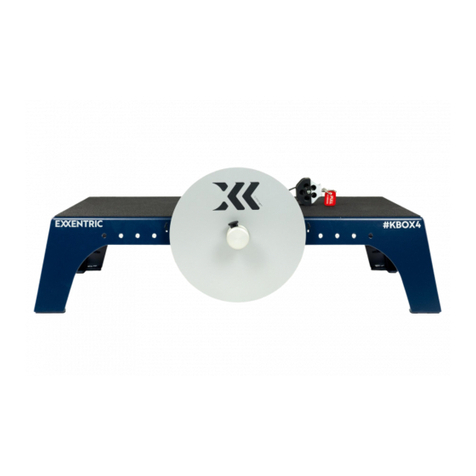
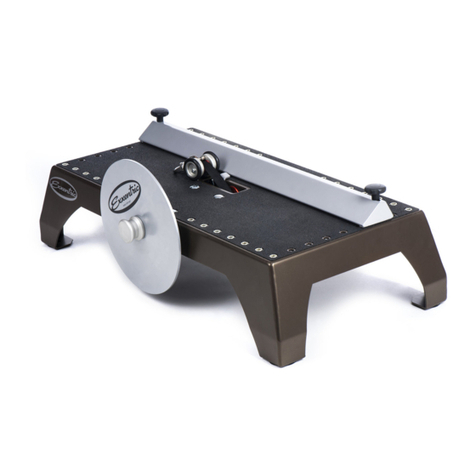
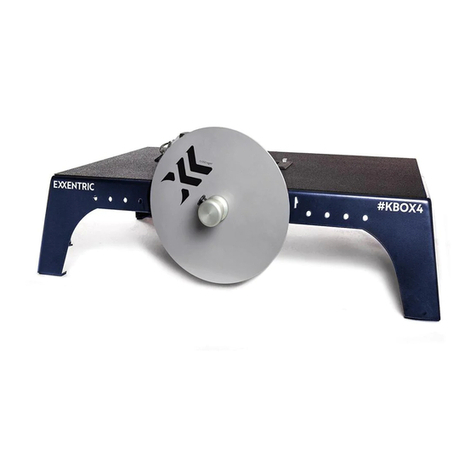
FEATURES OF THE KBOX
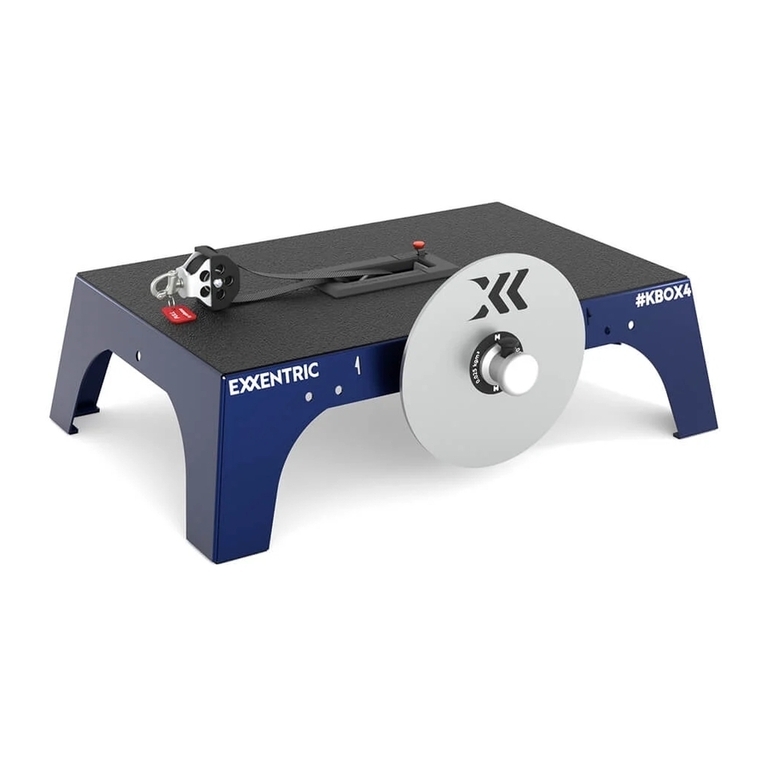
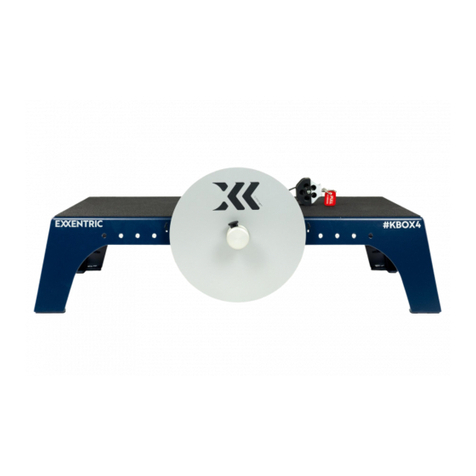
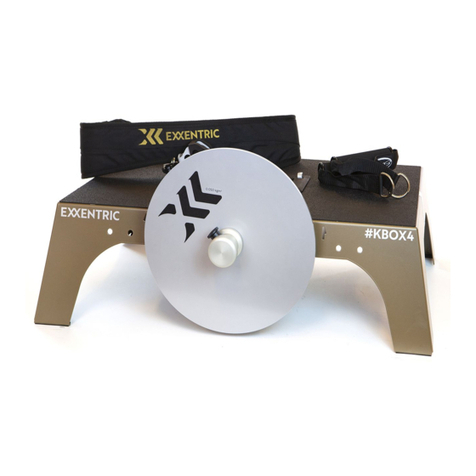
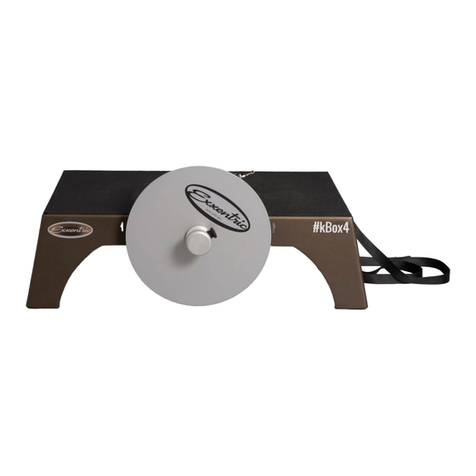
PrincipleofthekBox The kBox is a ‘flywheel exercise device’, often referred to as an
FWED. What muscle is being exercised depends on which exercise
isbeingperformed.
The principle is that you through muscle force accelerate and
decelerate a flywheel (or flywheels). Repeated exercises with high
intensity produces high forces that stimulate muscles to hypertrophy
and increased activation of the nervous system. These effects
together increase strength over time if the exercise is repeated
regularly.
Resistance The resistance is variable and unlimited. The flywheel has a
specified inertia and there is no upper limit to how much kinetic
energy you can produce in the flywheel motion. You can think of the
flywheel as a weight that weighs more if you put more effort into lifting
it. Resistance is variable so if you pull less, the flywheel will resist
less.
Every repetition in a maximal set is maximal instead of only the last
one which is the case with traditional weights. This results in a higher
training efficiency,earlier onset of strength increase and also
hypertrophy.
EccentricLoading The kBox provides for increased eccentric workloads. The skeletal
muscles can produce higher force in the eccentric, or negative phase.
This is difficult to take advantage of with traditional weights, which
alwaysweighthesame.
If you accelerate the flywheel during the concentric, or lifting phase
and then decelerate in a shorter amount of time, you will have to
produce a higher eccentric force. This will be similar to lifting a
tooheavy weight with help from training partners but executing the
eccentric (lengthening) phase by yourself. Check Training Guide for
moreinformationoneccentricoverload.
Mobility The kBox is mobile in comparison to traditional weights. Squatting
with the kBox is equivalent to traditional squats which would require a
barbell, weights up to 500 lb. for a strong lifter which is practically
impossible to carry around. In addition, you don’t need rubber mats or
rackstousethekBox.
kBox4manual 7