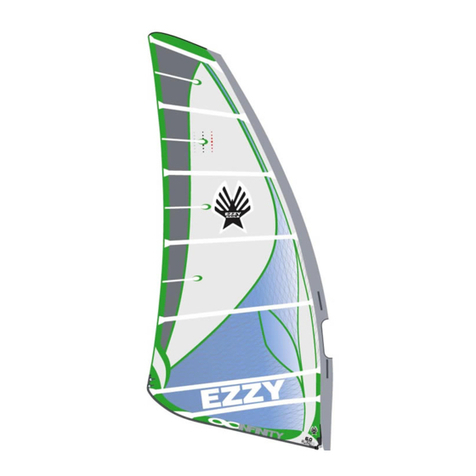
Rigging a 1998 Ezzy Power Wave
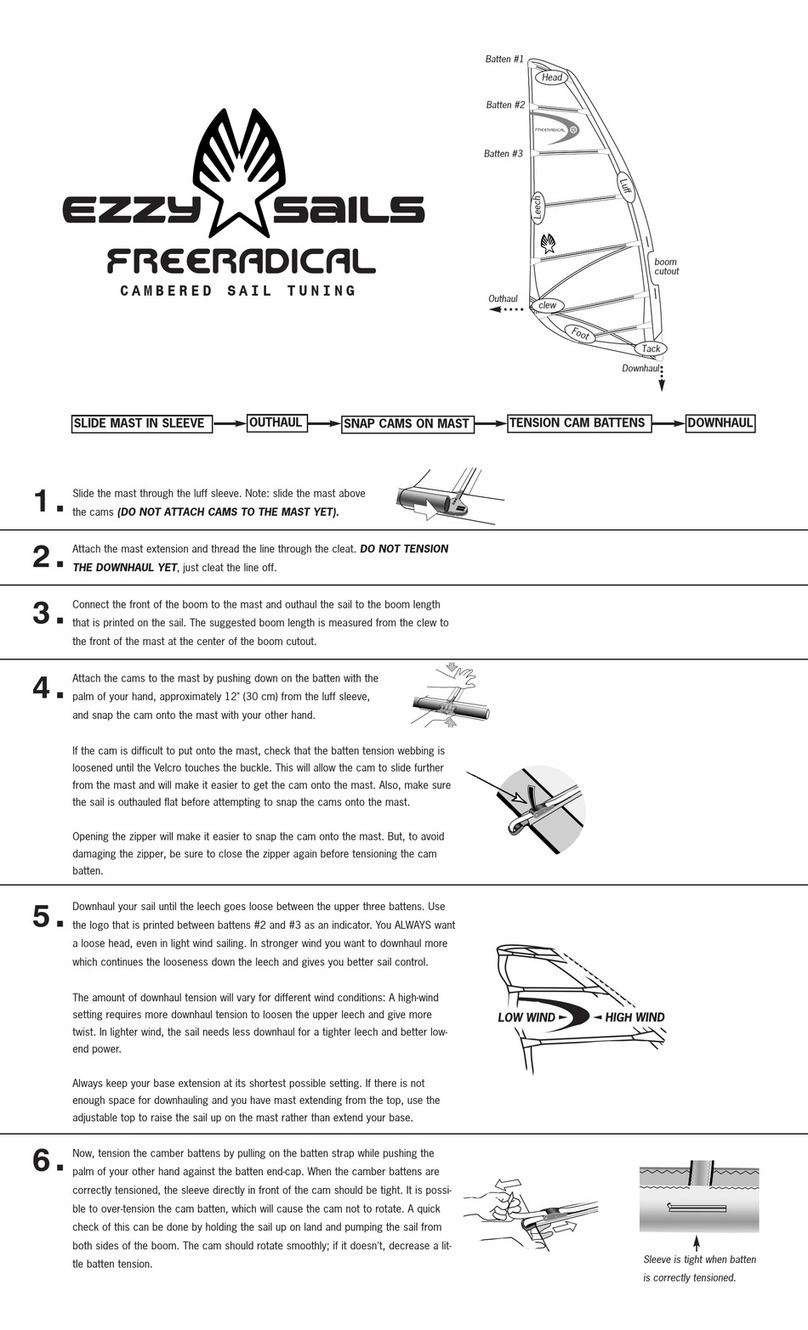
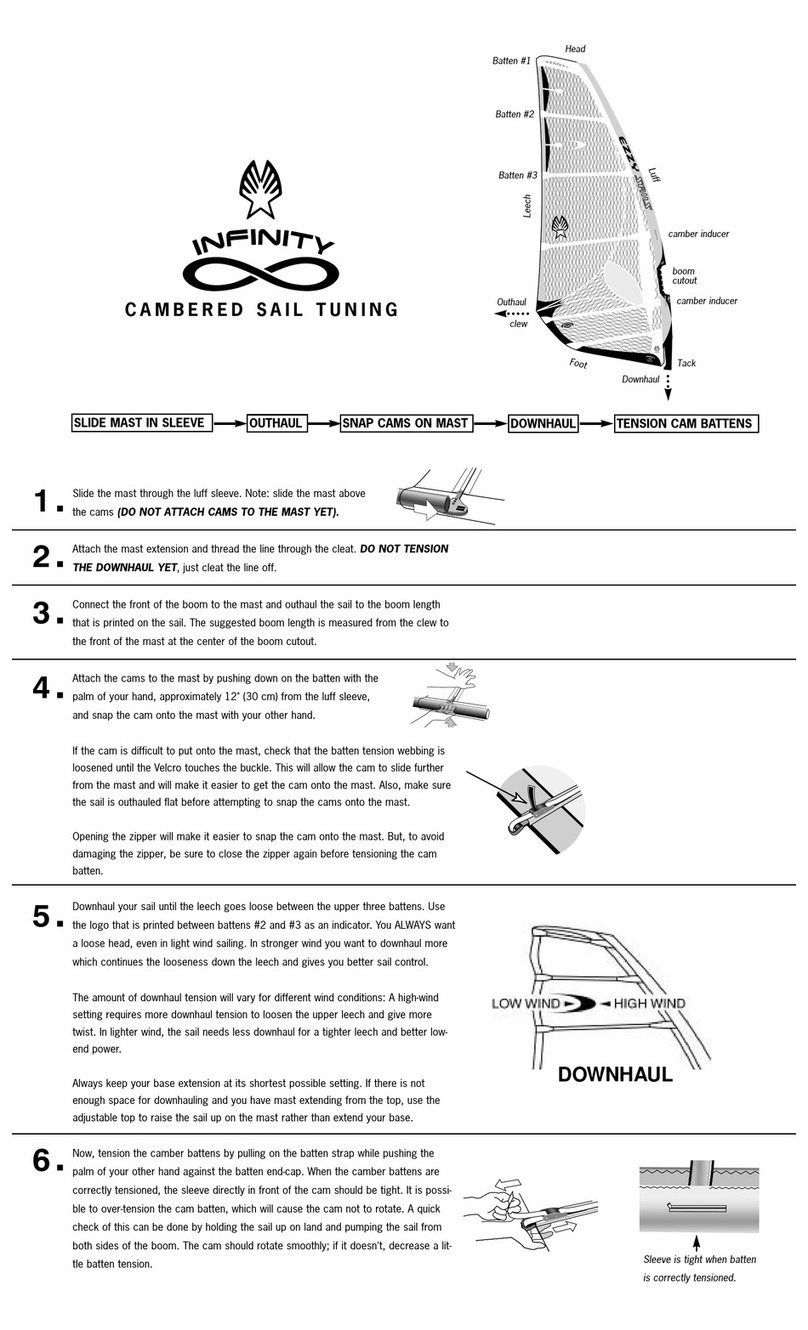
The suggested boom length is measured from the
center of the boom cutout.
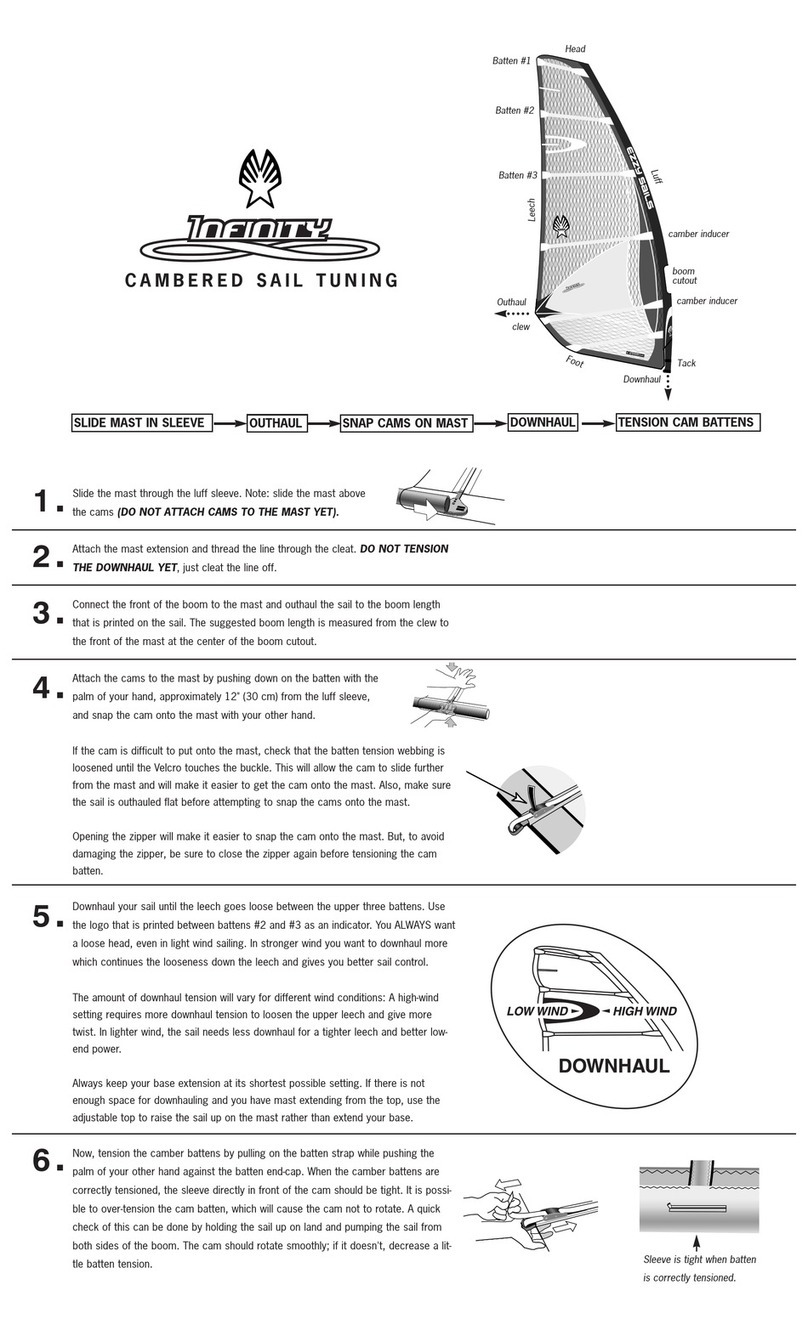
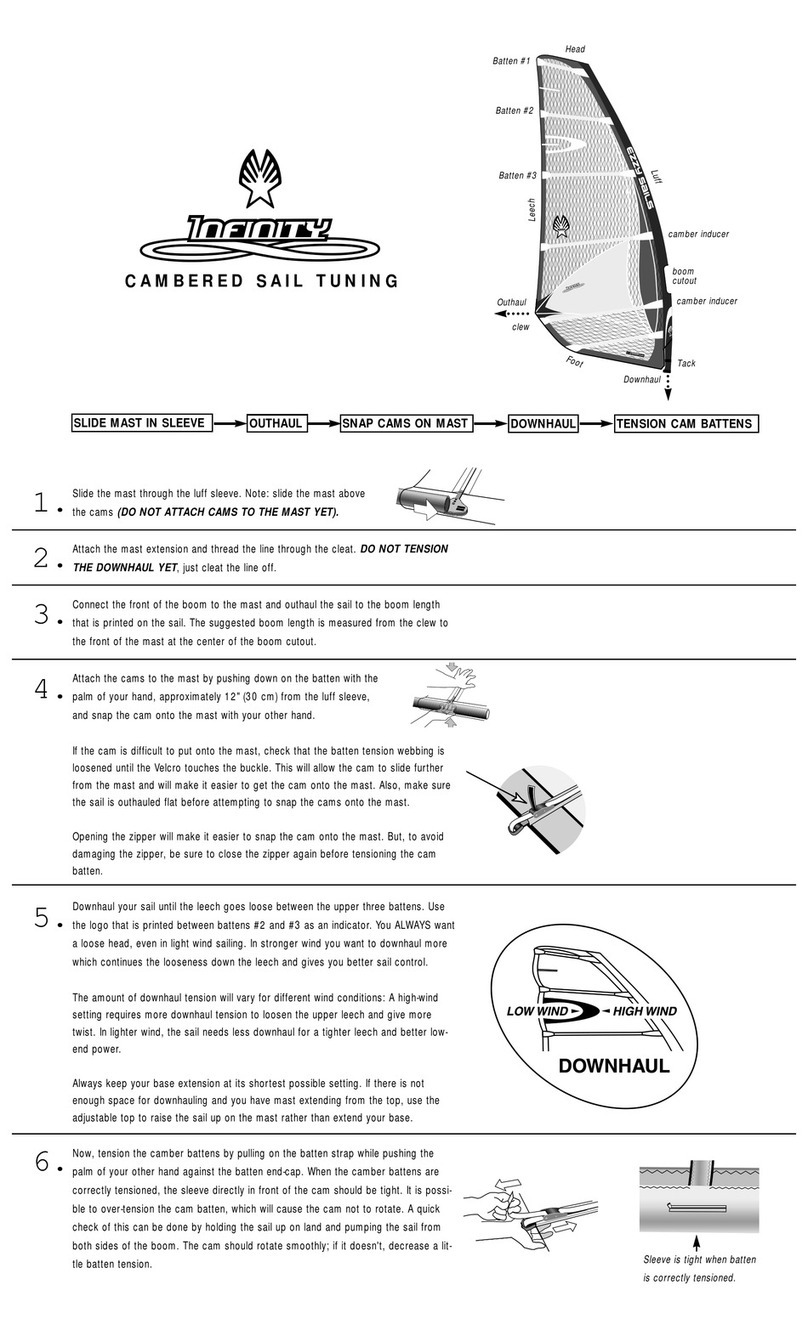
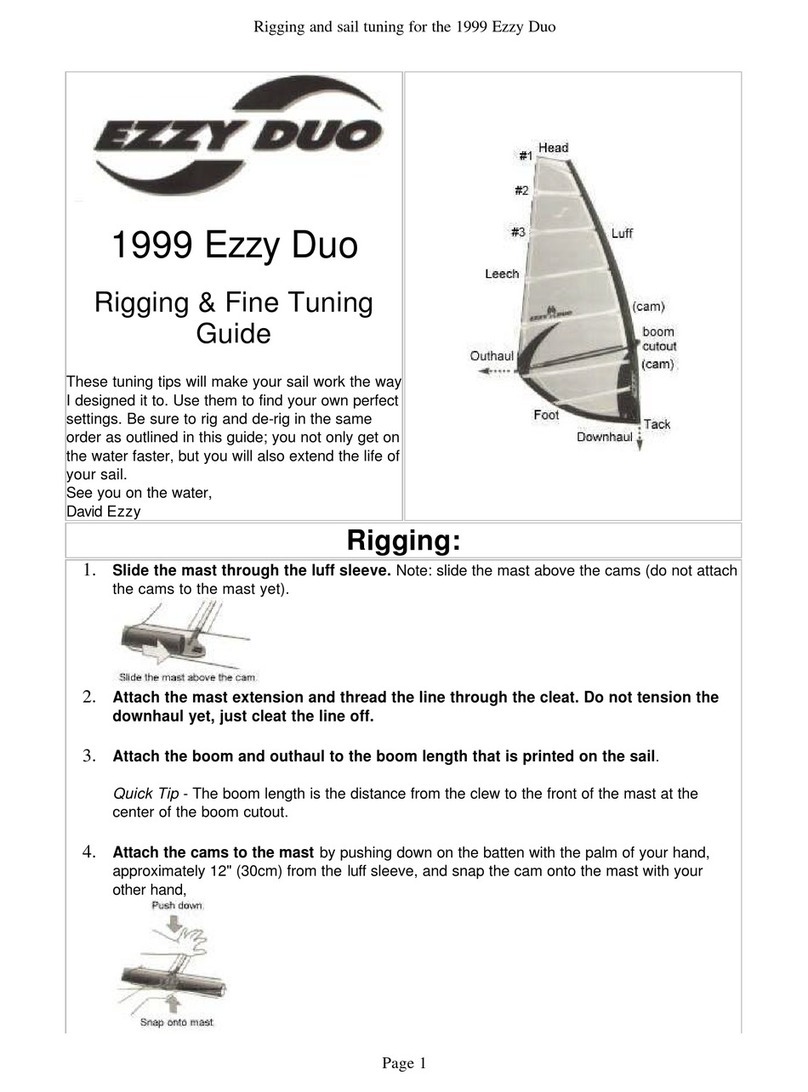
5) Attach the cam to the mast by pushing down on the batten
with the palm of your hand, approximately 12" (30cm) from
the luff sleeve, and snap the cam onto the mast with your
other hand.
Quick Tip: If the cam is difficult to put on to the mast, check that
the batten tension webbing is loosened until the Velco touches the
buckle. This will allow the cam batten to slide further away from
the mast and will make it easier to get the cam on to the mast.
Also, make sure the sail is outhauled flat before attempting to snap
cams on to the mast.
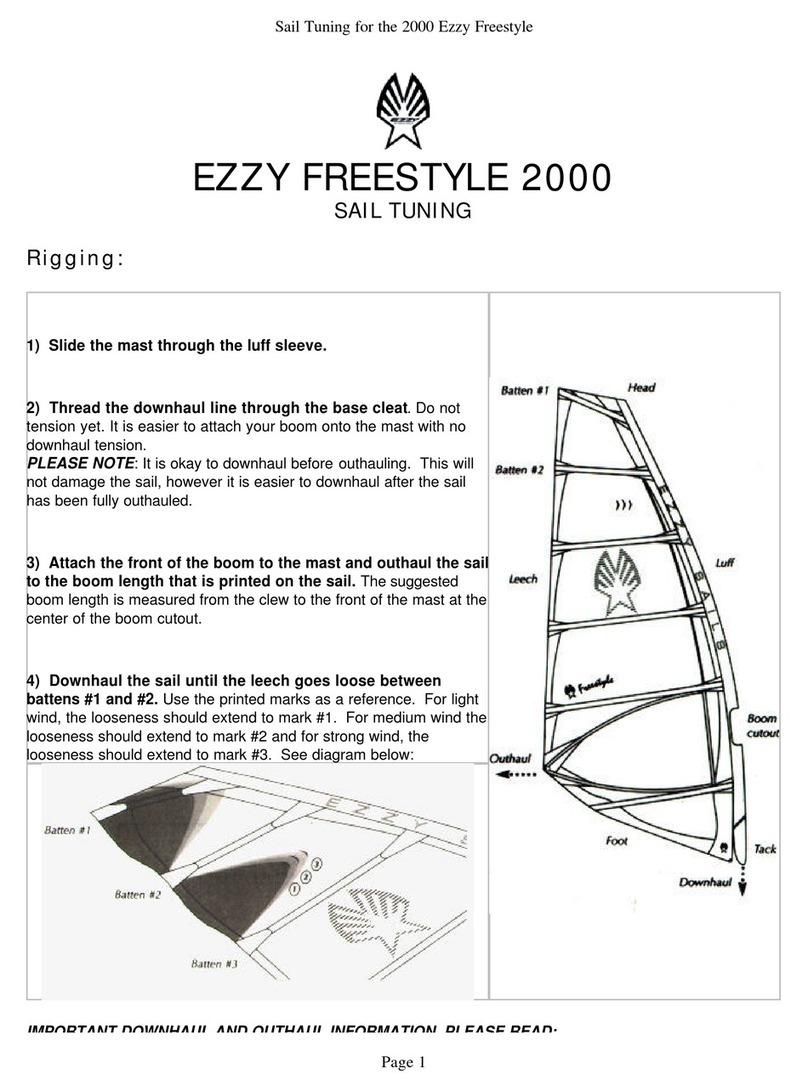
6) Downhaul the sail until the leech goes loose between
battens #1 and #2. A good way to gauge the correct
downhaul is to observe the head leech area between battens
#1`and #2. For high wind sailing, the looseness should
extend to the back seam on the leech panel. For light wind
sailing, the looseness will end about 30cm (12") behind the
back seam.
Quick Tip: The amount of downhaul tension will vary for different
wind conditions: A high-wind setting requires more downhaul
tension to loosen the leech and give more twist, increasing your
top-end speed. Then for lighter wind, the sail will perform better
with less downhaul. This gives the sail a tighter leech and better
low-
end power, which you will need to get on a plane quicker and
be carried through lulls faster.
Quick Tip: Always keep your base extension at its shortest
possible setting. If there is not enough space for downhauling and
you have mast extending from the top, use the adjustable top to
raise the sail up on the mast rather than extend your base.
7) Now, tension all of the battens, starting at the batten
above the boom, by pulling on the batten strap while pushing
the palm of your other hand against the batten end-cap.
Tension all battens until the vertical wrinkles running
Page 2