the glider is used for winch-launching with a winch which has not been inspected or by
non-licensed pilots and/or winch operators
the pilot has insucient experience or training
The paraglider must be operated only within the operating limits. These are exceeded, if one or more
of the following points are complied:
the take-off weight is not within the permissible weight range
the glider is flown in rain or drizzle, cloud, fog and / or snow
the canopy is wet
there are turbulent weather conditions or wind speeds on launch higher than 2/3 ot the
maximum flyable airspeed of the glider (varies according to the total take-off weight)
air temperature above 50°C and extremely low temperatures, which can lead, in combination
with moisture, to icing
aerobatics
modifications to the canopy, lines or risers which have not been approved
Before the first flight
The Bolero 7 is certified for use with all harnesses with variable cross-bracing (GH type). Practically all
modern harnesses are GH type harnesses. Older harnesses with fixed cross-bracing (GX type) are not
certified and should not be used. Check with the manufacturer of the harness or your paragliding
instructor if in doubt whether your harness is a GH or GX type harness.
It’s important for your comfort and safety to fly with a suitable harness that is properly adjusted.
When choosing a harness, remember that the height of the attachment points (i.e. distance from the
carabiners to the seat plate) affects the sensitivity of the glider and the relative brake travel. The lower
(shorter) the attachment points, the more sensitive the glider is to weight-shift.
The adjustment of the harness chest strap controls the distance between carabiners and affects the
handling and stability of the glider. Excessive tightening of the chest strap increases stability but also
the risk of riser twists following glider collapses. It also increases the likelihood of getting collapses
due to poor feedback from the glider. The risk of twisting is also strongly influenced by the seating
position of the pilot. Flying in a laid back (reclined) position makes it much more dicult to react in
time to prevent riser twisting. With the chest strap in a more closed position the glider also has more
tendency to maintain a stable spiral. With the chest strap in a more open position, feedback from the
glider is increased but stability is decreased.
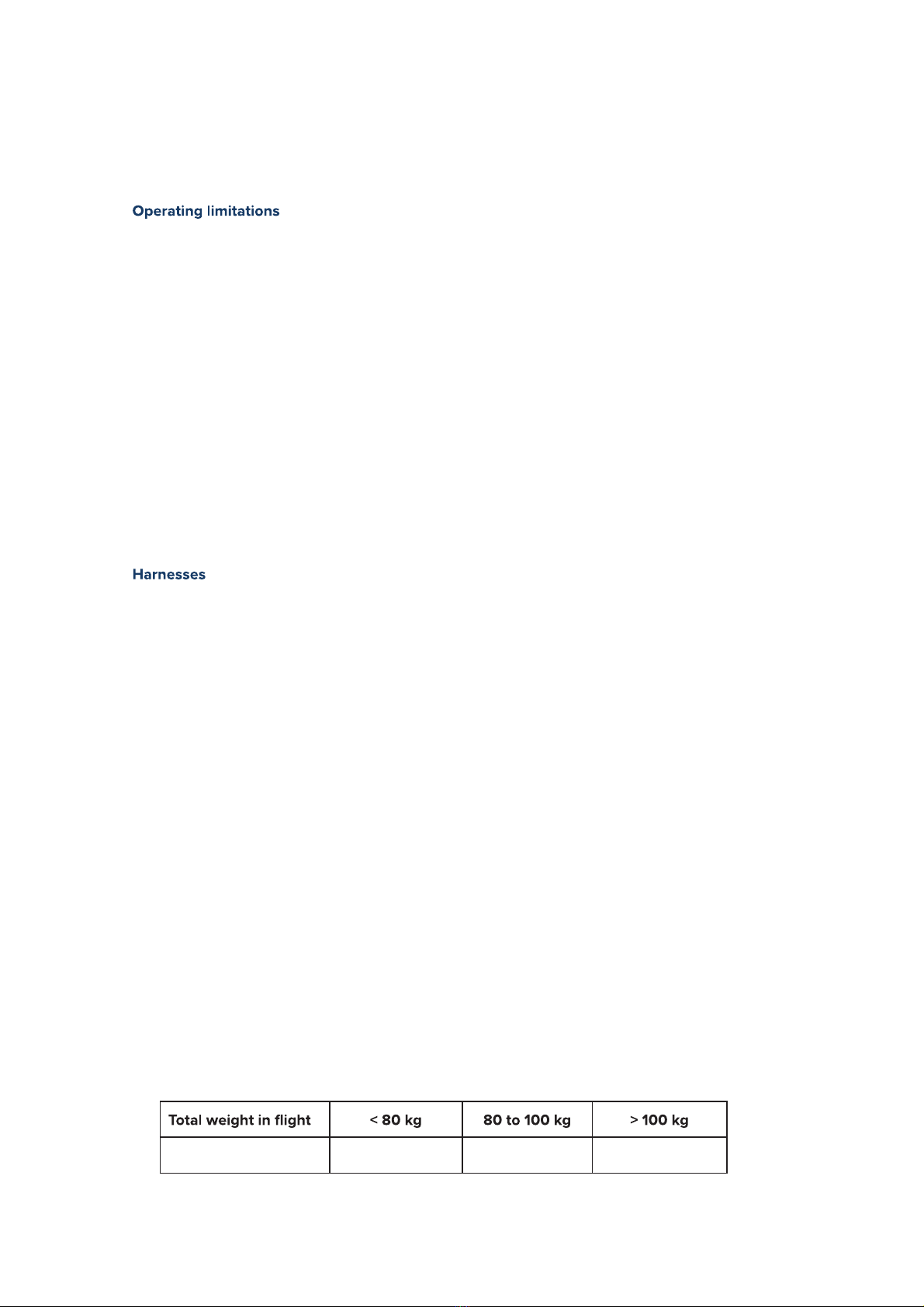
GIN gliders are developed with GIN harnesses, which have an attachment point of approximately
40-48 cm (depending on size and model). EN/LTF certification test flights are carried out with the
horizontal distance between the harness attachment points (measured between connector
centrelines) set depending on the total weight in flight as follows: