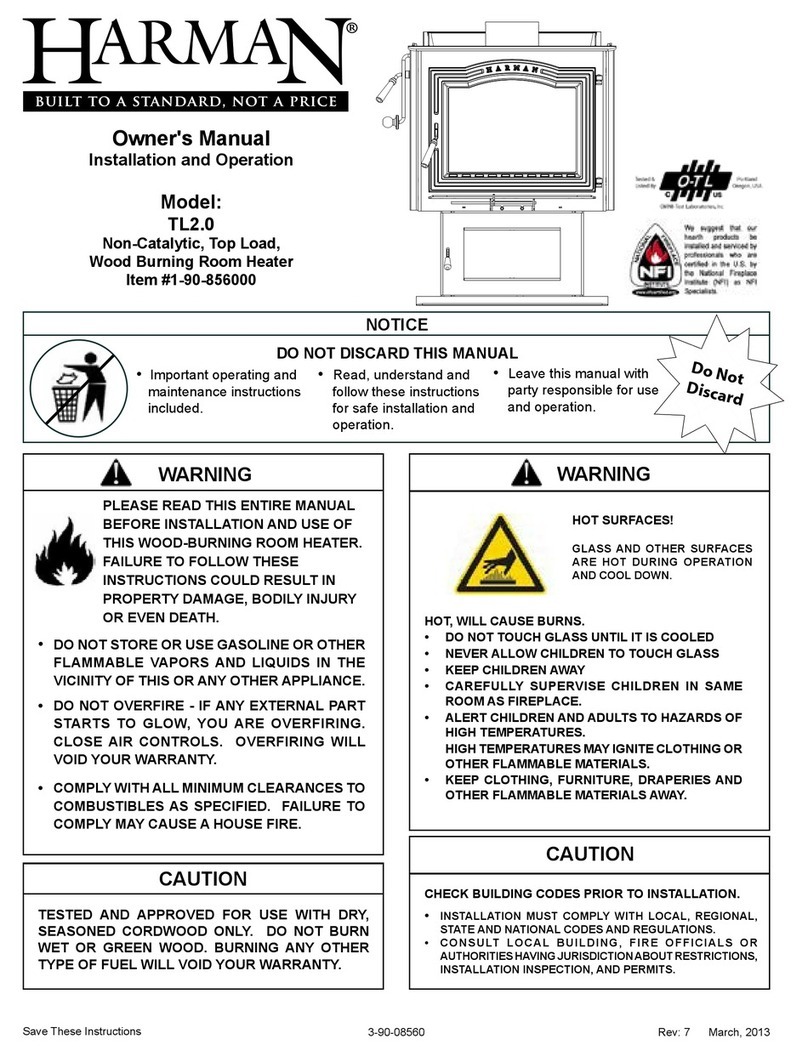
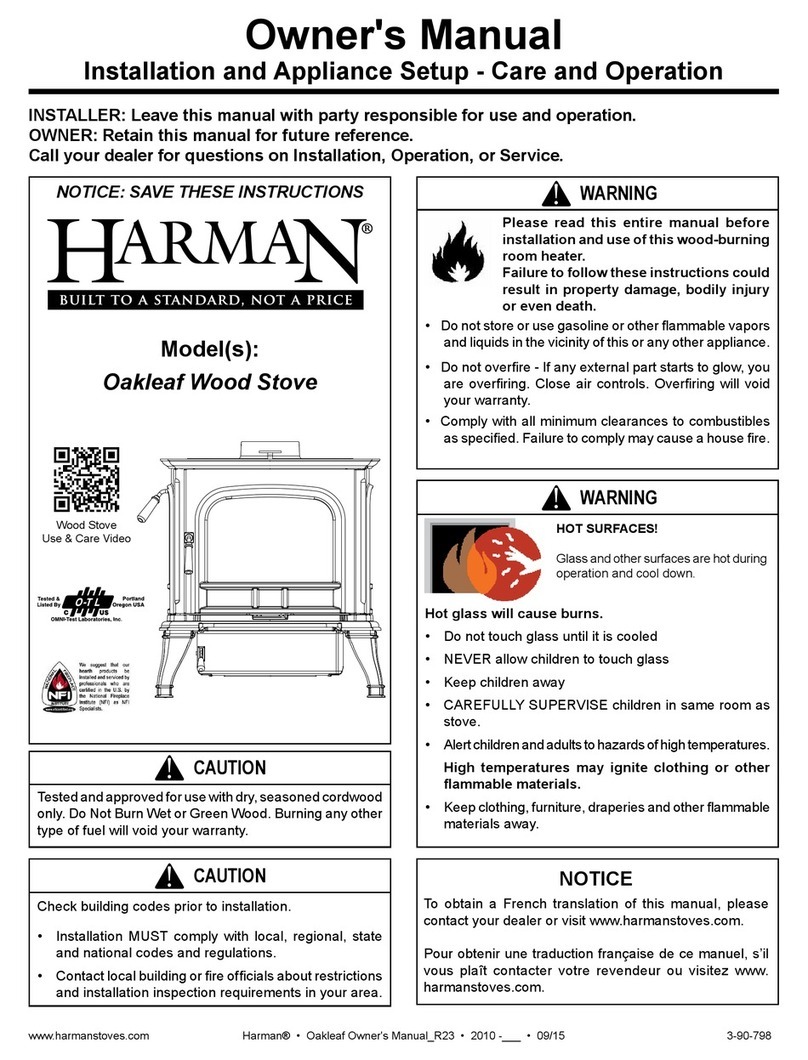
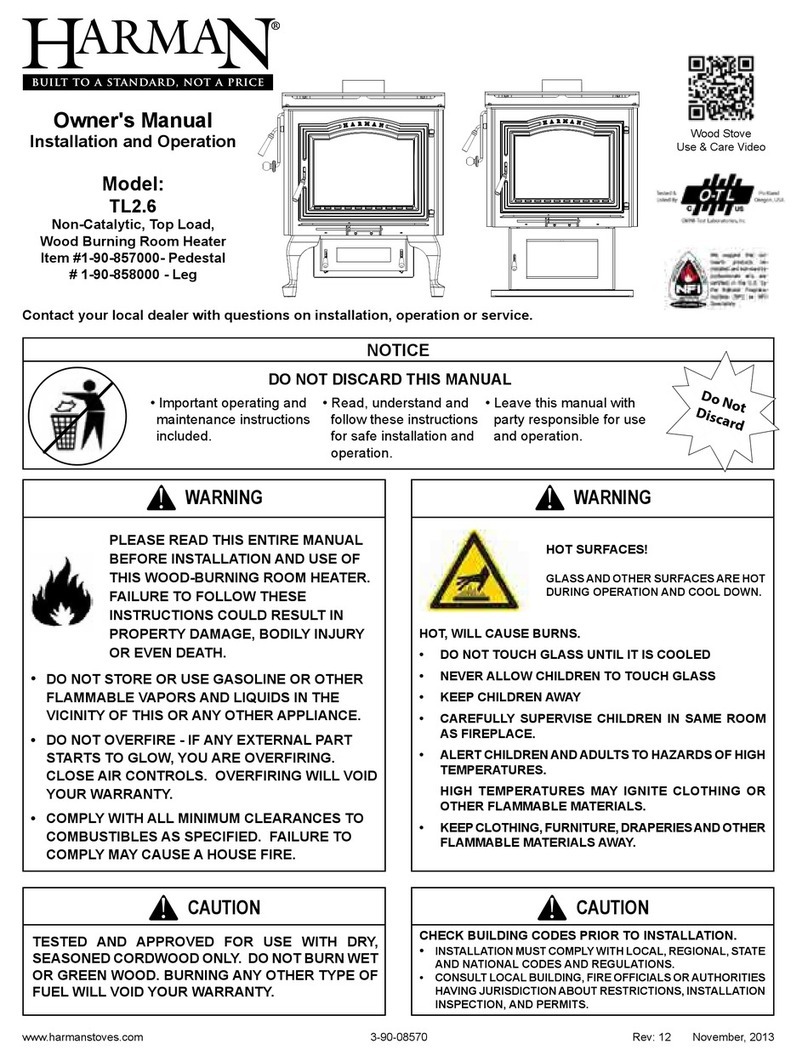
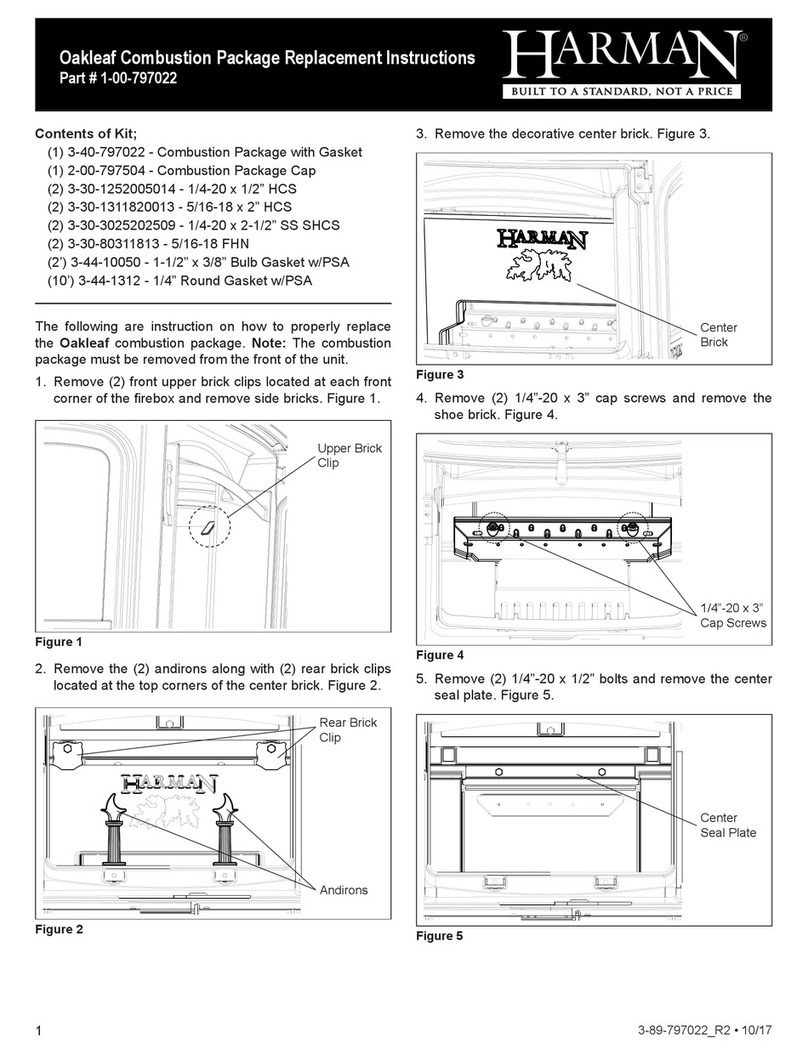
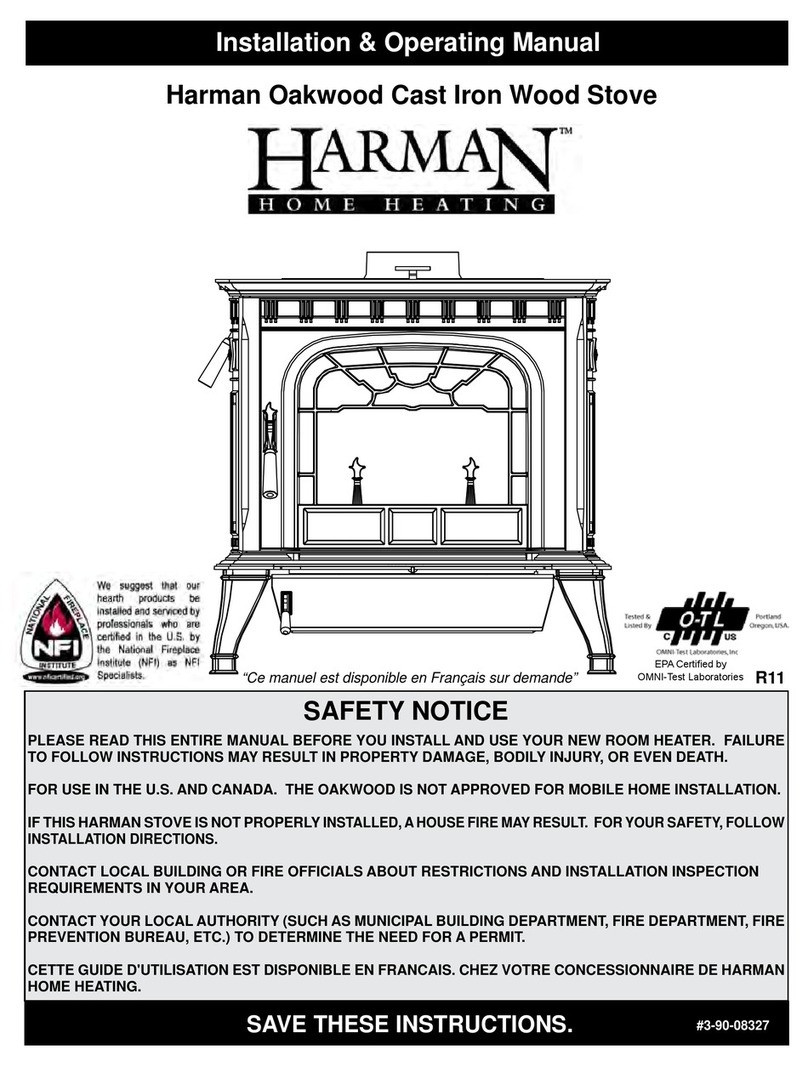
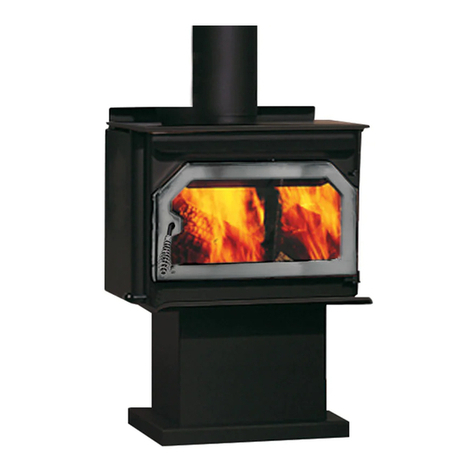
Your stove has a large glass-paneled door for loading
and re viewing, a separate smaller door for removing
ashes and a top loading door.
Front Door
Before opening, always check for wood, embers, or
ash that may be ready to fall out of the door.
To open the glass door, open the bypass damper rst,
then lift the handle and pull out; to close the door, push
the door closed with the handle in the open position,
then push the handle down to engage the latch.
Ash Door
To open the ash door, lift up the handle and pull out.
Close the door by pushing in and pushing the handle
all the way down.
Top Load Door
To open the top load door, open the bypass damper
and then lift to open the top load door.
All doors must be closed while the stove is in normal
operation, and the gaskets routinely examined for wear
and replaced when necessary. Good door seals are
important for maintaining control of the stove. Never
operate with the ash door open. Operating the stove with
the ash door open, or with a door inadequately sealed,
could create a serious overring condition (discussed
later in this section).
The glass used in your Oakwood is manufactured
to exact standards to withstand the high heat of the
re, but like all glass, it must be treated with common
sense and care. Never abuse the glass by slamming
the door shut or striking the glass with a heavy object.
If the glass is broken or damaged, do not operate the
stove until it has been replaced
(See instructions in the Maintenance section.)
The Harman Oakwood's unique grate system consists
of one at bottom grate, and two front andirons. The
bottom grate has slots which allow the ash to fall into
the ash pan by passing a poker back and forth across
the grate. The andirons keep the fuel from coming into
direct contact with the glass, and keep hot coals and
embers from spilling out while reloading. Never build
a re directly against the glass.
The grates and andirons must remain in place at all
times. Do not tamper with or change the conguration
of this grate system.
Before you install and operate your Oakwood
wood stove, please read the entire contents of this
manual. Pay particular attention to the explanation
of draft and its effect on stove performance in
the Installation section. By following the installation
and operating guidelines, you will ensure proper draft
and gain maximum efciency and enjoyment from your
stove.
Your Oakwood burns wood very efciently. Here are
some guidelines that will help you achieve the best
performance.
Select only . Wood for burning
should never be exposed to rain or extremely damp
conditions. Hardwoods are favored because they are
heavier and contain more heating capacity (BTU’s) per
load than do softwoods. Fuel wood should be split and
stored under cover for “seasoning” - at least a year is
recommended. Your stove is not an incinerator - do
not burn garbage, painted or treated wood, plastic, or
other debris.
Keep the area around the stove free from clutter.
Keep all combustibles, including fuel, beyond the code-
required clearance distance (48" or 1215 mm in the
U.S., 1525 mm or 60" in Canada). Never store fuel
in front of the stove where it could interfere with door
operation, safe loading, and ash removal.
IF THIS APPLIANCE IS NOT PROPERLY
INSTALLED, OPERATED AND MAINTAINED,
A HOUSE FIRE MAY RESULT. FOR YOUR
SAFETY, FOLLOW INSTALLATION
DIRECTIONS. CONTACT LOCAL BUILDING
OR FIRE OFFICIALS ABOUT RESTRICTIONS
AND INSTALLATION INSPECTION
REQUIREMENTS IN YOUR AREA.