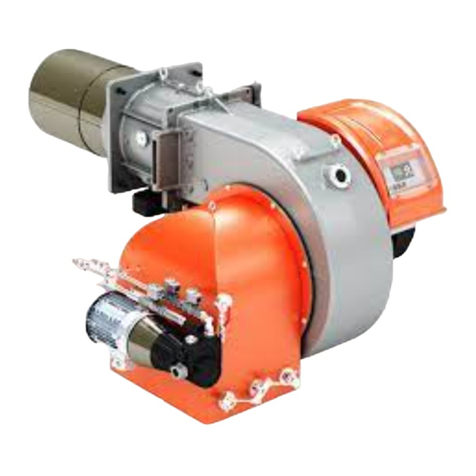
OXYTHERM®FHR DUAL FUEL BURNERS
E - i - 7/99 532M-92012—02
Start-up
Typical ignition sequence
IMPORTANT
OXYTHERM® FHR burners do not include means
for self ignition. Burner ignition procedure is the
responsibility of the end user, according to appli-
cable local, state and national codes. Burner igni-
tion should only be attempted at minimum firing
rates (see capacity charts or contact MAXON) to
prevent pressure surge in the fired chamber.
Checks during and after start-up
During and after start-up, check the integrity of the
system. Check all bolted connections after first firing (first
time on temperature) and retighten if necessary.
Burner adjustment and control
Oxygen-fuel burners require accurate control of both fuel
and oxygen for optimum performance. Piping to individual
burners should include control valves for both oxygen and
fuel. In addition, flow meters for oxygen and fuel capable of
local or remote readout are required for proper burner
adjustment.
Oxygen should only be used with approved
materials, properly cleaned pipe and equipment,
and specially designed systems.
Ordinary materials can be extremely flammable in
the presence of oxygen and air enriched with
oxygen.
Oxy-fuel burners cannot be set up and operated properly
using only pressure requirements for adjustment. Fully
metered oxygen and fuel control systems are required for
safe and optimum performance.
MAINTENANCE INSTRUCTIONS
The OXYTHERM® FHR burner is provided with
quick release clamps to allow for rapid change-
over between gas and oil firing.
ustomer-specific procedures for shut down and
blocking of fuel gas and oxygen supply to the
burner must be developed and adhered to prior to
attempting removal and changing of fuel inserts.
Only trained and qualified service and
maintenance personnel should perform this
operation.
Safety requirements
Regular inspection, testing and recalibration of
combustion equipment according to the installation
manual is an integral part of its safety. Inspection activities
and frequencies shall be carried out as specified in the
installation manual.
Perform the following activities at least annually as part of
a recommended preventative maintenance routine:
• Inspect burner internal parts for wear and oxidation.
• Inspect associated control instruments and devices for
function with particular attention to all safety
permissive switches.
• Perform leak tests on fuel shut-off valves according to
any schedule established by the authority having
jurisdiction.
Visual inspections
Regular visual inspection of all connections (air and fuel
piping to the burner, bolting of the burner to the block) and
burner flame size and aspect are essential.
Recommended spare parts
Keep local stock of operationally critical parts. Contact
MAXON for a complete list of recommended spare parts
for your specific application.