PN 97999Ć1028
NM2202AĆXPage 2 of 2
PUMP OPTION DESCRIPTION CHART
NM2202A - X 1 - X 3 1
CONTAINER SUITABILITY
PLUNGER TYPE
SPRING ARRANGEMENT
CONTAINER SUITABILITY PACKING MATERIAL
1 Ć Universal (Stub) 7 Ć Teflon (upper and lower)
4 Ć 55 Gallon B Ć UHM ĆPE (upper) / Teflon (lower)
C Ć UHM ĆPE (upper and lower)
J Ć Polyurethane (upper) / UHM ĆPE (lower)
SPRING ARRANGEMENT PLUNGER TYPE
3 Ć No Spring 1 Ć Standard (Carbon steel)
PACKING MATERIAL
GENERAL DESCRIPTION
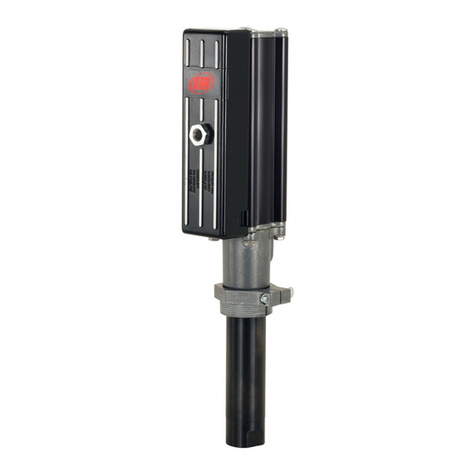
Model NM2202AĆX Series twoĆball, double acting pumps are intended
to be used primarily for oil transfer and delivery systems. It is best to use
this pump with low - medium viscosity fluids. It uses carbon steel and
other materials which make it compatible with most petroleum based luĆ
brication products. The twoĆball design provides better priming of the
lower foot valve. Double acting pumps will deliver material on both the up
and down stroke.
NOTE: If this pump was purchased separately (not part of a system),
consult your sales representative for compatible dispensing accessoĆ
ries which will best match the application. All accessories must be able
to withstand the maximum pressure developed by the pump.
WARNING HAZARDOUS PRESSURE. Do not exceed maxiĆ
mum operating pressure of 351 p.s.i. (24.2 bar) at 150 p.s.i. (10.3
bar) inlet air pressure.
PUMP RATIO X MAXIMUM PUMP
INLET PRESSURE TO PUMP MOTOR =FLUID PRESSURE
Pump ratio is an expression of the relationship between the pump motor area and the
lower pump end area. EXAMPLE: hen 150 p.s.i. (10.3 bar) inlet pressure is supplied
to the motor of a 4:1 ratio pump it will develop a maximum of 600 p.s.i. (41.4 bar) fluid
pressure (at no flow) Ć as the fluid control is opened, the flow rate will increase as the
motor cycle rate increases to keep up with the demand.
WARNING Refer to general information sheet for additional
safet precautions and important information.
NOTICE: Thermal expansion can occur when the fluid in the materiĆ
al lines is exposed to elevated temperatures. Example: Material
lines located in a nonĆinsulated roof area can warm due to sunlight.
Install a pressure relief valve in the pumping system.
Replacement warning label (pn 94520) is available upon request.
TROUBLE SHOOTING
Pump problems can occur in either the Air Motor Section or the Lower
Pump End Section. Use these basic guidelines to help determine which
section is affected. Be sure to eliminate any possible nonĆpump probĆ
lems before suspecting pump malfunction.
Pump will not c cle.
•No pressure to the motor. See motor manual.
•Damaged motor. Service motor
No material at the outlet (pump continuall c cles).
•Check the material supply, disconnect or shut off the air supply and
replenish the material, reconnect.
Material on one stroke onl (fast downstroke).
•The lower check may not be seating in the foot valve (see lower
pump disassembly). Remove the check from the foot valve, clean
and inspect the valve seat area. If check or foot valve are damaged,
replace.
Material on one stroke onl (fast upstroke).
•The middle packings may be worn (see lower pump disassembly).
Replace the seals as necessary.
PUMP CONNECTION - UPPER / LOWER
NOTE: All threads are right hand.
1. Lay the pump assembly on a workbench.
2. Remove four (Y99Ć47ĆC) cap screws and pull the air motor from the
lower pump end until the motor piston rod is in the down" position
and the lower pump end rod is in the up" position.
3. Remove the (Y15Ć31ĆC) cotter pin and (96064) pin, releasing the air
motor from the lower pump end.
Lower Pump Rod
Pump Motor Piston Rod
Cotter Pin Y15Ć31ĆC
PUMP CONNECTOR DETAIL
Figure 2
Pin 96064
REASSEMBLY
1. Assemble motor piston rod to the lower pump end rod, aligning thru
holes.
2. Assemble (96064) pin through hole, securing rods.
3. Assemble (Y15Ć31ĆC) cotter pin through hole in pin.
4. Align tie rods with holes in (96068) plate and pump outlet body.
5. Assemble four (Y99Ć47ĆC) cap screws, securing air motor. NOTE:
Tighten cap screws to 50 in. lbs (5.65 Nm).