5
Laird Thermal Systems s.r.o.
Operation Manual
Version: 1.1
1505.00
1. Description
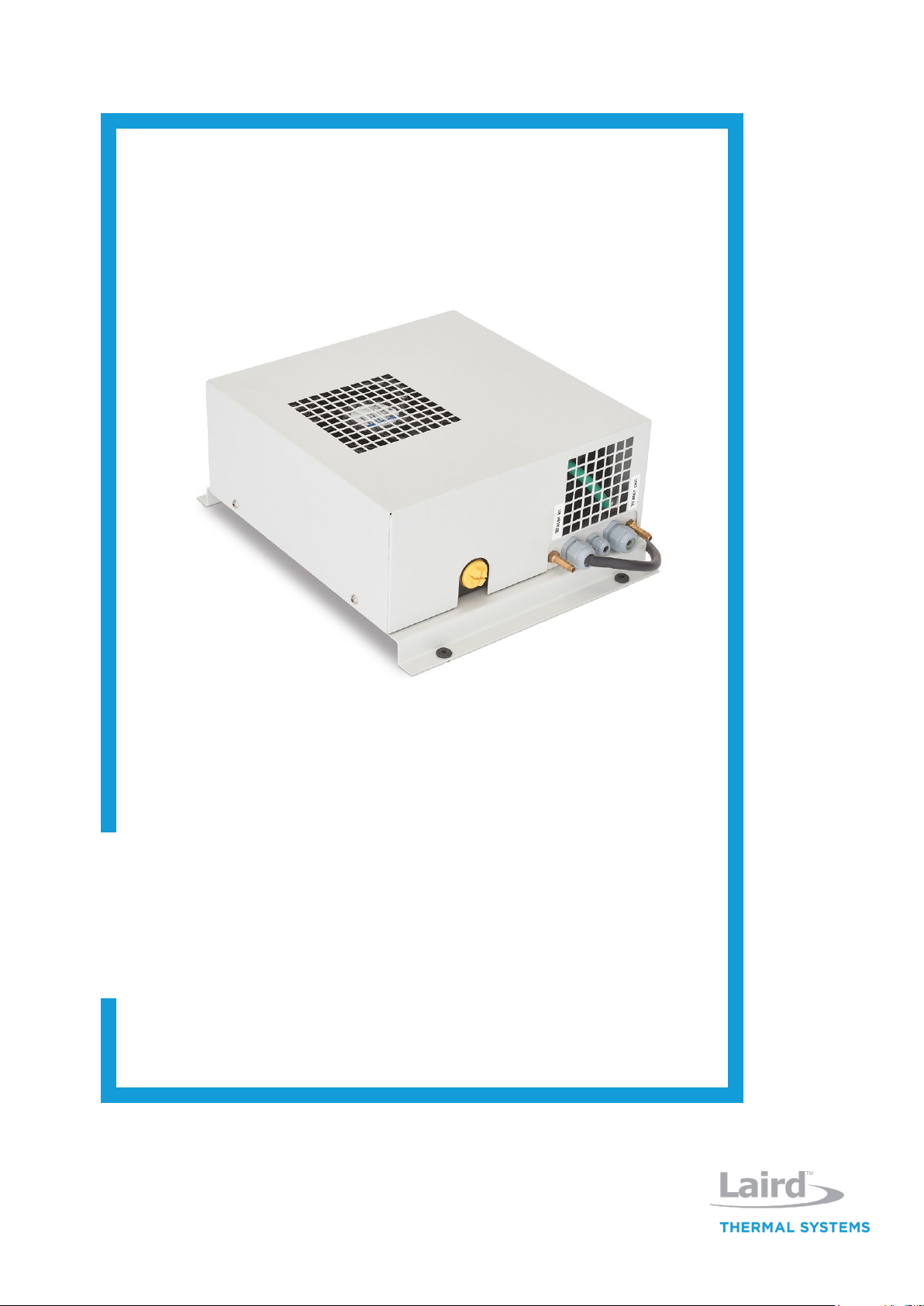
The WL 500 cooling unit is intended to remove heat from a liquid circuit. The coolant can be either
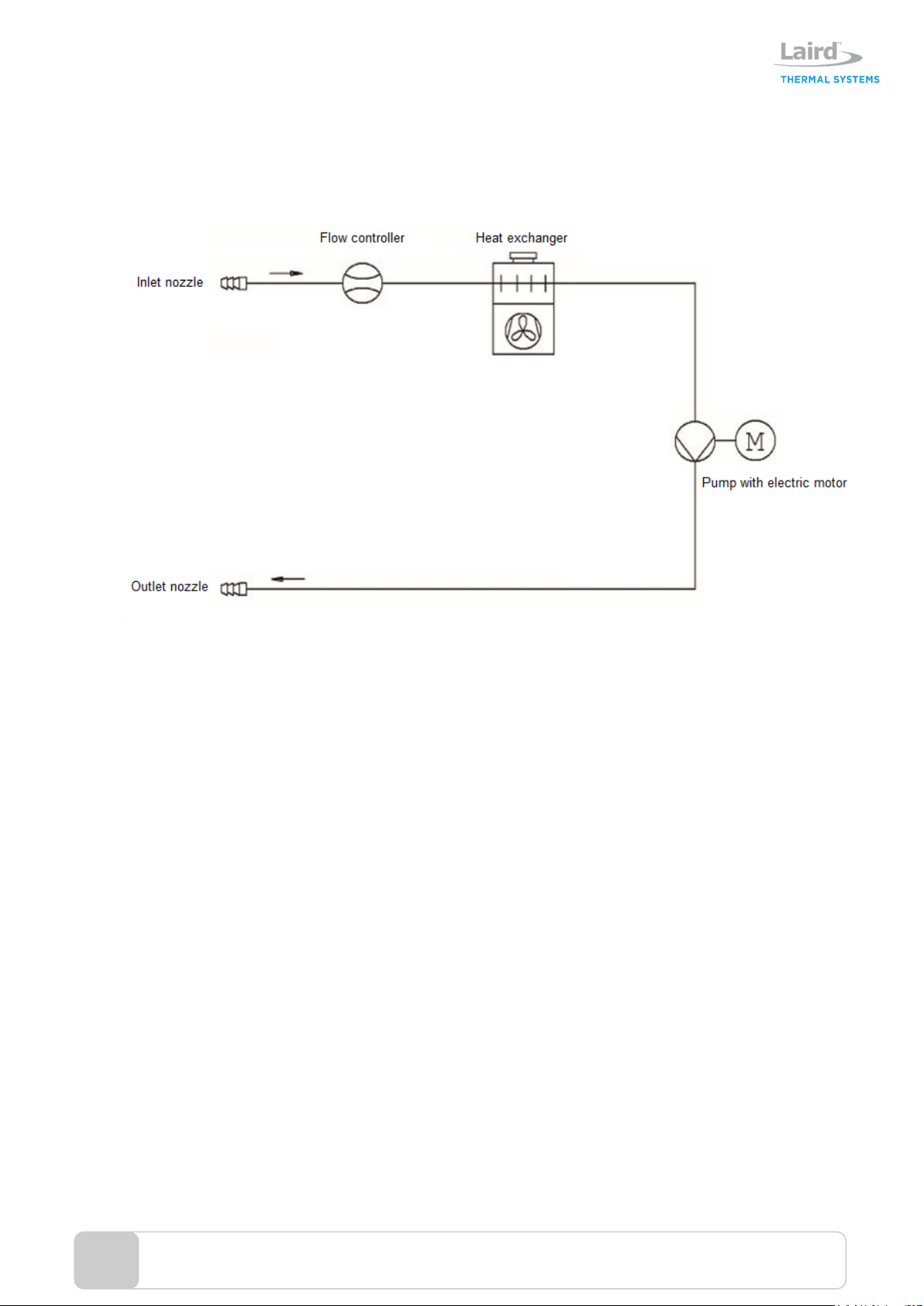
water or a mixture of water and water-glycol (antifreeze). Water circulates in a closed loop between
the ambient cooling system and a cold plate at the heat source. Heat is removed from water by an air-
cooled heat exchanger. The capacity of the cooling unit is dependent on the temperature differential,
which is defined as the difference between the ambient temperature and the water outlet temperature.
The cooling unit is designed to remove 500 W of heat at a temperature differential of 13°C. The water
inlet and water outlet are marked as Water in and Water out.
The maximum forward pressure is limited by a bypass valve, which has been integrated into the
pump. The coolant flow is controlled by a flow switch that opens when flow falls below a set rate.
Cooling hoses supplied by user are connected to threaded nozzle that can accommodate an 8 mm
hose ID.
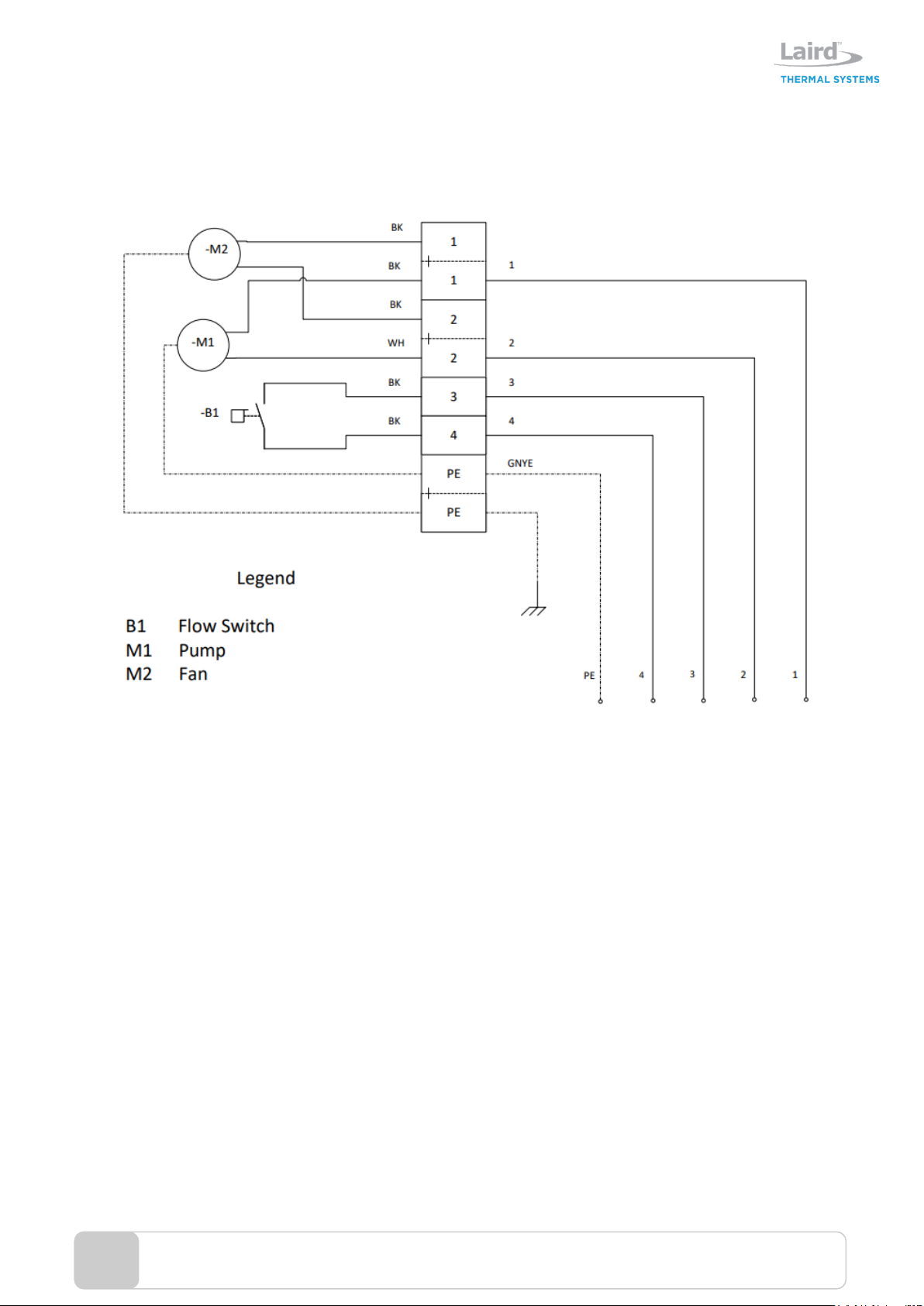
The water flow is monitored by an adjustable flow switch. The signal of the flow switch is available at
a potential free safety circuit. The permissible contact rating for the safety circuit is 125 VAC/1A/50
VA.
A bypass valve limits the water pressure.
Note: Flow switch and bypass valve are adjusted at factory and set according to specification.
2. Safety Precautions
Note: Read manual before operating the cooling unit.
2.1 Electrical Danger
Work on electrical installations must be carried out only by trained and authorized electricians
Input power must be rated 230 VAC at 50/60 Hz.
Before starting any service work on the cooling unit, please disconnect from the main power
source.
2.2 Safe Operation
Use Water or Water/Glycol as coolant.
Run the cooling unit at the correct coolant level, otherwise the pump might degrade, and cooling
capacity will be reduced.
Use cooling hoses that can handle max pressure of the liquid circuit and is resistant to corrosion
from coolant.
Never operate the unit if it is damaged or leaking.
2.3 Environmental Issues
Environmentally hazardous substances must be used or disposed of according to regional
regulations.
When dealing with working fluids, always be aware of the safety data sheet of the corresponding
manufacturer and use appropriate personal protective gear.