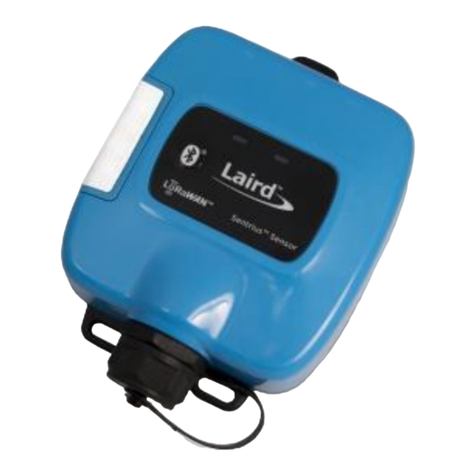
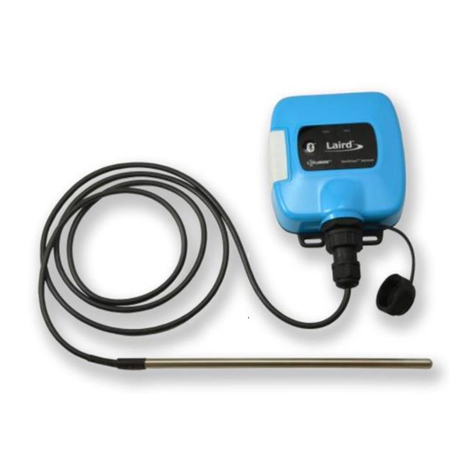
When the external probe is connected properly to the sensor, the sensor will operate “normally” once powered up. Normal operation
of the sensor is indicated by the left LED will flashing either “orange” or “green” color to indicate the connection status to a network.
A connection problem at power up is indicated by both LEDs on the front panel both being constantly on. This is a visual indicator
to the user that there is a communication issue between the sensor and the probe. If the sensor cannot detect the external probe it
will not function properly.
To remedy this, follow these steps:
Retry the steps from the Installation section. Make sure the sensor has the latest firmware installed to ensure the sensor
has all the latest capabilities. The firmware can be updated using the mobile app. Reference the RS1xx guide for more
details RS1xx product page on this process.
The time it takes for the sensor to detect a probe depends on the sensor’s settings, in particular, the read period and
aggregate count. This means that the time to auto detect a probe can fluctuate between 30 seconds or likely much longer.
To speed up the auto detect process of the sensor, press and hold the Bluetooth button on the top of the sensor for
five seconds after reconnecting the external probe. This will restart the sensor, and on startup the Sentrius sensor will
check for the sensor.
The sensor monitors the status of the external probe on each temperature measurement. If the external probe is damaged
or disconnected it will be shown by the LoRa status LED. The LoRa status LED flashes at the heartbeat interval to indicate
a network connection. If the external probe becomes disconnected, the LoRa status LED will quickly flash orange three
times immediately after the heartbeat indication. When the external probe is reconnected, the heartbeat LED will return to
normal operation.
If you continue to experience an issue, contact Laird Support. There could be damage to the Sentrius sensor or probe.
Figure 5: Front panel LEDs are lit