manuals.online logo
Brands
  1. Home
  2. •
  3. Brands
  4. •
  5. Legacy
  6. •
  7. Speakers System
  8. •
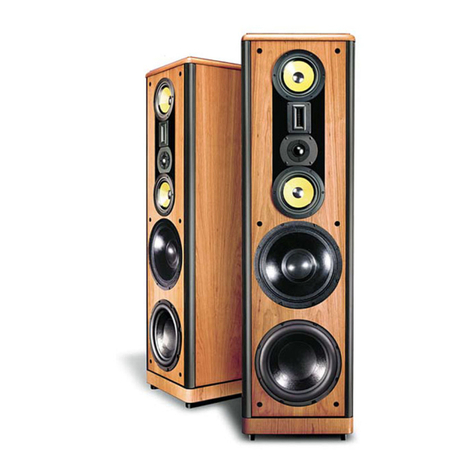
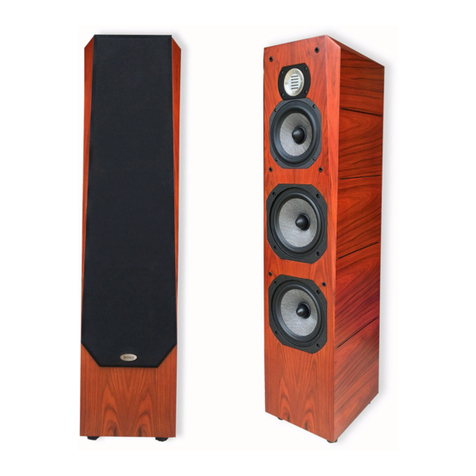
  9. Legacy Focus HD User manual

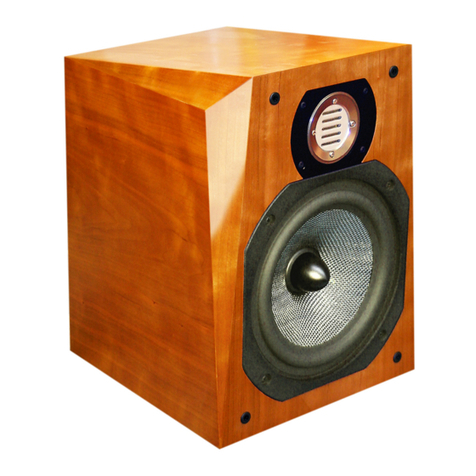
Legacy Focus HD User manual

Other manuals for Focus HD

1

Other Legacy Speakers System manuals

Legacy Classic HD User manual

Legacy

Legacy Classic HD User manual

Legacy Whisper XD User manual

Legacy

Legacy Whisper XD User manual

Legacy FOCUS XD User manual

Legacy

Legacy FOCUS XD User manual

Legacy Sconce User manual

Legacy

Legacy Sconce User manual

Legacy Silhouette User manual

Legacy

Legacy Silhouette User manual

Legacy Harmony Center User manual

Legacy

Legacy Harmony Center User manual

Legacy Studio HD User manual

Legacy

Legacy Studio HD User manual

Legacy Marquis HD User manual

Legacy

Legacy Marquis HD User manual

Legacy Broadway User manual

Legacy

Legacy Broadway User manual

Legacy Victoria LE User manual

Legacy

Legacy Victoria LE User manual

Legacy Mist User manual

Legacy

Legacy Mist User manual

Legacy Skyline User manual

Legacy

Legacy Skyline User manual

Legacy Focus HD User manual

Legacy

Legacy Focus HD User manual

Legacy Whisper XDS User manual

Legacy

Legacy Whisper XDS User manual

Legacy Phantom User manual

Legacy

Legacy Phantom User manual

Legacy Xtreme XD User manual

Legacy

Legacy Xtreme XD User manual

Legacy Helix User manual

Legacy

Legacy Helix User manual
Legacy CALIBRE User manual

Legacy

Legacy CALIBRE User manual

Legacy Phantom User manual

Legacy

Legacy Phantom User manual

Legacy Silverscreen II User manual

Legacy

Legacy Silverscreen II User manual

Legacy Studio HD User manual

Legacy

Legacy Studio HD User manual
Legacy Deco User manual

Legacy

Legacy Deco User manual

Legacy Classic HD User manual

Legacy

Legacy Classic HD User manual

Legacy Helix User manual

Legacy

Legacy Helix User manual

Popular Speakers System manuals by other brands

Monster MT-SB21 user manual

Monster

Monster MT-SB21 user manual

Monacor ESP-76AB/ WS manual

Monacor

Monacor ESP-76AB/ WS manual

Samsung HW-J430 user manual

Samsung

Samsung HW-J430 user manual

WILSON AUDIO WATT owner's manual

WILSON AUDIO

WILSON AUDIO WATT owner's manual

Hisense AX3125H user manual

Hisense

Hisense AX3125H user manual

EisSound KBSound iSelect user manual

EisSound

EisSound KBSound iSelect user manual

Boston Acoustics VRi793 manual

Boston Acoustics

Boston Acoustics VRi793 manual

Sven SPS-707bL Operation manual

Sven

Sven SPS-707bL Operation manual

Monacor DSM-26LAN instruction manual

Monacor

Monacor DSM-26LAN instruction manual

JVC CS-SR100 instructions

JVC

JVC CS-SR100 instructions

Samsung HW-C450 user manual

Samsung

Samsung HW-C450 user manual

TaoTronics evatronic ET-SK011 user guide

TaoTronics

TaoTronics evatronic ET-SK011 user guide

JVC HX-D7C instructions

JVC

JVC HX-D7C instructions

Pyle PBMSPG190 user manual

Pyle

Pyle PBMSPG190 user manual

Sven SPS-607 Operation manual

Sven

Sven SPS-607 Operation manual

iSP Technologies LT2 series owner's manual

iSP Technologies

iSP Technologies LT2 series owner's manual

Samsung Crystal Surround Air Track HW-F550 user manual

Samsung

Samsung Crystal Surround Air Track HW-F550 user manual

Bose Acoustimass 6 Series II owner's guide

Bose

Bose Acoustimass 6 Series II owner's guide

manuals.online logo
manuals.online logoBrands
  • About & Mission
  • Contact us
  • Privacy Policy
  • Terms and Conditions

Copyright 2025 Manuals.Online. All Rights Reserved.

Owners Manual For The
FOCUS HD
Loudspeaker System
2
Registration
Owners Record 3
The Cabinetry Our Commitment 4
Setup
Unpacking Your Speakers 5
Speaker Installation 6
Hooking Up Cables 7-8
Amplification 9-11
Foot Installation 12-15
Speaker Connections 16-20
Fine Tuning 21
Technology
Specifications 22
Table of Contents
Page
3
The serial number is located on the rear of the unit. Record this
number in the space provided below. Refer to this when calling your
dealer regarding this product.
Model: FOCUS HD
Serial No: _________________________
Date of purchase: ___________________
Thank you for selecting a Legacy Loudspeaker System. These hand-
crafted instruments will provide you with many years of listening en-
joyment.
Owners Record
4
Handcrafted
Beneath the surface of FOCUS HD’s elegant exterior lies rigid MDF
construction. Interlocking joinery maximizes the strength of the cabinet
parts. Polyester fiberfill is selected for internal damping. A sharp rap on
the enclosure will leave you with little more than bruised knuckles.
Each cabinet is impeccably finished on all exposed surfaces with select
veneers. The exquisite finish is hand-rubbed several times to assure a
patina at home with the most elegant decor.
Our Commitment
A great deal of forethought, love and satisfaction is instilled in each piece
of Legacy workmanship. We take pride in getting to know many of our
customers on a first name basis.
Your purchase of this product is backed by the renowned “Legacy
Satisfaction Guarantee”.
The Cabinetry / Our Commitment
5
Your new speaker system has been very carefully packaged to insure
that it travels to you safely. Each speaker is protected by a double-
wall outer carton with heavy V-board corner protectors. Molded foam
end caps are used to protect the elegant cabinetry, and a plastic liner
is provided as waterproofing. Please save this packing for future
transportation. If cartons become damaged or misplaced, new ones
can be purchased from Legacy Audio.
Unpackin Your Speakers
6
To allow more flexibility in seating arrangements, your Legacy loudspeaker is
designed for broad lateral coverage. Optimal listener position is actually
about 5 to 15 degrees off the axis normal to the loudspeaker baffle. Assum-
ing a listener distance of about ten feet, begin by placing the speakers ap-
proximately 7 feet apart and about 1 – 3 feet from the wall behind them. In
most rooms this will afford a speaker position at least 2 feet or more from
the side walls. The amount of recommended "toe-in" is a function of the lis-
tening angle. As the overall listening angle increases from 40 degrees, the
amount of toe-in should increase. Your Legacy speaker is optimized for a flat
response in the far field. Best results are obtained vertically with the lis-
tener's ear at tweeter level with the loudspeakers gently toed in toward the
listener. Increasing the degree of toe-in is recommended when placement
next to sidewalls is required. Placing the loudspeaker or the listener near a
room boundary will generally increase low frequency impact. If you are
forced to position one or both of your loudspeakers in a corner, be prepared
to reduce bass output via the control switches on the rear terminal plate of
each loudspeaker. You may also wish to reduce low frequency output with
your preamp's bass tone control.
Speaker Placement
7
The ideal conductor would have negligible resistance, inductance
and capacitance. The table below shows how a few actual speaker
cables measure up.
Cable Ωs ft pF ft µH ft
12 ga. 0.0033 24 0.21
14 ga. 0.0048 17 0.13
16 ga. 0.0079 16 0.18
18 ga. 0.0128 28 0.21
Capacitance is considered insignificant in each cable because its ef-
fect is well out of the audio bandwidth; inductance can be de-
creased (at the expense of increased capacitance) by keeping the
conductor pair closely spaced.
How long would a cable have to be before inductance effects would
impinge on the audio spectrum? Approximately 300 feet of 12 gauge
would be required to establish a corner frequency of 20 kHz with an
8 Ohm loudspeaker. As you see, inductance is not a problem for
most of us.
Hookin Up Cables
8
What about phase shift due to frequency dependent travel times down the speaker
cable? Measurements show that 100 Hz waves will be delayed about 20 billionths of a
second behind 10 kHz waves when traveling to the end of a 10 foot speaker cable.
Since the cilia of the ear requires 25,000 times longer than this just to transmit phase
information, phase shifting is obviously not the primary concern when considering
speaker cables.
What about resistance? Finally we are getting somewhere. Resistance is the control-
ling factor of the amplifier loudspeaker interface. Excessive resistance can cause ma-
jor shifts of speaker crossover frequencies. The lower the impedance of the loud-
speaker, the greater the effects of series resistance. A 20 foot run of 18 gauge cable
can cause up to 10% deviations of crossover center frequencies. That same 20 feet
can un-damp your damping factor and reduce your systems’ output by onehalf deci-
bel.
In summary, there are no perfect cables. The best way to approximate the ideal
would be to keep loudspeaker leads as short as is practical.
Hookin Up Cables
9
Ideally the loudspeaker would be among the first components selected when assembling a play-
back system. This would allow the user to choose an amplifier capable of delivering adequate
amounts of current into the frequency dependent load presented by the loudspeaker. However,
when upgrading a system, audiophiles may find themselves matching their new loudspeakers to
their existing amplification. For this reason, extensive measures have been taken to ensure that
each Legacy speaker system represents a smooth, non-reactive load to virtually any amplifier.
Often there is much confusion regarding amplification and loudness levels. It should be under-
stood that the role of the amplifier goes beyond that of driving loudspeakers to a given sound
pressure level. The amplifier should be able to CONTROL the loudspeakers across the entire mu-
sic spectrum. This means that parameters such as damping factor (values greater than 60 are
acceptable) and dynamic headroom should not be overlooked when comparing amplifiers.
Amplification
10
How much power will your new speakers need? That ultimately depends on
your listening environment and musical tastes. As little as five watts per
channel should drive them to a level satisfactory for background music. A
typical 45 watt per channel receiver may fill a room with the compressed
mid-band energy of “heavy metal,” but seem to lack weight or control with
classical recordings. Some audiophiles feel that 200 watts per channel is the
bare minimum to avoid audible clipping distortion when reproducing music
at “live” playback levels. Your Legacy speakers are designed to take advan-
tage of “high-powered” amplifiers, so don’t be afraid to put them through
their paces.
How much is too much power? Rarely is a drive unit damaged by large
doses of music power. More often than not the villain is amplifier clipping
distortion. Even through decades of refinement, loudspeakers are still noto-
riously inefficient transducers, requiring huge amounts of power to recreate
the impact of the live performance. Typically less that 1% of electrical
power is converted into acoustic output. (For example, an omnidirectional
transducer with an anechoic sensitivity of 90 dB @ 1w 1m has a full space
efficiency of only 0.63%)
Amplification