manuals.online logo
Brands
  1. Home
  2. •
  3. Brands
  4. •
  5. Leigh
  6. •
  7. Tools
  8. •
  9. Leigh R9PLUS User manual

Leigh R9PLUS User manual

Other Leigh Tools manuals

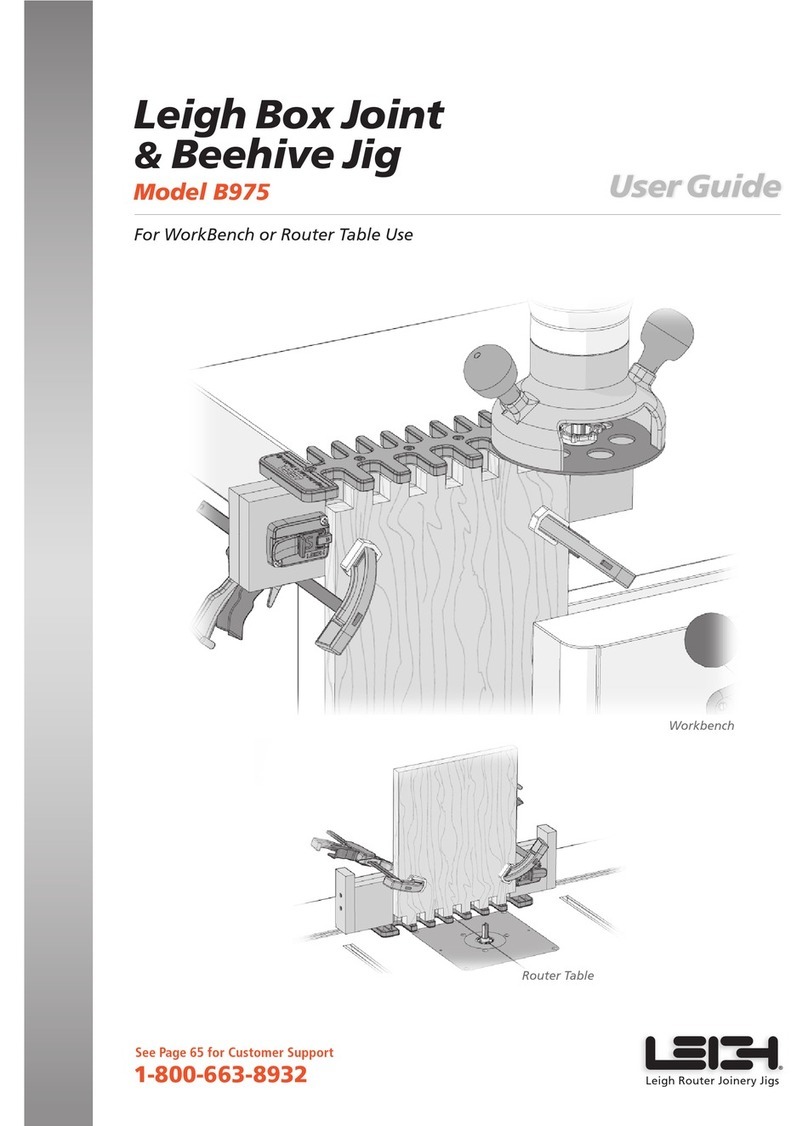
Leigh B975 User manual

Leigh

Leigh B975 User manual

Leigh Multiple Mortise and Tenon User manual

Leigh

Leigh Multiple Mortise and Tenon User manual

Leigh FMT PRO Guide

Leigh

Leigh FMT PRO Guide

Leigh D4R Pro User manual

Leigh

Leigh D4R Pro User manual

Leigh FMT PRO User manual

Leigh

Leigh FMT PRO User manual

Leigh TD330 User manual

Leigh

Leigh TD330 User manual

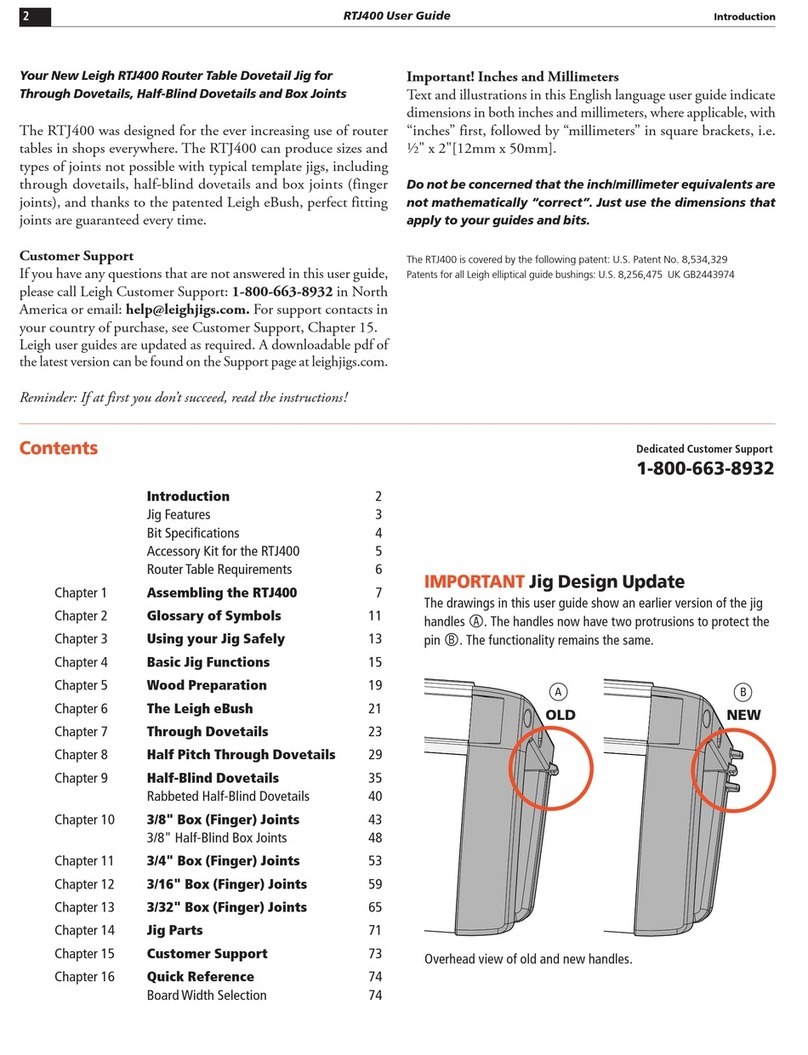
Leigh rtj400 User manual

Leigh

Leigh rtj400 User manual

Leigh rtj400 User manual

Leigh

Leigh rtj400 User manual

Leigh D4R Pro User manual

Leigh

Leigh D4R Pro User manual

Leigh D4R Pro User manual

Leigh

Leigh D4R Pro User manual

Leigh F1 User manual

Leigh

Leigh F1 User manual

Leigh D4R User manual

Leigh

Leigh D4R User manual

Leigh SUPERJIG-12-18-24 User manual

Leigh

Leigh SUPERJIG-12-18-24 User manual

Leigh B975 User manual

Leigh

Leigh B975 User manual

Popular Tools manuals by other brands

AGI Westfield MKX16 Assembly manual

AGI

AGI Westfield MKX16 Assembly manual

GYS HAND-DUCTION 056923 Translation of the original instructions

GYS

GYS HAND-DUCTION 056923 Translation of the original instructions

Grizzly H7583 instruction manual

Grizzly

Grizzly H7583 instruction manual

Sealey VS0462.V2 instructions

Sealey

Sealey VS0462.V2 instructions

Makita HR2650 instruction manual

Makita

Makita HR2650 instruction manual

Forza 1100H Series manual

Forza

Forza 1100H Series manual

Aventics EBS-PI operating instructions

Aventics

Aventics EBS-PI operating instructions

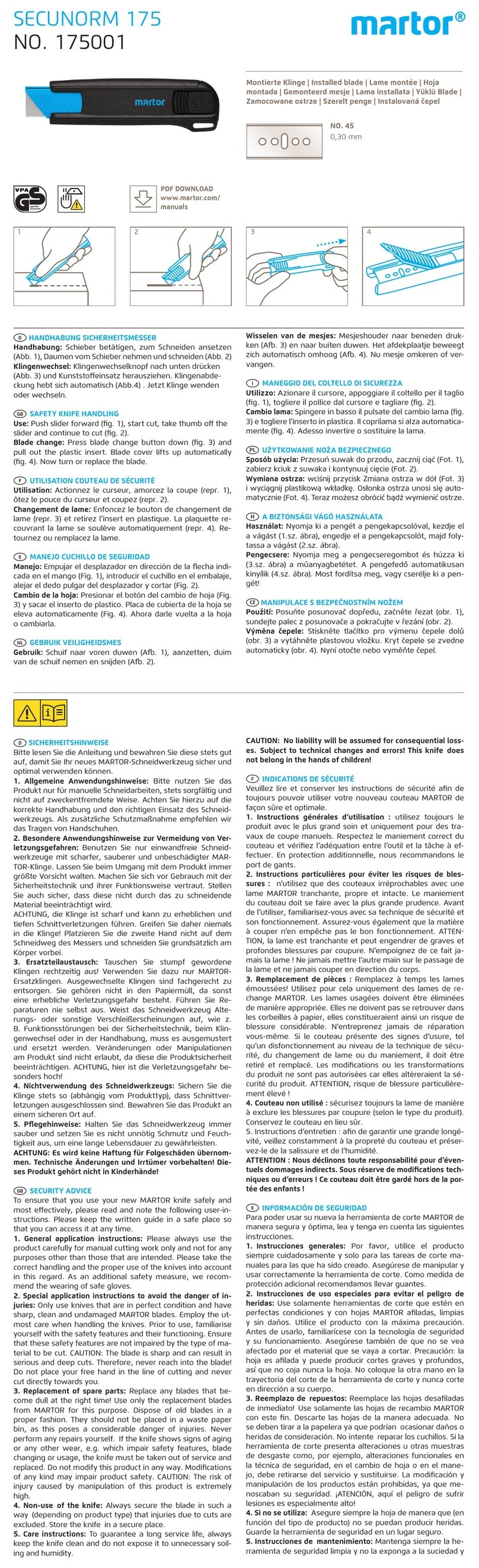
Martor SECUNORM 175 quick start guide

Martor

Martor SECUNORM 175 quick start guide

jbc N4473 instruction manual

jbc

jbc N4473 instruction manual

FEINMETALL FZWZ-SET-001 quick start guide

FEINMETALL

FEINMETALL FZWZ-SET-001 quick start guide

Worx Professional Sonicrafter WU676 Original instructions

Worx Professional

Worx Professional Sonicrafter WU676 Original instructions

Gage Bilt GB713SH Original instructions

Gage Bilt

Gage Bilt GB713SH Original instructions

Hilti DX 9-ENP Original operating instructions

Hilti

Hilti DX 9-ENP Original operating instructions

norbar NORTRONIC 34399 Operator's manual

norbar

norbar NORTRONIC 34399 Operator's manual

BGS technic 8578 manual

BGS technic

BGS technic 8578 manual

axing BWZ 5-02 Operation instructions

axing

axing BWZ 5-02 Operation instructions

Makita DHR241 instruction manual

Makita

Makita DHR241 instruction manual

Motor Guard JMB-1250 instructions

Motor Guard

Motor Guard JMB-1250 instructions

manuals.online logo
manuals.online logoBrands
  • About & Mission
  • Contact us
  • Privacy Policy
  • Terms and Conditions

Copyright 2025 Manuals.Online. All Rights Reserved.

Router Table & Bench Dovetail Jig
LEIGH R9PLUS
UserGuide
See other side of book for Bench Operation
Router Table Operation
Dedicated Customer Support
1-800-663-8932
22
ROUTER TABLE OPERATION
R9PLUS Dovetail Jig User Guide
Introduction
2000
2090
Your New Leigh R9PLUS Dovetail Jig
for Dovetails and Box Joints
Note: There are two user guides in this book. This user guide is for
Router Table Operation. Flip the book over for Bench Operation.
The R9PLUS Dovetail Jig was designed to overcome the restrictions
of fixed width jigs. Because of its unique “step over” feature, it
is possible to rout Through Dovetails and Box Joints on boards
of ANY width!
The R9PLUS can be used as a template jig with a hand-held router
or as a router table template. In either mode, you will be able
to rout multiple sizes of perfectly fitting through dovetails and
box joints.
Customer Support
If you have any questions that are not answered in this user guide,
please call Leigh Customer Support: 1-800-663-8932 in North
America or email [email protected]. For support contacts in
your country of purchase see the Customer Support section of
the Appendix.
Reminder: If at first you don’t succeed, read the instructions!
Important! Inches and Millimeters
Text and illustrations in this English language user guide
indicate dimensions in both inches and millimeters, with
“inches” first, followed by “millimeters” in square brackets, i.e.
1⁄2"x 2"[12x50mm].
Do not be concerned that the inch/millimeter equivalents are
not mathematically “correct.” Just use the dimensions that
apply to your guides and bits.
U.S. Patent No. 8,534,329
What’s in the Box:
PART NO. QUANTITY PART DESCRIPTION
2000 1 R9PLUS Template
2090 1 User Guide
BAG 1
2030 2 Latches
2040 1 Glide for Router Table
2080 1 Sidestop
BAG 2
2010 3 Pin Plates
BAG 3
2050 2 Beam Assembly Screws, ¼"-20 x 2¾"
2055 2 Beam Assembly Wing Nuts, ¼"-20
2060 2 Latch Screws, Phillips 10-24 x ¾"
2065 2 Latch Nuts, Nyloc
2070 11 Wood Screws, Phillips Flat Head, No.8 x 1¼"
2075 1 Sidestop Screw, Phillips Round Head, No.8 x 1¼"
BAG 4
e10 1 e10 eBush (Guide Bushing)
80-8 1 Dovetail Bit, ½"-8º
160 1 Straight Bit, ½"Two Flute
172-8 1 Collet Reducer, ½"to 8mm
730V 1 Pin Wrench
BAG 5
2020 2 Clamp Locators
9505 2 F-Clamps

33
ROUTER TABLE OPERATION
R9PLUS Dovetail Jig User Guide
Introduction
e10
172-8
730V
80-8
160
2030 x2
2040
2080
2010 x3
2070 x11
2075
2065 x2
2060 x2
2050 x2
2055 x2
2020 x2
BAG 1 BAG 4
BAG 5
BAG 3
BAG 2
9505 x2
Contents
You will need:
• A wooden beam 1
1⁄2"
x 3
1⁄2"
x 30".
See jig assembly for optional beam sizes.
•
5⁄8"[15mm]
MDF for sacrificial backer boards
and clamp face boards. See jig assembly for
optional sizes.
• A No.2 Phillips screwdriver
• An electric drill, preferably bench or pedestal,
but hand-held will work
•
3⁄32"
drill bit for pilot holes. Note: use
1
/
8
" or
9
/
64
" for hardwood.
•
3⁄4"
[19mm] Forstner or similar bit for the
clamp holes

•
5⁄16"
drill bit for the back up board holes,
• A countersink bit
• A router with adaptor for the e10 guide
bushing
Dedicated Customer Support
1-800-663-8932
Chapter 1 Making the Beam 5
Chapter 2 Glossary of Symbols 11
Chapter 3 Using your Jig Safely 13
Chapter 4 Basic Jig Functions 15
Chapter 5 The Leigh eBush 17
Chapter 6 Through Dovetail Joint Procedures
Concept of Operation 21
Board Width Selection 22
Through Dovetail Joints 23
Half-Pitch Through Dovetail Joints 25
Wide Boards 26
Chapter 7 Box Joint Procedures
Concept of Operation 29
Board Width Selection 30
3/8" Box Joints 31
3/16" Box Joints 33
3/4" Box Joints 34
Wide Boards 36
Appendix Customer Support 37
R9plus Beam Drawing 38
44
ROUTER TABLE OPERATION
R9PLUS Dovetail Jig User Guide
Introduction
Leigh Bits
75-8
70-8
A B*
Bit
Diameter
7/16"
Carbide Tipped
Carbide Tipped
Carbide Tipped
High Speed Steel
High Speed Steel
High Speed Steel
Solid Carbide
Carbide Tipped
Solid Carbide
Solid Carbide
Carbide Tipped
High Speed Steel
Solid Carbide
2 3/8" 8º 140-8
170
170C
e7
& e10
1 3/4"
1 3/4" 172-375
1 3/4" 172-375
1 3/4"
1 3/4"
1 3/4"
3/8"to
5/8" 8mm
140-8
170C*
5/16" 2 3/4" 172-8– – e7
1 3/4"
up to
1" 8mm
5/16" 2 3/4" – – e7 172-8
1 3/4"
up to
1"
8mm
[5/16"]
180C*
1/2" 3 1/2" – –
1 3/4"
1 3/4"
up to
1 1/4" 1/2"
3/8" 2 1/4" 8º
1 3/4"
1/4"to
1/2" 8mm
Max.
Cutting
Depth
C
Shank
Diameter
D
Shank
Length
E
Overall
Length
F
Angle Use with
Straight
Bit No.
Use with
e-Bush
Use with
Collet
Reducer
*
Bits 80-8 and 160 included with the R9 Plus.
*
Spiral upcut bits rout cleaner and faster,
leaving a smoother finish.
80-8*
1/2" 2 9/16" 8º 160
180
180C
160
180
180C
160
180
180C
172-8
172-8
172-8e10
e10
e10
1 3/4"
1/2"to
13/16" 8mm
–– e10
180*
1/2" 3 1/2"1 1/4" 1/2"
166*
3/16" –
172-8
–
––
– e7–
–e10
e10
e10
70-8
3/8"
Carbide Tipped
2 1/4" 8º 140-8
170
170C
e7
& e10
1 3/4"
1/4"to
1/2" 8mm 172-8
75-8 Carbide Tipped
7/16" 2 3/8" 8º
1 3/4"
3/8"to
5/8" 8mm 172-8
–e10
–
–
2 7/8"5/8" 1/4"
170*
5/16" 3"7/8" 8mm
[5/16"]
173*
For 3/8"
& 3/4"
Joints
3"1" 3/8"
166C*
3/16" 2 1/2"5/8" 1/4"
173C*
For 3/8"
& 3/4"
Joints
3"1" 3/8"
160*
1/2"
collet
required
1/2"
collet
required
1/2"
collet
required
1/4"
collet
required
1/4"
collet
required
–e10
1/2" 3" –
1 3/4"
up to
1 1/4" 1/2"
172-8
1/2" to 8mm collet reducer
1 1/4" long. For 8mm shank bits.
172-375
1/2" to 3/8" collet reducer
1 1/4" long. For 3/8" shank bits.
e10
Half-Pitch Through Dovetails
Full Pitch Through Dovetails
Box Joints
CF
A
B
D
E
C
D B
E
A
R9PLUS BIT SELECTION
This chart shows all bits that can be used on the R9PLUS.
R9PLUS Bit Selection
Item ACR9 Includes:
70-8
3/8" dovetail bit (for through dovetails)
75-8
7/16" dovetail bit (for through dovetails)
140-8
5/16" straight bit (for half-pitch through dovetails)
e7
eBush (for 70-8, 75-8 for half-pitch through dovetails)
166
3/16" spiral upcut bit (for box joints)
173
3/8" spiral upcut bit (for box joints)
172-375
1/2"to 3/8" collet reducer
This kit offers great savings over
individual prices.
2010PR
Package of 2
R9PLUS Accessory Kit
R9
PLUS
Pin Plates
55
The heart of the R9PLUS Dovetail Jig is the beam. A typical
beam, shown below, is 30"[762mm] long. A 30"[762mm]
beam can accommodate board widths of up to 18"[457mm].
Beams can be made shorter (minimum 20"[508mm]) or
longer, in 10"[254mm] increments. Because of the template’s
unique “step over” ability, beams can be made longer to suit
any width project. The beam is equally suited to router table or
bench operation.
The following instructions will guide you through the beam
making process. Care in building the beam will ensure great
joinery every time with the R9PLUS. In addition to these
instructions, a two page drawing, complete with all dimension
information, is provided at the end of the user guide.
Important: Please use this chapter’s step-by-step instructions
in conjunction with the technical drawing on pages 38-39 of
the Appendix.
R9PLUS ROUTER TABLE OPERATION
CHAPTER 1
Making the Beam
66
ROUTER TABLE OPERATION
R9PLUS Dovetail Jig User Guide
Making The Beam
Chapter 1
AB
C
A
B
D
B
C
A
E
A
B
C
C
A
B
1-1 The beam assembly consists of the main beam A, the
sacrificial backer board Band the clamping surface C. We
recommend making the clamping surface and sacrificial board
from MDF, 1/2" to 3/4"[12,7 to 19mm] thick. Hardwood or
softwood may also be used.
1-3 Cut a piece of MDF 30" long and 21⁄8" wide [762mm
x 54mm]. This will be your clamping surface A. Then cut
your sacrificial boards 1
1
⁄
2
" x 30"[38mm x 762mm]. You may
want to cut a number of extra sacrificial boards now to use as
replacements B.
1-5 This procedure is critical to the accuracy of the jig.
Before attaching the MDF boards to the beam, use each pin plate
as a drill guide. First, mark a line 41⁄2"[114mm] in from the left
end of the top of the beam and square it across A. Next, stack
the clamping surface
B
, sacrificial board
C
and beam
D
near
the edge of the workbench and clamp in place E.
1-2 Start with a straight, flat and square 30"[762mm] length
of wood, 11⁄2" x 31⁄2" x 30"[38mm x 89mm x 762mm]. Note: A
30" section of common 2 × 4 can be used if it is straight, flat and
square.
1-4
Lay out the mounting screw holes
A
and clamp holes
B
as
per the drawing on pages 38-39. Drill and countersink the screw
holes on the clamping surface. Drill the 5⁄16"[8mm] holes Cin
the sacrificial board. This piece can be reversed and flipped four
times to use up all four surfaces.
1-6 Clamp a pin plate with its wide straight side flush to the flat
bench surface Aand its side edge on the line B. Using the 2 small
holes Cin the pin plate as a drill guide, drill two
3
⁄
32
"[2,5mm]
pilot holes 1"[25,4mm] deep. These holes will correctly position
the pin plate on the beam. Note: If you are using hardwood, redrill
these holes with a larger bit, 1/8" or 9/64", to avoid breaking screws.
Important: Please use these step-by-step instructions in conjunction with the technical drawing on pages 38-39 of the Appendix.
77
ROUTER TABLE OPERATION
R9PLUS Dovetail Jig User Guide
Making The Beam Chapter 1
AB
7"
A
A
B
A
B
C
A
A A
A
1-7
Use two No.8 x 1
1
⁄
4
" [38mm] wood screws (included) to
lightly
attach the first pin plate with its left edge flush to the
line on the top of the beamA. Note: The pin plate is moved up
from the drilling position (see 1-6) to align the screw slots in
the pin plate with the pre drilled holes
1-10 Pin Plate “Pin” The template has positioning holes that
allow it to sit perfectly on top of the raised pin Aof each pin
plate. The pin plate sits flat on the beam B.Note: When the
sacrifical board Cis installed, the top of the pin plate will be
level with the top of the sacrificial board.
1-9 Assemble the Latches There are three parts to each
latch assembly: the latch screw A, the nyloc nut Band the plastic
latch C. Press the nyloc nut into the hexagon opening in the top
of the plastic latch with the white nylon insert facing up. Next,
screw in the latch screw from the bottom of the latch. Do not
tighten the screw at this time.
1-12
Mount the template on the left pair of pin plates using the
7⁄16"[11mm] pin position A.
1-8 Square a second line across the beam board exactly 7"
[178mm] from the right edge of the first pin plate A. Clamp
the second pin plate
B
flat on the workbench and against the
line. Repeat the drilling and attaching procedure as before.
Repeat this procedure for each successive pin plate.
1-11 Attach the latches to the keyhole slots and turn to engage
the pin plates A. Adjust the latch screw tension so that the
latches are stiff to turn onto the plates (seen from underside of
the template).
88
ROUTER TABLE OPERATION
R9PLUS Dovetail Jig User Guide
Making The Beam
Chapter 1
A
C
D
B
A
B
B
A
REV 040314
5/16
"
1
7/8
"
5/16
"
dia. x 1/4
"
deep
4
1/2
"
[114mm]
[8mm]
[47mm]
[8mm x 6.35mm]
A
1-13 Turn the assembly upside down. Take a piece of the
predrilled sacrificial board and lay it flush on the template.
1-15 Place the clamping surface Aagainst the beam B, flush
against the sacrificial board. Be sure the clamp hole layout
marks
C
are next to the sacrificial board
D
. Screw the clamping
surface to the beam through the countersunk holes. If screwing
into a hardwood beam, first drill pilot holes in the beam.
1-17
Sidestop Positioning
Create layout lines as indicated
above for the sidestop
A
.
Note:
Be precise. Sidestop positioning
is very important.
1-14 Using the two 5⁄16"[8mm] holes as drill guides, drill
two 5⁄16"[8mm] holes through the beam. Attach the sacrificial
board at the left end with a ¼-20 machine screw and wing nut.
Then move the template to its second position and install the
second screw.
1-16
Clamp Holes Drill all
3
⁄
4
"[19mm] clamp holes
A
square
to the beam, through the clamping surface and beam. Next,
drill two holes (as per beam drawing), 5⁄16"[8mm] diameter and
9⁄16"[14mm] deep, for the table glide B(used for router table
operation only).
1-18 Using a Brad Point or Forstner bit, counter bore a
5⁄16"[8mm] hole A, 1⁄4"[6,35mm] deep for the sidestop hub.
Then, using a 3⁄32"[2,5mm] bit, drill a pilot hole for the sidestop
mounting screw. Attach the sidestop to the beam with the
provided No.8 x 11⁄4"[30mm] round head screw B.
99
ROUTER TABLE OPERATION
R9PLUS Dovetail Jig User Guide
Making The Beam Chapter 1
AAA
A
B
C
A
90º
90º
1-19
The template will now be used to precisely position the pin
plates. Slightly loosen all pin plate screws Ajust enough so that
the pin plates can move side to side. Position the template on the
pin plates in the 3⁄8"[9,5mm] position B. Set the sidestop to the
TD Max position C.
1-21
Gradually tighten the second pin plate screws Amaking
sure the template is not binding on the pins. Move the template
to the second position and repeat the procedure with the third
pin plate.
1-22
Optional Hold-down for Bench Use
Notch out the
ends of the beam in order to clamp beam assembly to a bench
and use in hand-held router mode. ■
1-20 Clamp a square board against the sidestop and flush
under the template. Insert the shank of the No.80-8 bit into
the 5⁄16"[8mm] hole in the template. Move the template and pin
plates laterally until the shank of the bit just touches the edge of
the board. Now tighten the first pin plate.
Important: The beam may expand or contract with humidity changes. Use the
3⁄8"[9,5mm]
holes to adjust the pin plates as required.
1010
ROUTER TABLE OPERATION
R9PLUS Dovetail Jig User Guide
Making The Beam
Chapter 1