manuals.online logo
Brands
  1. Home
  2. •
  3. Brands
  4. •
  5. Lissmac
  6. •
  7. Cutter
  8. •
  9. Lissmac FS 27-E User manual

Lissmac FS 27-E User manual

Other Lissmac Cutter manuals

Lissmac FS UNI-CUT User manual

Lissmac

Lissmac FS UNI-CUT User manual

Lissmac COMPACTCUT 800 User manual

Lissmac

Lissmac COMPACTCUT 800 User manual

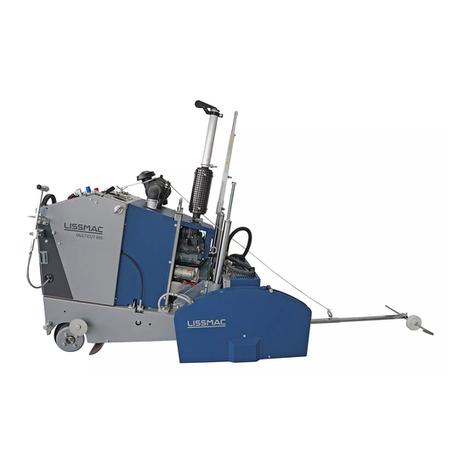
Lissmac MULTICUT 800 User manual

Lissmac

Lissmac MULTICUT 800 User manual

Lissmac UNICUT 500 User manual

Lissmac

Lissmac UNICUT 500 User manual

Popular Cutter manuals by other brands

Eraser WC600 operating instructions

Eraser

Eraser WC600 operating instructions

Husqvarna K 760 OilGuard Operator's manual

Husqvarna

Husqvarna K 760 OilGuard Operator's manual

Binding Products GuilloMax user manual

Binding Products

Binding Products GuilloMax user manual

Bms Bulut Makina BULUCUT-6 Operational manual

Bms Bulut Makina

Bms Bulut Makina BULUCUT-6 Operational manual

Westfalia 80 02 22 instruction manual

Westfalia

Westfalia 80 02 22 instruction manual

Perfecta 76 UC Service instructions

Perfecta

Perfecta 76 UC Service instructions

Bosch POF 1400 ACE Original instructions

Bosch

Bosch POF 1400 ACE Original instructions

SignWarehouse.com Bobcat BA-60 user manual

SignWarehouse.com

SignWarehouse.com Bobcat BA-60 user manual

Makita 4112HS instruction manual

Makita

Makita 4112HS instruction manual

GEISMAR STUMEC MTZ 350S manual

GEISMAR STUMEC

GEISMAR STUMEC MTZ 350S manual

Hitachi CM 4SB2 Safety instructions and instruction manual

Hitachi

Hitachi CM 4SB2 Safety instructions and instruction manual

Dexter Laundry 800ETC1-20030.1 instruction manual

Dexter Laundry

Dexter Laundry 800ETC1-20030.1 instruction manual

GCC Technologies AFJ-24S user manual

GCC Technologies

GCC Technologies AFJ-24S user manual

ARCBRO Stinger-PRO 5100 Series Install manual

ARCBRO

ARCBRO Stinger-PRO 5100 Series Install manual

DeWalt XR LI-ION DCS350N manual

DeWalt

DeWalt XR LI-ION DCS350N manual

Baudat ES1 instruction manual

Baudat

Baudat ES1 instruction manual

Makita 4100NH instruction manual

Makita

Makita 4100NH instruction manual

CAB PCU400 instructions

CAB

CAB PCU400 instructions

manuals.online logo
manuals.online logoBrands
  • About & Mission
  • Contact us
  • Privacy Policy
  • Terms and Conditions

Copyright 2025 Manuals.Online. All Rights Reserved.

USER’S MANUAL
FLOOR CUTTER
FS 27-E / 7.5 kW
Maschinenbau GmbH
Lanzstraße 4 - D-88410 Bad Wurzach
Telefon +49 (0) 75 64/3 07-0 - Fax + 49 (0) 75 64/3 07-5 00
[email protected] - www.lissmac.com
Edition: 2011/11
Translation of the original operating manual
1
Introduction
This operating manual should make it easier to learn about the machine and its
features.
The operating manual contains important information on operating the machine safely,
correctly and efficiently. Following the instructions helps prevent accidents,
unnecessary repair costs and down time, which extends the machine’s reliability and
service life.
The operating manual is yet to be supplemented with instructions pertaining to national
laws concerning accident prevention and environmental protection.
The operating manual must always be accessible on the machine.
Every person working on this machine must read and follow the instructions in the
operating manual. This includes the following areas:
Operation, including setting-up, troubleshooting, disposal of waste products, product
care, disposal of lubrication and auxiliary products.
Servicing (maintenance, inspection, repair) and/or
Transport
In addition to the operating manual and to complying with all national and local
regulations concerning accident prevention, the general technical regulations for safe
and correct operation must also be adhered to.
Table of Contents
1. General Safety Precautions
2. Description of Machine
3. Commissioning
4. Transport
5. Operation
6. Switching off
7. Maintenance
8. Trouble Shooting
10. Guarantee
11. Disposal
12. Conditional connections
2
1. General Safety Precautions
1.1 Warning Labels and Symbols used in this Manual
Danger! Not following the instructions can result in serious injuries or even
death.
Caution! Not following the instructions can, under certain conditions, result in
injuries.
Note! Not following the instructions can result in damage to the machine or
other equipment.
1.2 General Safe Operating Procedures
Danger!
1.2.1 The machine has been manufactured in keeping with the most recent
technology and the recognised safety rules. Nevertheless there may be some
risk of a hazard to life and limb of the user or third persons or impairments of
the machine and other real assets respectively.
1.2.2 Use the machine only in good working condition and follow all procedures
concerning correct and safe operation, as outlined in the manual! This applies
specifically to malfunctions that can jeopardise safety!
1.2.3 This floor cutter is intended for cutting concrete or asphalt exclusively.
The cutting of wood, plastic material or metal (except concrete reinforcements)
is not permitted!
Any other utilisation of this floor cutter is considered inadmissible.
The manufacturer/supplier is not liable for any damage caused by undue
application.
Correct operation also requires following instructions in the operating
manual as well as inspection and maintenance procedures.
1.3 Organisational Measures
1.3.1 Always keep the operating manual close to the machine and easily accessible!
1.3.2 Follow all laws and regulations concerning accident prevention and environmental
compliance listed in the supplement to this operating manual. These regulations
can, for example, apply to the use of dangerous chemicals, personal protective
equipment, and traffic laws.
3
1.3.3 Any personnel working on the machine must read this operating manual
especially this chapter on safety precautions-prior to beginning. Learning on
the job is too late. This especially applies to personnel who occasionally work
on the machine (e.g. setup and maintenance crews).
1.3.4 Perform regular spot checks to ensure that personnel are doing their jobs in a
safe and conscientious manner and that they are adhering to the instructions in
the operating manual!
1.3.5 Use personal protective equipment whenever necessary or when required by
regulations!
1.3.6 Pay attention to all safety and danger warning labels located on the machine!
1.3.7 Keep all safety and danger warning labels in/on the machine completely
legible!
1.3.8 Stop the machine and notify the parties in charge when performing safety-
related changes on the machine or its operation!
1.3.9 Make no alterations and do not add componentry or rebuild the machine
without permission from the manufacturer!
1.3.10 Use only original spare parts!
1.3.11 Perform all scheduled inspections as needed, or use the scheduled intervals
outlined in the operating manual!
1.3.12 For carrying out maintenance work, adequate workshop equipment is
indispensable.
1.4 Qualifications for Selecting Operators; Fundamental Responsibilities
1.4.1 Only personnel of proven reliability is allowed to operate the machine. Observe
legal minimum age requirements!
1.4.2 Use only qualified and trained personnel. Clearly define staff responsibilities
concerning operation of machine, setup, maintenance, and repair works!
1.4.3 Ensure that the floor cutter is handled only by persons instructed to do so.
1.4.4 Define machine operator's responsibility - also in respect to road traffic
regulations - and his ability to object to instructions not in compliance with the
safety regulations!
1.4.5 Apprentices, new employees, or personnel being trained must be
4

accompanied at all times by an experienced operator while working
on the machine!
1.4.6 Any work at the electrical equipment of the floor cutter must be carried out by
a qualified electrician only or a trained person under the supervision of a
qualified electrician, in accordance with the rules and standards for electronics.
1.5.1 Normal Operation
1.5.1.1 Do not perform procedures that may present a safety risk!
1.5.1.2 Take steps to ensure the machine is used only when it is
in a safe, operational state!
1.5.1.3 Machine must be examined for externally visible damage at least once per
shift! Report any changes (including performance) to the appropriate
personnel at once! If necessary, immediately stop and secure the machine!
1.5.1.4 Immediately stop and secure the machine when malfunctioning!
Promptly fix the problem!
1.5.1.5 Prior to starting work, familiarise yourself with the locality and its
environment. The environment may include obstacles within the working and
traffic area, safe floor load, necessary protection of the site towards public
traffic areas, first aid in the case of an accident.
1.5.2 Using the Machine for Extracurricular Jobs and Maintenance Procedures, e.g.
Troubleshooting; Waste Disposal
1.5.2.1 Follow the instructions in the operating manual when adjusting,
maintaining and inspecting componentry and performing scheduled
work. This includes the replacement of parts! Only qualified
personnel are allowed to perform these activities.
1.5.2.2 Notify operators of any maintenance or additional work prior to
performing it! Appoint a supervisor!
5
1.5.2.3 When the machine is completely turned off for maintenance or repair
work, it must be safeguarded against an unexpected restart.
1.5.2.4 Before cleaning machine with water or with other cleansing agents cover
and seal all openings into which, due to safety or functional reasons,
water/cleansing agent may not penetrate. Particularly protect endangered
electric motors and switches.
Do not clean the machine by a high pressure steam jet!
1.5.2.5 Completely remove all covers/tape after cleaning!
1.5.2.6 Tighten any loose screws after performing maintenance or repair work!
1.5.2.7 If the protective devices on the machine need to be removed for setting up,
maintenance or repairs, they must be reassembled immediately afterwards
and tested for their safety features in order to ensure safe operation!
1.5.2.8 Dispose of lubrication and auxiliary devices as well as spare parts in a safe
and environmentally friendly manner!
1.5.2.9 The machine must be operated on circuits with safety switch (FI) only.
1.6 Precautions for Special Types of Danger
1.6.1 Electrical Power
1.6.1.1 Only use original fuses with the electrical current for which they were
designed! Immediately turn off the machine when encountering electrical
problems!
1.6.1.2 Any work on electrical equipment must be performed by a qualified
electrician only or by trained persons under the supervision by a qualified
electrician, in compliance with the regulations for electrical engineering.
1.6.1.3 Regularly inspect/check the machine’s electrical condition. Problems, such
as loose connections (e.g. damaged cables) must be immediately repaired.
6
1.6.2 Dust
1.6.2.1 Observe all national regulations and standards when working in small
spaces!
1.6.3 Noise
1.6.3.1 Officially prescribed personal ear protection!
1.7 Transport
1.7.1 Ensure that your hoisting gear and load suspension devices have adequate
carrying capacity.
1.7.2 Have an experienced coordinator direct the lifting process!
1.7.3 Lift the machines using only approved lifting equipment as per the
instructions in the operating manual (striking points for loading procedures)!
1.7.4 Use only a vehicle providing sufficient lift capacity for transporting the
machine!
1.7.5 Secure the load. Use the appropriate striking points!
1.7.6 Turn off the power even when moving the machine only a small distance!
Before restarting, ensure the machine is securely connected!
1.7.7 Always follow the instructions in the operating manual when restarting!
7
2. Description of Machine Componentry
2.1 Component Overview
Pos. 1 Cut depth adjustment
Pos. 2 Locking for cut depth adjustment
Pos. 3 Steering rod
Pos. 4 Fixing of saw hood
Pos. 5 Saw hood
Pos. 6 Main switch
Pos. 7 Star-delta-switch (Eyebolt)
Pos. 8 Motor attachment (Split pin and Hexagon nut)
Pos. 9 Motor attachment
Pos. 10 Water supply
Pos. 11 Connector plug
Pos. 12 Machine frame
Pos. 13 Positioning rod
Pos. 14 Scale for cut depth adjustment
Pos. 15 Motor connector plug
Pos. 16 Protective cap – V-belt tension
Pos. 17 Locking screw
Pos. 18 Straining spindle
Pos. 19 Emergency stop switch
Pos. 20 Splash guard
Pos. 21 V-Belt
Pos. 22 Tension pulley
2.2 Protection devices
Pos. 6 Saw blade protection cap
Emergency off switch
Pos. 19 Emergency stop switch
Pos. 20 Splash guard
8
9
2.3.Technical data
FS 27- E / 7.5 kW
Cut depth 320 mm (12.6“)
Saw blade diameter 800 mm (31.5“)
Saw blade holder (bore hole) 25.4 mm (1“)
Dimensions L/W/H 1200/650/1090 mm (47“/25“/42,9“)
Weight 156 kg (341 lbs.)
Left-/Right Cutting yes
Drive motor Electrical motor
Motor output 7.5 kW
Voltage/Frequency 400 V / 50 Hz
Current consumption 16.1 A
Kind of current 3PH + N + PE
Number of revolutions – saw blade 1350 r.p.m.
2.4.Noise emitted FS 27-E
Guaranteed sound level
= 96 dB(A)
Attention! Ear muffs must be worn if a 90 dB(A) noise level is
exceeded!
The acoustic emission measurement was made in consideration of EN ISO 3744, EN
13862 and the guidline 2000/14/EEC.
2.5.Vibration of the handle
The vibration total value is among the exposure limit value of 2,5 m/s².
2.6 Water pressure
Supply water pressure to the floor cutter should not exceed 5 bar, otherwise use a
pressure reducer to limit the water pressure to a max. 5 bar.
10