8
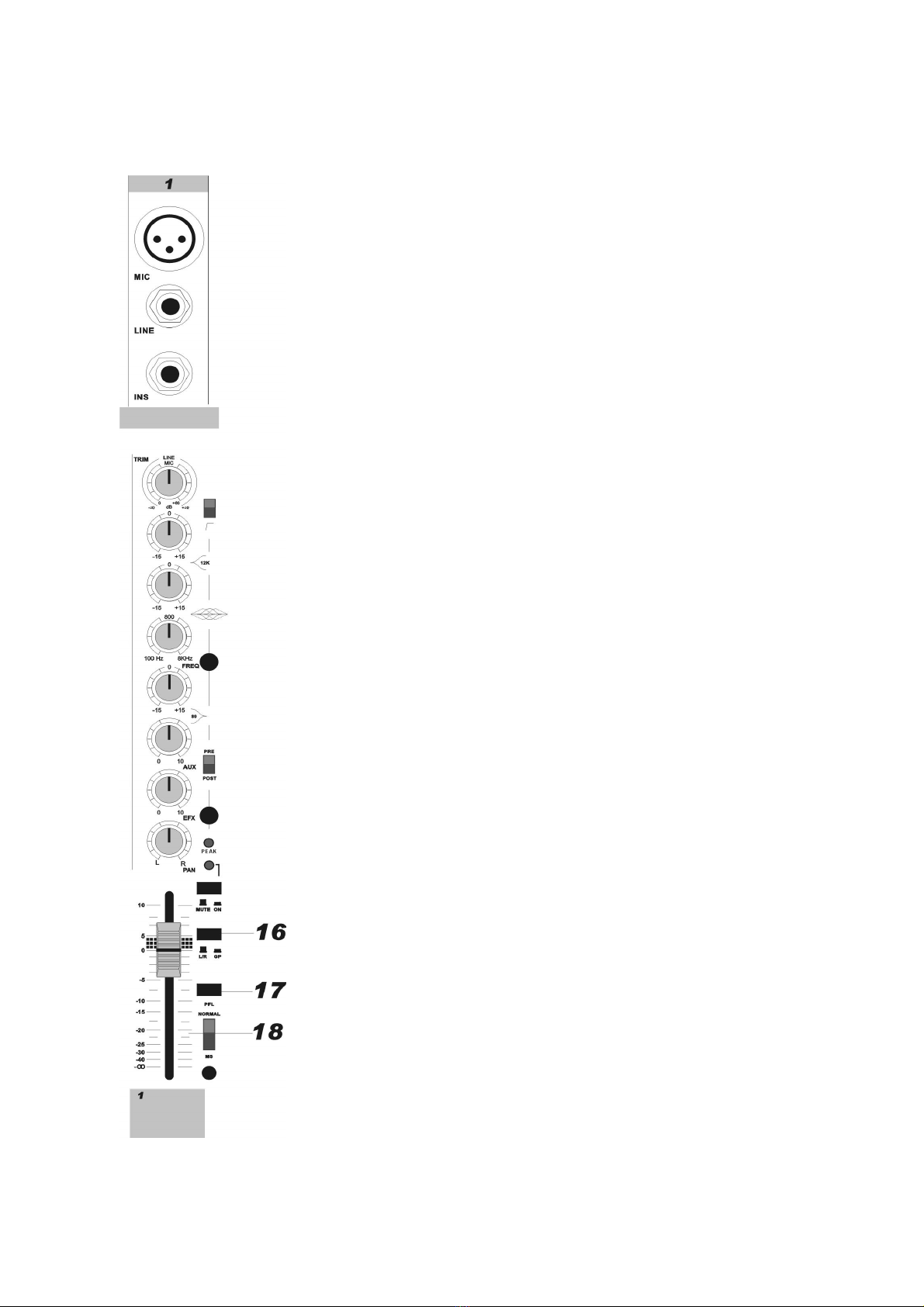
16. GP GROUP SWITCH
The input channel signal always routes to ST; press the GP switch rout
the channel signal to the GP output only, Select GP1 or GP 2 by channel
PAN control. Turn fully to the left, the channel signal will be routed to GP 1;
turn fully to the right, the channel signal will be routed to GP 2; You have
to use the L/R buttons to patch the GP1 or GP2 to either side of the stereo
mix.
17. PFL(Pre-Fader-Listening)
When PFL switch is pressed, the pre-fader signal will be fed to control
room/headphonesoutput, whereit replaces theselected monitorsource.
PFLis very useful for mixingengineer tomonitor individualchannel without
affectthe mainmixes, asto makeadjustments ortrace problem.When
PFL is selected the LED indicator will light up.
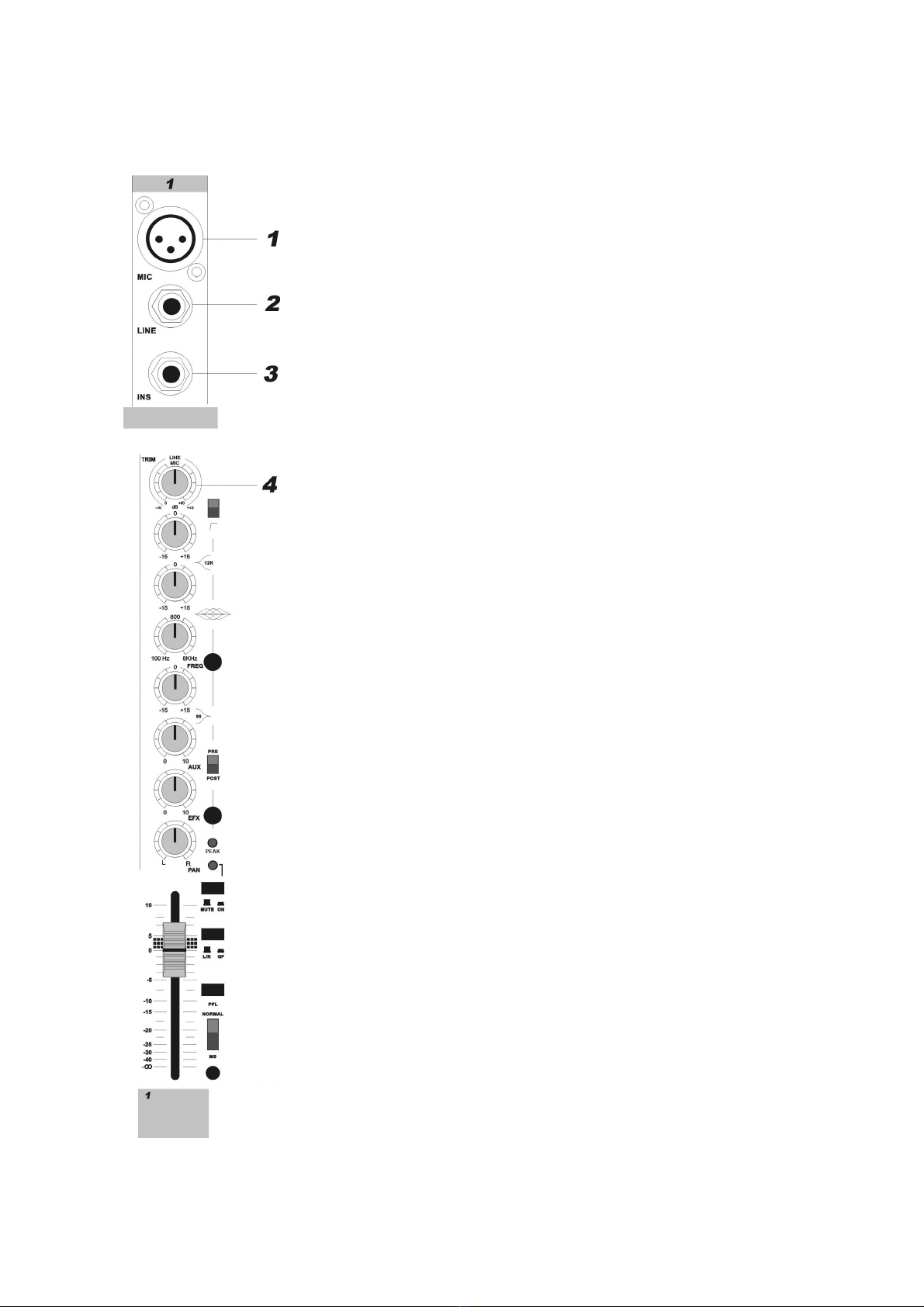
18. NORMAL / MS SWITCH (UNIQUE FEATURE)
If you want to make a M-S stereo recording, normally, you will need 2
microphones, one is cardioid for M signal pointing at the center, and the
other is figure eight microphone for S signal pointing the side. In order to
decode the MS signal to XY, you need 3 channels of Mic input to start with:
one for M and the rest two to for +S and accordingly. MM series
unique
featureNORMAL/MS switchwill helpto simplify the whole thing.
Now you won
’
thaveto worryaboutthe channelavailability,and patching
withspecial cable. When you havean occasionfor thestereo recording,
please just choose MM series mixer and simply slide down the M-S switch,
themixer will prepare everything foryou, theodd channelwill now become
theM channel,the evenchannel becomes the S channel.
M-S STEREO RECORDING
M-Sis an abbreviation for mid-side,the microphonesused forM-S recording
are a cardioid (or figure eight) facing directly to the source, and a figure-eight
microphonefacingsideways. Thefigure-eightmicrophone picksupthe left
halfof thesource with onephase andthe right halfwith invertedphase.
When the signal is added to the signal from the cardioid, the signal from the
left side adds together, while the signal from the right subtract due to the
phase inversion. The combined pattern of the two microphones is similar to
two cardioids (or figure eight) facing 45 degrees to the left and the other
cardiod facing 45 degrees to the right to create the stereo image.
Why don
’
t we use two cardioids 90 degrees apart? That will do something
different! With the M-S system, the related angle of the cardioids can be
variedwith respectto thelevel ofS (figureeight), andthis willvary thewidth
ofthe stereoimage.
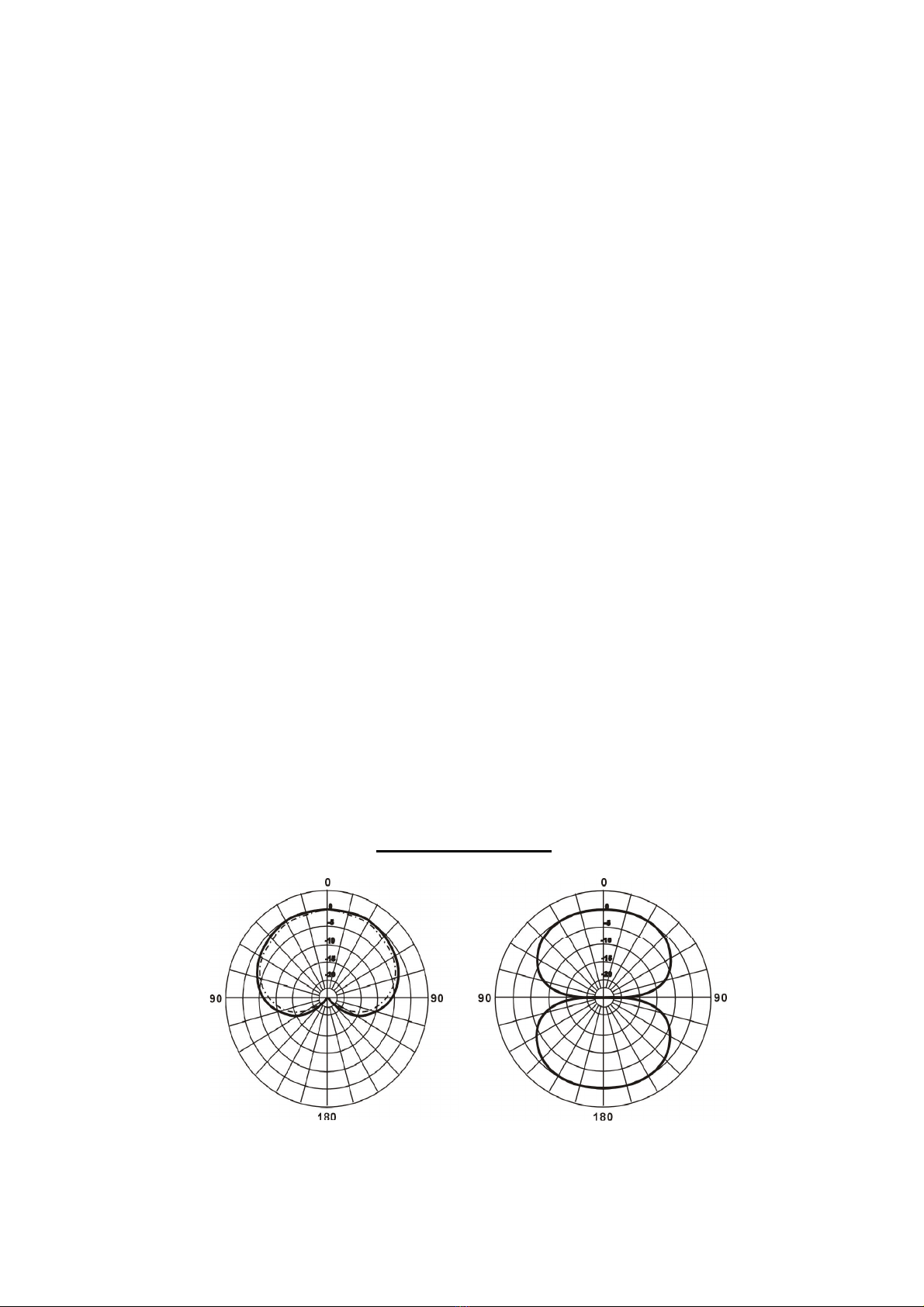
What is Cardioid ?
Cardioid means
“h
eart-shaped,
”
and any micwhich hasa hearted-