manuals.online logo
Brands
  1. Home
  2. •
  3. Brands
  4. •
  5. ResMed
  6. •
  7. Medical Equipment
  8. •
  9. ResMed LifeChoice Activox User manual

ResMed LifeChoice Activox User manual

Other ResMed Medical Equipment manuals

ResMed AirCurve 10 ST-A User manual

ResMed

ResMed AirCurve 10 ST-A User manual

ResMed Oxygen Connector Port User manual

ResMed

ResMed Oxygen Connector Port User manual

ResMed Swift FX Bella User manual

ResMed

ResMed Swift FX Bella User manual

ResMed VPAP III ST-A User manual

ResMed

ResMed VPAP III ST-A User manual

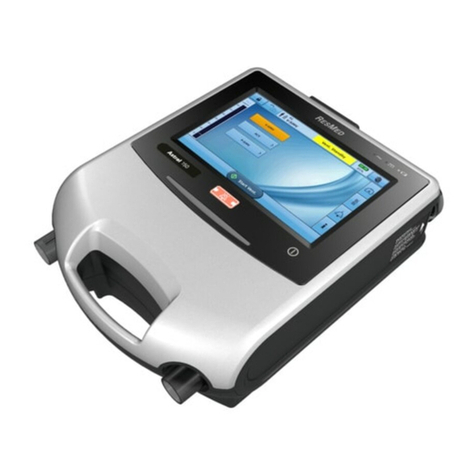
ResMed Astral Series User manual

ResMed

ResMed Astral Series User manual

ResMed VPAP Malibu User manual

ResMed

ResMed VPAP Malibu User manual

ResMed S9 Series Operating and safety instructions

ResMed

ResMed S9 Series Operating and safety instructions

ResMed H5i User manual

ResMed

ResMed H5i User manual

ResMed Nox A1s User manual

ResMed

ResMed Nox A1s User manual

ResMed H4i User manual

ResMed

ResMed H4i User manual

ResMed Swift FX Bella Gray User manual

ResMed

ResMed Swift FX Bella Gray User manual

ResMed AirCurve 10 ST-A User manual

ResMed

ResMed AirCurve 10 ST-A User manual

ResMed Mirage Quattro User manual

ResMed

ResMed Mirage Quattro User manual

ResMed CPAP User manual

ResMed

ResMed CPAP User manual

ResMed Quattro Air User manual

ResMed

ResMed Quattro Air User manual

ResMed S8 Series User manual

ResMed

ResMed S8 Series User manual

ResMed Astral 100 Series User manual

ResMed

ResMed Astral 100 Series User manual

ResMed TxLink 2 User manual

ResMed

ResMed TxLink 2 User manual

ResMed AirCurve 10 CS PaceWave User manual

ResMed

ResMed AirCurve 10 CS PaceWave User manual

ResMed AIRMINI User manual

ResMed

ResMed AIRMINI User manual

ResMed Ultra Mirage User manual

ResMed

ResMed Ultra Mirage User manual

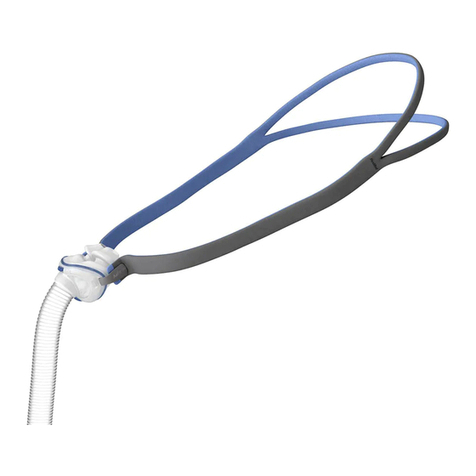
ResMed AirFit N30 User manual

ResMed

ResMed AirFit N30 User manual

ResMed Pixi User manual

ResMed

ResMed Pixi User manual

ResMed Quattro FX User manual

ResMed

ResMed Quattro FX User manual

Popular Medical Equipment manuals by other brands

TekTone Tek-CARE160 Installation and operation manual

TekTone

TekTone Tek-CARE160 Installation and operation manual

NeuroMetrix Quell 2.0 user manual

NeuroMetrix

NeuroMetrix Quell 2.0 user manual

AMT XLR8 Quick reference guide

AMT

AMT XLR8 Quick reference guide

EDAN SONOTRAX Pro user manual

EDAN

EDAN SONOTRAX Pro user manual

Restorative Therapies RT300 Service guide

Restorative Therapies

Restorative Therapies RT300 Service guide

Gendex Expert DC installation manual

Gendex

Gendex Expert DC installation manual

Dexcowin ADX4000W user manual

Dexcowin

Dexcowin ADX4000W user manual

Libelium MySignals user manual

Libelium

Libelium MySignals user manual

Acelity V.A.C.ULTA 4 user manual

Acelity

Acelity V.A.C.ULTA 4 user manual

Caputron ActivaDose II tDCS quick start guide

Caputron

Caputron ActivaDose II tDCS quick start guide

Plinth 2000 93CDT Service manual

Plinth 2000

Plinth 2000 93CDT Service manual

GE SENOGRAPHE 800T Operator's manual

GE

GE SENOGRAPHE 800T Operator's manual

GE Definium 5000 Operator's manual

GE

GE Definium 5000 Operator's manual

Kanmed GE-1380 user manual

Kanmed

Kanmed GE-1380 user manual

Huntleigh FD1 Instructions for use

Huntleigh

Huntleigh FD1 Instructions for use

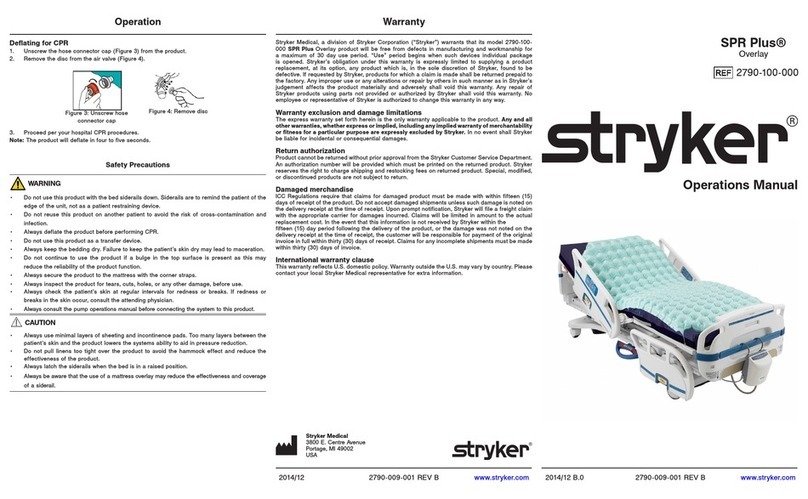
Stryker SPR Plus Operation manual

Stryker

Stryker SPR Plus Operation manual

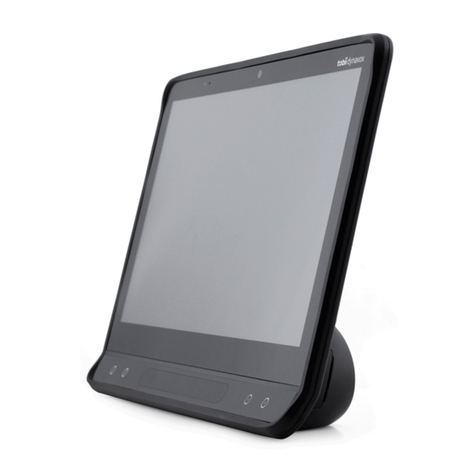
Tobii Dynavox I-Series user manual

Tobii Dynavox

Tobii Dynavox I-Series user manual

S-Capepod Evac Cocoon Step-by-step guide

S-Capepod

S-Capepod Evac Cocoon Step-by-step guide

manuals.online logo
manuals.online logoBrands
  • About & Mission
  • Contact us
  • Privacy Policy
  • Terms and Conditions

Copyright 2025 Manuals.Online. All Rights Reserved.

The control panel and user interface
Mute button
Power indicator
and button
Alarm indicator
Nasal cannula
fitting
1Message field (alarm text)
2External power symbol
3Setting level
4
PULSE-WAVE breath detection
symbol
5Auto Mode settings
6
Operating status (battery
condition)
7Internal & external battery bars
8Mute symbol
Navigation controls
• +/- buttons
Press to adjust the pulse
setting (1, 2, 3 or 4).
• OK button
Press once to light up the
screen.
Press and hold down to display
the serial number and hours of
operation.
• Right/Left arrow buttons
Press once to light up the
screen.
Service personnel will also
use these buttons to access
maintenance menus for
troubleshooting.
Display screen
AC power port
Inova Labs
3500 Comsouth Drive,
Suite 100
Austin, TX 78744 USA
Distributed by: See ResMed.com for ResMed locations worldwide. Activox, LifeChoice and PULSE-WAVE are trademarks and/
or registered trademarks of the ResMed family of companies. For patent information, see ResMed.com/ip. Product availability
may vary across regions. Specifications may change without notice. © 2017 ResMed Ltd. 1019963/1 2017-06
ResMed.com
1
3 5 7
4
6
8
2
Quick set up guide
ResMed.com
How to charge your POC
Please ensure you fully charge the internal battery before using your device for the first
time. If you purchased an external battery, it should also be fully charged before use.
1
To charge the internal
battery, connect the
AC power supply to the
device and plug it into
an electrical socket. A
plug icon will appear
on the display screen to
show that your portable
oxygen concentrator
(POC) is connected to an
external power source.
2
To charge the external
battery, first connect
the AC power supply to
an electrical socket (see
step 1). Then connect the
external battery to the
external battery port on
the device (the flat side of
the external battery cable
should be facing upwards).
3
A ‘Charging Internal’
message and the ‘INT’
battery bar on the display
screen show that the
internal battery is being
charged. The same
indicators with ‘EXT’ mean
the external battery is
being charged. When the
battery is fully charged, the
message will disappear
from the display and the
battery bar will indicate the
charge remaining.
Note: It can take up to 4 hours to charge a depleted internal battery and up to 2 hours to charge
a depleted external battery. By design, the system will always charge the internal battery first and then charge
the external battery. The system will deplete the external battery first to preserve the internal battery for as long
as possible.
Charging tips
• We recommend keeping your device plugged into the mains power supply even when it is
not in use and charging the external battery as often as possible. This helps extend the overall life
of the rechargeable batteries and only consumes a very small amount of electricity. The batteries
will not over-charge.
• Please ensure you test your vehicle’s
charging capabilities before taking a trip.
Some vehicles may not have sufficient
power output to the DC power supply
*
to
simultaneously operate and charge the
device and/or external battery.
• The fans on your POC will turn on to remove
heat that is generated during operation and
battery charging.
*For in-vehicle charging on the go **Hours are approximate and based on breaths per minute.
Setting 1 2 3 4
Internal battery
runtime** 10hr 15min 8hr 15min 5hr 4hr
External battery
runtime** 4hr 45min 3hr 45min 2hr 45min 2hr 25min
Total runtime** 15hr 12hr 7hr 45min 6hr 25min

How to use your POC
1
Turn on your POC by
briefly pressing and
releasing the power
button.The display screen
and green power indicator
will light up.
Important: do not put the
cannula in your nose until

the unit is turned on.
2
Press the + or – button to

select the pulse setting
prescribed by your doctor.
The setting number (1-4)
will appear on the bottom
left-hand corner of the
display screen, under
‘Setting’.
3
Plug in the nasal cannula
then put the cannula
prongs into your nostrils
and breathe normally.
When you take a breath,
the device will deliver a
gentle dose of oxygen
and the PULSE-WAVE™
symbol will flash on
and off.
Note: You might trigger the “no breath” alarm if you remove the nasal
cannula while the device is on or breathe through your mouth for an
extended period of time. To turn off the alarm, simply reconnect the cannula
or breathe through your nose.
4
Turn off your POC by
pressing and holding the
power button until you
hear a beep.
Device use and storage
• Your POC must only be used in well ventilated locations. Make sure that the inlets and outlets are
not obstructed (e.g. by clothing...).
• Your POC is designed to be operated and stored in its carrying case at all times.
• Your POC and batteries may be damaged if they are exposed to extremes of temperature (e.g. in
a parked vehicle). You should also keep your device away from environments with high levels of
moisture, dust or sand.