manuals.online logo
Brands
  1. Home
  2. •
  3. Brands
  4. •
  5. Siemens
  6. •
  7. Relay
  8. •
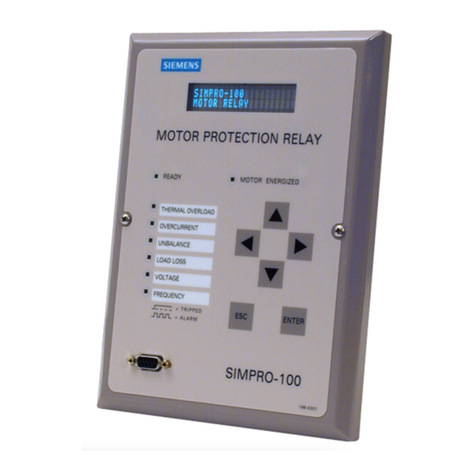
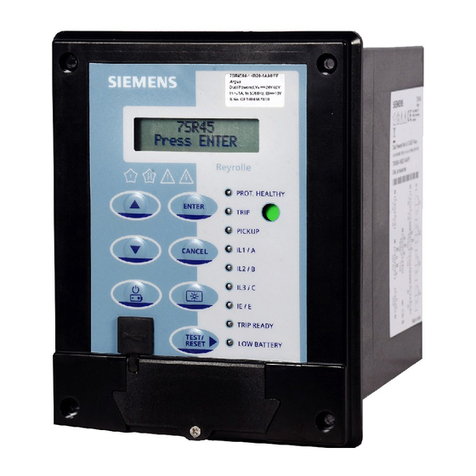
  9. Siemens 7SR46 Argus User manual

Siemens 7SR46 Argus User manual

Other Siemens Relay manuals

Siemens SIRIUS 3RT161 1A 3 Series User manual

Siemens

Siemens SIRIUS 3RT161 1A 3 Series User manual

Siemens 5TT4930 User manual

Siemens

Siemens 5TT4930 User manual

Siemens SIRIUS 3TK2824 A.20 Series User manual

Siemens

Siemens SIRIUS 3TK2824 A.20 Series User manual

Siemens 3TK2810-1 User guide

Siemens

Siemens 3TK2810-1 User guide

Siemens 48-HASA3M User manual

Siemens

Siemens 48-HASA3M User manual

Siemens SIRIUS 3UG5461-1AA40 User manual

Siemens

Siemens SIRIUS 3UG5461-1AA40 User manual

Siemens SIRIUS User manual

Siemens

Siemens SIRIUS User manual

Siemens SIPROTEC 7SA511 User manual

Siemens

Siemens SIPROTEC 7SA511 User manual

Siemens 7VK512 User manual

Siemens

Siemens 7VK512 User manual

Siemens SIRIUS 3TK2827 User manual

Siemens

Siemens SIRIUS 3TK2827 User manual

Siemens CRM-4 User manual

Siemens

Siemens CRM-4 User manual

Siemens 3SK1120 Series User manual

Siemens

Siemens 3SK1120 Series User manual

Siemens Sirius 3UG4614 User manual

Siemens

Siemens Sirius 3UG4614 User manual

Siemens SRC-8 User manual

Siemens

Siemens SRC-8 User manual

Siemens 3RB20 User manual

Siemens

Siemens 3RB20 User manual

Siemens 7SR45 Argus User manual

Siemens

Siemens 7SR45 Argus User manual

Siemens 3RB22 User manual

Siemens

Siemens 3RB22 User manual

Siemens SIMOCODE pro User manual

Siemens

Siemens SIMOCODE pro User manual

Siemens SIPROTEC 7SJ81 User manual

Siemens

Siemens SIPROTEC 7SJ81 User manual

Siemens SIRIUS 3RU1 4 Series User manual

Siemens

Siemens SIRIUS 3RU1 4 Series User manual

Siemens SIRIUS 3RS1040 User manual

Siemens

Siemens SIRIUS 3RS1040 User manual

Siemens SIRIUS 3TK2825 User manual

Siemens

Siemens SIRIUS 3TK2825 User manual

Siemens 7SN71 User manual

Siemens

Siemens 7SN71 User manual

Siemens Siprotec 7UM611 User manual

Siemens

Siemens Siprotec 7UM611 User manual

Popular Relay manuals by other brands

Woodward BU1-DC2 manual

Woodward

Woodward BU1-DC2 manual

ABB SSR32 product manual

ABB

ABB SSR32 product manual

Shelly Pro Series user manual

Shelly

Shelly Pro Series user manual

GE MVAX 11 Technical manual

GE

GE MVAX 11 Technical manual

ABB RELION REF615R manual

ABB

ABB RELION REF615R manual

Kemo Electronic B197 quick guide

Kemo Electronic

Kemo Electronic B197 quick guide

Seg MRM3 manual

Seg

Seg MRM3 manual

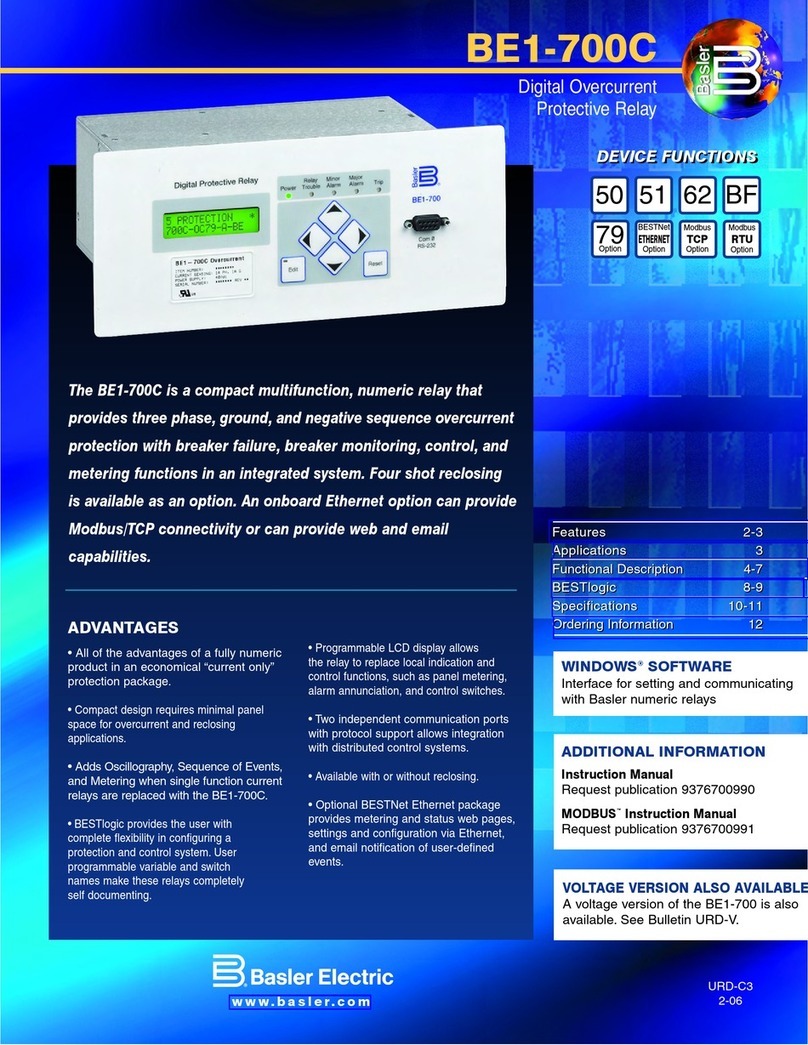
Basler BE1-700C manual

Basler

Basler BE1-700C manual

CD Automation REVEX 2PH 280A user manual

CD Automation

CD Automation REVEX 2PH 280A user manual

ABB SPAJ 142 C User manual and technical description

ABB

ABB SPAJ 142 C User manual and technical description

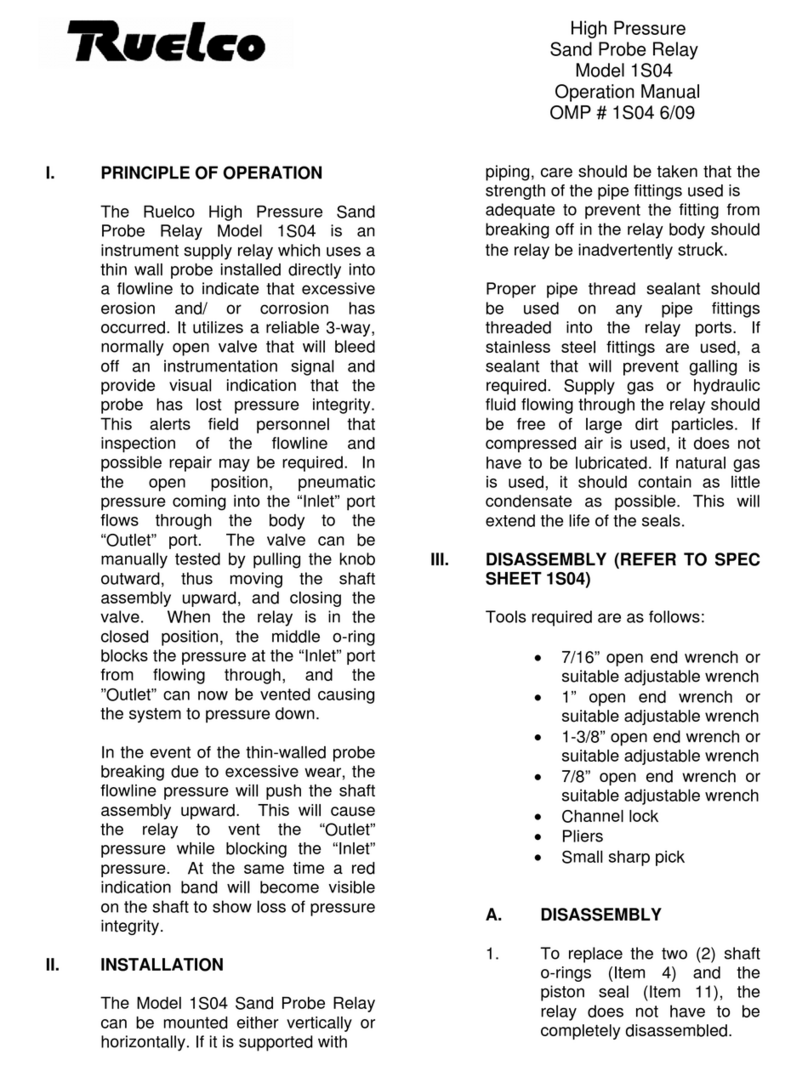
Ruelco 1S04 Operation manual

Ruelco

Ruelco 1S04 Operation manual

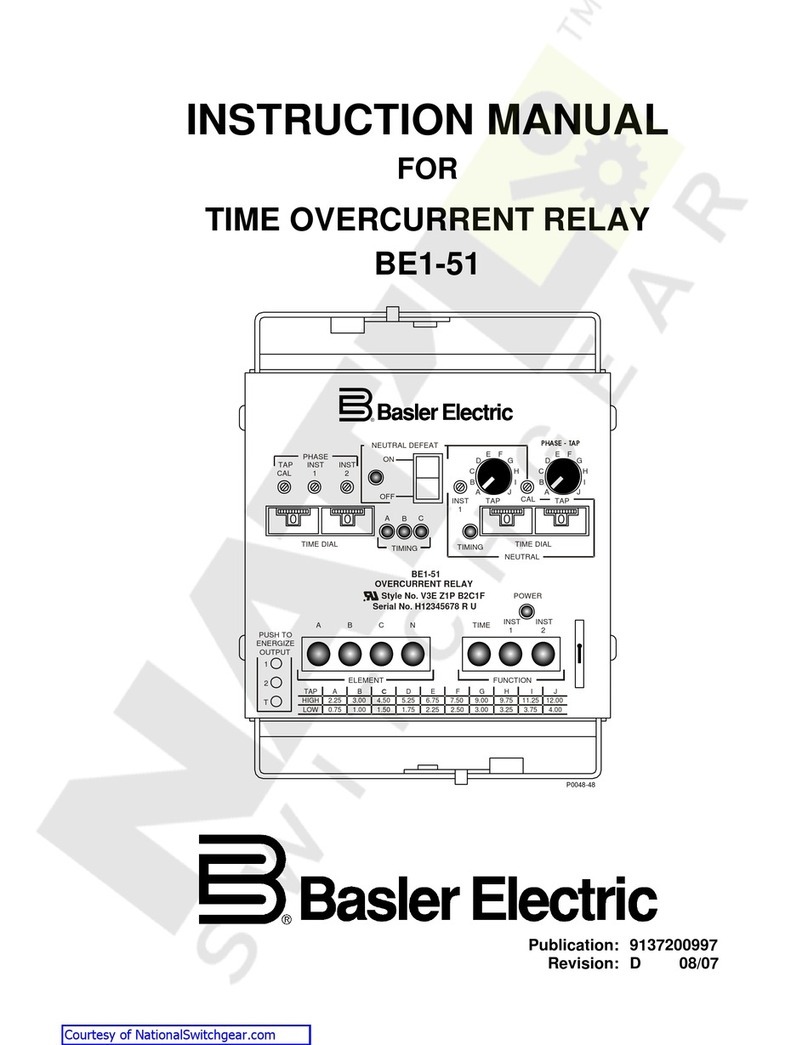
Basler V3E Z1P B2C1F instruction manual

Basler

Basler V3E Z1P B2C1F instruction manual

GE DGP instruction manual

GE

GE DGP instruction manual

Kyongbo Electronics GDR-D01 user manual

Kyongbo Electronics

Kyongbo Electronics GDR-D01 user manual

Eaton easyE4 series Application note

Eaton

Eaton easyE4 series Application note

Leuze MSI-SR5B Original operating instructions

Leuze

Leuze MSI-SR5B Original operating instructions

Littelfuse SE-330AU manual

Littelfuse

Littelfuse SE-330AU manual

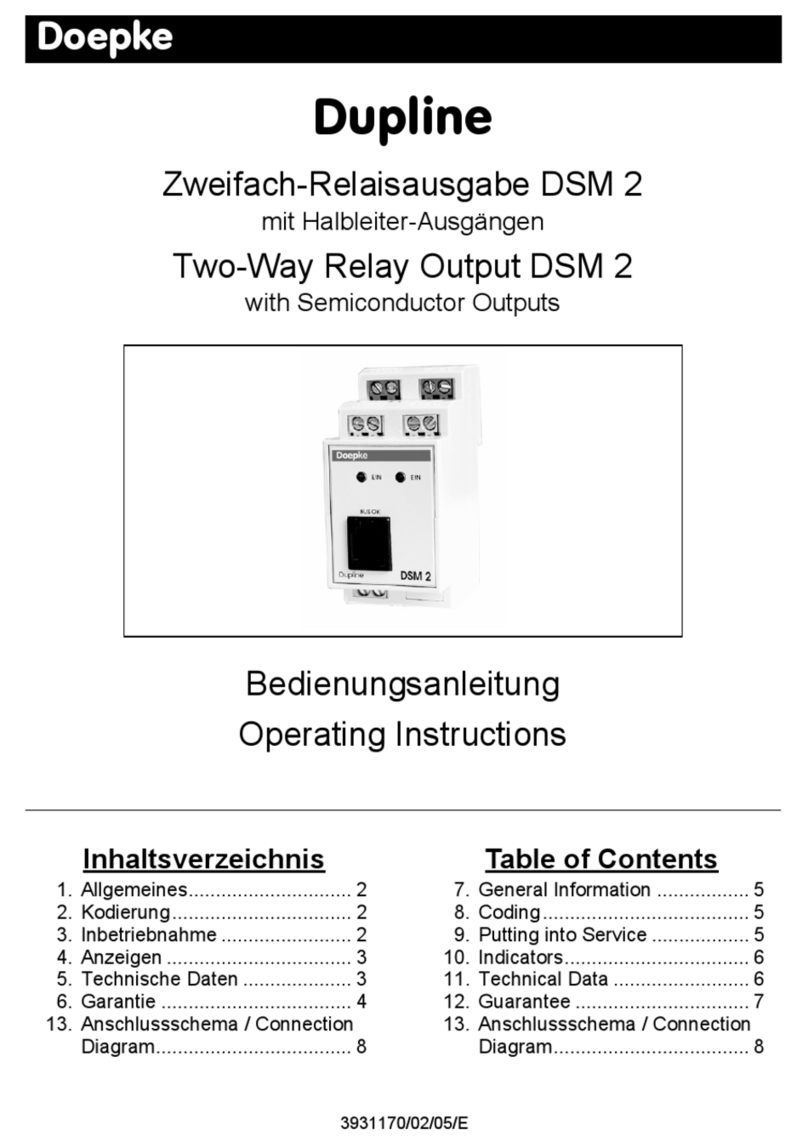
EVA Logik ZW12 user manual

EVA Logik

EVA Logik ZW12 user manual

manuals.online logo
manuals.online logoBrands
  • About & Mission
  • Contact us
  • Privacy Policy
  • Terms and Conditions

Copyright 2025 Manuals.Online. All Rights Reserved.

Siemens Limited C53000-K7040-C103-1 Page 1
7SR46 Argus Quick Reference Guide
SIEMENS
7SR46 Argus Quick Reference Guide
SIEMENS
WARNING
Dangerous voltages may occur in devices and modules
during operation depending on the design and application.
Incorrect use of the devices can therefore result in severe
personal injury or substantial damage to property. Only
suitably skilled personnel must work on this device. Correct
and safe operation of this device is dependent on proper
handling, installation, operation, and maintenance.
Should you require further information, or should
problems occur which are not handled in sufficient depth
in the instructions of the respective product, help can be
requested through your loca
l Siemens Office or
representative.
Mounting and Commissioningg
Mounting
The physical dimensions of the relay and the required cut-out
dimensions are shown in Figure 1.
1. As per the relay selection, create a slot of dimensions (in mm) to
house the relay in the Low Voltage (LV) compartment.
2. Insert the rear-side of relay into the RMU/LV compartment cut-out.
3. Fasten the relay with 4 M4x20 Pan Philips stainless-steel screws and
nuts provided in the relay packing box with a torque of
0.5 Nm to 0.6 Nm.
4. Carry-out all other installation steps and wiring connections from
the LV compartment.
5. In the rear terminal of the relay, execute the wiring process as
mentioned in the terminal diagram.
For more details on terminal connector diagram, refer to
Figure 2.
Refer to Table 1 for the recommended terminal lugs to be used.
If needed, use washers from the kit to connect the current
inputs.
6. The grounding cable must be wired as indicated in the Figure 2
using a non-stranded cable of 4 mm2/6 mm2.
This cable must be terminated in the shortest possible path
to the ground terminal/bus bar in LV compartment.
7. Maintain a minimum clearance (in mm) from the relay as given
in Figure 1 to ensure safety and accidental touch of terminals.
8. In case the work area is restricted in a cubicle, then suitable
protective terminals to be provided.
Figure 1: Device Dimensions and Panel Cut-out
Preparing for Commissioning
If the following criteria are satisfied, then proceed with the
commissioning tests:
1. Equipment has not been damaged in transit (physical damage).
2. Equipment has been correctly connected and installed.
3. Gland insulator from the battery compartment is removed.
4. Characteristics of the protection and settings are based on
calculations.
5. Relay thermal ratings have been considered before selecting the
specific CT. Refer to 7SR46 Device Manual for more information.
6. Confirm that settings have been correctly applied.
7. Synchronize the RTC via Reydisp Evolution or through HMI.
Terminal/Wiring Diagram s
The 7SR46 Argus Relay must be wired with reference to the appropriate
terminal diagram.
Figure 2: 7SR46 Argus Terminal Diagram
Table 1Recommended Terminal Lugs Specifications
Terminal
Blocks
Type/Cable Specifications
Manufacturer/
Part number
Current
Inputs
Panduit ring terminal, Nylon
insulated M3 stud size,
4 mm2to 6.6 mm2, 12 AWG,
Torque required: 0.58 Nm
TE Connectivity
Mfr. Part No.
2-327960-1 or
equivalent
Auxiliary
Supply
Insulated tin-plated crimp pin
connector, 2.6 mm² to
6.6 mm², 12 AWG to
10 AWG, Torque required:
0.5 Nm to 0.6 Nm
End sleeve
3D-8011H or
equivalent
Rear
Communicat
ion Port
Pin type lug/1.5 mm2control
cable, Torque required:
0.5 Nm to 0.6 Nm
End sleeve
3D-8011H or
equivalent
Front
Communicat
ion Port
USB, Type B
Tyco/974329-1
or equivalent
Binary Input/
Binary
Output/Pulse
Output/ Flag
Output/ETI
Insulated tin-plated crimp pin
connector, 2.6 mm² to
6.6 mm², 12 AWG to
10 AWG, Torque required:
0.5 Nm to 0.6 Nm
End sleeve
3D-8011H or
equivalent
Ground
Terminal
Panduit ring terminal, nylon
insulated M3 stud size,
4 mm² to 6 mm², 12 AWG,
Torque required: 0.58 Nm
RS Stock No.
613-9334 or
equivalent,
Mfr. Part no.
RVY5-3.2
Do’s s
Follow the Do’s when installing the 7SR46 Argus Relay:
•During installation, follow the instructions provided herewith.
For more information, refer to 7SR46 Operating Manual.
•Before energizing the relay, ensure that the relay is grounded
using ground terminal on the back plate. Refer to Figure 2.
•Use Auxiliary/CT/USB Power to configure the relay settings to
avoid any unnecessary consumption of battery power.
•Check the time duration and BI, BO operation counts on battery
power in Instrument menu.
•Maintaining a set of test results for future reference is
recommended.
•Remove the paper strip between battery clip and battery before
device is put in service.
Don’ts s
Follow the Don’ts when working with the 7SR46 Argus Relay:
•Do not attempt to remove the relay without disconnecting all the
wires.
•Do not use non-recommended Specific CT. Refer to 7SR46 Device
Manual for Specific CT details.
•Do not replace the battery with a battery that is not recommended
from Siemens. Refer to 7SR46 Hardware Manual for battery details.
Siemens Limited C53000-K7040-C103-1 Page 2
7SR46 Argus Quick Reference Guide
SIEMENS
Setting and Configuring the Relay using Reydisp Evolution s
To set the relay using a communication port:
PC with Reydisp Evolution Version 9.51 or higher installed. This can
be downloaded from our website http://www.siemens.com/reyrolle.
Go to Products & Services > Energy > Energy automation and smart
grid > Protection for digital substation > Engineering tools for
protection > Reydisp Evolution > Downloads. This software requires
Windows 7 or Windows 10.
NOTE:
Select Properties > Advanced > check Do NOT Check
Communications Connection in check box settings.
When Reydisp Evolution is running, all the available communication
ports will automatically be detected. On the start page tool bar, open
the sub-menu Fileand select Connect.
The Connection Manager window displays all available
communication ports. With the preferred port highlighted, select
the Properties option and ensure the baud rate and parity match
that selected in the relay settings. Select Connect to initiate the
relay PC connection.
Figure 3: USB Connection to PC
Figure 4: RS485 Connection to PC
Figure 5: Communication to Multiple Devices using RS485
Output Test and Trip Pulse Test
After commissioning the relay, the operator can execute the output
test, trip pulse test and verify the binary outputs assigned to the
corresponding functions.
To execute the output test in the relay, follow the procedure:
1. In the Settings mode, select Maintenance and Output Test.
2. For testing, select output by pressing ENTER.
3. Select Yes/No.
4. Perform the test by pressing ENTER.
Output test can be conducted with Auxiliary power, CT power,
USB power and battery.
To execute the trip pulse test in the relay, follow the procedure:
1. In the Settings mode, select Maintenance and Trip Pulse Test.
2. For testing, select output by pressing ENTER.
3. Select Yes/No.
4. Perform the test by pressing ENTER.
Trip pulse test can be conducted with Auxiliary power, CT power
and USB power only.
Troubleshooting
This section provides the common problems of 7SR46 Relay and the
recommended solution to resolve the problem.
Observation
Action
Relays will not
communicate in a
ring network
•
Check that all relays are powered up with
auxiliary power supply.
•Check that all relays have unique addresses.
•In self-powered mode, check CT input current
above 1.62 ⋅ Ismin (1-phase) or
0.6 ⋅ Ismin (3-phase).
Relay does not
power up
•Check whether correct auxiliary AC or DC
voltage is applied, and the polarity is correct.
•Check whether phase connections are based
on the terminal diagram and if CT power is
applied.
•Check USB port, if the relay is connected with
USB power.
•Check the battery healthy voltage if the relay
is powered with battery power.
Relay does not
accept the
password
•Password entered is wrong. Enter the correct
password.
•If correct password is forgotten, note down
the numeric code displayed at the Change
Password screen.
•To retrieve the password, communicate this
numeric code to a Siemens customer care
representative.
Healthy LED
OFF/LCD not
displaying
•In the absence of auxiliary voltage, check the
minimum phase currents.
•Check error messages and error codes in the
Instrument Mode.
Cannot
communicate with
the relay
•Check whether communication cable is
connected properly.
•Check that the USB driver is installed
correctly.
•In Reydisp Evolution, verify that “Do NOT
Check Communications Connection”is
selected in the Advanced properties.
•In Reydisp Evolution, check that the Relay
Address is set as “1” in the Relay menu.
•Ensure that IEC 60870-5-103 is specified for
the connected port (COM1 or COM2).
Binary inputs do
not work
•Check that the correct BI voltage is applied,
and that the polarity is correct.
•Check that the binary input settings such as
the pick-up and drop-off timers and the status
inversion function are correctly set.
External trip (ET)
input does not
work
•Check whether the device is working on CT
power or aux power and ensure that the
device is operating in healthy condition.
•Short the ET terminals with a resistance wire
and ensure that the line wire resistance is less
than or equal to 20 Ω.
Low/critical battery
indication
•Check whether paper strip between battery
clip and battery is removed.
•Check whether battery is connected to the
correct polarity.
•Check the battery healthy voltage.
For enquires please contact Siemens AG customer support center:
Tel: +49 911 2155 4466
Email: energy.automation@siemens.com
Web: www.siemens.com/reyrolle
Customer support: www.siemens.com/csc
Siemens 7SR46 website (English): www.siemens.com/7SR46
Siemens 7SR46 website (German/Deutsch): www.siemens.de/7SR46