manuals.online logo
Brands
  1. Home
  2. •
  3. Brands
  4. •
  5. SignaMax
  6. •
  7. Switch
  8. •
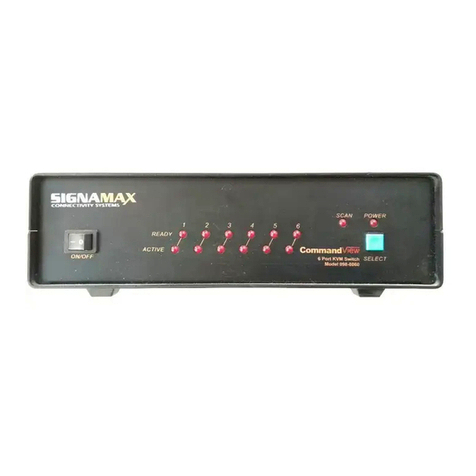
  9. SignaMax 098-8040 User manual

SignaMax 098-8040 User manual

Other SignaMax Switch manuals

SignaMax 065-7851 User manual

SignaMax

SignaMax 065-7851 User manual

SignaMax 065-7310F Series User manual

SignaMax

SignaMax 065-7310F Series User manual

SignaMax 065-7931 User manual

SignaMax

SignaMax 065-7931 User manual

SignaMax 065-7931 User manual

SignaMax

SignaMax 065-7931 User manual

SignaMax C-310 Series User manual

SignaMax

SignaMax C-310 Series User manual

SignaMax 500-7622GE2GS User manual

SignaMax

SignaMax 500-7622GE2GS User manual

SignaMax 065-7840 User manual

SignaMax

SignaMax 065-7840 User manual

SignaMax C-120 Series User manual

SignaMax

SignaMax C-120 Series User manual

SignaMax C-100 Series User manual

SignaMax

SignaMax C-100 Series User manual

SignaMax 065-7861 User manual

SignaMax

SignaMax 065-7861 User manual

SignaMax 065-7942 User manual

SignaMax

SignaMax 065-7942 User manual

SignaMax SC30010 Instruction Manual

SignaMax

SignaMax SC30010 Instruction Manual

SignaMax 065-7401 User manual

SignaMax

SignaMax 065-7401 User manual

SignaMax 065-7429 User manual

SignaMax

SignaMax 065-7429 User manual

SignaMax 065-7932 User manual

SignaMax

SignaMax 065-7932 User manual

SignaMax 065-7841 User manual

SignaMax

SignaMax 065-7841 User manual

SignaMax 065-7726SPOE User manual

SignaMax

SignaMax 065-7726SPOE User manual

SignaMax FO-065-7732A User manual

SignaMax

SignaMax FO-065-7732A User manual

SignaMax 065-7032A User manual

SignaMax

SignaMax 065-7032A User manual

SignaMax 065-7905A User manual

SignaMax

SignaMax 065-7905A User manual

SignaMax 098-8280 User manual

SignaMax

SignaMax 098-8280 User manual

SignaMax 065-7345 User manual

SignaMax

SignaMax 065-7345 User manual

SignaMax 065-7520 User manual

SignaMax

SignaMax 065-7520 User manual

SignaMax 065-7111F Series User manual

SignaMax

SignaMax 065-7111F Series User manual

Popular Switch manuals by other brands

SMC Networks SMC6224M Technical specifications

SMC Networks

SMC Networks SMC6224M Technical specifications

Aeotec ZWA003-S operating manual

Aeotec

Aeotec ZWA003-S operating manual

TRENDnet TK-209i Quick installation guide

TRENDnet

TRENDnet TK-209i Quick installation guide

Planet FGSW-2022VHP user manual

Planet

Planet FGSW-2022VHP user manual

Avocent AutoView 2000  AV2000BC AV2000BC Installer/user guide

Avocent

Avocent AutoView 2000 AV2000BC AV2000BC Installer/user guide

Moxa Technologies PT-7728 Series user manual

Moxa Technologies

Moxa Technologies PT-7728 Series user manual

Intos Electronic inLine 35392I operating instructions

Intos Electronic

Intos Electronic inLine 35392I operating instructions

Cisco Catalyst 3560-X-24T Technical specifications

Cisco

Cisco Catalyst 3560-X-24T Technical specifications

Asante IntraCore IC3648 Specifications

Asante

Asante IntraCore IC3648 Specifications

Siemens SIRIUS 3SE7310-1AE Series Original operating instructions

Siemens

Siemens SIRIUS 3SE7310-1AE Series Original operating instructions

Edge-Core DCS520 quick start guide

Edge-Core

Edge-Core DCS520 quick start guide

RGBLE S00203 user manual

RGBLE

RGBLE S00203 user manual

Thrustmaster FLIGHT SIMULATOR X quick guide

Thrustmaster

Thrustmaster FLIGHT SIMULATOR X quick guide

Southwire SURGE GUARD 41390 RVC troubleshooting guide

Southwire

Southwire SURGE GUARD 41390 RVC troubleshooting guide

Buhler Nivotemp NT 61 Brief instructions

Buhler

Buhler Nivotemp NT 61 Brief instructions

Kramer VS-41HDCP user manual

Kramer

Kramer VS-41HDCP user manual

Techly IDATA AU-270 user manual

Techly

Techly IDATA AU-270 user manual

Belkin F1U109 user manual

Belkin

Belkin F1U109 user manual

manuals.online logo
manuals.online logoBrands
  • About & Mission
  • Contact us
  • Privacy Policy
  • Terms and Conditions

Copyright 2025 Manuals.Online. All Rights Reserved.

Signamax Connectivity System _____________________________ ___ _____________ 098-8040
www.signamax-us.com www.signamax-eu.com
Signamax™Connectivity Systems
Model:098-8040
4-port Slim Palmtop PS/2 KVM Switch
with Audio & Mic
Quick Installation Guide
Thank you for purchasing the 098-8040 Slim Palmtop PS/2
KVM Switch w/ Audio & Mic! With our highly reliable and quality
product, user can enjoy countless benefits from using it.
098-8040 (w/ Audio&Mic)
Introduction
The 098-8040 is a 4-port Slim Palmtop PS/2 KVM Switch with
audio and microphone switching function. It allows you to access,
control, boot and reboot multiple PS/2-enabled computers using
only one keyboard, video, mouse, and optional speaker set and
microphone. It also offers user-programmable
simultaneous/independent switching of PC channel and
Audio/Mic channel for flexible multimedia application with KVM
switching. For users who might need to use a hotkey preceding
sequence other than two scroll locks, we also offer five key
alternatives for free configuration.
Before you install
The default setting of the 098-8040 is appropriate for most
systems. 098-8040 KVM Switch is a Plug-and-Play device for
installation. In fact, you do not need to configure 098-8040 KVM
Switch before installation.
For the first time installation of 098-8040 KVM Switch, please
follow the instructions below for correct setup sequence:
The correct setup sequence is ……
(1) Connect the shared keyboard, monitor and mouse (and
optional speaker set and microphone) to 098-8040 KVM
Switch first, and then connect your computers.
(2) Power up your connected computers…
Since 098-8040 KVM Switch receives power from the computer’s PS/2
interface, it is powered up when you connect the KVM Switch to a PC.
Out-of-the-box Installation
Take 098-8040 KVM Switch out of the box and begin
installation….
DO NOT TRY to connect 098-8040 KVM Switch to the computers
while the computers are still in powered-on states. Otherwise, the
computer will have difficulty recognizing your shared keyboard and
mouse.
Step 1. Make sure all the computers that are to be connected to
098-8040 KVM Switch and their peripherals are in
powered-off state. If not, power them off before you
proceed with the following steps.
Step 2. Connect the shared PS/2 keyboard, mouse, monitor,
speaker set and microphone to 098-8040 KVM switch.
Step 3. Connect each of your computers to 098-8040 KVM
switch, using appropriate KVM & Audio/Mic cables.
098-8040 Configuration Diagram
Step 4. (Now your KVM Switch should have been powered-up….)
Power up the connected computers one by one. After
your computers are powered up, the keyboard and
mouse will be recognized and now you can begin
operating the KVM switch.
Easy Operation
There are two methods to control your KVM Switch for PC
switching: using the face-panel push button or a hotkey
sequence. For audio/mic switching, use the hotkey command. See
Quick Reference Sheet
Face-panel buttons
The face-panel buttons allows you a direct control over PC port
switching, simply press the button to switch PC port. By default,
PC port switching and Audio/Mic port switching are bound
together (both will be switched simultaneously).
If you want to enable the binding of PC and audio/mic port
switching, use the hotkey sequence, ScrLk +ScrLk + Q. To
disable the binding again, just hit ScrLk +ScrLk + W.See Quick
Reference Sheet
Keyboard hotkey
A keyboard hotkey sequence consists of at least three specific
keystrokes: See Quick Reference Sheet
Hotkey sequence = [ScrLk]*+ [ScrLk] * + Command key(s)
* User-definable = SCROLL LOCK, CAPS, ESC, F12 or NUM LOCK
Hotkey preceding sequence configuration: For users who
want to use a preceding sequence other than two consecutive
Scroll Locks, there is also one convenient way to configure it:
Step 1. Hit ScrollLock + ScrollLock + H, then the KVM switch will be
ready for new preceding sequence selection. [or Press and hold
down the last front-panel button (Button 2 or Button 4) for over 8
seconds, and then release the button.]
Step 2. Select and press the key you would like to use as your preceding
sequence (SCROLL LOCK, CAPS, ESC, F12 or NUM LOCK
keys are available for selection). Now you can use the new
preceding sequence to execute your hotkey commands.
Another way to activate the Hotkey preceding sequence
configuration is to press the last front-panel button (button 2/button 4)
for over 3 seconds to set the KVM switch into hotkey configuration mode.
Then you select and press the key that you’ll choose as the preceding
sequence.
Each keystroke within a hotkey sequence should be pressed within 2
seconds. Otherwise, the hotkey sequence will not be validated.
For detailed Hotkey sequences and their corresponding functional
commands, please refer to the Quick reference sheet.

Signamax Connectivity System _______________________ ___ _____________ 098-8040
www.signamax-us.com www.signamax-eu.com
Quick Reference Sheet
Notes:
1. Note that (x) denotes a number key for the selected port number (x = 1 ~ 2). You can use either the top row number keys or the number pad for the hotkey commands.
2. When the binding of PC & Audio/Mic port switching is enabled by the hotkey sequence: ScrLk + ScrLk + Q, any PC and Audio/Mic switching are bound together. To remove this binding, hit ScrLk + ScrLk + W.
Hotkey convention: The hotkey notation ScrLk + ScrLk + (key), denotes that you should hit the individual key consecutively one at a time, not simultaneously.
Mouse Troubleshooting: If your mouse hangs or behaves abnormally, you can hit the following hotkey commands for mouse reset:
(a) When you are using a PnP OS such as Windows 98 Second Edition or later Windows operating systems such as Win2k, WinXP, etc., hit ScrLk + ScrLk + End for mouse reset.

(b) When you are using a non-PnP OS such as Linux, NT4.0, etc, just hit one of the following hotkey commands for mouse reset according to your mouse configuration on the non-PnP OS --
ScrLk + ScrLk + M + 1 for a 2-key mouse setting; ScrLk + ScrLk + M + 2 for a 3-key wheel mouse setting; ScrLk + ScrLk + M + 3 for a 5-key wheel mouse setting.
098-8040 4-port Slim Palmtop PS/2 KVM Switch Operation Commands for Hotkeys/ Face-Panel Buttons
Hotkey sequence = [ScrLk]*+ [ScrLk] * + Command key(s) * User-definable Preceding sequence = SCROLL LOCK, CAPS, ESC, F12 or NUM LOCK
Command Hotkeys Face-panel Buttons Description
Select PC Channel
(Joint-select PC port and Audio/Mic port, if binding
is enabled)2
ScrLk + ScrLk + (x) 1
(x is a top-row number key)
x = 1 ~ 2 or 1 ~ 4 for PC channel no
-- Select the active PC channel
(Joint-select PC & Audio/Mic port, if binding is enabled)
Select Audio/Mic Channel
ScrLk + ScrLk + (Fx)
(Fx is a function key)
x = 1 ~ 2 for Audio mic channel no
-- Select the active Audio/Mic channel
(Joint-select PC & Audio/Mic port, if binding is enabled)
Bind PC & Audio/Mic Switching
[default] ScrLk + ScrLk + Q --
Enable the binding of PC and Audio/Mic switching. (Once
this feature is enabled, PC and Audio/Mic switching is bound
together) [factory default]
Unbind PC & Audio/Mic Switching ScrLk + ScrLk + W -- Disable the binding of PC and Audio/Mic switching
Next lower PC channel
(Joint-select PC port and Audio/Mic port, if binding
is enabled)2
ScrLk + ScrLk + ↑(arrow up) Press the face-panel button to switch to
next PC channel -
Select the next lower PC channel
(joint-select PC port and Audio/Mic port, if binding is
enabled)
Next higher PC channel
(Joint-select PC port and Audio/Mic port, if binding
is enabled)2
ScrLk + ScrLk + ↓(arrow down) Press the face-panel button to switch to
next PC channel1
Select the next higher PC channel
(joint-select PC port and Audio/Mic port, if binding is
enabled)
Previous PC channel ScrLk + ScrLk + Å(Backspace) --Toggle between the previous channel and current channel
Define Hotkey Preceding Sequence
ScrLk + ScrLk + H + (y)
y= SCROLL LOCK, CAPS, ESC,
F12 or NUM LOCK
Press and hold down last button (Button 2
/ Butotn4) for over 8 seconds, then release
the button and press (y) key
Select the hotkey preceding sequence among 5 alternative
keys
Console Mouse/Keyboard Reset ScrLk + ScrLk + End -- Reset keyboard and mouse on the console side
Autoscan ScrLk + ScrLk + S -- Autoscan through every connected channel for quick screen
browsing of each channel (scan delay = 5 sec.).
Autoscan with Programmable Delay Time
ScrLk + ScrLk + S + (x) 1
x = 0~9
1 Æ10” ; 2 Æ20” ; 3 Æ30” ; 4 Æ40” ; 5 Æ50”
6 Æ60” ; 7 Æ70” ; 8 Æ80” ; 9 Æ90” ; 0 Æ100”
--Autoscan with a user-defined delay time within a range of 5 ~
100 seconds
Stop Autoscan Press any key on keyboard Press any button Terminate Autoscan activity