EN
CORE
16 Operating limits Operating limits | Maintenance, Care 17
9 OPERATING LIMITS
The CORE is approved according to DIN EN 1651 for a maximum pilot weight of 100 kg.
Due to the ultralight construction, we strongly advise against flying extreme flight or
acro maneuvers.
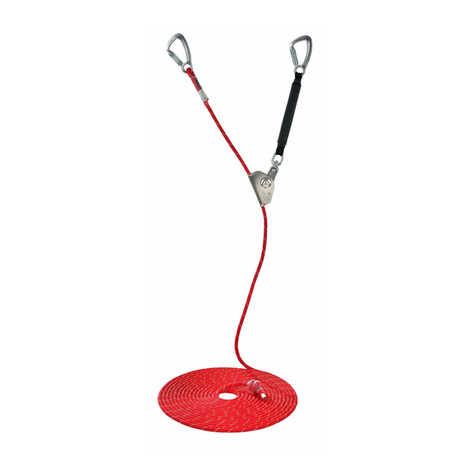
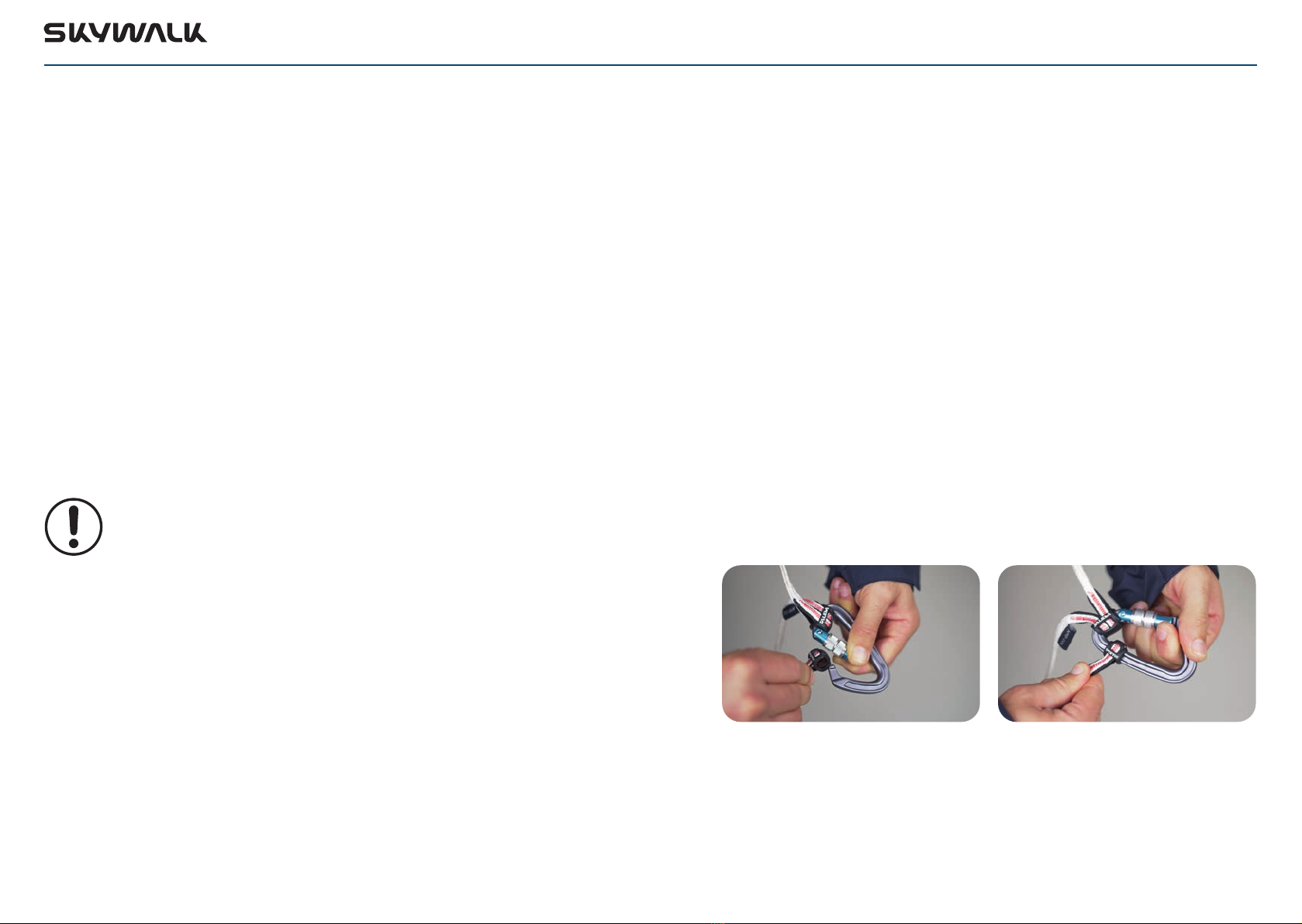
The skywalk HIKE aluminum screw carabiner is an ultralight product (38 g, 22 KN)
and requires special care:
> Do not use the carabiner if there is any visible external damage or wear.
> Avoid transverse loads, strokes and do not drop the carabiner.
> The aluminum carabiner should be replaced after 3 years or 300 hours.
WINCH-TOWING
The CORE is not recommended as a harness for winch towing.
TANDEM FLIGHT
The CORE is suitable as a light Hike&Fly tandem passenger harness. The responsible
tandem pilot should always be aware of the increased risk of material wear due to
intensive use.
SAFETY TRAINING AND FLYING OVER WATER
We do not recommend using the CORE for flying over water or for safety training.
It is possible that the PERMAIR protector of the harness could force the pilot under water
after a water landing. Furthermore, the direct looping of the leg straps into the
carabiners makes it more difficult to get out of the harness when landing in water.
.
BE CAREFUL WHEN FLYING OVER WATER!
LIFESPAN
The harness is your direct connection point to your paraglider. It is your responsibility to
check the harness before each use. If you have any doubts about safety, do not use the
harness under any circumstances and contact your skywalk dealer.
All straps, threads, and fabrics have a limited lifespan. To find out whether your harness is
still safe, you should check it according to the inspection report, which is attached at the
end of this manual.
skywalk harnesses that are properly stored and meet all test criteria can be used for up
to 10 years from the date of the type test. You can find the sample test date on the sam-
ple test sticker, which is located on the right side of your harness.
Please remember that some factors that affect the lifespan of your harness are not
visible. You should know the complete history of use of the harness. You should know
which environmental influences (UV light, salt water, extreme heat, etc.) or which
chemical influences (aggressive cleaning agents, petroleum, oils, lubricants, acids,
etc.) the harness was exposed to. If the harness has been subjected to a great deal
of stress, for example in the event of a rescue deployment, falling or landing in a tree,
it should no longer be used and should be destroyed immediately.
Dispose of harnesses that are out of date due to new regulations or standards or are no
longer compatible with other items of equipment in the safety system. It is your responsi-
bility to understand these factors. If you have any doubts about its condition, you should
stop using the harness and destroy it.
10 MAINTENANCE, CARE
The selected materials used in the CORE make it necessary to treat them carefully
and in a professional manner. Make an effort to take care of your harness and keep it
clean to preserve its airworthiness over the longest possible time.
> Avoid dragging your harness over stony ground and always try to land in an upright
positon.
> Don’t leave your harness lying in the sun unnecessarily long. UV radiation is very
damaging to the material.
> Store it in the bag when you don´t use it.
> Store your paragliding equipment loosely packed in a cool and dry place. If it gets wet,
always dry out your equipment before packing it.
> To clean it, just use a brush or a damp cloth. Use mild soap to clean it only when
absolutely necessary. If you do, first remove other parts like the reserve parachute.
The coating of the material can be damaged by brushing or rubbing.
> Let the harness dry in a well-ventilated, shady place if it was wet. If the reserve
parachute gets wet, (e.g. during a water landing), then it is necessary to open it up,
let it dry, and pack it again.
> After a hard landing or an impact higher than 0,5m, check the protector for damage.
> Zippers should be treated with silicon spray once a year.