manuals.online logo
Brands
  1. Home
  2. •
  3. Brands
  4. •
  5. System air
  6. •
  7. Heating System
  8. •
  9. System air VR 400 DCV User manual

System air VR 400 DCV User manual

Other manuals for VR 400 DCV

1

This manual suits for next models

3

Other System air Heating System manuals

System air Villavent VR 400 DC Instruction Manual

System air

System air Villavent VR 400 DC Instruction Manual

System air fantech VHR 200R User manual

System air

System air fantech VHR 200R User manual

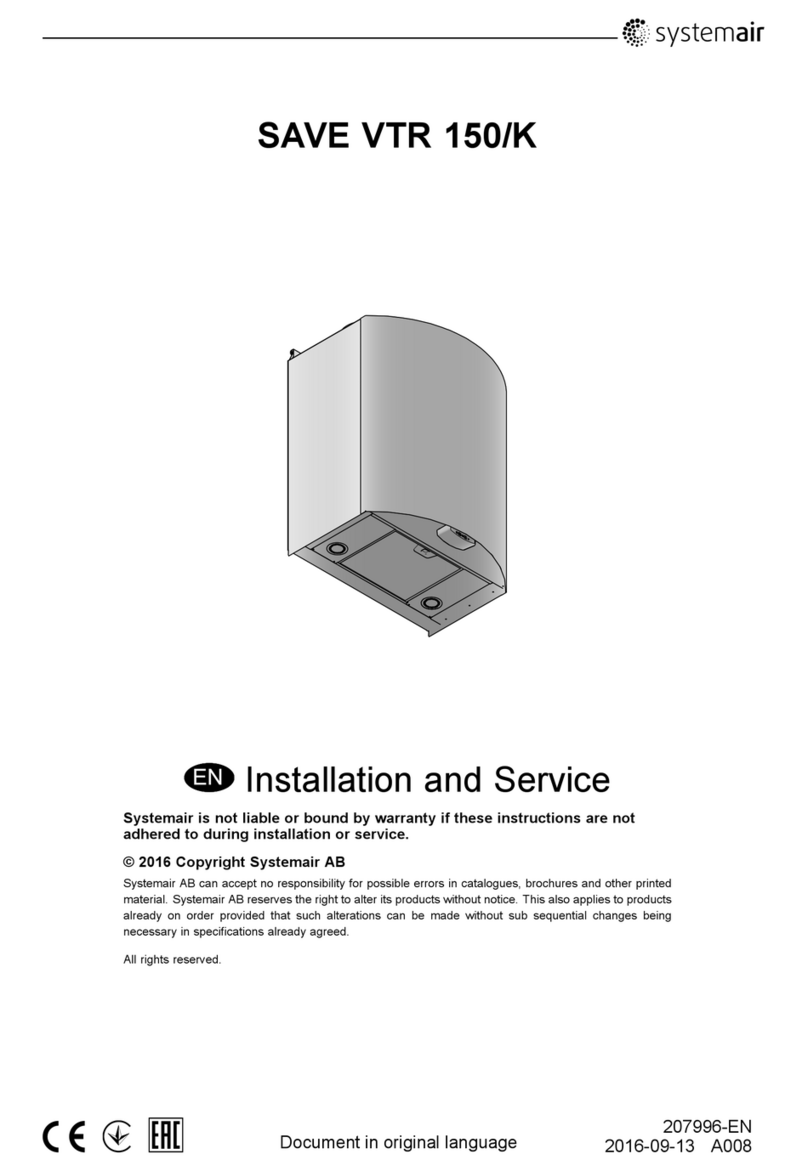
System air SAVE VTR 150/K User manual

System air

System air SAVE VTR 150/K User manual

System air fantech VHR 70 User manual

System air

System air fantech VHR 70 User manual

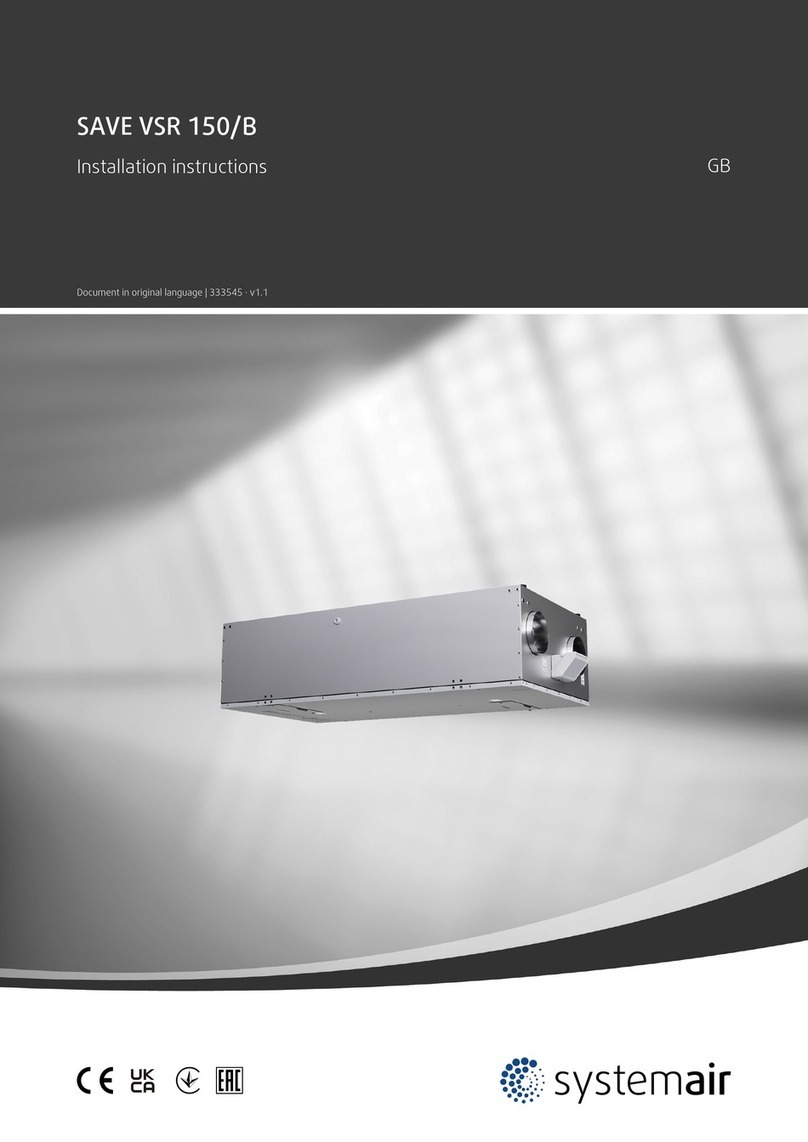
System air SAVE VSR 150/B User manual

System air

System air SAVE VSR 150/B User manual

System air VTR 700 User manual

System air

System air VTR 700 User manual

System air fantech SHR 150R User manual

System air

System air fantech SHR 150R User manual

System air SAVE VTR 150/K Manual

System air

System air SAVE VTR 150/K Manual

System air Fantech SH Series User manual

System air

System air Fantech SH Series User manual

System air SAVE VTC 700 User manual

System air

System air SAVE VTC 700 User manual

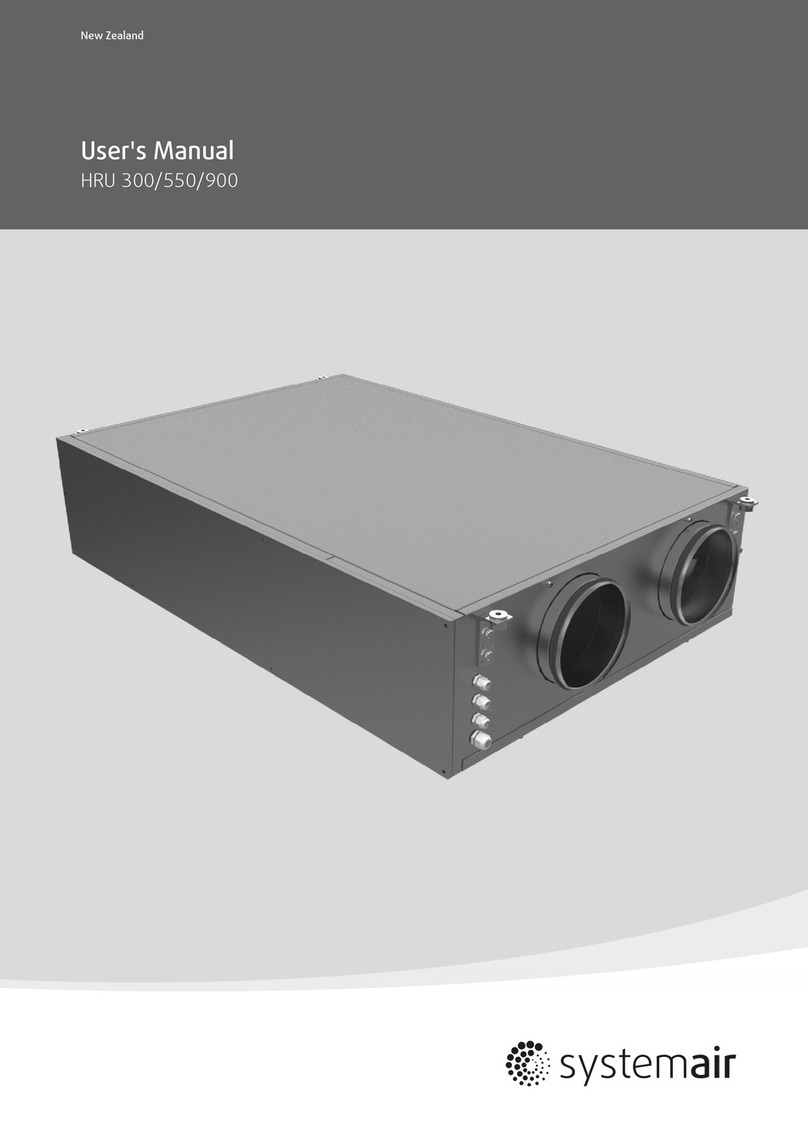
System air HRU 300 User manual

System air

System air HRU 300 User manual

System air Villavent VR-250 EH/B/3 Instruction Manual

System air

System air Villavent VR-250 EH/B/3 Instruction Manual

System air fantech SHR450 User manual

System air

System air fantech SHR450 User manual

System air SAVE VTC 700 with reheater User manual

System air

System air SAVE VTC 700 with reheater User manual

System air Villavent VR-300 TK/B/3 Instruction Manual

System air

System air Villavent VR-300 TK/B/3 Instruction Manual

System air SAVE-P VSR 150/B User manual

System air

System air SAVE-P VSR 150/B User manual

System air SAVE VTC 300 User manual

System air

System air SAVE VTC 300 User manual

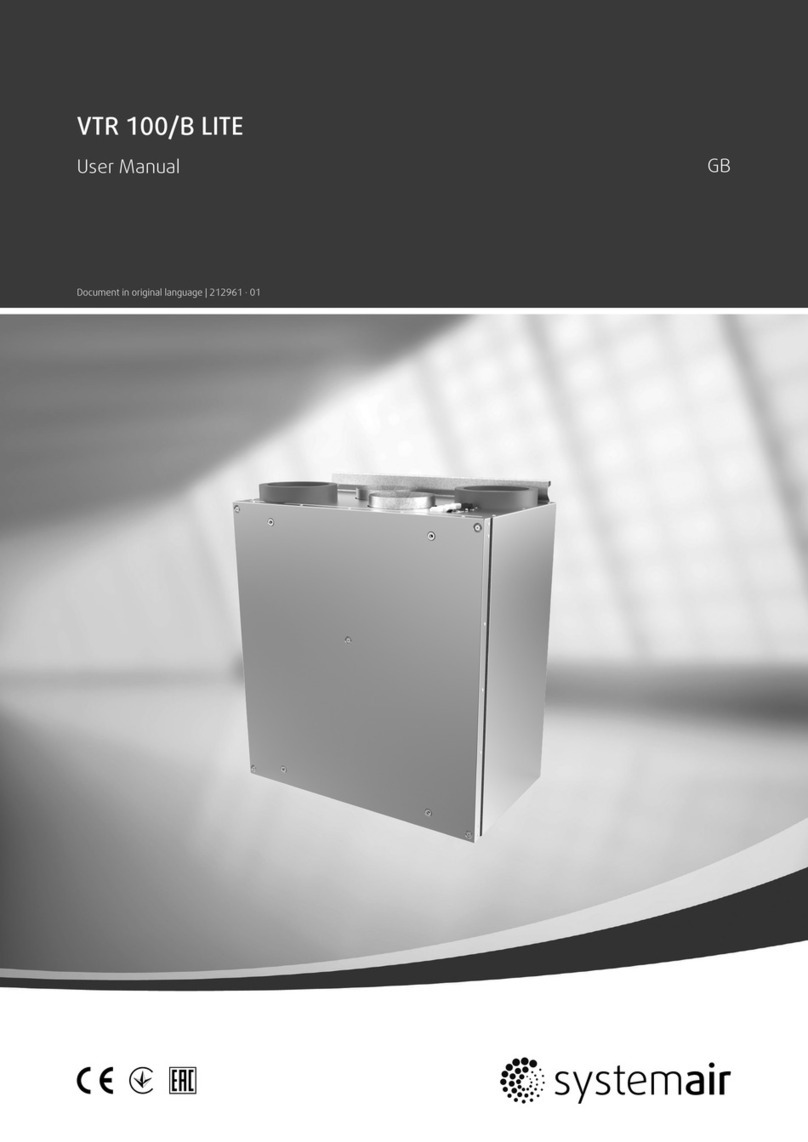
System air VTR 100/B LITE User manual

System air

System air VTR 100/B LITE User manual

System air SAVE VTR 700 User manual

System air

System air SAVE VTR 700 User manual

System air Fantech SER260D User manual

System air

System air Fantech SER260D User manual

System air fantech SHR200R User manual

System air

System air fantech SHR200R User manual

System air SAVE VTC 300 User manual

System air

System air SAVE VTC 300 User manual

System air Living HR Troubleshooting guide

System air

System air Living HR Troubleshooting guide

Popular Heating System manuals by other brands

Truma Trumatic E 2400 E Operating instructions and installation instructions

Truma

Truma Trumatic E 2400 E Operating instructions and installation instructions

Aqua-Hot 200 Series installation manual

Aqua-Hot

Aqua-Hot 200 Series installation manual

Vent-Axia HR100S Installation and maintenance instructions

Vent-Axia

Vent-Axia HR100S Installation and maintenance instructions

aerauliqa QR350ABP installation manual

aerauliqa

aerauliqa QR350ABP installation manual

WatchGas ATEX BEACON manual

WatchGas

WatchGas ATEX BEACON manual

Lampoassa 203GT user manual

Lampoassa

Lampoassa 203GT user manual

Viessmann Vitoligno 300-H Operating Instructions for the System User

Viessmann

Viessmann Vitoligno 300-H Operating Instructions for the System User

MSA SOA-1022 operating manual

MSA

MSA SOA-1022 operating manual

nilan Compact P user manual

nilan

nilan Compact P user manual

ITR OASIS NE-S owner's manual

ITR

ITR OASIS NE-S owner's manual

Carrier 48LJD Installation, Start-Up and Service Instructions

Carrier

Carrier 48LJD Installation, Start-Up and Service Instructions

aldes EVEREST XV installation instructions

aldes

aldes EVEREST XV installation instructions

Kober C22SPV23MEF user manual

Kober

Kober C22SPV23MEF user manual

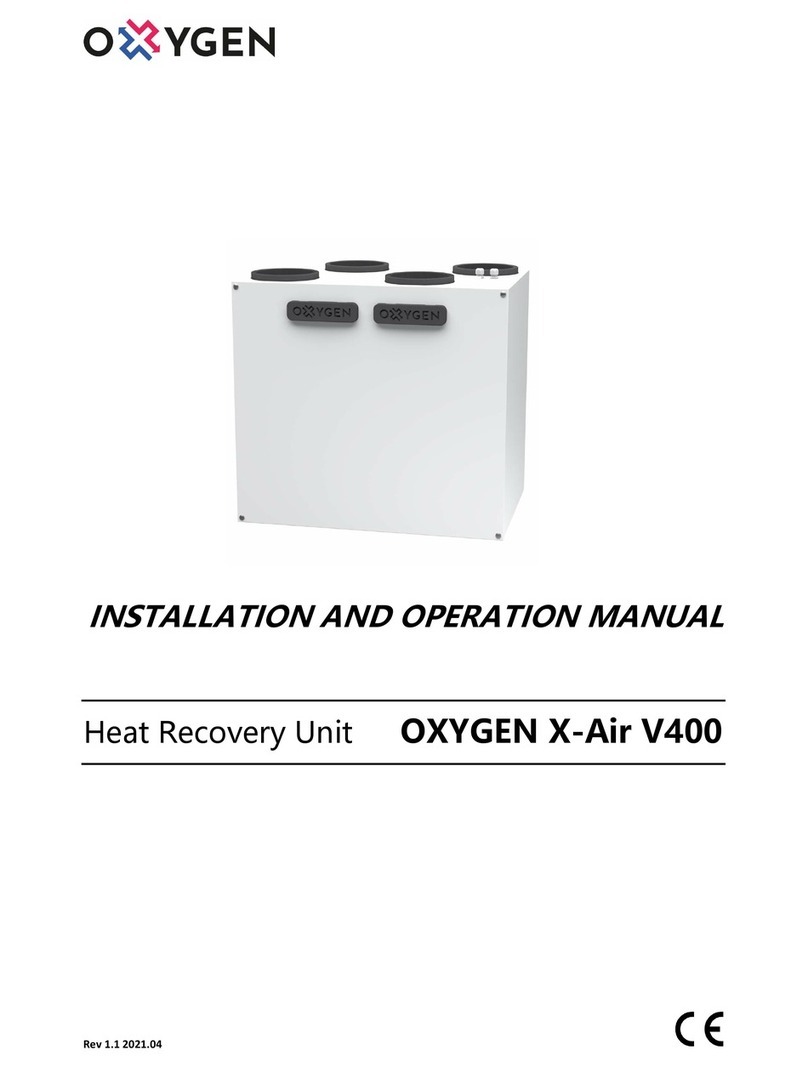
Oxygen X-Air V400 Installation and operation manual

Oxygen

Oxygen X-Air V400 Installation and operation manual

Kroll HM200 Instruction handbook

Kroll

Kroll HM200 Instruction handbook

Kroll HM200 Instruction handbook

Kroll

Kroll HM200 Instruction handbook

NuAire XBOXER XBC Series Installation operating and maintenance istructions

NuAire

NuAire XBOXER XBC Series Installation operating and maintenance istructions

Vents VUT V mini user manual

Vents

Vents VUT V mini user manual

manuals.online logo
manuals.online logoBrands
  • About & Mission
  • Contact us
  • Privacy Policy
  • Terms and Conditions

Copyright 2025 Manuals.Online. All Rights Reserved.

25.02.2009/KLLA
Villavent
VR 400 DCV/DE
VR 700 DCV/DE
Installationsanweisung
Installation instructions
2
EINLEITUNG
Villavent produziert seit 1980 Lüftungs- und Wärmerückgewinnungsanlagen. Diese
Geräte sind und werden in Tausenden von Gebäuden in Norwegen und im Ausland
eingesetzt.
Alle daraus gewonnenen Erfahrungen haben wir in das System Villavent einfließen
lassen. Ebenso wurde die letzte Untersuchung über den Zusammenhang zwischen
Innenraumklima und dem menschlichen Wohlbefinden berücksichtigt. Große
Beachtung gilt der Qualitätssicherung .
Selbst wenn wir alle Erfahrungen bei der Entwicklung der Anlage haben einfließen
lassen, so hängt der letztliche Erfolg doch in großem Maße von der Installation und
der Handhabung ab. Darum sollten Sie diese Anleitung vor der Montage
aufmerksam durchlesen.
INHALT
I
NSTALLATION DES
G
ERÄTES
/
S
TANDORTWAHL
Seite 3
R
OHRSYSTEM
Seite 6
Allgemeines Seite 6
Kanal-Verbindungen Seite 7
Schalldämpfer Seite 7
Flexible Rohre Seite 7
Kondensbildung/Wärmedämmung Seite 7
Z
U
-
UND
A
BLUFTVENTILE
Seite 8
Auslässe / Abluftventile und Dunsthaube Seite 9
Volumenstrom-Einstellung Seite 9
Luftzirkulation Seite 10
Kamine, Dunsthauben, Trockner etc. Seite 10
E
LEKTRISCHER
A
NSCHLUSS
Seite 11
Das WRG-Gerät Seite 11
Die Dunstabzugshaube Seite 11
Fernbedienung Seite 11
Digitaleingänge Seite 11
A
LTERNATIV
:
M
ONTAGEANLEITUNG
:
WASSERFÜHRENDES
H
EIZ
-
ODER
K
ÜHLREGISTER
Seite 11
Z
UBEHÖR
Seite 12
I
NBETRIEBNAHME
/G
RUNDEINSTELLUNG
Seite 13
Checkliste nach der Installation Seite 13
Einstellungen vor Inbetriebnahme Seite 13
Einstellen der Luftmenge Seite 14
S
CHALTPLAN
Seite 15
INTRODUCTION
Villavent ventilation units with heat recovery have been manufactured since 1980.
The units are installed in thousands of buildings in Norway, with increasing numbers
in the U.K.
Experience from these installations is incorporated in the Villavent-units. The latest
results from the studies of the indoor climate and it’s influence on our health are
taken into consideration, and great emphasis is given to quality and performance.
However even after we have put all our experience in developing the unit, the final
result depends on the quality of the total installation and maintenance. The
installation instructions should therefore be read carefully before starting the
installation.
INDEX
I
NSTALLING THE UNIT
/
POSITIONING AND ACCESS
page 3
D
UCT SYSTEM
page 6
General page 6
Connecting the duct system page 7
Attenuation page 7
Flexible ducting page 7
Condensation-/heat insulation page 7
D
IFFUSERS
/L
OUVERS
page 8
Inlet diffusers/ Extract louvers page 9
Setting of air volume page 9
Air circulation page 10
Fireplace, kitchen ventilator etc. page 10
E
LECTRICAL CONNECTIONS
page 11
The unit page 11
The cookerhood page 11
Separate controller page 11
Digital inlets page 11
A
LTERNATIVE
:
I
NSTALLING BATTERY FOR WATER
-
BORN HEATING
/
COOLING
page 11
A
DDITIONAL EQUIPMENT
page 12
C
OMMISSIONING
page 13
Checklist after installation page 13
Before starting the system page 13
Commissioning of airflow page 14
W
IRING DIAGRAMS
page 15
3
1. Inspektionstür 8. Rohr von Dunstabzugshaube (Ø125) nur bei VR 400
DCV/B (falls angeschl.)
2. Schalldämpfer am Gerät 9. Flexible Rohre (nur am Gerät oder zugänglich)
4. Frischlufteinlaß 10. Spirorohre
5. Fortluft über Dachhaube 11. Diffusionsdichte Wärmedämmung, siehe sep Kapitel
6. Zuluft/Auslässe 12. Rohre mit Gefälle zur Aussenwand.
7. Abluftventile in Nassräumen 13. Etwaige Abdeckung zwischen Decke und Gerät
Hinweis! VR 400 DCV/DE kann nur mit dem Bedienteil links geliefert werden.
Hinweis! Anbringen der Montageschiene (1) an der Wand. Die Unterkante der Montageschiene
befindet sich 45mm unterhalb der Geräteoberkante. Schwingungsdämpfung (2) auf
der Montageschiene und auf der Rückseite des Gerätes (3) auf Beschädigung
überprüfen. Gerät einhängen und sicherstellen, daß kein direkter Kontakt zwischen
dem Gerät und dem Gebäude besteht.
1. Inspection hatch 8. Duct from cookerhood, (Ø125/ only for VR 400 DCV/B)
2. Sound attenuators inlet/extract 9. Flexible ducting
4. Fresh air intake 10. Spiro ducting
5. Discharge extract air 11. Condensation-/ heat insulation, see
6. Air inlet/inlet diffusers separate chapter
7. Extract/extract louvers 12. Grade towards wall grill
13. Duct cover between roof and unit, if required
NOTE! VR 400 DCV/DE is only available as a left hand model.
NOTE!Install mounting bracket (1) on the wall. Bottom side of bracket should be 45 mm below top
of unit position, when installed on the wall. Check that the anti vibration packing (2) on the
mounting bracket and on the backside of the unit (3) is undamaged. Lift the unit into position
and make sure that there is no direct contact between unit and building construction.
Fig. 1
4xØ160 mm
4xØ200 mm
VR 400 DCV/DE
VR 700 DVC/DE
4
INSTALLATION DER ZENTRALEINHEIT (Fig. 1)
Das Zentralgerät wird vorzugsweise in einem Extraraum aufgestellt, z.B. im
Hauswirtschaftsraum oder im Abstellraum. Die Geräte sind Wandgeräte können aber
auch liegend mit der Front nach oben aufgestellt werden. In diesem Falle müssen
Schalldämmunterlagen darunter gelegt werden.
Bei der Standortwahl denken Sie bitte an die regelmäßige Reinigung und Wartung der
Anlage. Stellen Sie sicher, daß sich die Kontrolltüren zur Wartung öffnen lassen und
genügend Platz zum Ausbau der Hauptkomponenten vorhanden ist. Wenn das Gerät auf
einer Leichtbauwand zu einem Wohn- od. Schlafzimmer hin montiert wird, ist auf die
Vermeidung der Schallübertragung zu achten!
Der empfohlene Platz für die Frischluftansaugung ist die Nord- oder Ostseite des
Gebäudes, mit einem ausreichenden Abstand zu Abluftöffnungen wie z.B. Dunsthauben,
Zentralstaubsauger, Kanalentlüftung und anderen Geruchsquellen. Denken Sie bitte auch
an den Straßenverkehr. Die Fortluft sollte über die Dachhaube ins Freie geleitet werden,
mit einem ausreichenden Abstand zu Fenstern und dem Frischlufeinlaß.
Eine weiße Abdeckung (13)zw. Decke und Gerät (H=295mm) ist als Zubehör erhältlich.
Die Abdeckung muß so montiert sein, daß die Revisionstür (1) entfernt werden
kann: max. Tiefe VR 400 DCV = 355 mm, VR 700 DCV = 470 mm.
INSTALLING THE UNIT/POSITIONING AND ACCESS
(Fig. 1)
The unit should preferably be installed in a separate room (e.g. storeroom, laundry
room or similar). The unit is produced for installation on the wall, but can alternatively
be installed lying (i.e. inspection door upwards). If lying installation is chosen, ensure
that necessary anti vibration pads under the unit.
When choosing the installation position, consideration must be taken that the unit
requires regular maintenance. Make sure that the inspection doors are available for
maintenance/service. Leave free space for removing of inspection doors and main
components inside the unit. If the unit is installed on a light wall construction towards
a living room (f.ex. bedroom), we recommend that the wall is insulated/ designed so
that transfer of noise is avoided.
Recommended installation location for the fresh air intake is the northern or eastern
side of the building and with a distance to openings for discharge of stale ventilation
air, kitchen ventilator, central vacuum system, waist water drainage and other pollu-
tion sources like exhaust from traffic etc. Stale discharge air should ideally be led via
a roof unit to outside and with a good distance to any fresh air intake, windows etc.
White painted duct cover (13) between ceiling and unit (H=295mm) can be supplied
as additional equipment. If duct cover over the unit is being built on site, ensure
that it is built so that inspection hatch (1) can be removed. I.e. max. debth VR
400 DCV = 355 mm, VR 700 DCV = 470 mm.
5
1. Schlafen 1. Bedroom
2. Wohnen 2. Living room
3. Küche 3. Kitchen
4. Bad/HWR 4. Bathroom/Laundry room
5. Windfang 5. Hall
6. Abstellraum 6. Storeroom
Fig. 2
6
ROHRSYSTEM
Allgemeines (Fig. 2)
Die Luft von und zu der Anlage wird über ein Rohrsystem geführt. Um eine lange
Lebensdauer und gute Reinigungsmöglichkeiten sicherzustellen, empfehlen wir
Rohre aus verzinktem Stahl (Spiro).
Kurze Verbindungen (max. 1m) können aus flexiblen Alurohren hergestellt werden,
z.B. zwischen Rohrsystem und Gerät oder an der Dachhaube und dem
Aussengitter.
Um einen möglichst hohen Nutzen, geringen Energieverbrauch und den
erforderlichen Luftwechsel u erzielen, sollte das Kanalsystem auf eine geringe
Luftgeschwindigkeit und einen geringen Druckverlust ausgelegt werden.
ACHTUNG!
°Schließen Sie niemals einen Trockner an das System an. Legen Sie dafür
einen separaten Ausgang ins Freie.
°Die Rohrverbindungen/enden sollten während der Lagerung und
Installation verschlossen sein.
°Die Aussenwandabdeckung und die Dachhaube müssen der Bauweise
entsprechend installiert werden.
DUCT SYSTEM
General (Fig. 2)
Air to and from the unit is led through a duct system. To ensure a long life and
satisfactory cleaning possibilities, ducts made of galvanised steel (Spiro) are highly
recommended.
Short pieces (max. 1 m) of flexible aluminium ducting can be used for connection of
the unit to roof unit/wall grill.
To obtain high efficiency, low energy consumption and the required airflow the duct
system should be commissioned for low air speeds and a low pressure drop.
NOTE!
°Do not connect tumble dryer to the ventilation system. Use separate duct
from the dryer to the open.
°Duct connections/duct ends should be covered during storage and
installation.
°Grill for discharge/roof unit must also be installed according to building
regulations in force
Fig. 3
Fig. 4
Fig. 5
7
Verbindungen (Fig. 3)
Benutzen Sie Verbindungsstücke wie T-Stücke, Übergänge Bogen etc. mit
Gummidichtung. Sichern Sie die Verbindungen mit Blechtreibschrauben (3 Stck pro
Verbindung) oder Klebeband. Die Schiebeverbindungen der Zoom-Rohre müssen
immer mit Klebeband gesichert werden.
Schalldämpfer (Fig. 4)
Um Strömungsgeräusche in die Zimmer zu vermeiden, verwenden Sie
Schalldämpfer (1) an den Zu- und Abluftstutzen des Gerätes (Länge 1,0 m).
Um die Übertragung des Geräteschalles und des Telefonieschalles durch das
Kanalsystem zu vermeiden sind zusätzlich noch vor jedem Auslass Schalldämpfer
vorzusehen. (Fig. 6).
Flexible Rohre (Fig. 4)
Flexible Rohre (2) können für die Verbindungen Gerät-Rohrsystem, Dachhaube-
Rohrsystem und am Aussengitter eingesetzt werden. Diese Verbindungen müssen
auswechselbar sein.
Kondensbildung/Wärmedämmung (Fig. 5)
Frisch- und Fortluftkanäle müssen gegen Schwitzwasser isoliert werden. Dabei ist
eine Lückenlose Isolierung bis zum Gerät wichtig. Außerdem müssen alle, im
Kaltbereich verlegten Kanäle ebenfalls isoliert werden: 50mm Mineralwolle mit
diffusionsdichter Hülle.
In Gegenden mit extrem niedrigen Außentemperaturen (< -15°C) sollten die Kanäle
im Kaltbereich noch zusätzlich isoliert werden. Gesamt-Isolierstärke: 100mm.
ACHTUNG! Isolieren Sie auch alle Verbindungen und kleben diese mit ab.
Bei Verwendung von anderen Kanalsystemen bitte die dort beiliegende
Montageanleitung beachten!
Duct connections (Fig. 3)
Secure all joints between ducting and Tee-pieces, duct connectors, reducers etc. by
means of special tape or 3 pcs. self drilling screws per joint. Always tape the
telescopic connections on Villavent Zoom ducts.
Attenuation (Fig. 4)
To avoid fan noise being transferred to rooms, install sound attenuators (1) on
connectors for inlet air and extract air on the unit. (L = 1,0 m).
To avoid noise being transferred between rooms via the duct system and also to
reduce noise from the duct system itself, installation of sound attenuators before
every inlet diffuser is recommended. (Fig. 6).
Flexible ducting (Fig. 4)
Flexible ducting (2) to be used only for connections between the unit and roof unit /
grill for fresh air intake.
Condensation/heat insulation (Fig. 5)
Fresh air duct and discharge ducts must always be well insulated against
condensation. Correct insulation installation on ducts connected to the unit is
especially important. All duct runs installed in cold rooms/areas must be well
insulated. Use insulation sleeving (50 mm mineral wool) with plastic diffusion barrier.
In areas with extremely low outdoor temperatures during the winter, additional
insulation must be installed. Total insulation thickness must be at least 100 mm.
NOTE! Make sure that all joints are covered with insulation, and tape well.
Using another kind of duct system you should follow the enclosed instruction.
8

Auslass Deckenmontage

Inlet diffusor (ceiling mounted)

Abluftventil

Extract louvre

Flex. Schalld. m. Ventilanschl.

Flexible silencer with frame


Fig. 6
Ø125 mm Ø100 mm
Ø100/125/160 mm Ø100/Ø125 mm

9
ZU / ABLUFTVENTILE
Auslässe, Abluftventile und Dunstabzugshaube (Fig. 6)
Montieren Sie Luftauslässe in alle Wohn-, Ess- und Schlafzimmer. Abluftventile
sollen in Bädern, WC, Küche und Trockenräumen installiert werden. Achtung:
Auch wenn eine DH angeschlossen ist, ist ein separates Abluftventil in der
Küche zu installieren.
Abluftventile können entweder in der Decke oder in der Wand montiert werden.
Zuluftventile sollten vorzugsweise in der Decke montiert werden außer sie sind
speziell als Wandventile ausgeführt. Vergewissern sie sich, dass der Zuluftvolumen-
strom auf keine Hindernisse treffen kann. Verwenden Sie Montagerahmen, um die
Demontage der Ventile zur Reinigung zu erleichtern.
Einstellung der Volumenströme
Als Grundeinstellung der Auslässe öffnen sie die Ventile 5-7 Umdrehungen.
Fixieren Sie die Einstellung durch die Kontermutter in der Mitte.
Als Grundeinstellung der Abluftventile öffnen sie diese 10 Umdrehungen.
Fixieren Sie dies ebenfalls durch die Kontermutter in der Mitte.
Um eine Feineinstellung des Volumenstromes für jeden Raum vorzunehmen, ist
anhand der CAD-Planung eine Druckverlustberechnung durchzuführen oder die
Anlage im Betrieb abzugleichen (hierfür sind Messinstrumente erforderlich).
Der Volumenstrom kann über die Fernbedienung voreingestellt werden. Sollte der
eingestellte und der gemessene Wert nicht übereinstimmen, sind die Ventilatoren
neu einzujustieren (siehe Inbetriebnahme/Grundeinstellung)
DIFFUSERS/LOUVERS
Inlet diffusers, extract louvers and cookerhood (Fig. 6)
Mount inlet diffusers in all living rooms, dining areas and bedrooms. Extract louvers
to be installed in bathrooms, laundry room, WC and kitchen. Note: Even if the
cookerhood is connected to the unit, a separate extract louver must be installed in
the kitchen.
Extract louvers can be ceiling or wall mounted. Inlet diffuser should be mounted in
the ceiling. Make sure that the air stream from inlet diffusers has a free passage.
Air stream from inlet diffuser mounted on the wall (where the ceiling is horisontal),
must have throw length, so that the air is supplied to the room alongside the ceiling.
Air supply through extract louvers will ensure an air stream with throw length, and
extract louvers can therefore be used as inlet diffusers when mounted in the wall
close to the ceiling. Use frames to ease the removing of diffusers for cleaning.
Setting of air volume
For basic setting of inlet diffusers, open core of the diffuser 5-7 turns from closed
position. Lock by means of centre nut. For basic setting of extract louvers, open core
of the diffuser 10 turns from closed position. Lock by means of centre nut.
For adjustment of air volumes to each separate room, setting on diffusers/louvers are
to be made in accordance with calculations made during designing of the ventilation
system or during commissioning of the system (special measuring equipment
required).
Fig. 7
Fig. 8
10
Luftzirkulation (Fig 7)
Um eine zufriedenstellende Luftzirkulation zu erhalten, sollten entweder die Türen-
blätter etwas gekürzt, die Türdichtungen entfernt oder sonstige Öffnungen zum
Überströmen der Luft in Tür oder Wand geschaffen werden (je Abluftventil ca 70
cm
2
freier Querschnitt).
Holzöfen, Kamine, Dunstabzugshaube, Wäschetrockner... (Fig.8)
Wenn das VR Gerät installiert ist, ist eine ausgeglichener Zu- und Abluftstrom
gegeben, so daß im Gebäude normalerweise kein Unterdruck herrscht. Es besteht
also keine Gefahr der Rücksaugung von Rauch oder Küchendunst durch die
Wohnraumlüftung. Es ist elektronisch sichergestellt, dass immer beide Ventilatoren
gleichzeitig laufen.
Eine offene Feuerstelle benötigt ca. 150-300 m
3
/h Frischluft (40 - 80 l/s). Hierfür ist
eine Zuluftöffnung von 300 cm
2
erforderlich. Die Zuluft wird am Besten durch einen
separaten Frischluftkanal direkt an den Kamin/Ofen herangeführt.
Grundsätzlich gilt bei Kombination von Lüftungsanlagen und Feuerstätten,
den Bezirksschornsteinfegermeister zu fragen!!
Air circulation between rooms (Fig 7)
To obtain a satisfactory air circulation, a small gap should exist around the doors
between rooms with inlet diffusers (living rooms and bedrooms) and rooms with
extract points (bathroom, WC, kitchen, laundry rooms etc.). Install doors with slot in
the frame, doors without door sill or slots/vents in doors/wall (min. 70 cm
2
free area
per extract diffuser).
Fireplace, kitchen ventilator, tumble dryer etc. (Fig. 8)
Balanced ventilation is obtained where the VR-unit is installed. There will normally be
no under pressure in the building, and therefore no risk for back draught from
fireplace or chimney.
An open fireplace requires an air supply of 150 - 300 m
3
/h (40 - 80 l/s) for maximum
functionality and efficiency. This equals 300 cm
2
ventilation slots per fireplace. Supply
air duct directly to the fireplace would be the optimal solution, but 2 pcs. 16x16 cm
closing vents in outer wall is a good alternative.
16x16 cm vents could be installed for air supply to tumble dryer and kitchen ventilator (one
for each). These should preferable be installed in the same room. An open window will also
give the required air supply to fireplace, kitchen ventilator and tumble dryer.
Fig. 10
Fig. 10A
1. Kabelgjennomføring ved bruk av digitale
innganger, f.eks. kjøkkenhette (for VR 400
DCV/B)
2. Aggregat
3. Betjeningspanel
1. Kabelgenomföring vid användning av digitala
ingångar, t.ex. spiskåpa (för VR 400 DCV/B)
2. Aggregat
3. Kontrollpanel
1. Leitungsdurchführung bei Gebrauch von
digitalem Eingang, z.B. für externe
Dunstabzugshaube (bei VR 400 DCV/B)
2. Das Gerät
3. Zeitschaltuhr
1. Cable bushings when using digital inlets,
f.ex. cookerhood (for VR 400 DCV/B)
2. The unit
3. Control panel