EN 3
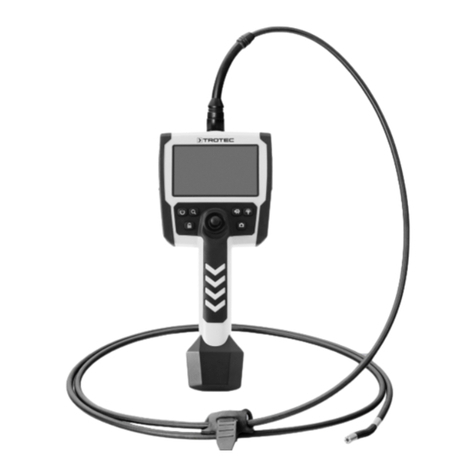
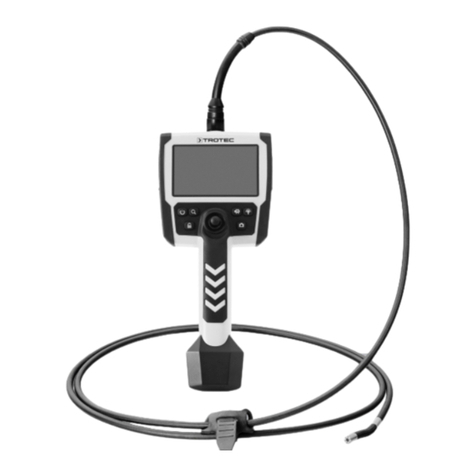
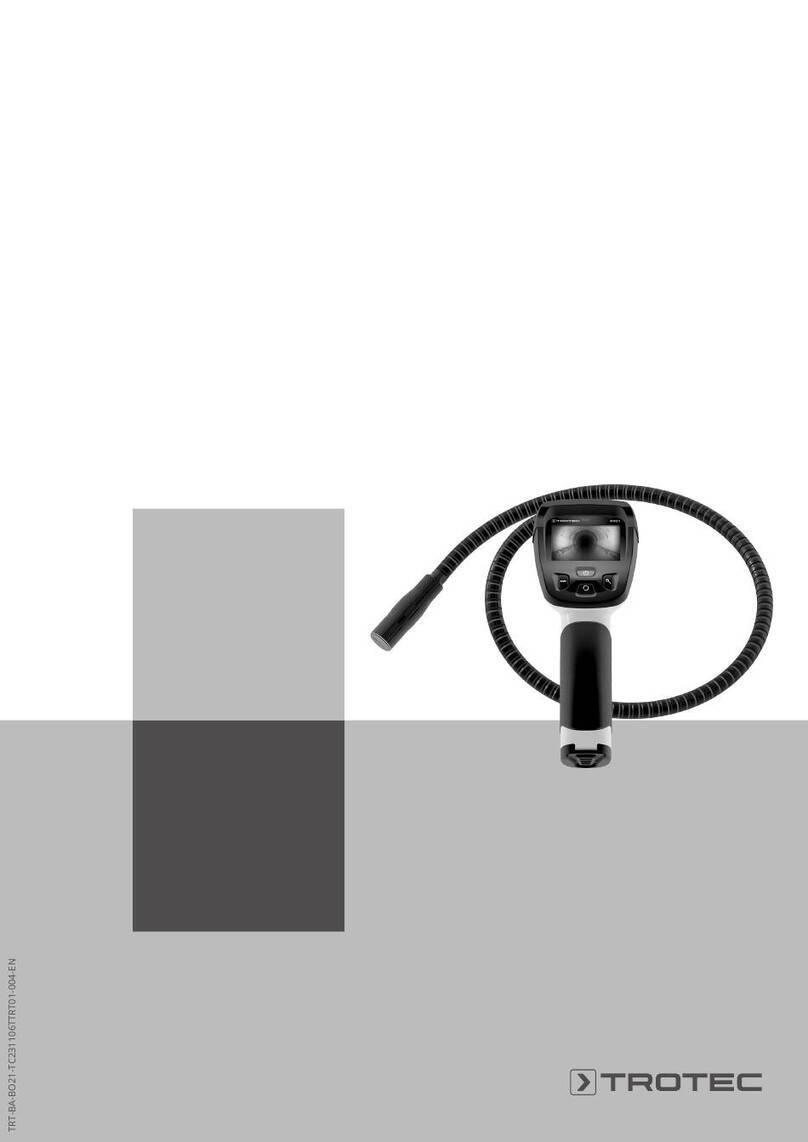
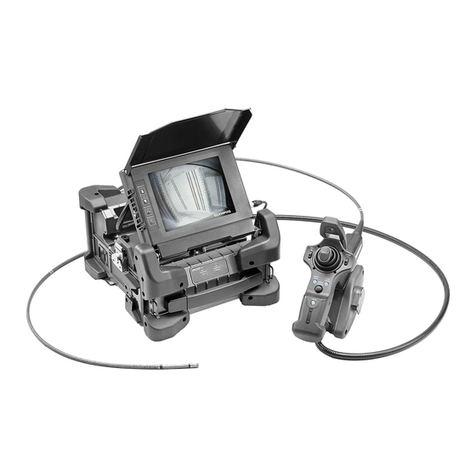
videoscope VSC106
• Check the charger, cable and plug before each use. Do not
use the charger if you detect any damages to the device.
Do not open the charger and have it repaired only by
qualified personnel and only with original spare parts.
Damaged chargers, cables and plugs increase the risk of
electric shock.
• Do not operate the charger on highly combustible ground
(e.g. textiles, paper etc.) or in an inflammable environment.
The heat generated by the charger during charging entails
a risk of fire.
• In case of damage and improper use of batteries, vapours
may be emitted. Provide for fresh air and seek medical
help in case of complaints. The vapours can irritate the
respiratory system.
• Under abusive conditions, liquid may be ejected from a
battery. Avoid contact with liquid ejected from the battery
as it may cause skin irritation or burns. If contact
accidentally occurs, flush with water. Seek medical help if
this liquid contacts eyes.
• Only use the supplied charger for charging a 18650 Li-ion
battery protected against over- and undervoltage. The
battery voltage must match the battery charging voltage of
the charger.
• Observe the storage and operating conditions (see
Technical data).
Intended use
Only use the device for the visualization of objects.
The probe can be used in water with a salt content of less than
5% and for a period of up to 5minutes in oil, petrol and diesel.
Allow the medium to be examined to cool down before using the
device and then clean the probe head thoroughly.
Any use other than the intended use is regarded as misuse.
Reasonably foreseeable misuse
Do not use the device:
• in potentially explosive atmospheres
• in live environments
• in unsuitable liquids, e.g. acids and alkalis
• on people or animals
Do not use the control unit with display underwater.
Any unauthorised modifications, alterations or structural
changes to the device are forbidden.
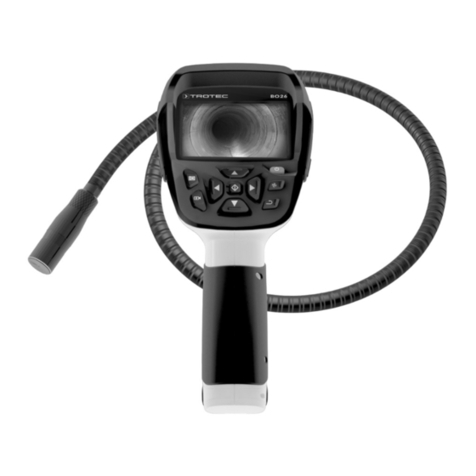
Instructions for the use of videoscopes
The videoscope is a precision instrument. For this reason,
please observe the following instructions and precautions when
using videoscopes:
• Carefully remove the videoscope from the transport case
before use and carefully place it back into the case after
use.
• The probe is a precision component. Impact, compression,
shock and pulling on the device can cause damage to the
lens or light source.
• Avoid excessive bending, stretching, twisting and rolling of
the probe cable as this may damage it and affect the
function of the device.
• For videoscopes with a probe length of more than two
metres, the tube should first be straightened to allow for
proper function after the device has been removed from
the transport case. To do so, shake the probe gently before
use so that it can straighten out. In any case, avoid that the
probe tip is being hit hard.
• An extended use of this product may cause stains on the
lens due to previous contamination, which in turn may
result in blurred images during data collection. Use alcohol
or acetone to clean the lens before use.
• If the probe is in a bent state, do not force to straighten it.
Control the bending of the probe using the joystick only.
• Do not use the probe in liquids other than those specified
in the technical data. Clean the entire probe cable
including the lens head immediately after use to prevent
corrosion.
• If the device shows unusual reactions during operation,
e.g. a flickering picture due to electromagnetic
interference, stop the current operation immediately and
switch off the device. Contact the supplier.
Personnel qualification
People who use this device must:
• have read and understood the instructions, especially the
Safety chapter.