8
Take the handle from the set, remove the nut from the
end, and t the triangle blade in place by retting and
tightening the nut. The triangular scraper is ideal for
stripping paint from at wooden surface and edges.
Remember to clean the blade after use with wire wool
and lightly oil before storing.
Choose the required nozzle and t onto the heat outlet.
Select the scraper required. Hold the gun with the nozzle
approximately 50mm (2 inches) from the surface of the
paintwork and starting with the lower heat setting, move
it slowly backwards and forwards until the paint blisters
and bubbles. Immediately remove the paint with the
scraper . Aim to heat the paint just ahead of the scraper
so that you can develop a continuous action. Do not heat
the paint for too long, as this will burn the paint making it
difcult to remove.
Most stickers can also be removed from paintwork by
using the heat to soften the adhesive. Be careful not to
direct the heat for too long if you are trying just to remove
the stickers, as this will blister the paint.
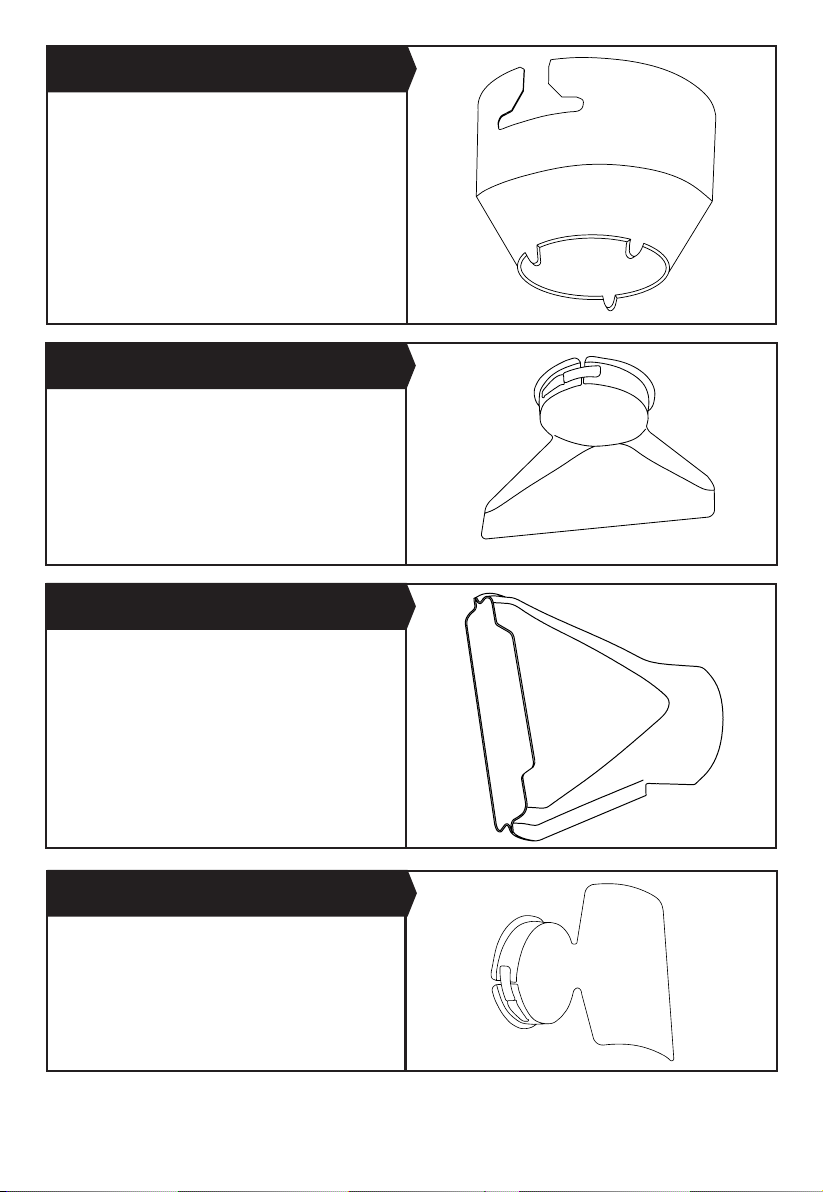
Always use the glass protection nozzle. Ensure you have the nozzle facing the correct way to deect the heat away from
the glass before you switch on. Rotate the gun or nozzle 900 as you move to horizontal or vertical bead. Allow nozzle to
cool before attempting to turn it. Paint can be removed from prole surfaces by using scraper and/or a soft wire brush.
WARNING: Glass can break easily.
Choose the Hook nozzle and t over the heat outlet. Always heat from one or other end of the frozen portion, not from
the middle.
WARNING: Do not attempt to defrost PVC pipes. Always check that it is a water pipe and not a gas pipe. Do not
heat a gas pipe.
5) SCRAPER (See Fig. E)
5. REMOVING PAINT (See Fig. F)
6. REMOVING PAINT FROM WINDOW FRAMES
7. DEFROSTING FROZEN PIPES
Fig. E
Fig. F