manuals.online logo
Brands
  1. Home
  2. •
  3. Brands
  4. •
  5. ZAGI
  6. •
  7. Toy
  8. •
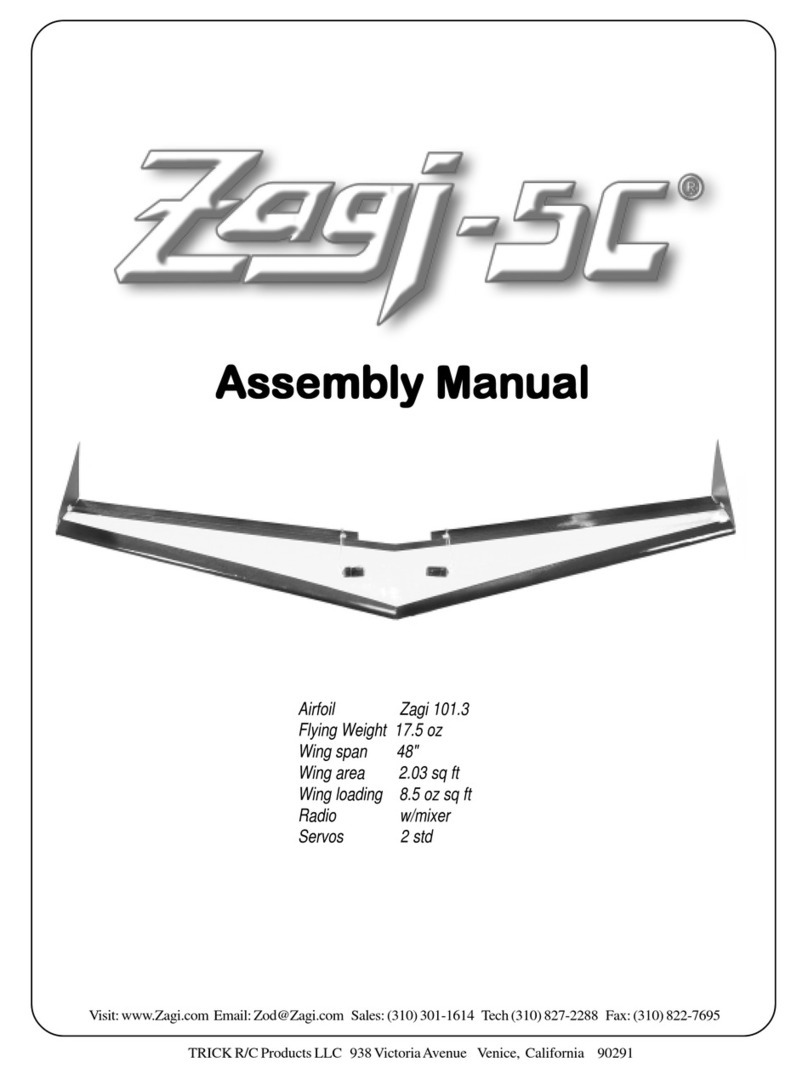
  9. ZAGI ZAGI-3C User manual

ZAGI ZAGI-3C User manual

Other ZAGI Toy manuals

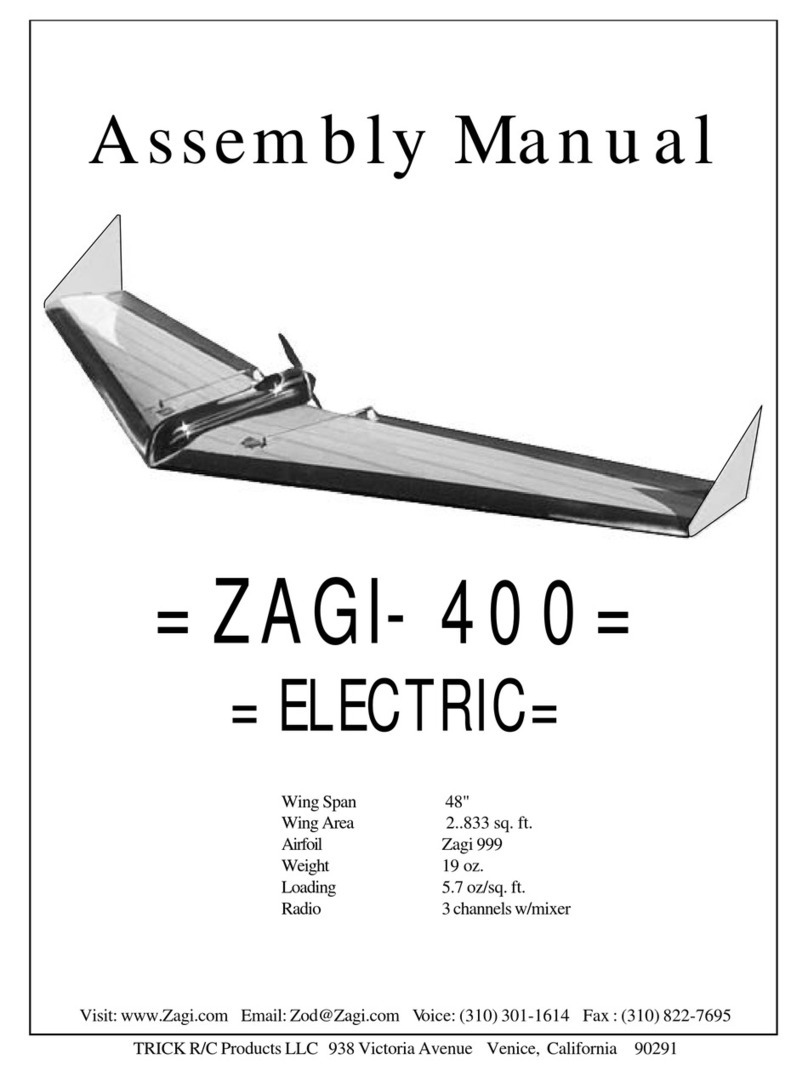
ZAGI 400 X ELECTRIC User manual

ZAGI

ZAGI 400 X ELECTRIC User manual

ZAGI 400 ELECTRIC User manual

ZAGI

ZAGI 400 ELECTRIC User manual

ZAGI ZAGI-DC User manual

ZAGI

ZAGI ZAGI-DC User manual

Popular Toy manuals by other brands

FUTABA GY470 instruction manual

FUTABA

FUTABA GY470 instruction manual

LEGO 41116 manual

LEGO

LEGO 41116 manual

Fisher-Price ColorMe Flowerz Bouquet Maker P9692 instruction sheet

Fisher-Price

Fisher-Price ColorMe Flowerz Bouquet Maker P9692 instruction sheet

Little Tikes LITTLE HANDIWORKER 0920 Assembly instructions

Little Tikes

Little Tikes LITTLE HANDIWORKER 0920 Assembly instructions

Eduard EF-2000 Two-seater exterior Assembly instructions

Eduard

Eduard EF-2000 Two-seater exterior Assembly instructions

USA Trains EXTENDED VISION CABOOSE instructions

USA Trains

USA Trains EXTENDED VISION CABOOSE instructions

Modellbau Laffont Z1601 Assembly instructions

Modellbau Laffont

Modellbau Laffont Z1601 Assembly instructions

NOCH 12905 instruction manual

NOCH

NOCH 12905 instruction manual

Eduard Ki-61-Id quick start guide

Eduard

Eduard Ki-61-Id quick start guide

Viessmann Vollmer 45616 Mounting instruction

Viessmann

Viessmann Vollmer 45616 Mounting instruction

Vollmer 42004 Mounting instruction

Vollmer

Vollmer 42004 Mounting instruction

Phoenix Model CLASSIC-EP instruction manual

Phoenix Model

Phoenix Model CLASSIC-EP instruction manual

H-KING Sopwith Camel British WW1 Fighter instruction manual

H-KING

H-KING Sopwith Camel British WW1 Fighter instruction manual

MODSTER Predator 4x4 Crawler user manual

MODSTER

MODSTER Predator 4x4 Crawler user manual

DHK Hobby 8136 User instruction manual

DHK Hobby

DHK Hobby 8136 User instruction manual

THUNDER TIGER Raptor 50 V2 kit manual

THUNDER TIGER

THUNDER TIGER Raptor 50 V2 kit manual

Timberkits Skateboarder instructions

Timberkits

Timberkits Skateboarder instructions

Hangar 9 Funtana 125 Assembly manual

Hangar 9

Hangar 9 Funtana 125 Assembly manual

manuals.online logo
manuals.online logoBrands
  • About & Mission
  • Contact us
  • Privacy Policy
  • Terms and Conditions

Copyright 2025 Manuals.Online. All Rights Reserved.

Wing span 48”
Wing area 3.33 sq. ft.
Airfoil ZAGI 2000
Weight 17-19 oz.
Speed range 6 to 45+ mph
Radio 2 channels w/mixing
TRICK R/C Products LLC 938 Victoria Avenue Venice, California 90291 (310) 301-1614 Voice
(310) 827-2288 Tech Support (310) 822-7695 Fax Visit http://www.Zagi.com Email: [email protected]
ZAGI-3C
Features a 3 Carbon Fiber Spar Matrix
New 2000 upgrade... Lighter Thinner Stronger Faster !
These instructions are updated with each new production run. Any mods or changes to
the kit are included with each run.
3M Super 77 spray adhesive is the recommended adhesive for the assembly of the Zagi-
3C. Shoe Goo, Goop, or any of the other Goo or goop adhesives can be used with a
weight penalty of one to three ounces. The Zagi-3C can be built for various conditions -
light weight or rough duty. There are references to these different functions in the appro-
priate place in the text following. The construction you choose will determine the final
weight of the airplane. It roughly translates to 17 oz. for light duty to 19 oz. for rough
duty or combat. The weight differences are simply the amount of fiber tape used.
Balancing The Zagi-3C balances at 7 1/2 inches back from the nose. This means that
most of the outboard wing panels are behind center of gravity (CG). Adding weight
behind CG means that more weight will be needed in the nose to achieve balance. So you
pay a weight penalty twice or even more for adding the extra weight behind the CG.
(See Figure 1)
Wing Panels The wings panels are die cut for standard servos. The die cut battery bay
will accept a square AA size battery pack or NiCd batteries from 220 mAh to 600 mAh.
A small 220 mAh battery may be used for extra light conditions. Notice that the battery
bay is wide enough for the battery and some nose weight if necessary. The receiver bay
will accommodate almost any receiver size plus enough room to stow the extra servo wire.
The die-cut servo bays can be glued back in place and re-cut if different size radio gear is
preferred. Just push them out and spray them with the adhesive and replace them. Balsa
shims can also be used to assure a snug fit. The wing is thick enough for the radio instal-
lation within the original contours of the airfoil. For maximum performance, install all of
the radio gear, wires, and nose weight flush. Radio gear should be invisible when it's
covered. The switch should be installed so that it is not above the surface of the wing.
After turning the switch on, put a piece of tape over the switch slot before launching.
Recommendations and Notes
page 2
CG
Figure 1
7 1/2”

The Zagi-3C Kit Contents:
2Expanded polypropylene (EPP) wing panels and beds
2Pre-cut balsa elevons
1Roll 2.2 mil color poly tape
2Control horns with 2 screw plates and 4 screws
2Threaded 2-56 control rods
2Threaded 2-56 clevises
2Die-cut clear plastic winglets
11 1/2” x 2” x 8” EPP foam block for repair and reinforcement
1Roll of 2” wide fiber filament tape
Needed Components:
1Receiver (RX)
2Standard servos (cutouts are for “standard” servos but minis may be used)
1Battery A 600 mAh NiCd AA size battery will allow several hours of flying
before recharging.
Tools and Materials Needed:
Small 90 degree square
Sanding block
150 to 320 grit sandpaper
X-acto knife with #11 blade
Dremel (optional)
Spray adhesive (3M Super 77)
Lead weights for balancing (if needed)
Additional roll 2.2 mil color poly tape in contrasting color (optional) - see text
Round pencil or ball point pen
Mixing (popsicle) sticks
Wax paper and/or clear wrap
Scissors
Z-bend pliers (optional)
page 3
With fiber filament tape, tape the top beds together and then tape the bottom beds to-
gether. (See Figure 3)
page 4
Assemble Wings There are three parts to each wing panel. The wing core is shipped
between the top and bottom beds. The beds are used as construction jigs. Always use
the beds as a base when working on the wings. They will be useful for storage and for
tune-ups and repairs, so save them.
Remove the hairs and zigzags from the wing cores and beds by lightly rubbing on them
with a scrap piece of foam. Lay the bottom right and left wing beds on a flat surface.
Set the wing cores on the beds and lightly block sand the wing panels (cores) with #320
paper and round the leading edge (LE). (See Figure 2)
Lay the top bed on a flat surface. Spray the root (wide) end of the panels with 3M Super
77 adhesive. Hold the spray head 1 inch from the root. Spray a long bead along the root
edge. Spread the bead with a small brush, a mixing (popsicle) stick, or scrap foam. Let
the adhesive get tacky dry to the touch. Put the wing panels together. Make sure that the
spar slots are aligned. Put two pieces of fiber tape on the top and bottom.
(See Figure 4)
Top bed
Bottom bed
WingpanelorWingCore
Figure 2
Figure 4
Put two pieces of fiber
tape on the top and bottom
to hold until the glue sets
Figure 3
Put the wing panels in the top bed bottom side up. Use weights to hold the panels in
place. The weights are very important to maintain alignment and wing geometry.
Hold the spray head 1 inch from the middle of the spar slot. Spray one long puddle of
3M Super 77 spray adhesive the length of the two long spar slots. Use the end of the spar
as a spatula to spread the glue evenly. A mixing (popsicle) stick can be used to direct the
excess adhesive into the spar slot. Repeat this until the entire groove is wet with adhesive.
Make sure that the side walls of the spar slot are covered. Lay the spars on a piece of
wax paper or aluminum foil and spray the spars with the adhesive. Align the spars to meet
at the center of the wing panel and push them in place. Place weights on the wing panels
to hold the correct alignment. (See Figure 5)
Install Servos On the table, plug the servos into the receiver, typically the right one in
slot 1 and the left in slot 2. Turn on the transmitter (TX) then plug the battery in the re-
ceiver (RX) (always turn the TX on before the RX and turn off the RX before the TX).
Use the “X” servo control arm. Cut three of the arms off of the X, using the longest if
different sizes. Attach the arm to the servo in as nearly vertical position as possible but
make sure both arms are
page 5
close to the same angle. Make sure servos move in correct
direction, forward with the stick back; right one forward, left one to rear for right stick
movement. Reverse TX controls if necessary to provide correct elevon movement. Dis-
connect battery and turn off TX. Remove servo wires from the RX.
Spray one long puddle of 3M Super 77 spray adhesive the length of the short spar slot.
Lay the spar on a piece of wax paper and spray the short cross spar with the adhesive.
Push the spar in place. The glue will reach maximum strength overnight. (See Figure 6)
Figure 6
Weights
Figure 5
Push the spars in
place while the
glue is wet
Install Radio Push the battery bay and receiver cookies out of the center of the wing
panels. Cut 1/8'' wafer off of the bottom of the receiver cookie using the X-acto Extra
Fine Saw Blade to make a floor for the receiver bay. Cut a 1/4” wafer off the bottom of
the battery cookie to make a floor for the battery bay. Make sure that the floors match the
contour of the wing surfaces. (See Figure 8)
page 6
Servo Wing section
1/4” servo bay floor Figure 8
Servo control arm Fit to the wing contour
The control rods may not fit in the servo control arm. The end of the control rod can be
filed to fit in the servo control arm or the top hole in the servo control arms can be reamed
by spinning an X-acto #11 blade in the hole or drilling with a #48 drill (.076”).
The wing thickness will accommodate standard servos. Servo control arms should be
straight up facing outboard—toward wing tips. Some standard servos are bigger than
others. It may be necessary to cut or router the servo holes to a tight squeaky fit so that
no glue is necessary. Locate the servo-cut out in the wing panel. Push the cookie cut-out
out of the wing. Slice a 1/4'' wafer off the bottom of the cookie. The X-acto Extra Fine
Saw Blade does an excellent job of slicing EPP wafers. Spray a puddle of 3M Super 77
adhesive on a piece of wax paper or aluminum foil. Touch the edges of the parts to be
glued in the puddle. Glue the wafer back in the bottom of the servo bay as a servo bay
floor. Push the servo into the bay and cut the top of the cookie to fit as a servo bay lid.
Make sure the lid is flush with the top of the wing. (See Figure 7)
Figure 7
Servos bay
Receiver bay
Battery bay
Drill a hole between the battery bay and the receiver bay big enough to push the connec-
tors through. Use a 3/8” brass tube with one edge filed sharp. Twist the tube while push-
ing to make a clean cut through the foam. Do the same between the servo bays and re-
ceiver bay. A hole can also be burned in the foam by heating a wire. Do not overheat the
wire. Do a few tests on a piece of scrap before trying it on the wing. Allow space in front
of the RX bay to install the switch. If needed, make a small space next to the switch to
stow the battery charge wire. (NOTE: If using AA batteries a battery charge wire is not
used.) Mount the switch below the surface of the wing for two reasons. Reason one,
drag. Reason two, contact can turn it off in flight. Make a line with a straight edge from
the RX bay to the wing tip parallel to the wing spars. Cut a 1/4 inch deep cut on the line.
Push the antenna into the slot with a flat blade screwdriver. Let the extra antenna wire
hang off the wing tip. Install the servos, battery, switch, and receiver using double backed
tape. The switch may be taped to the RX for a solid mount. Cut a wafer off of the top of
the RX and battery cookies, making sure they match the contours of the wing surfaces.
Put the servo, battery, and receiver bay covers in place, leaving an opening for the switch.
Rotate the servo control arms out of the way of the servo tops. Push the antenna wire
into the spar. Apply a piece of fiber tape over the covers. (See figure 9)
To wing tip
Battery
Nose weight
Servo leads
Switch
Rx Antenna
Figure 9
page 7
Servo Servo
Battery Lead
Taping Wings For Strength Vacuum the dust from the cores, beds and the work
bench. Make sure that all of the radio parts are covered before spraying. Lay the wing in
the bottom bed top-side up. Apply a coat of 3M Super 77 spray adhesive to cover the
top of the entire wing. Allow the adhesive spray to dry at least 30 minutes. Repeat this
procedure on the other side. (See Figure 10)
Wrapastrip of2”fiber tapearoundthe trailingedge.
page 8
Figure 10
Make sure that the glue used to hold the spars is dry. Apply a strip of 2” fiber tape over the spars.
Wrapa strip of 2” fiber tape around the leadingedge.
OptionalTapingSchemeifWeightisNotaFactor
The Zagi-3C can be built for rough conditions. The construction you choose will deter-
mine the final weight of the airplane. It roughly translates to the light weight at about 17
oz., rough duty about 19 oz. The weight differences are simply the amount of fiber tape
used. Below is a suggestion for a fiber tape schedule for rough duty. If you do not fly
combat or in rough conditions, skip Figure 11. (See Figure 11)
page 9
Topview
Bottomview
Figure 11
Cover with Colored Tape Having the top and bottom of the wing in sharply contrast-
ing colors makes the plane much easier to fly, typically with the darker color on the bot-
tom surface. An optional roll of color tape will be required to do this.
Spray the fiber tape with 3M Super 77 adhesive and let it dry for about 30 minutes Start
the color tape covering at the trailing edge (TE) of the wing by wrapping a strip of tape
around the TE being careful to follow the shape. Work from the TE forward. Lay strips
of tape from tip to at least 4 inches past the center. (See Figure 12)
Overlap the tape 1/4" all the way from the center to the tip. Cut the tape at an angle at the
LE.
Place the wing in the top bed and repeat the taping procedure working from TE forward
to the LE.
Finish the leading edge with a single spanwise piece of tape wrapped around the LE.
(See Figure 13)
Wrap the leading edge
with a single spanwise
piece of tape Overlap the tape 1/4"
Figure 13
Wrap the first strip of
tape around the TE
Cut the tape at
an angle at the LE
Figure 12
page 10