manuals.online logo
Brands
  1. Home
  2. •
  3. Brands
  4. •
  5. ABB
  6. •
  7. Power Tools
  8. •
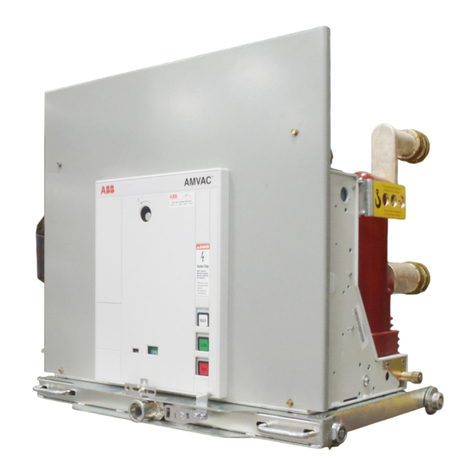
  9. ABB AMVAC Quick start guide

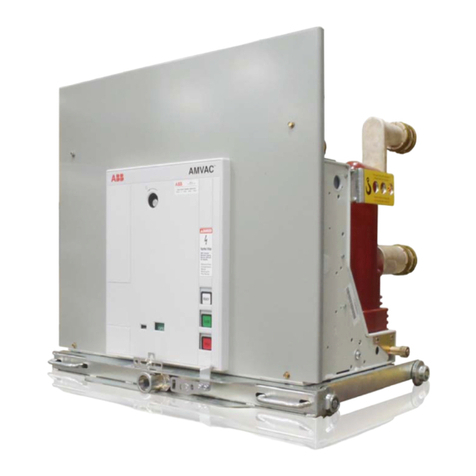
ABB AMVAC Quick start guide

Other manuals for AMVAC

4

Other ABB Power Tools manuals

ABB B-CK 240 User manual

ABB

ABB B-CK 240 User manual

ABB T&B Tools TBM12PCR-LI User manual

ABB

ABB T&B Tools TBM12PCR-LI User manual

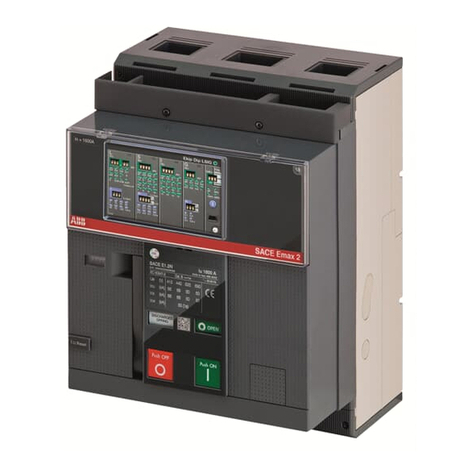
ABB SACE Emax 2 Manual

ABB

ABB SACE Emax 2 Manual

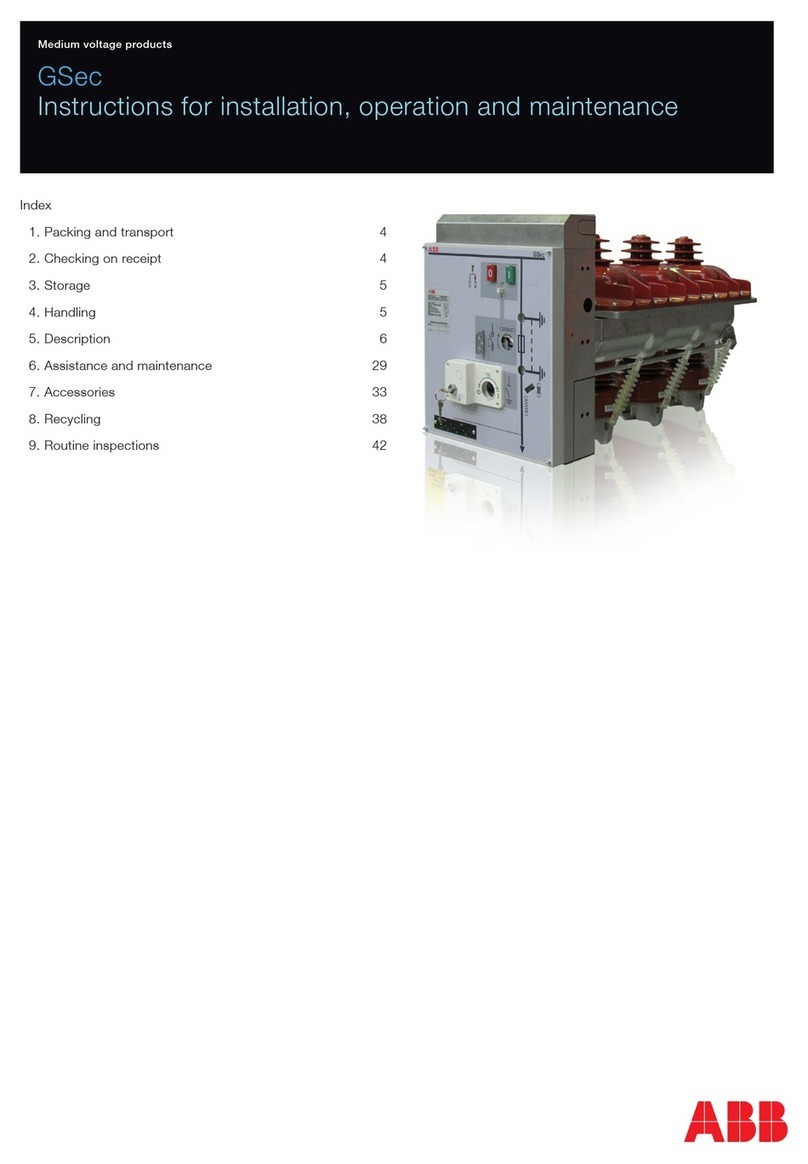
ABB GSec/T1 Programming manual

ABB

ABB GSec/T1 Programming manual

ABB SF6 User manual

ABB

ABB SF6 User manual

ABB Relion REQ650 User manual

ABB

ABB Relion REQ650 User manual

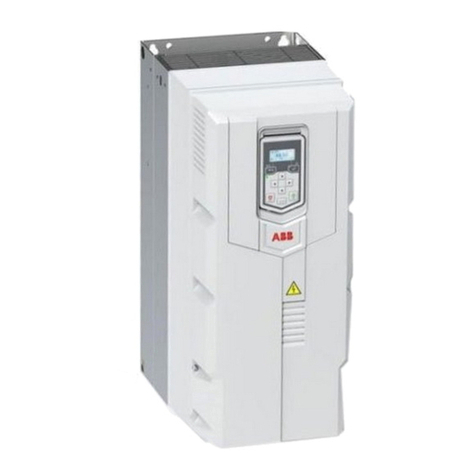
ABB ACS560 User manual

ABB

ABB ACS560 User manual

ABB REX 521 User manual

ABB

ABB REX 521 User manual

ABB Thomas&Betts BAT22-6NV2 User manual

ABB

ABB Thomas&Betts BAT22-6NV2 User manual

ABB VD4G-25 User manual

ABB

ABB VD4G-25 User manual

ABB HD4 Series Quick guide

ABB

ABB HD4 Series Quick guide

ABB AMVAC User manual

ABB

ABB AMVAC User manual

ABB VD4 Series User manual

ABB

ABB VD4 Series User manual

ABB Emax E1 Quick guide

ABB

ABB Emax E1 Quick guide

ABB Smart Tool + User manual

ABB

ABB Smart Tool + User manual

ABB AMVAC Quick start guide

ABB

ABB AMVAC Quick start guide

ABB VD4 Series User manual

ABB

ABB VD4 Series User manual

ABB VD4 Series User manual

ABB

ABB VD4 Series User manual

Popular Power Tools manuals by other brands

ISLAND HOPPER Power Egg HT-309 operating instructions

ISLAND HOPPER

ISLAND HOPPER Power Egg HT-309 operating instructions

Sioux Tools SSR6P25 Instructions-parts list

Sioux Tools

Sioux Tools SSR6P25 Instructions-parts list

Makita HM1317C technical information

Makita

Makita HM1317C technical information

Baumr-AG BMJK-24S user manual

Baumr-AG

Baumr-AG BMJK-24S user manual

Bosch Professional GST 18 V-LI S Original instructions

Bosch

Bosch Professional GST 18 V-LI S Original instructions

Ronix RA-2702 quick start guide

Ronix

Ronix RA-2702 quick start guide

Nordson ProBlue user guide

Nordson

Nordson ProBlue user guide

aoyue int6028 instruction manual

aoyue

aoyue int6028 instruction manual

Hitachi CJ 65VA2 Instruction manual and safety instructions

Hitachi

Hitachi CJ 65VA2 Instruction manual and safety instructions

Makita HM1304 instruction manual

Makita

Makita HM1304 instruction manual

Kurtz Ersa Ersa X-TOOL VARIO operating instructions

Kurtz Ersa

Kurtz Ersa Ersa X-TOOL VARIO operating instructions

SCHUNK KSO 65 Installation and operating instruction

SCHUNK

SCHUNK KSO 65 Installation and operating instruction

Harken LokHead 500 user manual

Harken

Harken LokHead 500 user manual

Senco DuraSpin ExTPro installation instructions

Senco

Senco DuraSpin ExTPro installation instructions

Ferm JSM1020 Original instructions

Ferm

Ferm JSM1020 Original instructions

Milwaukee M12 FUEL 2559-20 Operator's manual

Milwaukee

Milwaukee M12 FUEL 2559-20 Operator's manual

EINHELL BT-CD 12/2 operating instructions

EINHELL

EINHELL BT-CD 12/2 operating instructions

Evolution HDG200 instruction manual

Evolution

Evolution HDG200 instruction manual

manuals.online logo
manuals.online logoBrands
  • About & Mission
  • Contact us
  • Privacy Policy
  • Terms and Conditions

Copyright 2025 Manuals.Online. All Rights Reserved.

AMVACTM
Vacuum Circuit Breaker with Magnetic Actuator Mechanism
AMVAC
Universal applications:
• Medium voltage motor starting
applications
• Capacitor switching
• Retrofit applications to replace
existing circuit breakers in repetitive
duty applications
AMVAC circuit breakers have been
fully tested to the most recent
versions of ANSI C37.04, C37.06,
and C37.09. Using "k" factor equals
1 as the test criteria.
Available for 5, 15, and 27 kV
applications, in stationary and
drawout forms, this next generation
circuit breaker offers solutions for
many applications.
2
3
AMVAC. The circuit breaker.
Although many refinements have been made throughout the 80-90 year
history of the medium voltage circuit breaker, there have been only four
generations of circuit breaker design. Early circuit breakers were spring
charged units with separate close and trip springs. These units were used for
older air-magnetic breakers. The second generation used the same
mechanism modified for use with a vacuum bottle. The new generation of
circuit breakers, such as the ADVAC breaker with a torroidal spring, were
designed specifically for use with vacuum technology.
Each generation reflects the best technology available at the time of their
introduction, building on the strengths of previous designs, yet adding new
innovations, marking true turning points.
Although it is well established that vacuum interrupters are capable of more
than 10,000 operations, conventional stored energy circuit breakers seldom
operate beyond 10,000 operations without teardown, re-lubrication, and/or
replacement of parts. More than 100 parts are required to perform spring
charging, closing, anti-pumping and tripping functions. Conventional stored
energy breakers also place limitations on the types of control voltages
allowed. Vacuum interrupters were mounted in open moldings, making them
susceptible to dust, moisture, and corrosive atmospheres.
The AMVAC is truly the next generation in medium voltage vacuum
technology. With the AMVAC, ABB is the first to combine the unique
requirements of vacuum interrupter technology to a stored energy
mechanism designed to exploit these capabilities. Using a flux-shifting device
with integral permanent magnets, the AMVAC mechanism has just seven
moving parts. Having only an open/close actuator, an electronic controller,
and capacitors for energy storage, the AMVAC circuit breaker mechanism is
capable of 50,000 to 100,000 operations. Vacuum interrupters are embedded
in a proprietary epoxy material, achieving excellent dielectric and thermal
capabilities. Eliminating mechanism operated cell switches, the AMVAC
breaker packages all auxiliary control contacts on the circuit breaker. These
are just a few of the features that mark a departure from the conventional
stored energy breaker and introduce new capabilities and benefits for the
modern power systems.
4
AMVAC
Summary of benefits:
• Simple mechanical operation
• Fewer than 10 moving parts
• Manual opening capability
• High reliability
Manual opening mechanism
Magnetic actuator
Electronic controller
Auxiliary contacts
Electrical energy storage
Sensor for switching position
detection
The magnetic actuator,
encapsulated vacuum interrupter
pole assemblies, electronic
controller, capacitors, and push
button/capacitor discharge
assembly are the key components
for this next generation product.
The magnetic actuator has a
magnetic frame assembly, two
identical operating coils, two rare
earth magnets, and a single moving
armature. Instead of mechanical
assemblies for armature position
sensing, proximity sensors detect
armature position for the
electronic controller. The rare earth
magnets are especially encapsulated
to eliminate the corrosion normally
associated with this type of
magnet. Evaluation confirms that
these permanent magnets will
retain 99% of their flux density for
over 100 years.
Similar evaluations find that the
capacitors used for stored energy
have a lifetime up to 20 years.
These special capacitors charge in
as little as seven seconds after
control power is available and are
periodically "topped off" by the
electronic controller as needed.
Covers over the capacitor terminals
prevent accidental contact. The
capacitors are discharged by a
unique discharge assembly when
the circuit breaker is moved to the
"Disconnect" position and the
racking truck handles are moved
inward to unlock the circuit break-
er from the breaker compartment.
The AMVAC circuit breaker is
designed to provide many years of
trouble free service for the end
user.
AMVAC. Qualities that convince.
Maintenance free vacuum
interrupter and current
carrying parts in one
embedded assembly.
5 kV
15 kV 27 kV
Innovation extends to the vacuum interrupter
assembly, as well. For the first time in any
vacuum circuit breaker, the interrupter and the
current carrying parts are completely embedded in
a proprietary epoxy resin. Thermal performance
of the interrupter is improved as the epoxy resin
draws heat away from hot spots for a more even
heat distribution. Moreover, the interrupter pole
assembly is fully skirted so that push rod and
other moving parts of the current transfer area are
isolated and protected from external influences.
As a result, accumulations of dust, dirt, and
condensation do not increase tracking and partial
discharge as they do in non-embedded designs.
5
6
AMVAC. Low maintenance
permanent magnet technology. Instantaneous
representation of
magnetic flux density
distribution
Magnetic latching in a
limit position.
Magnetic latching plus
current build up in one
coil.
Armature reaching the
opposite limit position.
Following the advance of vacuum
interruption in the field of medium voltage
circuit breakers in the last 20 years, a natural
teaming of technology has been achieved
with the addition of magnetic actuator
technology. The requirements of one
technology are optimally matched by the
opportunities of the other. Magnetic actuator
technology naturally provides the suitable
travel-time and force-travel characteristics for
the vacuum switching devices. All operating
mechanism functions are integrated in the
magnetic actuator of the AMVAC circuit
breaker. The actuator is a bi-stable magnet
system, in which armature change-of-state is
accomplished by the magnetic field of two
electrically excited coils. The armature is held
magnetically in the limit positions by the
fields of two rare-earth permanent magnets.
Switching operations are achieved by
excitation of one of the two coils until the
retaining force of the permanent magnets is
exceeded. Even on complete failure of
auxiliary power, electrical operation is still
possible for a period of 60 to 90 seconds.
When capacitor stored energy is no longer
sufficient to achieve tripping, the circuit
breaker can then be opened with the assis-
tance of a manual opening handle.
The armature of the magnetic actuator is
linked to an operating shaft connected via
insulated push rods to each of the vacuum
interrupters. The only points of lubrication
for this mechanism are at the union of the
armature to the operating shaft, the pivot
points of the operating shaft, and the pivot
points of the operating shaft to the push
rods. Long life synthetic lubricants are applied
during assembly to further reduce the need
for lubrication during the life of the
circuit breaker. During circuit breaker racking,
mechanical interlocks from the racking mech-
anism block the movement of the
magnetic actuator armature so that the circuit
cannot be closed electrically in any racking
position other than "Test" or "Connect".
7
The electronic controller uses robust components and circuit board con-
forming coatings to prolong the life of the device. The electronic con-
troller will operate on AC or DC control power because it utilizes an AC
to DC converter internally. Instead of selecting from a long list of control
power options, the user only needs to select a controller for low voltage
control power (38-56 VDC) or a controller for high voltage control power
(104-254 VAC or 100-250 VDC). Inside these ranges, the user may apply
any value of direct current, or any value of 50 or 60 cycle alternating cur-
rent to achieve circuit breaker operation. The electronic controller incor-
porates all capacitor charging, open/close coil switching, anti-pumping,
interlocking, and armature position details. Self-monitoring functions are
programmed to monitor proximity sensors, the microprocessor, and other
key functions with annunciation and/or circuit breaker opening possible.
Radio frequency and transient testing has been performed on the electron-
ic controller to ensure that it is resistant to such abnormal conditions. The
electronic controller demands up to 100 watts of peak power during
capacitor charging; less than 10 watts of power is needed to maintain 10
amperes peak during capacitor charging; only four watts of energy is
needed to maintain controller functions and capacitor full charge.
Proximity sensors
provide highly reliable
armature position
information to the
electronic controller.
AMVAC. Circuit-breaker of
the high tech generation.
Notes:
All contacts are shown with the breaker in the OPEN & READY unless
otherwise specified.
* Coil Monitoring Device cannot be used and will be recognized as a
Close or Open Signal.
** READY Contact is CLOSED when the breaker is ready for operation.
“READY” monitors control power, capacitor voltage, Close & Open Coils
& uP Watchdog.
*** NOT READY Contact is CLOSED when the breaker is not ready for
operation.
AMVAC. Technical data.
8
RATED NOMINAL RATED MAX LOW FREQ IMPULSE RATED SHORT SHORT TIME CLOSE & RATED VOLTAGE
BREAKER CONTINUOUS VOLTAGE VOLTAGE WITHSTAND LEVEL (BIL) CIRCUIT CURRENT LATCH RANGE FACTOR
TYPE CURRENT A CLASS kV rms VOLTAGE kV rms kV Crest CURRENT kA rms kA rms 2 Sec. kA Peak K
1200
5AMV25 2000 4.16 4.76 19 60 25 25 65 1.00
3000
1200
5AMV31 2000 4.16 4.76 19 60 31.5 31.5 82 1.00
3000
1200
5AMV40 2000 4.16 4.76 19 60 40 40 104 1.00
3000
1200
5AMV50 2000 4.16 4.76 19 60 50 50 130 1.00
3000
1200
7.5AMV40 2000 7.2 8.25 36 95 40 40 104 1.00
3000
1200
15AMV20 2000 13.8 15 36 95 20 20 52 1.00
3000
1200
15AMV25 2000 13.8 15 36 95 25 25 65 1.00
3000
1200
15AMV31 2000 13.8 15 36 95 31.5 31.5 82 1.00
3000
1200
15AMV40 2000 13.8 15 36 95 40 40 104 1.00
3000
1200
15AMV50 2000 13.8 15 36 95 50 50 130 1.00
3000
1200
2000
1200
2000
27
23
27AMV25
25
25
125
60
42
1.00
1.00
65
60
125
16
16
27AMV16
23
27
Table 2-Capacitor Bank Switching Ratings:
Table 1-Short Circuit Ratings:
Parameter 5&15kV @ 5&15kV @ 27 kV
20-25kA 31.5-50kA
Mechanical operations-mechanism 100,000 50,000 50,000
Mechanical operations-vacuum interrupter 30,000 30,000 15,000
Operating cycles at rated current 30,000 30,000 15,000
Operating cycles at short-circuit current 100 100 100
Control power at rest <10 watts <10 watts <10 watts
Control power during capacitor charging <100 watts <100 watts <100 watts
Operating time-close 60 ms 60 ms 60 ms
Operating time-trip 45 ms 45 ms 45 ms
Height (fixed mount) (mm) 25.65” (651.5) 25.65” (651.5) 27.42” (696.5)
Depth (fixed mount) (mm) 16.93” (429.9) 16.93” (429.9) 16.93” (429.9)
Width-drawout & stationary (frame) (mm) 29.53” (750) 29.53” (750) 29.53” (750)
Weight (avg 750 mm fixed mt/drawout) lbs (kg) 321.93/412.34 321.93/412.34 321.93/412.34
Table 3-Mechanical Details:
CONTINUOUS CURRENT RATING
1200 A 2000 A 3000 A
GENERAL
PURPOSE DEFINITE
PURPOSE GENERAL
PURPOSE DEFINITE
PURPOSE GENERAL
PURPOSE DEFINITE
PURPOSE
kV rms kA rms A A A A A A
4.76 25 400 630 400 630 400 630
4.76 31.5 400 630 400 630 400 630
4.76 40 400 630 400 630 400 630
4.76 50 250 N/A 250 N/A 250 N/A
8.25 40 250 630 250 630 250 630
15 20 250 630 250 630 250 630
15 25 250 630 250 630 250 630
15 31.5 250 630 250 630 250 630
15 40 250 630 250 630 250 630
15 50 400 N/A 400 N/A 400 N/A
27 16 160 N/A 160 N/A N/A N/A
27 25 160 N/A 160 N/A N/A N/A
AMVAC. The modern circuit breaker.
AMVAC
The equipment specifications:
• Completely concealed moving parts
• UL Labeling and CSA compliance
• Low Power consumption
• ANSI compliance at 5, 15, and 27 kV
9
The following are standard features of the AMVAC electronic controller:
•Loss of control power trip
•Trip on declining capacitor voltage
The AMVAC circuit breaker is shipped with these standard features disabled; the end user may enable the features he chooses by moving
the appropriate 'dip' switch to the 'on' position.
The following electronic controller 'dry contact' (250 VAC and VDC, 200 mA) outputs wired to the circuit breaker secondary
disconnects are optional at extra cost:
•A normally open contact that closes when the capacitors are fully charged to provide external 'Ready' indication.
•A normally closed contact that opens when the capacitors are not fully charged to provide external 'Not Ready' indication.
•A normally open contact that closes for 100 ms to indicate a trip signal was received by the microprocessor.
•Two normally open 'a' contacts which close when the circuit breaker is closed plus two normally closed 'b' contacts which open
when the circuit breaker is closed.
•Close blocker function that prevents circuit breaker closing unless a control power signal (16 - 280 VDC, 104 - 256 VAC) is
present at the terminals of the close blocker feature.
The following option allows circuit breaker tripping even when the microprocessor is disabled:
•Auxiliary Trip on failure of control board microprocessor. When turned 'On' by the 'Dip' switch, a trip signal across the
auxiliary trip terminals bypasses the microprocessor to perform tripping. In the 'Off' position, trip signals on the auxiliary trip
terminals will not trip the circuit breaker.
The AMVAC is the first vacuum
circuit breaker to combine low
maintenance embedded vacuum
interrupters, a low maintenance
magnetic actuator, and a
maintenance-free electronic
controller. The result is a
medium voltage circuit breaker
capable of 100,000 operations.
1. Upper Primary Terminal
2. Vacuum Interrupter
3. Epoxy Potting Compound
4. Lower Primary Terminal
5. Flexible Connector
6. Wipe Springs
7. Insulated Pushrod
8. Jackshaft
9. Stroke Adjustment
10. Position Sensors
11. Close Coil
12. Permanent Magnets
13. Armature
14. Open Coil
15. Manual Opening Actuator
16. Mechanism Enclosure
10
General
The Circuit breaker shall be an ABB AMVAC or approved equal, three-pole, drawout (or
stationary) type, electrically operated with stored energy magnetic actuator operating
mechanism. The circuit breaker is intended for use as a general purpose device in
accordance with the latest revisions of the following ANSI standards applying
to 5, 7.5, 15, or 27 kV applications: ANSI C37.04, C37.06, and C37.09. The
circuit breaker shall also conform to the general purpose capacitor switch-
ing ratings referenced in the ANSI standards.
Option: Definite purpose capacitor switching ratings are optionally offered
for single and back-to-back applications. Details of these applications are
required at the time of quotation to insure conformance to specific appli-
cations.
Drawout Circuit Breaker Racking System and Interlocks
The circuit breaker shall be inserted and withdrawn by means of a breaker
mounted racking system, which can be operated with the compartment
door open or closed. The racking system shall provide smooth consis-
tent racking, and shall secure the breaker from both sides of the cell
in all racking positions. During racking, the breaker shall automati-
cally open and close cell-mounted safety shutters to cover station-
ary primary contacts when the breaker is not in the "Connected"
position.
The racking system shall have three distinct positions. In
addition to the withdrawn position (free movement):
"Disconnected" (both primary and secondary con-
tacts disengaged), "Test" (secondary contacts
engaged, primary contacts disconnected, and shut-
ter closed), and "Connected" (Shutter open, pri-
mary and secondary contacts engaged). Positive
stops shall be provided for all three positions, with
deliberate operator intervention required to enable con-
tinued insertion or withdrawal of the circuit breaker from any
position.
The racking system and all moving parts of the breaker-cell interface, including the secondary disconnects, shutter actuator and ground
contact, shall be capable of 500 complete rack-in/rack-out operations without maintenance.
It shall not be possible to insert or withdraw a closed breaker, and the breaker shall not be allowed to close within a cell unless it is in the
"Connected", "Test", or "Disconnected" position. Electrical and mechanical blocking means shall be employed to preclude breaker
contact closure in any position other than "Connected", "Test", or "Disconnected". The stored energy capacitors shall be automatically
discharged in the "Disconnected" position prior to removing the circuit breaker from the circuit breaker compartment.
Controls
Opening and closing speed shall be independent of the operator or the control voltage within the rated control voltage range. Circuit
breaker charge, close, and trip circuits shall be electrically separated, and control voltage for each circuit shall be independently specified
from the full range of ANSI preferred control voltages. Provisions shall be provided for manually opening the circuit breaker. These pro-
visions shall be installed and easily accessible at the front of the breaker.
All control components shall be front-accessible for quick inspection after easy removal of the circuit breaker front cover. Mechanism
operated cell switches shall not be allowed; the circuit breaker shall include eight on-board auxiliary contacts (four normally open "a" and
four normally closed "b") for customer use, wired through the secondary disconnect. All breaker-mounted contacts shall operate in both
the "Connected" and "Test" positions.
Option: Nine additional contacts (for a total of nine normally open "a" and eight normally closed "b") shall be installed on the circuit
breaker and wired through the secondary disconnect, for a total of 17 on-board contacts.
AMVAC. Circuit breaker specifier's guide.