Apogee Symphony 64 User manual

User’s Guide
V2 - May 2011
PCIe Card for Apogee Interfaces


........................................................................................................................1
..............................................................................................................2-10
...........................................................................................2
.............................................................2-3
...............................................4-5
......................................................6-7
............................................................................................8
........................................................................................................8
.................................................................10
...........................................................................................10
.........................12-17
..........................................................................14-17
..........................................................................................................18-20
......................................................................21-33
.................................................................................................................21
.....................................................................................................22
..........................................................................................................23
................................................................24
...................................................................................25
...................................................................................26
..............................................................................27
....................................................................28
..............................................................................29
....................................................................30
......................................................................31
.........................................................................32-33
...........................................................................................................................34-51
..................................................................................34-37
...........................................................................................38-42
.............................................................................................................42-49
........................................................................................................50-51
...............................................................................52
User’s Guide
Table of Contents
Introduction
Getting Started
Check the Package Contents
Install the Symphony 64 Card / Jumper Settings
Connect the Symphony 64 PCIe card to Apogee Interfaces
Word Clock Connections - Multiple Apogee Interfaces
Install Software and Drivers
Initial Conguration
Congure Symphony 64 with Apple Logic Pro 8
Other Settings on your Mac
Using Symphony SBus to Interconnect Apple Computers
Conguring Multiple Macs with SBus
Troubleshooting
Hardware Interface Combinations
Rosetta 200
1 AD-16X, 1 DA-16X
1-4 Rosetta 800s
1 AD-16X, 1DA-16X (std routing), Rosetta 800
1-2 AD-16Xs (std or adv routing)
1-2 DA-16Xs (std or adv routing)
Rosetta 800, 1 AD-16X (std routing)
1 AD-16X (std or adv routing), Rosetta 800
Rosetta 800, 1 DA-16X (std routing)
1 DA-16X (std or adv routing), Rosetta 800
2 Mac Pros, 1 AD-16X + 1DA-16X per Mac
8 AD-16Xs, 8 DA-16Xs (std routing)
Maestro
Control Window/Settings Pane
Input and Output Panes
Mixer Pane
Menu by Menu
Installing the X-Symphony Card


APOGEE ELECTRONICS
1
Symphony PCI card – User’s Guide
Introduction
The Symphony 64 PCIe card is quite simply the most cost effective and exible way to connect Apogee
hardware interfaces to Apple Mac Pro computers. Additionally, Symphony 64 allows the interconnection
of Mac computers to create powerful digital audio networks.
Symphony 64 features include:
• Up to 128 channels of 24-bit 192 kHz I/O
• Extremely low system latency
• Supports Apogee Rosetta 800, Rosetta 200, AD-16X and DA-16X hardware
• Simple, one cable interface between any Apple Mac Pro and Apogee hardware
• Compatible with any CoreAudio application
• Apogee VBus - virtual routing within a CoreAudio application or between multiple applications.
• Apogee SBus - 32 channel per port, 192 kHz digital audio network between
Apple Macintosh computers
The system consists of:
• Symphony 64 PCIe card
• A compatible Apogee hardware interface equipped with an X-Symphony option card
• PC-32 cables between interfaces and to the Apple Mac Pro
• Apogee Maestro routing and low latency mixer application
System Requirements
• Apple Mac Pro computer, running OS X 10.4.11, 10.5.3 or greater.
• Minimum 2 GB of memory, 4 GB recommended.
• Apogee Rosetta 800, Rosetta 200, AD-16X, or DA-16X equipped with an X-Symphony option card
(the X-Symphony card must be running v2.0 rmware or greater).
Pleaseseepages21-33forsupportedApogeehardwarecombinations.
Important Compatibility Information
• Symphony 64 and Symphony32 cards and drivers may not be installed on the same computer
• X-Symphony option cards must be running v2.7 rmware or greater.
• To connect a Symphony Mobile card to a Symphony 64 card via SBus, the Mobile system must be
running rmware, software and drivers dated October 2008 or later.

APOGEE ELECTRONICS
2
Symphony64 PCI card – User’s Guide
Getting Started
Check the Package Contents
The following items should be included in your Symphony 64 package:
Install the Symphony 64 PCIe Card
Before installing Symphony 64 cards in your Mac, it’s necessary to congure the cards as “Master”
or “Slave 1” by placing jumpers across headers J9 and J10, as shown in the diagrams below.
• If you’re installing only one card, congure the card as “Master”.
• If you’re installing two cards, congure one card as “Master” and the second as “Slave 1”.
Symphony64
PCIeCard
3meterPC-32
cable
1
2
J9
J10
J9
J10
MASTER SLAVE 1
Note:Thesecondjumperisnotinuseinthe
masterconguration,butprovidedforusein
theSlave1conguration.

APOGEE ELECTRONICS
3
Symphony64 PCI card – User’s Guide
To install the Symphony 64 PCIe card in your Apple Mac computer:
•First,unplugtheMac’sACcableasasafetyprecaution.
• Remove the Mac’s side cover.
• Unscrew and remove the Mac’s PCI bracket (see the illustration below).
• Holding the Symphony PCIe card by its corner, align the card's connector with the desired PCI slot
and press the card rmly into place until the gold pins of the edge connector are just visible. If the
card does not slide into place with minimal effort, remove the card, check alignment, and check for
foreign objects.
Don’t force the card into place.
• If you’re installing two Symphony 64 PCIe cards, install the “Master” card in the slot closest to the
video card slot.
• Re-install the PCI bracket to secure the Symphony 64 card.
• If two Symphony 64 cards have been installed, connect the supplied ribbon cable between each
card as shown below, making sure to align the key on the ribbon cable connector to the slot on the
card socket. Three connectors are present on the ribbon cable, but use the connectors at each end.
• Re-install the Mac’s side panel.
Port access opening
PCI Express slot
PCI bracket
Brace

APOGEE ELECTRONICS
4
Symphony64 PCI card – User’s Guide
Connect the Symphony 64 PCIe card to Apogee Interfaces
Because of the wide range of Apogee interfaces that may be connected to your Symphony 64 card, the details
of how hardware interfaces connect to the cards vary according to the specic set of interfaces in use. Please
consult the list of supported hardware combinations per Symphony 64 port beginning on page 21, and nd the
combination page that corresponds to your set of Apogee interfaces.
If you have more than four interfaces to connect, distribute them across multiple Symphony 64 ports so that the
group of interfaces connected to each port is a supported combination. For example, if you have 4 AD-16Xs and
1 DA-16X, connect the rst AD and the DA as shown on page 22, and connect the remaining ADs as shown on
page 25.
2 AD-16Xs, 2 DA-16Xs page 5
1 AD-16X ,1 DA-16X page 22
1 to 4 Rosetta 800s page 23
1 AD-16X, 1 DA-16X, 1 Rosetta 800 page 24
1 to 2 AD-16Xs page 25
1 to 2 DA-16Xs page 26
1 Rosetta 800, 1 AD-16X pages 27-28
1 Rosetta 800, 1 DA-16X pages 29-30
Many of the hardware combinations which include AD-16Xs and DA-16Xs support the interfaces’ “Standard” and
“Advanced” routing modes. Please see page 8 of the AD-16X User’s Guide and page 7 of the DA-16X User’s
Guide for an explanation of these routing modes.
Hardware Combination Example Page
An example page, the hardware combination of 2 AD-16Xs and 2 DA-16Xs, is shown at right. Each page is
organized into the following sections:
• Summary - A short paragraph describes the unique characteristics of the specic combination shown.
• PC-32 Connections - This diagram depicts the order of PC-32 connections for the specic combination.
In general, the Master PCIe card’s Channels 1-32 port is connected to the rst unit’s Main port using
the 3 meter PC-32 cable included with the Symphony 64 card; the rst unit’s Thru port is connected to
the second unit’s Main port using the 0.5 meter cable included with the X-Symphony option card, and
so on until all depicted connections are made.
PC-32 cables lengths of up to 30 meters between the Mac and hardware interfaces are supported at
sample rates of 44.1-96 kHz. Lengths up to 5 meters are supported at sample rates of 176.4-192 kHz.
Always use the 0.5 meter cable between hardware interfaces.
• Settings - This section lists the required settings to be made in the included Apogee Maestro software
or on Apogee hardware.
• Routing - This diagram depicts the manner in which hardware inputs and outputs are routed to software
inputs and outputs. In the example shown at right, the rst AD’s analog inputs are routed to software
inputs 1-16, the second AD’s analog inputs are routed to software inputs 17-32, and the rst and
second DA are routed in a similar manner.
For these instructions, we’ve assumed that an X-Symphony option card has been installed in each hardware
interface. If that’s not the case, please consult pages 52 for instructions how to install X-Symphony cards.
3

APOGEE ELECTRONICS
5
Symphony64 PCI card – User’s Guide
Set Symphony Source to Card 1, Port 1 (ch 1-32)
Set the AD and DA-16Xs to Standard routing
PC-32 Connections
Settings
Routing
Shown below are the PC-32 connections, required settings, and resultant routing when connecting 2 AD-16X
and 2 DA-16Xs to the Symphony 64 card’s rst port. Of course, it’s possible to connect only 1 AD and DA,
in which case software inputs SymIn and outputs SymOut 17-32 have no hardware connection
(though they appear in the input/output list of your software).
Hardware Combinations - 2 AD-16Xs, 2 DA-16Xs in Standard Routing
MAIN X-Symphony THRU
MAIN THRU
MAIN THRU
MAIN THRU
X-Symphony
X-Symphony
X-Symphony
AD-16X 1DA-16X 1AD-16X 2DA-16X 2
PORT 2PORT 1
MASTER
CHANNELS 1-32 CHANNELS 33-64
VIDEO
Symphony64
MAC PROHARDWARE I/O
HARDWARE I/0 SOFTWARE IN SOFTWARE OUT
AD-16X
DA-16X
ANALOG IN 1-16 SymIn 1-16
DIGITAL OUT 1-16 SymOut 1-16
AD-16X
DA-16X
ANALOG IN 1-16 SymIn 17-32
DIGITAL OUT 1-16 SymOut 17-32

APOGEE ELECTRONICS
6
Symphony64 PCI card – User’s Guide
Word Clock Connections Multiple Apogee Interfaces
As with any digital audio system, all hardware interfaces in your Symphony system must be locked to a common
sample clock. Shown below are three clock conguration options, including setup.
Option 1 - Using the First Hardware Interface as Clock Master
Advantages - least expensive
Disadvantages - BNC “T” connectors may be mechanically unstable;
difcult to integrate other digital devices such as consoles, outboard effects, etc.
• Connect a BNC cable from the rst interface's word clock output to a BNC "T" connector installed on
the second interface’s word clock input. Connect the other side of this BNC "T" connector to the next
interface, using additional BNC "T" connectors to extend the chain.
• Continue until all interfaces are connected (as depicted at right), and terminate the last interface's
word clock input .
• In Maestro, set Clock Source Select to Internal.
• Verify that the rst interface is locked to internal (INT) and that all other interfaces are locked to word
clock (WC). Verify that all interfaces are running at the desired sample rate.
• As congured, the Apogee hardware will follow the sample rate of the Mac.
Option 2 - Using an External Master Clock (such as Apogee’s Big Ben)
Advantages - most stability, easy integration of other digital devices
Disadvantages - user must manually match the hardware sample rate to the software sample rate
• Connect a word clock cable between outputs of the master clock and each interface’s word
clock input as depicted at right. Be sure to terminate all the inputs.
• In Maestro, set Clock Source Select to External.
• Set the external Master clock to the desired sample rate.
• Verify that all interfaces are locked to word clock (WC).
IMPORTANT-Thesamplerateoftheexternalclocksourcemustbematchedmanuallytothesamplerate
oftheMac,asdeterminedbytheDAWsessionorthesampleratesettinginAudioMIDISetup.
Option 3 - First Hardware Interface is Master, Big Ben clocks all remaining interfaces
Advantages - most stability, easy integration of other digital devices,
hardware follows software sample rate
Disadvantages - When using Rosetta 800s and a Big Ben,
the rst Rosetta 800 isn’t clocked to Big Ben.
• Connect a word clock cable between the rst unit’s word clock output and Big Ben’s word clock input.
• Connect a word clock cable between Big Ben’s outputs and the remaining interfaces’ word
clock inputs. Be sure to terminate all the inputs.
• In Maestro, set Clock Source Select to Internal.
• Clock Big Ben to its word clock input (WC).
Clock varispeed operation up to +- 4.5% of the nominal sample rate is supported.
4
Table of contents
Other Apogee Computer Hardware manuals
Apogee
Apogee Mini-Me User manual
Apogee
Apogee X-Digi-Mix Card User manual
Apogee
Apogee X-FireWire Card User manual
Apogee
Apogee AMBus HD User manual

Apogee
Apogee UV-1000 User manual
Apogee
Apogee X-Video Card User manual

Apogee
Apogee X-HD User manual

Apogee
Apogee DA-12 User manual
Apogee
Apogee AD-8000 Supplement

Apogee
Apogee UV22HR Installation guide




Popular Computer Hardware manuals by other brands
EMC2
EMC2 VNX Series Hardware Information Guide

Panasonic
Panasonic DV0PM20105 Operation manual

Mitsubishi Electric
Mitsubishi Electric Q81BD-J61BT11 user manual
Gigabyte
Gigabyte B660M DS3H AX DDR4 user manual
Raidon
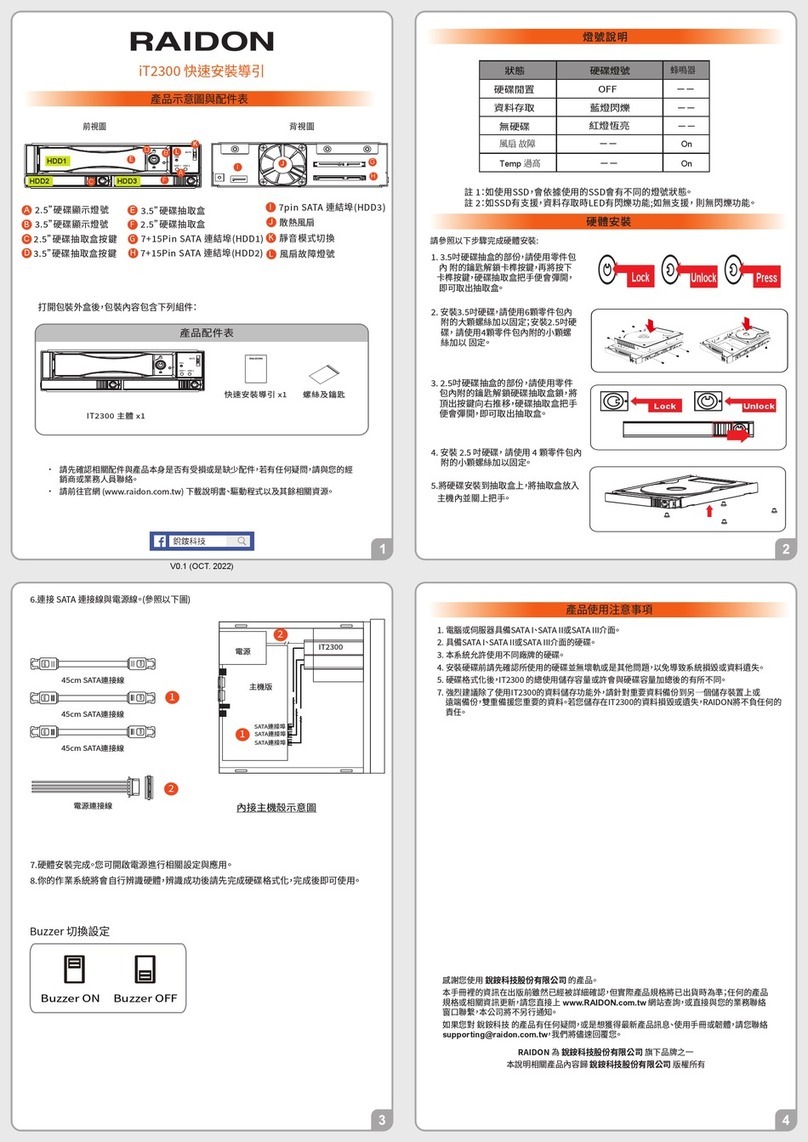
Raidon iT2300 Quick installation guide
National Instruments
National Instruments PXI-8186 user manual