manuals.online logo
Brands
  1. Home
  2. •
  3. Brands
  4. •
  5. artisan
  6. •
  7. Sewing Machine
  8. •
  9. artisan 880 User manual

artisan 880 User manual

Other artisan Sewing Machine manuals

artisan Toro 4500 Guide

artisan

artisan Toro 4500 Guide

artisan 4400RB Guide

artisan

artisan 4400RB Guide

artisan 797 ab series Guide

artisan

artisan 797 ab series Guide

artisan 1798-1 AZ User manual

artisan

artisan 1798-1 AZ User manual

artisan TK-117 User manual

artisan

artisan TK-117 User manual

artisan Toro-3200 BT Guide

artisan

artisan Toro-3200 BT Guide

artisan TORO 4011 LA-37 User manual

artisan

artisan TORO 4011 LA-37 User manual

artisan 1988-MDZ User manual

artisan

artisan 1988-MDZ User manual

artisan 8144-20 User manual

artisan

artisan 8144-20 User manual

artisan 2618-1B Instruction Manual

artisan

artisan 2618-1B Instruction Manual

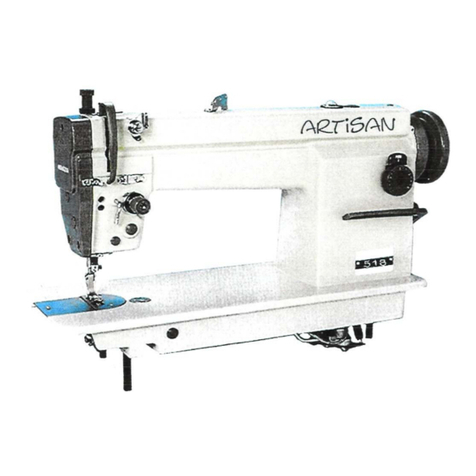
artisan 518 User manual

artisan

artisan 518 User manual

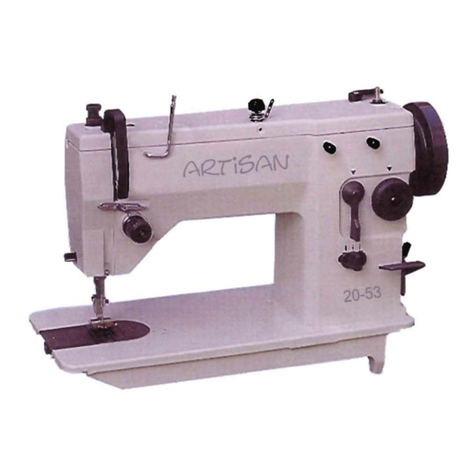
artisan 20-53 Guide

artisan

artisan 20-53 Guide

artisan 797 AB-800 User manual

artisan

artisan 797 AB-800 User manual

artisan 2698-1 User manual

artisan

artisan 2698-1 User manual

artisan TORO 3000 Guide

artisan

artisan TORO 3000 Guide

artisan 196 R-2 Guide

artisan

artisan 196 R-2 Guide

artisan VME-SIO4A User manual

artisan

artisan VME-SIO4A User manual

artisan Toro-4600 Product manual

artisan

artisan Toro-4600 Product manual

artisan 335 B User manual

artisan

artisan 335 B User manual

artisan WM217 Technical manual

artisan

artisan WM217 Technical manual

artisan TORO 2600 User manual

artisan

artisan TORO 2600 User manual

artisan 1797 AB Guide

artisan

artisan 1797 AB Guide

artisan 4618 Guide

artisan

artisan 4618 Guide

artisan 1508 H-10 User manual

artisan

artisan 1508 H-10 User manual

Popular Sewing Machine manuals by other brands

Brother PE-180D Service manual

Brother

Brother PE-180D Service manual

Singer 569U1100 Operator's guide

Singer

Singer 569U1100 Operator's guide

ELNA 2002 instruction manual

ELNA

ELNA 2002 instruction manual

Siruba DL7200D-NM1 Instruction book

Siruba

Siruba DL7200D-NM1 Instruction book

Silver Viscount 9500e instruction manual

Silver

Silver Viscount 9500e instruction manual

Pfaff 3588-05/020 instruction manual

Pfaff

Pfaff 3588-05/020 instruction manual

JUKI DDL-9000A instruction manual

JUKI

JUKI DDL-9000A instruction manual

Pfaff 284 Instruction book

Pfaff

Pfaff 284 Instruction book

Reliable MSK-335B Specification sheet

Reliable

Reliable MSK-335B Specification sheet

Kenmore 385. 19000 owner's manual

Kenmore

Kenmore 385. 19000 owner's manual

Brother FD4-B271 instruction manual

Brother

Brother FD4-B271 instruction manual

Brother Computerized Embroidery Machine Operation manual

Brother

Brother Computerized Embroidery Machine Operation manual

Husqvarna Viking Designer SE user guide

Husqvarna Viking

Husqvarna Viking Designer SE user guide

Singer 645 owner's manual

Singer

Singer 645 owner's manual

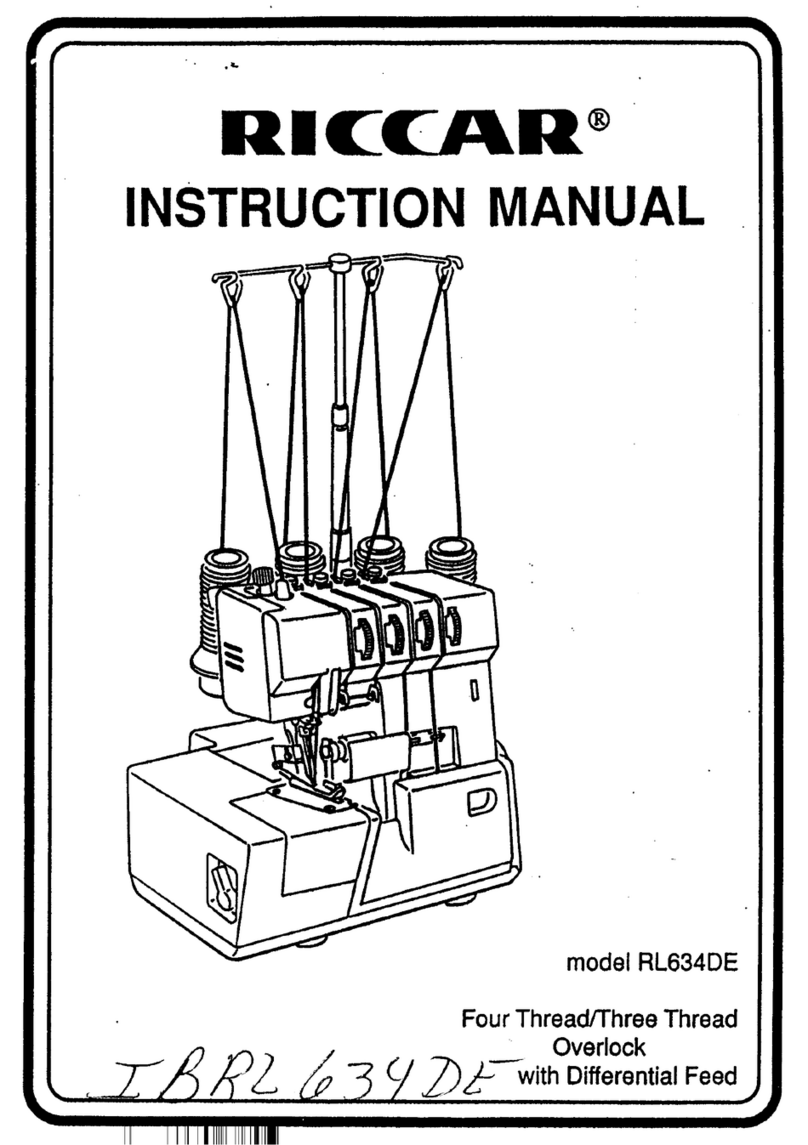
Riccar RL634DE user manual

Riccar

Riccar RL634DE user manual

ZOJE ZJ9800 Operation manual

ZOJE

ZOJE ZJ9800 Operation manual

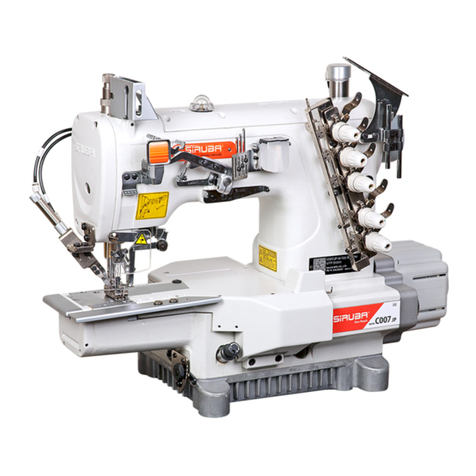
Siruba C007JP Instruction book

Siruba

Siruba C007JP Instruction book

IKEA SY user guide

IKEA

IKEA SY user guide

manuals.online logo
manuals.online logoBrands
  • About & Mission
  • Contact us
  • Privacy Policy
  • Terms and Conditions

Copyright 2025 Manuals.Online. All Rights Reserved.

MODEL
880
Pin
Point
(Saddle
Stitch)
Sewing
Machine,
2 Needle
Chainstitch
OPERATORS
and
SPARTS PARTS
Manual
-----
CONT
ENTS -----
1.
Pr
ec
auti
ons bef
ore
starting operation···········..·..·· ·..······.· , , 1
1) Safety
pr
ecautions
~
·······..· ··.· · 1
2)
Pr
ecaution before St
arting
Operation
·· ·..·· · ··..·..··..····..· · · ·..········· 1
3)
Pr
ecaution for Op
erating
Conditions··..·..·..· ·..· ····..·..·..···..·· ·..·..········ ·..····..··· 1
2. How to use the sewing machine ··..· ·..·..· ·..· · ·..·..·······..· · · · · ·..· · ·:·· 1
3)
Adjustment
of stitch length ···..· ·..···· ·..·2
4) Pressing for sewn goods··..·····..···· ·· · ······..·· ····..···..·..··..·..············· ····· ···..··..··..·..·2
6) Upper
thr
ead
tension ·..· ·..·..· · ·2
1) How to set the needle ·..· · ·..· · 1
2) How to
threading
· ·..·..··..··..·..·· ·..·..· · ········..···..·..·..·······..··········..···..··..·· ···· ·..··..·..1
5) Sewing condition 2
3. C
auti
on f
or
use to use the sewing machine ·· ·..· · ·····..·..·..· ·..·..· ·· ·..· ·· ·..3
1) Oiling·..······..···· · ·..··..· · · ·..·····..·· ···..··· ··..· · ····..·..· · · ·..3
2) Clean periodically in
accordanc
e with using frequ ency..····..·..·..······..·..···..· · ·..·· ··..· ··4
4. Outline of machine
adju
stment
..··· ·..·· · ·..·..·· ·· ·..· ·· ·..· · ··..··4
5)
Adjustment
of
thread
tension
sprin
g· · ·· ·····..· ·..·..·· ··..··· · · · · ···..··6
6)
Adjustment
of
thread
tightening..· ·..·· ··..· • ·..·..····..· ·· ··..·..·· ·..·· ·· ··7
I) Timing
of
needle
and
feed dog·..· ·..·..· • · · ·..·..···..·· ··..··..· 4
2)
Height
of
needle
bar·
· ····..···..·· ·..·..······..·..· · · ·..· ········..·..·..· ···· ·..·..· ·..4
3) How to fit needle
and
looper · · ·..·..·..· ··..·· ·· ··..· · ·..· · · ·· ····5
4) Adjustment of needle guide 6
5.
Parts
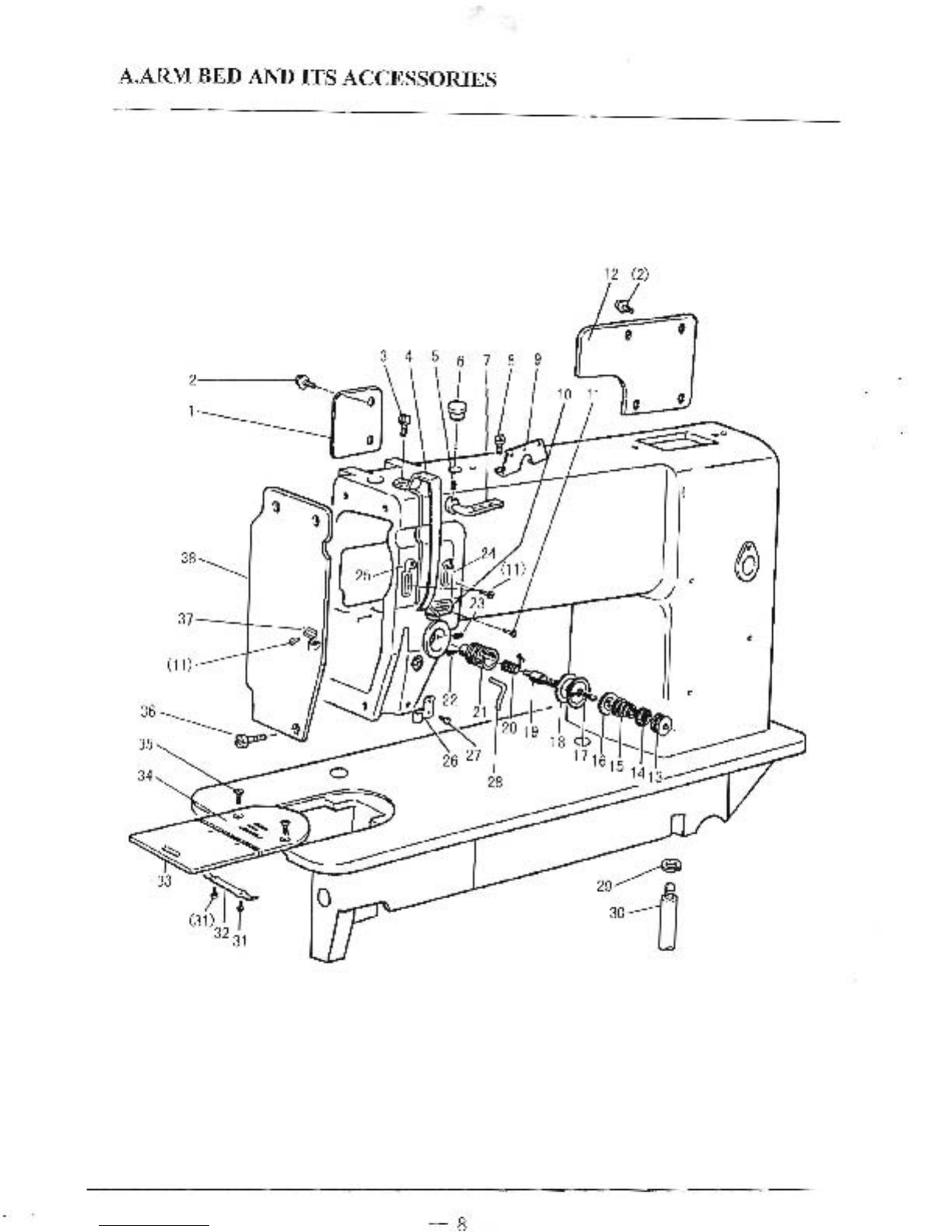
catalog ····..·..··..··..·..· ······· · · · ·..· ··8
A)
Arm
bed & Its accessories..· ·..·..·· ·..· · ·· · · ·..· · ·..· ·8
B) Sewing mechanism ······..··· ·· ·..····..···..···············10
E)
Pre
s
ser
foot mechanism ·..··..·..· · · ·..··18
G) Accessories..··..· ·..··..··..· ·..· ·..· ·..·· · · ···..·..·..·..··· ·· ·..·..·..· ·22
C) Feeding
and
feed lifting &
Lower
shaft
mechanism ..· ·..·..· · · · · · ·....·..···..13
D) Stitch
regulator
mechanism : ·..·..·..··..·· 16
F) Oil
lubrication
mechanism· ·..·· · ·..····· ··..·..·..· ··· · ··..·· ·· ·..·..·..·..··..· ·•·..···..20
1. Precautions before
staring
operation
1) Safety precautions:
() When turning the power on, keep
your
hands and fingers away from the area around/under the needle
and the area around the pulley.
(2) Power must be turned
off
when the machine is not in use, or when the operator leaves the seat.
(3) Power must be turned
off
when tilting the machine head, installing or removing the
"V"
belt, adjusting
the mach ine, or when replacing.
(4) Avoid placing fingers, hairs, bars etc., near the pulley,
"V
" belt, bobbin winder pulley, or motor when
the machine is in operation.
(5) Do not insert fingers into the thread take-up cover, under/around the needle, or pulley when the machine
is in operation.
(6) If a belt cover, fin
ger
guard, eye guard are installed, do not operate the machine without these safety
devices.
2) Precautions before
starting
operation:
(I)
If the machine's oil pan has an oil sump, never operate the machine before filling it.
(2) If the machine is lubricated by a drop oiler, never operate the machine before lubricating.
(3) When a new sewing machine is first turned on, verify the rotational direction
of
the pulley with the
power on. (The pulley should rotate counterclockwise when viewed from the pulley)
(4) Verify the voltage and (single or three) phase with those given on the machine nameplate.
3) Precautions for
operating
conditions:
I) Avoid using the machine at abnormally high temperatures
C3
5·C or
higher)
or low temperatures ( 5·C or
lower) .
2) Avoid using the machine in dusty conditions.
2. How to use the sewing machine
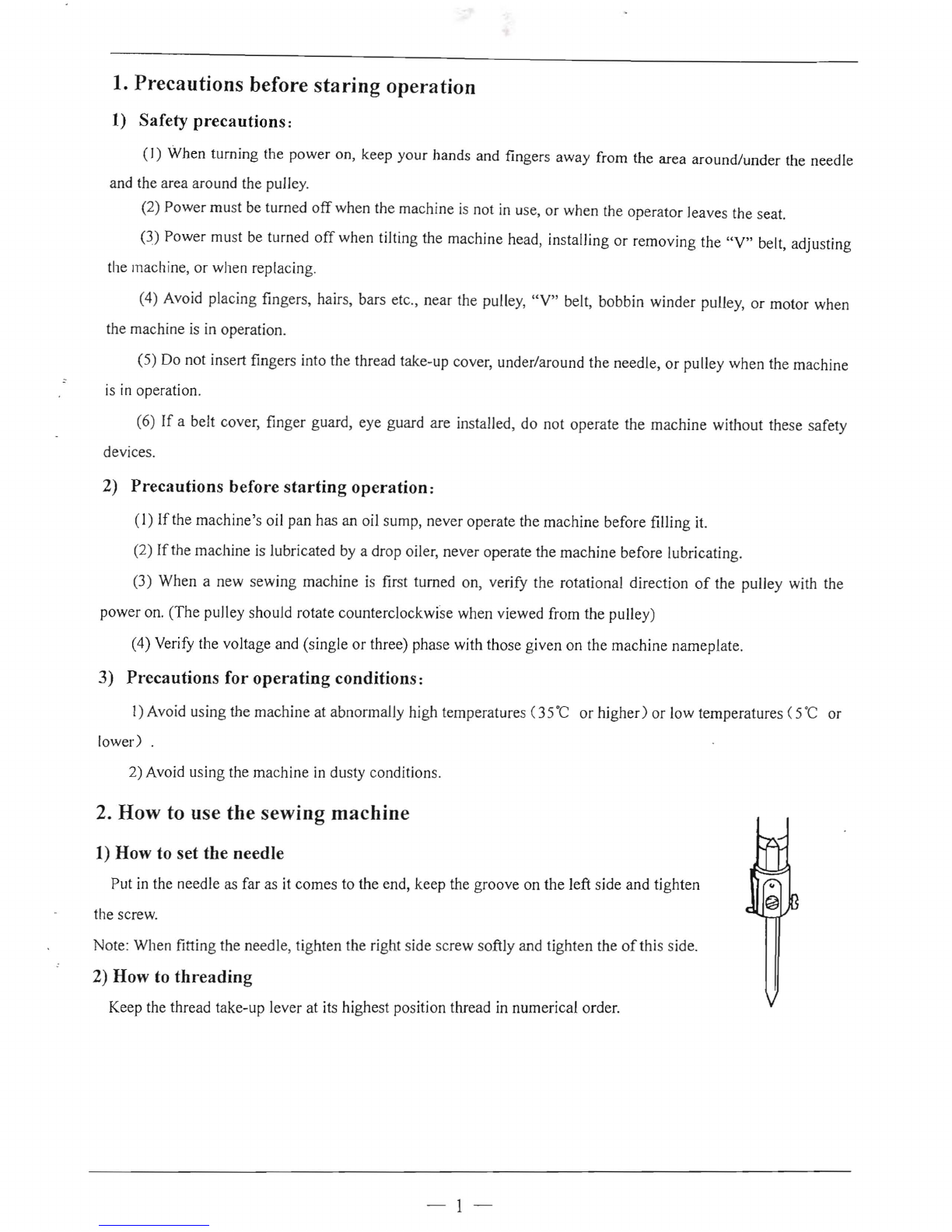
1) How to set the needle
Put in the needle as far as it comes to the end, keep the groove on the left side and tighten
the screw.
Note: When fitting the needle, tighten the right side screw softly and tighten the
of
this side.
2) How to
threading
Keep the thread take-up lever at its highest position thread in numerical order.
-1-
3) Adjustment of stitch length
Note: Whenyou make the stitch length small, turn the stitch length
dial.
4) Pressing for sewn goods
Presser
regulating
Standard pressure of the feed dog is obtained when the
thumb
.
scren
-
upper surface of the presser regulating thumb screw is in the
position approximately 20mm above the arm surface.
Jncrease the pressure by turning the pressure regulating
thumb screw, if the sewing cloth is skipped stitch due to the
hook needle catching a fiber of the cloth, or other reasons
depending on the state
of
the sewing cloth.
S) Sewing condition
Well-balanced good stitch.
6)
Upper
thread
tension
Adjust by turning the tension regulating thumb nut. In the case
of
garment sewing with special thread and
cloth, the upper thread tension is adjusted with the check spring tension and the working volume of the thread
take-upspring too.
-?
-
loose
Tens ion: r
egulating
t humb nut
3. Caution for use
1) Oiling
Before running, oil a proper quantity necessary at places marked arrow.
- -
-©
Plenty of drops, Scc
---0
5-6 drops
]
-2
drops
Oi I
with
one or two
drops
working
spots
-
·1
-
2) Clean periodically in accordance with using frequency
Remove the needle plate. Take
off
dust in the grooves
of
the feeder. As
for assembling
of
the needle plate, turn the screw 2 or 3 times with
your
hand and tighten it evenly with a long screwdriver.
Note: When fitting the needle plate, fit so that the needle might
come
to
the center
of
the hole
of
the needle plate.
4. Outline
of
machine adjustment
1) Timing
of
needle and feed dog
The height
of
feed dog from the needle plate to the top
of
feeder teeth
shall be approximately Imm. To adjust height
of
the feed dog, move the
feed
LIp
or down by loosening the screw (Fig.I). To adjust the trimming
of
the needle and feed dog properly, set the feed dial to
"8"
and make sure
that the top
pf
the parent needle enters approximately 0 to
lmm
from the
needle plate as illustrated in Fig.2, when the needle top is flush with the
need Ie plate after feeding has been completed.
If
the timing
of
the feed
dog is earlier, proper thread tension cannot be obtained and the sewing
cloth will get caught by the needle easily. To adjust the timing
of
the feed
dog,
LI
se the feed cam. To advance the timing, move the feed cam to the
near side by loosening the two feed cam set-screws
"A"
as illustrated in
Fig.3. To retard the timing, move the feed cam to the far side.
Fi g. 1
@
Fig.3
2) Height
of
needle bar
When the needle bar is at the top
Fig.4
dead point, a standard distance
(Fig.d, "B'') between the needle
plate is as given in the Table 1. Check the proper distance, since the thread
loop
of
the parent needle is changed depending on the type
of
the thread to
be used. To adjust the height
of
the needle bar, loosen the needle bar holder
set screw as illustrated in Fig.5.
N
eed
le
gauge
Size B
(mm
)
(m
m)
Tetoron
thread
Cotton
thre
ad
7.5-8
2
8~8
.
5 Table I
-
L1-
------------
3) How to fit needle and looper
(l)
When the large looper is in its advance end position, the
size between the side
of
the hook needle and the large looper slot
bottom (Fig.6, "C") shall be as given in Table 2. To adjust the
position
of
the large looper, loosen the tightening screw in the large
looper block as illustrated in Fig. 7. Table 2
------------
Size
C (rum)
Tetoron
thread
0-1
Cotton
thread
1-2
Fig
.6
(2) When the needle bar is at the lowest dead point, the distance between the large looper top and the side
of
the parent needle (Fig.S,"D'') shall be as given in Table 3. To adjust this distance, adjust the travel amount
(angle
of
the oscillating block) by changing the position
of
the tightening screw in the large looper adjusting arm
as illustrated in Fig.9. Decrease the travel amount, if the size
"0"
is excessive, or increase the travel amount if
the size
"0"
is insufficient. To decrease the travel amount, loosen the tightening screw with a spanner and move
the large looper adjusting arm so that it clears the large looper shaft. To increase the travel amount, move the
large looper adjusting arm so that it comes closer to the large looper
shaft. Since the travel position
of
the large looper (Fig.6,
"C')
and the
timing
of
the large looper to the needle well be changed by this
adjustment, align the needle with the looper while confirming the
proper timing. Table 3
Si
ze 0 (mm)
Tetoron
thr
ead
1
-2
Cotton
thread
3
-5
Fig
.8
Fig.9
~FU.~=t2-3mm
(3) When the top
of
the large looper is aligned with the center
of
the parent needle after the large looper has been advanced from its
back end position, the top
of
the large looper shall be 2 to
3mm
above
the upper end
of
the needle hole in the parent needle as illustrated in
Fig.Ill
.To adjust this position, loosen the setscrew
of
the large looper. Fig.10
-5-
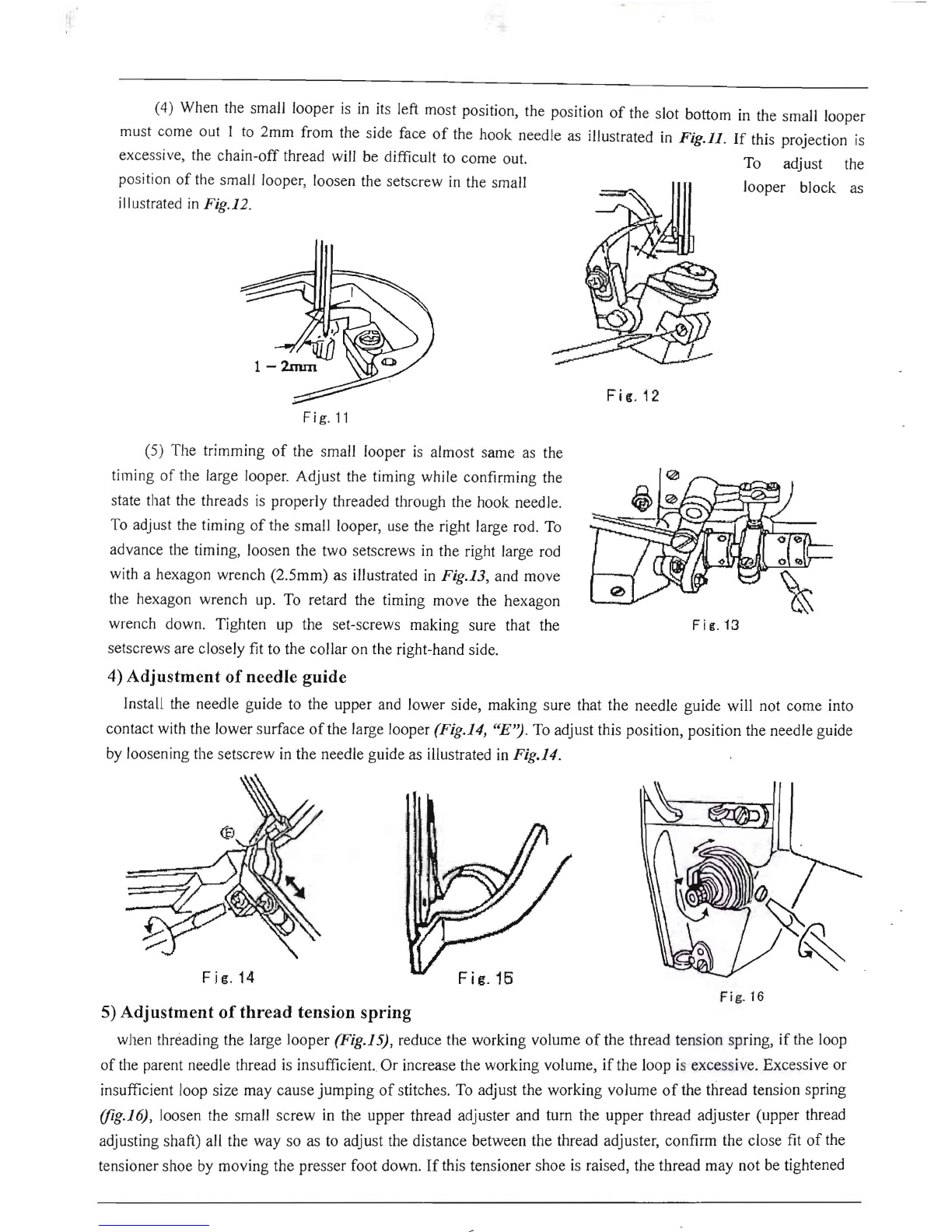
(4) When the small looper is in its left most position, the position
of
the slot bottom in the small looper
must come out I to 2mm from the side face
of
the hook needle as illustrated in
Flg.Ll
.
If
this projection is
excessive, the chain-off thread will be difficult to come out. To adjust the
position
of
the small looper, loosen the setscrew in the small looper block as
illustrated in
Fig.n.
Fig
,12
Fig.11
(5) The trimming
of
the small looper is almost same as the
timing
of
the large looper. Adjust the timing while confirming the
state that the threads is properly threaded through the hook needle.
To adjust the timing
of
the small looper, use the right large rod. To
advance the timing, loosen the two setscrews in the right large rod
with a hexagon wrench (2.5mm) as illustrated in Fig.13, and move
the hexagon wrench up. To retard the timing move the hexagon
wrench down . Tighten up the set-screws making sure that the
setscrews are closely fit to the collar on the right-hand side.
4)
Adjustment
of
needle guide
Install the needle guide to the upper and lower side, making sure that the needle guide will not come into
contact with the lower surface
of
the large looper (Fig.14,
"E")
. To adjust this position, position the needle guide
by loosening the setscrew in the needle guide as illustrated in Fig.14.
F j it. 13
I~l
Fig
.16
F j g. 14
Fig.16
5)
Adjustment
of
thread
tension
spring
when threading the large looper (Fig.IS}, reduce the working volume
of
the thread tension spring, if the loop
of
the parent needle thread is insufficient. Or increase the working volume, if the loop is excessive. Excessive or
insufficient loop size may cause
jumpin
g
of
stitches. To adjust the working v
olume
of
the thread tension spring
(fig.Iti), loosen the small screw in the upper thread adjuster and turn the upper thread adjuster (upper thread
adjusting shaft) all the
way
so as to adjust the distance between the thread adju
ster
, confirm the close fit
of
the
tensioner shoe by moving the presser foot down.
If
this tensioner shoe is raised, the thread may not be tightened

properly.
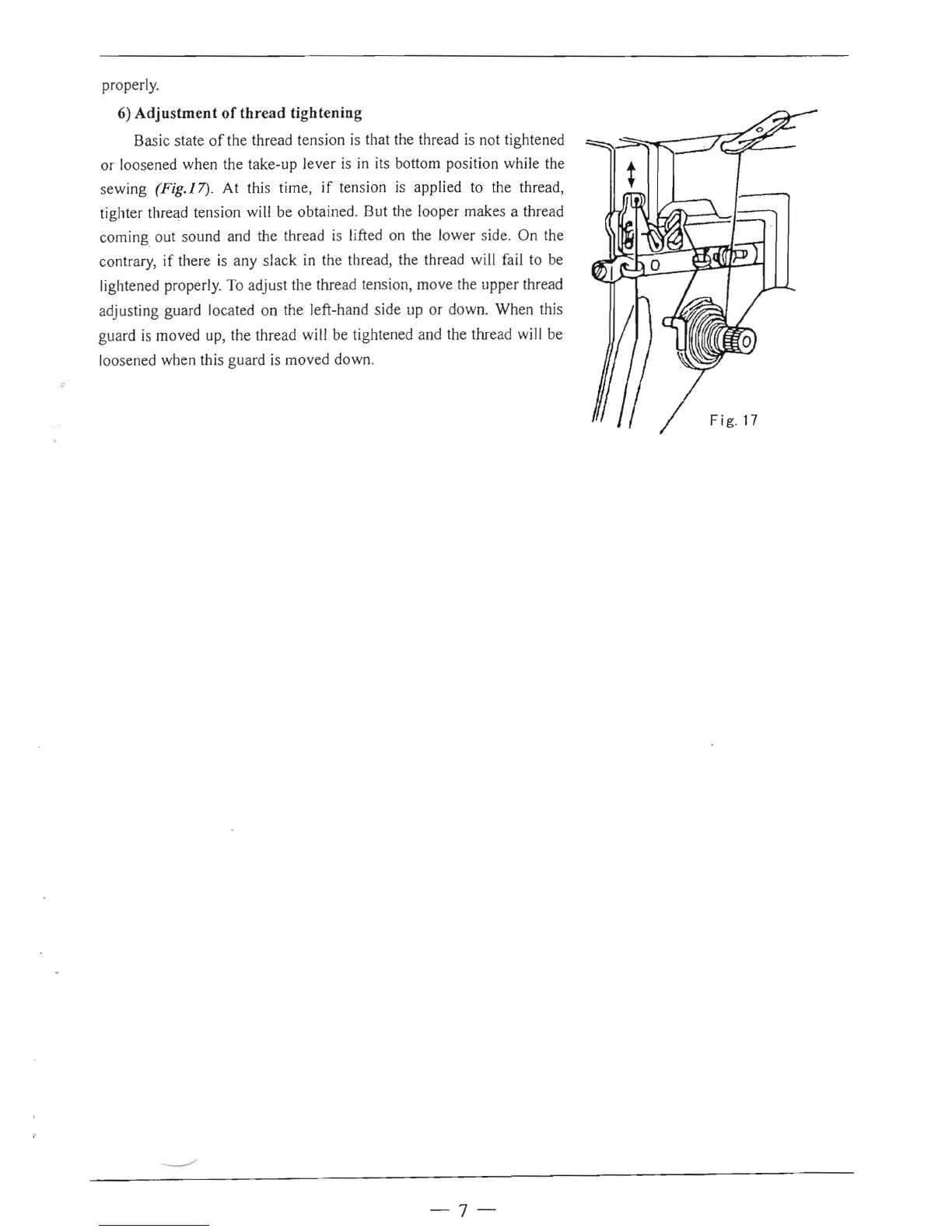
6) Adjustment
of
thread tightenin g
Basic state
of
the thread tension is that the thread is not tightened
or loosened when the take-up lever is in its bottom position while the
sewing (Fig.I7). At this time, if tension is applied to the thread,
tighter thread tension will be obtained. But the looper makes a thread
coming out sound and the thread is lifted on the lower side. On the
contrary, if there is any slack in the thread, the thread will fail to be
lightened properly. To adjust the thread tension, move the upper thread
adjusting guard located on the left-hand side up or down. When this
guard is moved up, the thread will be tightened and the thread will be
loosened when this guard is moved down.
Fi g. 17
-7-