6
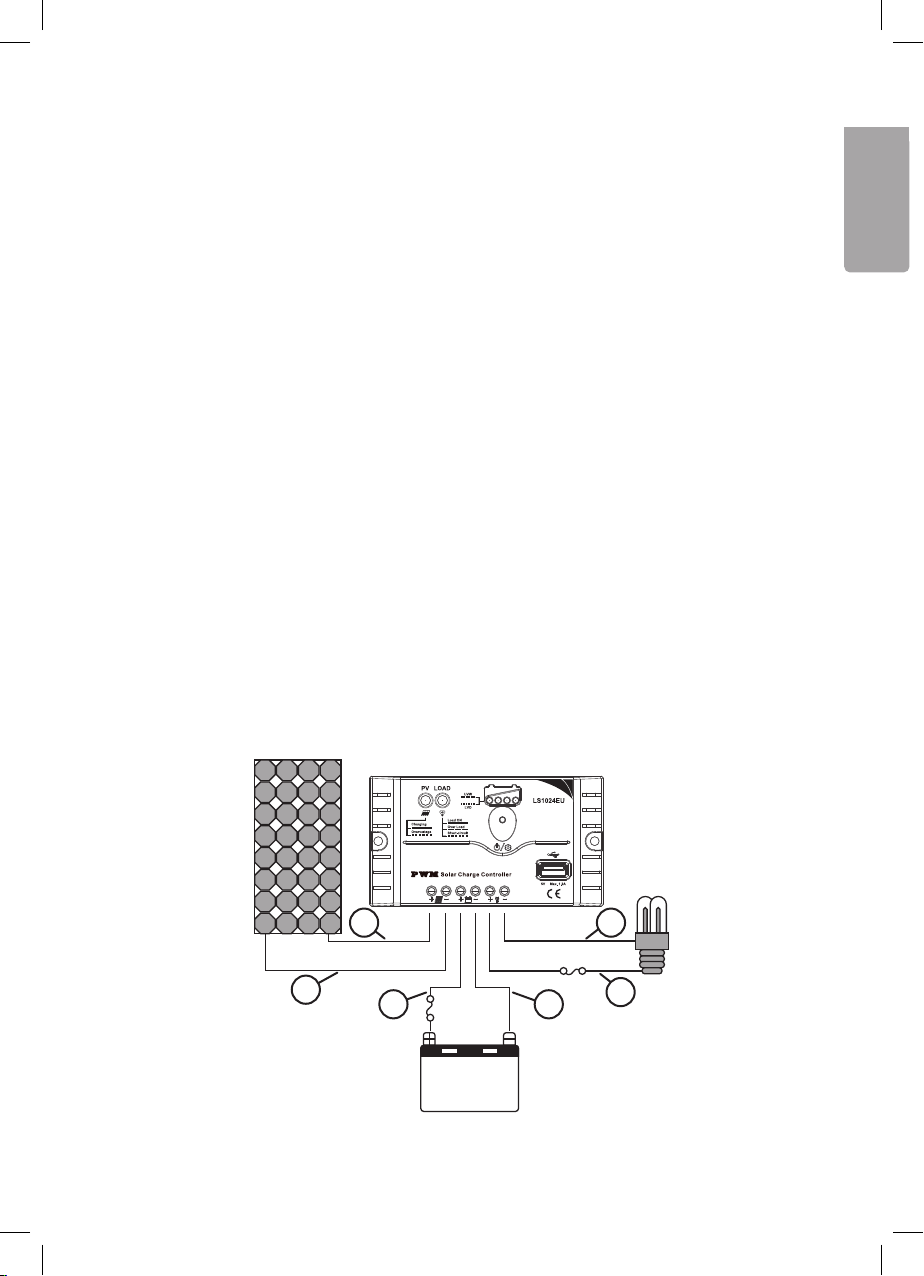
1. Install thecontroller on adry, flat and heatproof surface.
2. Connect thecables (aand b) from theconnections on thecontroller (11) to
thepositive (+) and negative (–) terminals of thebattery. Protect thebattery by
installing afuse close to thepositive terminal. Never use afuse with agreater
current rating than thecurrent rating of thecontroller (10A).
3. Connect thecables (c and d) from thesolar panel to theconnections on
thecontroller (10) observing thecorrect polarity. Cover thesolar panels when
connecting thecables to prevent sparking.
4. Connect thecables (e and f) from theconnections on thecontroller (12) to aload
device, observing thecorrect polarity. Turn off all load devices when connecting
thecables to prevent sparking. Never use more current than therated charging
current of thecontroller (10 A). Install afuse on thepositive (+) side of theload
device connection. Never use afuse with agreater current rating than thecurrent
rating of thecontroller (10A).
Operation
Switching on/off
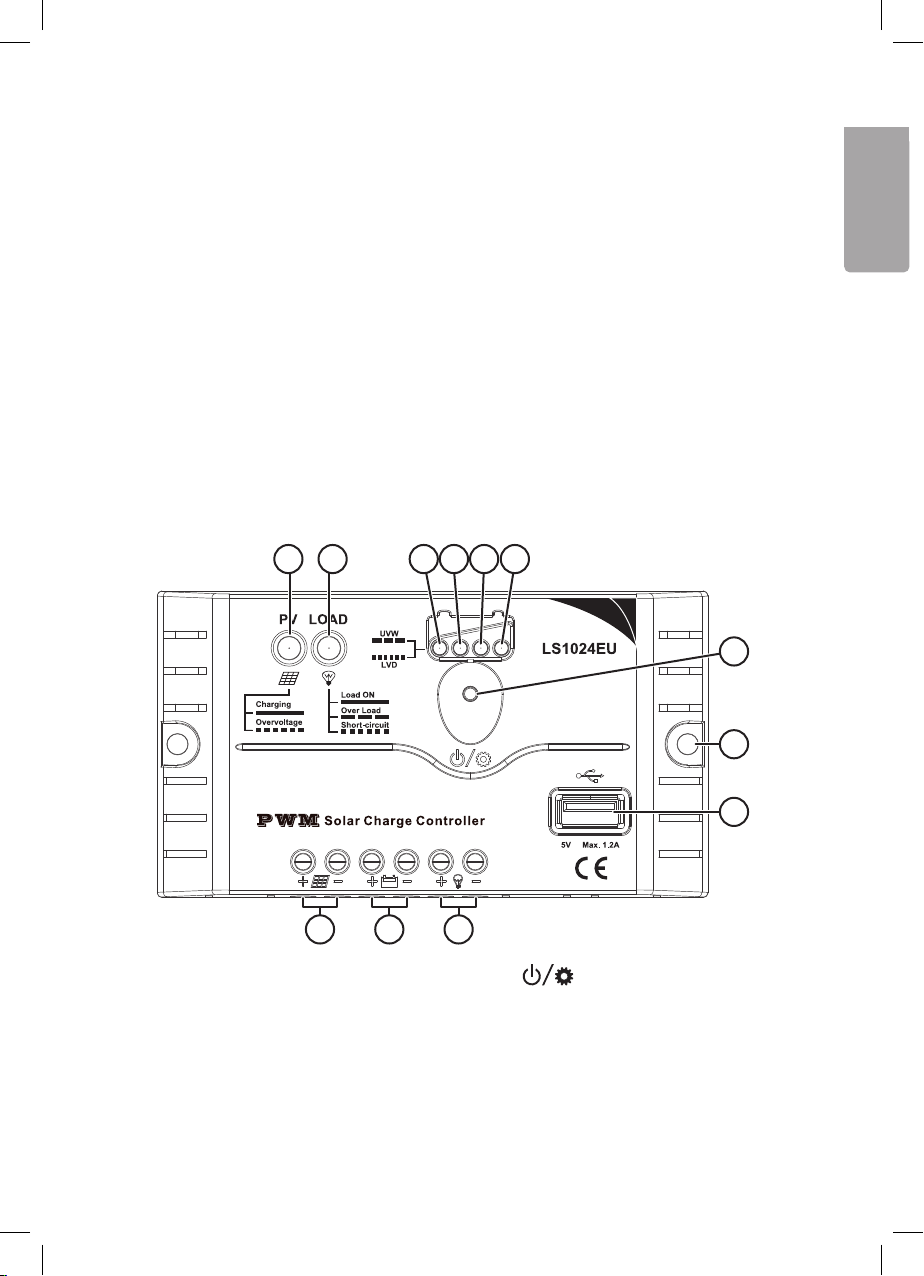
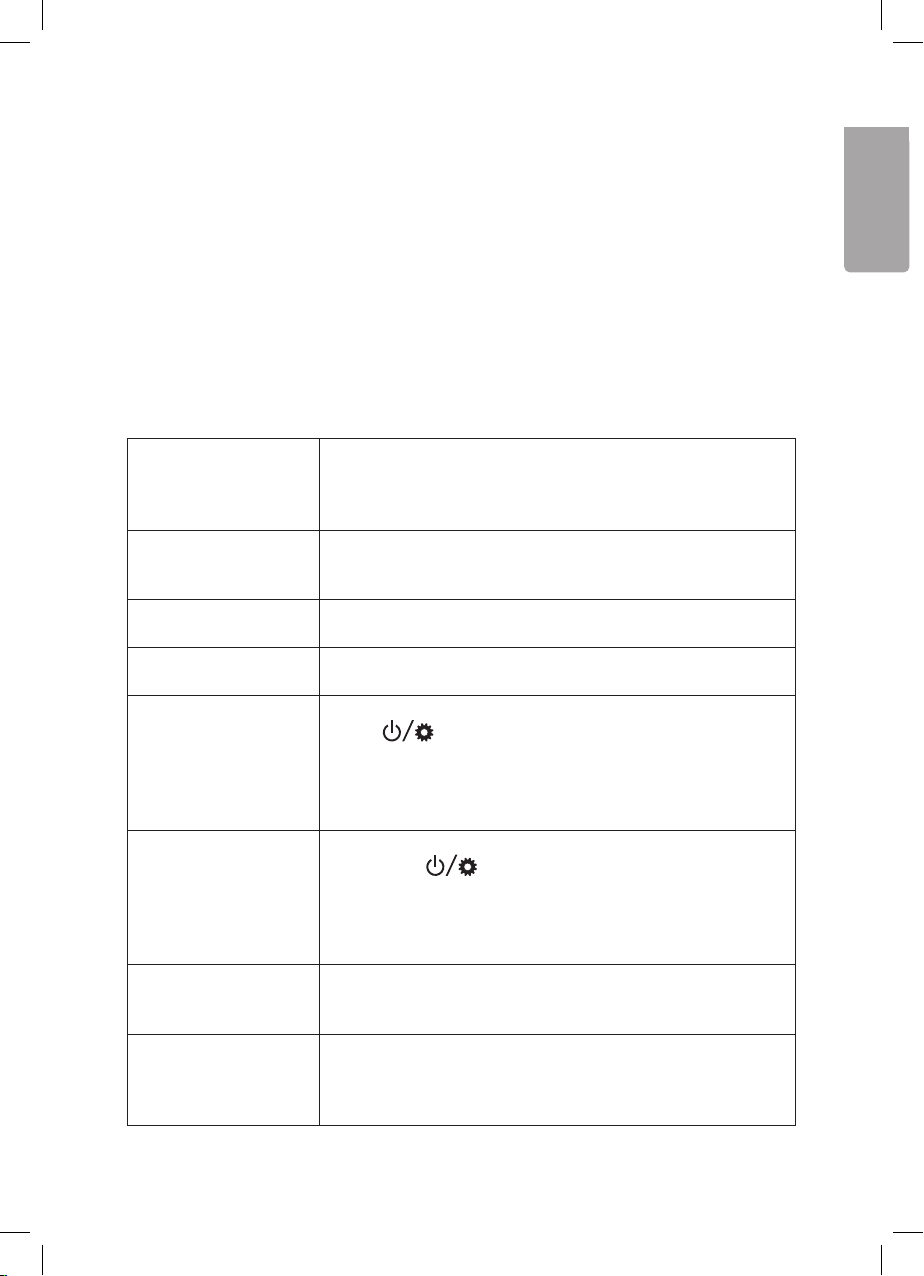
1. Switch theload output on by pressing [ ] (7).
2. Press thesame button again to switch off thecurrent to theload device.
Setting thebattery type
1. Hold in [ ] for more than 5 seconds. The LED indicator/s will begin flashing
displaying the last battery setting.
2. Use short presses to toggle to your current battery type.
3. Wait 5 sec until the LED display pattern becomes solid and corresponds to your
current battery type. Settings are now complete.
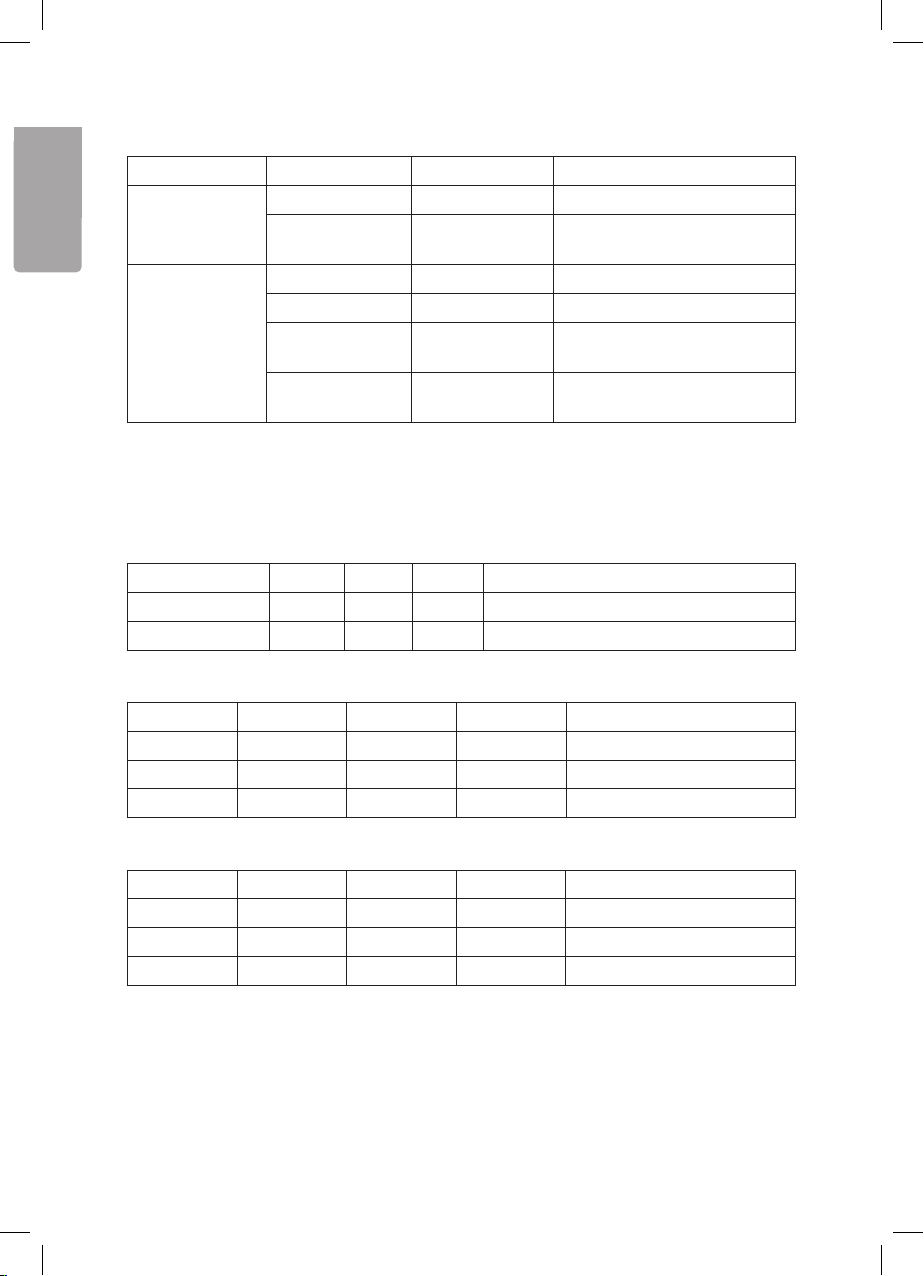
LED 1 LED 2 LED 3 Battery type
On Off Off Sealed lead-acid battery
On On Off GEL/AGM battery
On On On Flooded lead-acid battery
Safety features
Overloading and short-circuiting
Thecontroller has abuilt-in electronic safety feature which cuts off thecurrent to
theload device outputs in theevent of anoverload or short circuit in theload device.
In order to restart thecontroller following anoverload/short circuit, first disconnect
theload device and then press the [ ] button.
Note: In some cases it might be necessary to disconnect both thebattery and
thesolar panel from thecontroller to ensure that it is completely de-energized
before being able to restart it after it has been overloaded.