TECHNICAL DESC RIPTION
The cartridge
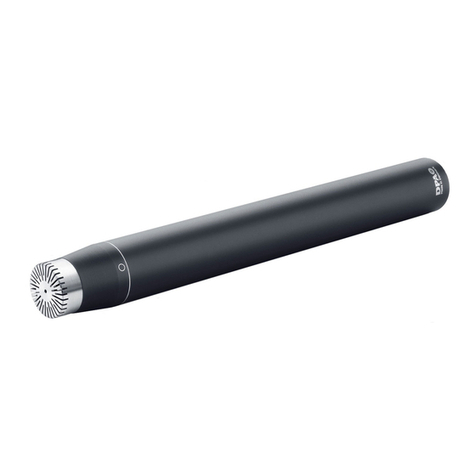
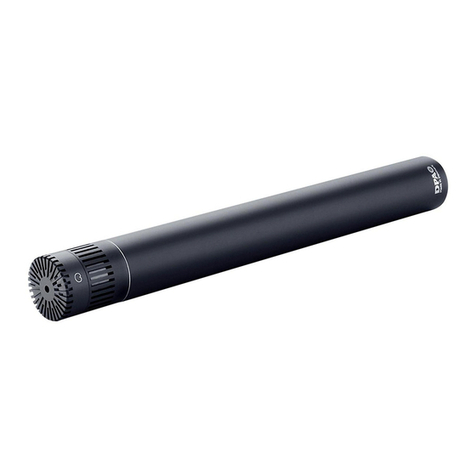
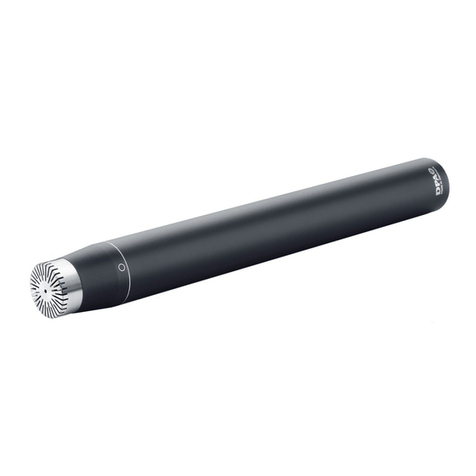
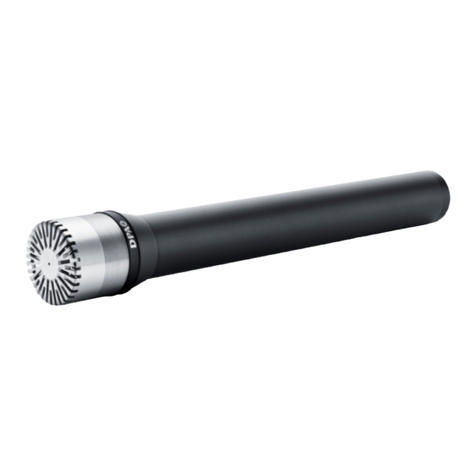
Directional microphones Type 4011, 4012, 4015 and 4016 use a
19mm diameter prepolarized pressure gradient condenser-micro-
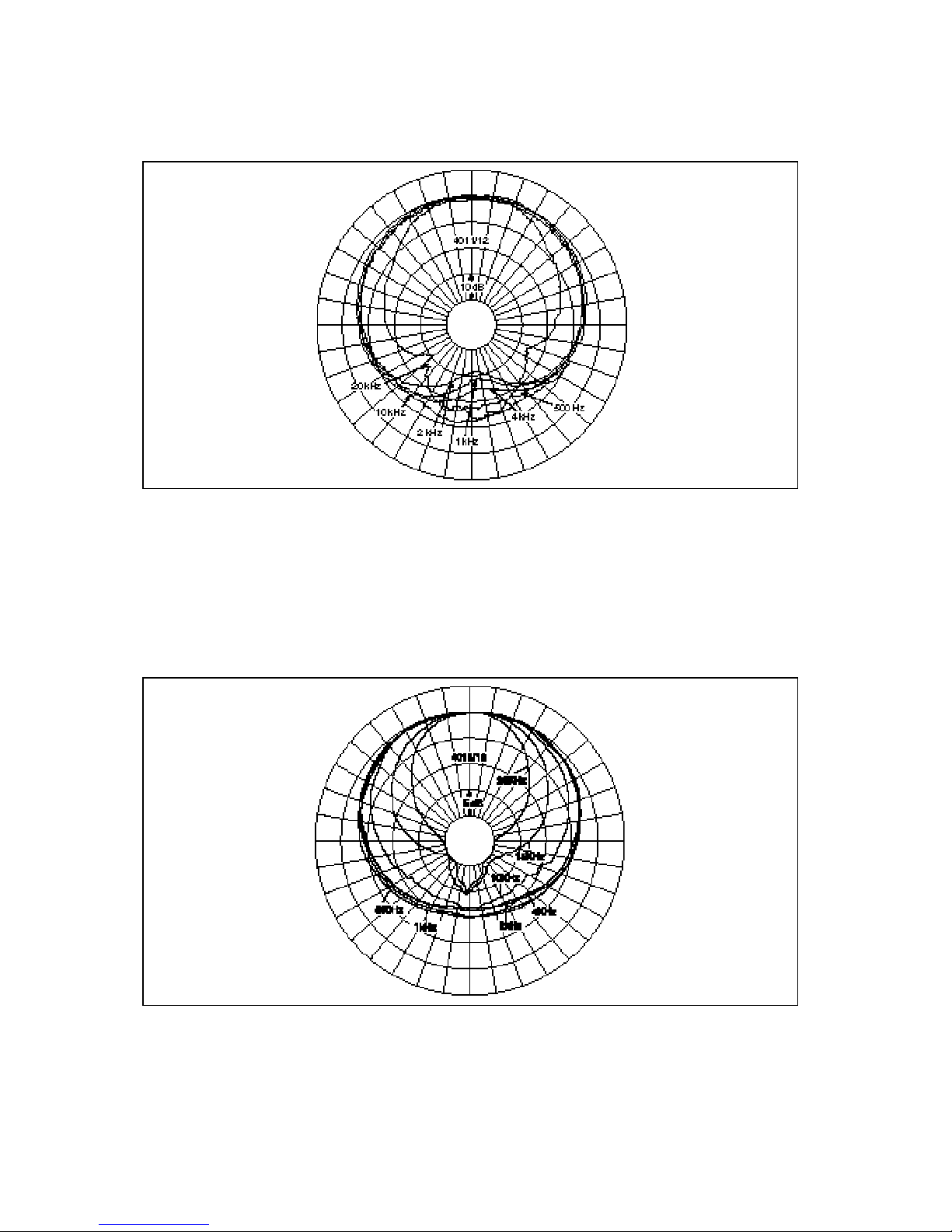
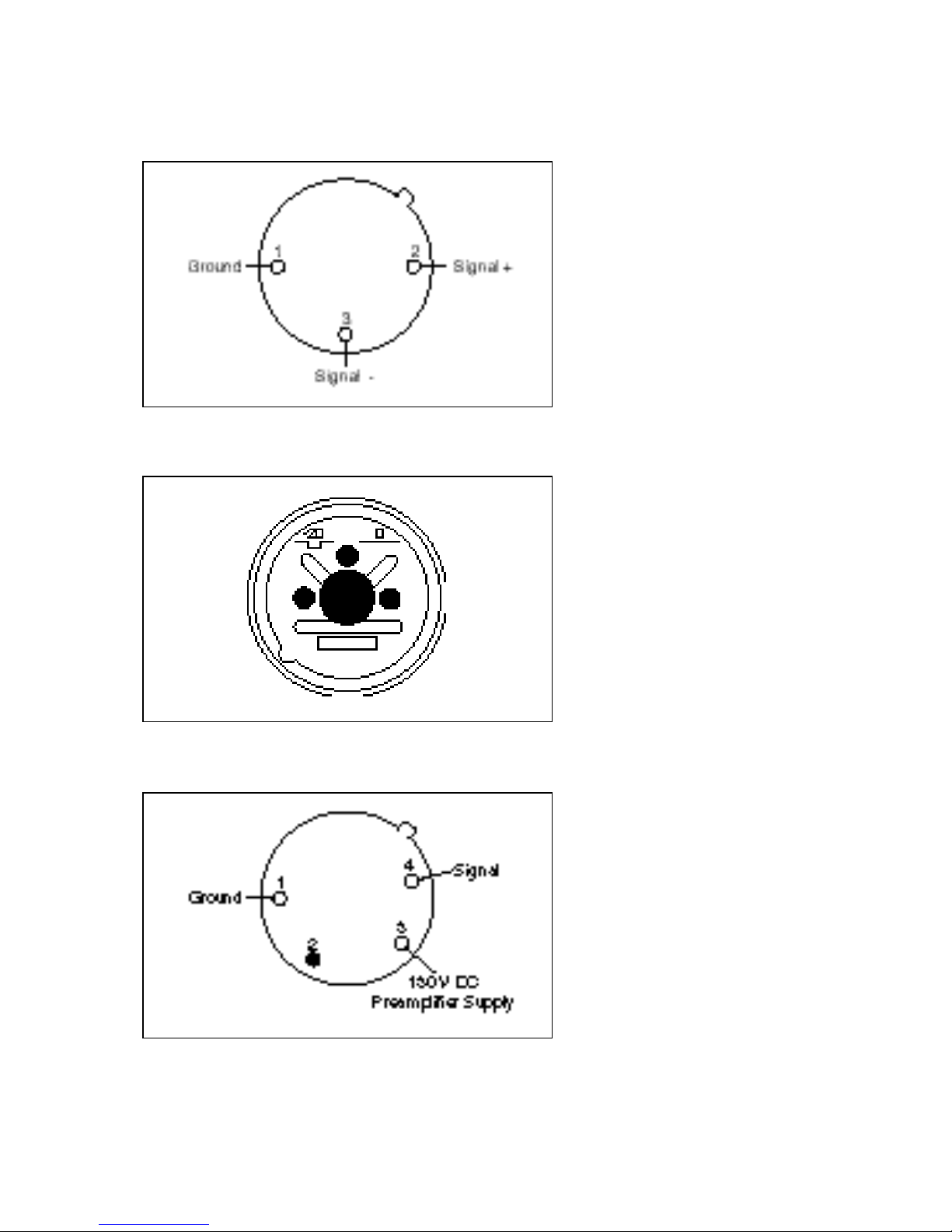
phone cartridge. Type 4011 and 4012 offer a first order cardioid
pick-up pattern, the Type 4015 and 4016 offer a wide cardioid pat-
tern (see Fig. 1 & 2). The diaphragm is highly resistant to the most
aggressive kinds of humidity. The large spacing between the
diaphragm and the back plate in this cartridge makes the micro-
phone highly insensitive to temperature influence and allows
greater SPL handling before clipping occurs.
Type 4011 and 4012 are designed to have a linear on-axis response
from 40Hz to 20kHz (±2dB) measured at 30cm (see Fig. 3). Type
4015 and 4016 are designed to have a linear on-axis response from
40Hz (±2dB) to 20kHz (+3/-1dB) measured at 60cm (see Fig. 4) and
are furthermore intentionally calibrated with a slight high-frequency
soft boost.
Great attention has also been paid to the microphone’s off-axis
performance during the design process (see Fig. 3 & 4).
The diaphragm is protected from dust by an acoustically transparent
net behind the front protection grid and inside the back port of the
cartridge. For optimum stability the microphone cartridge has
undergone a special pre-aging process, which stabilizes all tensions
in the materials as well as the polarization voltage.
The preamplifiers
Types 4011, 4012, 4015 and 4016 use the same high quality pres-
sure gradient capsule, but differ in their polar patterns and preampli-
fier powering systems. The 4011 and 4015 are 48V phantom pow-
ered, whereas the 4012 and 4016 are powered with 130V via the
DPA Type HMA4000 High-Voltage Microphone Amplifier.
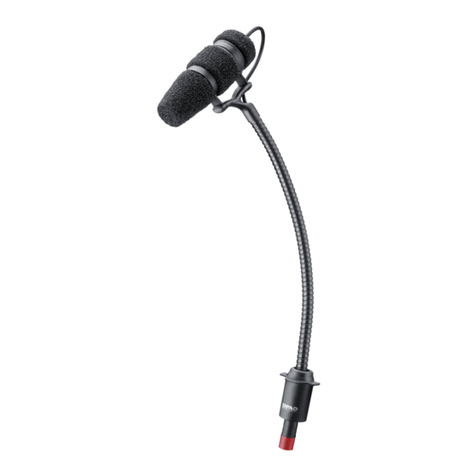
The 4011 and 4015 are powered via a standard P48 system and are
equipped with standard 3-pin XLR-connector (see Fig. 5 for pin
designation). They feature a 20 dB attenuator push-switch built into
the connector (see Fig. 6). When the button is pushed in, the output
is attenuated 20 dB. The attenuation allows the microphones to be
used for close-miking high SPL sound sources without overloading
the console input amplifier from the output of the microphone.
2