manuals.online logo
Brands
  1. Home
  2. •
  3. Brands
  4. •
  5. Earthworks
  6. •
  7. Microphone
  8. •
  9. Earthworks CMK4 CloseMic Kit User manual

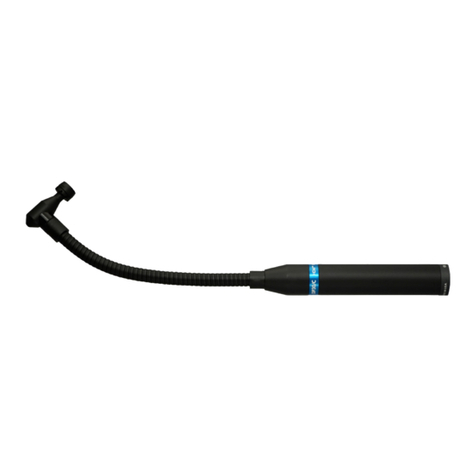
Earthworks CMK4 CloseMic Kit User manual

Other manuals for CMK4 CloseMic Kit

1

This manual suits for next models

2

Other Earthworks Microphone manuals

Earthworks SR77 User manual

Earthworks

Earthworks SR77 User manual

Earthworks M23 User manual

Earthworks

Earthworks M23 User manual

Earthworks SR20 User manual

Earthworks

Earthworks SR20 User manual

Earthworks QTC Series User manual

Earthworks

Earthworks QTC Series User manual

Earthworks DP30C User manual

Earthworks

Earthworks DP30C User manual

Earthworks QTC40 User manual

Earthworks

Earthworks QTC40 User manual

Earthworks SR20LS Cardioid User manual

Earthworks

Earthworks SR20LS Cardioid User manual

Earthworks P30 User manual

Earthworks

Earthworks P30 User manual

Earthworks CTB30 User manual

Earthworks

Earthworks CTB30 User manual

Earthworks SR20 Instruction Manual

Earthworks

Earthworks SR20 Instruction Manual

Earthworks SR69 User manual

Earthworks

Earthworks SR69 User manual

Earthworks TC20 User manual

Earthworks

Earthworks TC20 User manual

Earthworks SR30 User manual

Earthworks

Earthworks SR30 User manual

Earthworks M30BX User manual

Earthworks

Earthworks M30BX User manual

Earthworks SR40/HC User manual

Earthworks

Earthworks SR40/HC User manual

Earthworks ICON PRO User manual

Earthworks

Earthworks ICON PRO User manual

Earthworks QTC30 User manual

Earthworks

Earthworks QTC30 User manual

Earthworks M30BX User manual

Earthworks

Earthworks M30BX User manual

Earthworks QTC30 User manual

Earthworks

Earthworks QTC30 User manual

Earthworks TC25 User manual

Earthworks

Earthworks TC25 User manual

Earthworks P30/HC User manual

Earthworks

Earthworks P30/HC User manual

Earthworks SR40V User manual

Earthworks

Earthworks SR40V User manual

Earthworks TC25 User manual

Earthworks

Earthworks TC25 User manual

Earthworks M50 User manual

Earthworks

Earthworks M50 User manual

Popular Microphone manuals by other brands

Betzold 760932 operating instructions

Betzold

Betzold 760932 operating instructions

Shure A88SM user guide

Shure

Shure A88SM user guide

JTS UF-10TH/12 instruction manual

JTS

JTS UF-10TH/12 instruction manual

Shure BETA 58A User giude

Shure

Shure BETA 58A User giude

Shure SM7 user guide

Shure

Shure SM7 user guide

Sony ECM-Z200 Service manual

Sony

Sony ECM-Z200 Service manual

Electro-Voice 652 engineering data

Electro-Voice

Electro-Voice 652 engineering data

mantona 21150 instruction manual

mantona

mantona 21150 instruction manual

Loewe We. SEE 55 user manual

Loewe

Loewe We. SEE 55 user manual

IK Multimedia iRig Stream MIC PRO user manual

IK Multimedia

IK Multimedia iRig Stream MIC PRO user manual

DAPAudio RM-101 user manual

DAPAudio

DAPAudio RM-101 user manual

AKG CHM 21 User instructions

AKG

AKG CHM 21 User instructions

Sennheiser evolution wireless series EM 100 instruction manual

Sennheiser

Sennheiser evolution wireless series EM 100 instruction manual

Sony C-48 operating instructions

Sony

Sony C-48 operating instructions

GIGAMEDIA GGM PAMICUHFG user manual

GIGAMEDIA

GIGAMEDIA GGM PAMICUHFG user manual

Shure WH30TQG user guide

Shure

Shure WH30TQG user guide

auna PRO MIC-900 manual

auna PRO

auna PRO MIC-900 manual

Shure MV51 manual

Shure

Shure MV51 manual

manuals.online logo
manuals.online logoBrands
  • About & Mission
  • Contact us
  • Privacy Policy
  • Terms and Conditions

Copyright 2025 Manuals.Online. All Rights Reserved.

CMK4
CMK5
User’s Guide
CloseMic™ Kit
Congratulations on your purchase of the Earthworks®CMK4 or CMK5 kit of
DM20 DrumMic™ Tom & Snare Microphones. When using these microphones
on your toms and snare, you will hear more detail in the attack in addition to
hearing subtle details that cannot be heard when using conventional micro-
phones. You will walk into a whole new world of pristine drum sound using the
DM20 DrumMic™ High Denition Microphones™. After reading this manual,
if you have any unanswered questions, please email or phone us using the
contact information on the back cover of this manual.
First, identify all the items that came in your CMK4 or CMK5 kit to verify
that you have received everything listed below.
CMK4 CloseMic™ Kit CMK5 CloseMic™ Kit
4 – DM20s for Toms & Snare 5 – DM20s for Toms & Snare
4 – RM1 RimMount™ for DM20s 5 – RM1 RimMount™ for DM20s
4 – PW1 Foam Windscreens 5 – PW1 Foam Windscreens
1 – High Impact Carrying Case 1 – High Impact Carrying Case
with custom foam insert with custom foam insert
1 – Users Manual 1 – Users Manual
IMPORTANT NOTICE - Please Read This
The DM20’s High SPL Handling and Lower Output Level
The DM20 has been designed for close miking toms and snares with high SPL
handling of 150dB and a reduced output level. In most cases the DM20 will
not require the use of a pad to prevent overloading the input of outboard mi-
crophone preamps, or the mic preamp inputs on mixers, consoles or computer
audio interfaces. The majority of these units will accommodate high microphone
levels at the preamp input without distortion. However, the more sensitive units
will not handle high mic levels at the preamp input will require the use of a pad
to prevent the preamp from distorting. We encourage you to check the speci-
cations of your preamp, mixer, console or computer audio interface to verify that
the microphone preamp input will accommodate high levels of approximately
+20dBV.
Different Types of Preamp Input Pads
Some outboard preampliers, mixers or consoles may have a built-in mic preamp
pad that can be switched in or out. However, on some models these pads are
not attenuators that precede the preamplier input and just reduce the gain of the
preamplier itself. Unless these preampliers will handle a high input level (i.e.
1
Version 1, August 15, 2017
2
+20dBV) these so-called pads will typically provide no preamp input overload
protection from microphones with high output levels (see Fig. 1-A). Some out-
board preamps, mixers, consoles or computer audio interfaces have actual pads
that precede the preamplier input. These types of pads will provide preamp input
overload protection that is needed (see Fig. 1-B). Such pads will typically provide
–10dB or –20dB attenuation. If an external XLR type mic pad is needed, Earth-
works offers a LevelPad™ which provides -20dB of attenuation and is simply
plugged into the microphone cable. The DM20’s lower output level, in most cases,
should not require an external pad when close-miking toms or snares.
Earthworks Drum Mics
The Earthworks DrumKit™ High Denition Three-Microphone Systems™ have
had great success because they pick up drum sounds with far more detail and
accuracy than conventional microphones. This improved sound quality is due to
Earthworks® advanced proprietary technologies.
Many drummers such as Jeff Campitelli with Joe Satriani, Steve Gadd, Keith
Carlock, Ronnie Vannucci, Anton Fig, Anthony King and many top FOH engi-
neers touring with major artists are using Earthworks High Denition Drum Mi-
crophones™ for overheads, toms, snare and kick drum with exceptional results.
The DM20 is a new generation of Earthworks tom and snare microphones. It
features a stable gooseneck for easy positioning that will stay in place even
when the drums are played very hard. It also can handle high acoustic sound
levels up to 150dB SPL. The Earthworks proprietary polar technology pro-
vides a stunning amount of rear rejection and a frequency response out to
80 degrees off-axis within 3dB of the on-axis response. This vastly reduces
phase cancellations, minimizes the pickup of unwanted sounds at the rear of
the microphone and provides significantly more gain before feedback for live
sound applications.
AB
Figure 1-A and 1-B Types of Preamp Input Pads
This so-called pad, is not really a pad,
it only changes the gain of the preamp,
and may not prevent overload of the
preamp input.
This is an actual microphone preamp
pad, which is an attenuator that will
reduce level prior to the preamp input.
3
Earthworks High Definition Microphones™
the New Science in Microphones
David Blackmer, the brilliant engineer who invented the innovative technol-
ogies of dbx, is also the inventor and founder of Earthworks. In the last few
years of his life, David developed a number of revolutionary technologies that
dramatically improve the sound quality and performance of microphones. In
short, Earthworks High Definition Microphones™ pick up sounds more accu-
rately and with more detail than conventional microphones. These dramatic
improvements are in the areas of impulse response, diaphragm settling time
and advanced polar technologies. Those who have heard Earthworks High
Definition Microphones™ say they have more rear rejection and more gain
before feedback in addition to hearing more detail of the attack, more subtle
detail from low level signals thereby providing a more pristine sound quality
than with any conventional microphones can provide, regardless of price.
Miking Drums
There are many ways to mic drums and it seems that most every recording or live
sound engineer has their own way of doing this. Our objective is not to indicate
which drum miking approach is better, but to make suggestions and look at ad-
vantages and disadvantages of each. Every engineer or producer uses their own
methods to obtain the results they desire, and that’s what matters.
Multi-microphone Method
The objective in multi-microphone drum miking is to place a separate micro-
phone on most or all the elements of a drum set. Typically, separate mics are
used on snare, toms, hi-hat and kick drum, along with one or two overhead
microphones. The overhead mics pick up the overall sound of the drum set
including cymbals (which are typically not miked separately). By this method,
the mixing engineer can control the level, and signal processing (limiting, EQ,
etc.) for each element of the drum set (toms, snare, hi-hat, etc.). This provides
a great deal of control over the sound of the entire drum set and allows bring-
ing out certain patterns on hi-hat, snare, etc. Multi-miked drums are desirable
for live sound, providing more control and increased gain before feedback,
and when recording in a large room with high ambient sound this reduces the
amount of unwanted room sound and provides greater control of the drum mix.
Earthworks Near-Perfect Polar Response
One of Earthwork’s proprietary technologies is near-perfect polar response
i.e. very uniform response over the front 160º of the microphone. Conventional
microphones (even expensive ones) have a loss of high frequencies at the
sides of the microphone. Have you ever tried to put three singers on a single

directional microphone? The singer at the front of the mic sounds great, but
the two on the sides of the microphone sound muffled due to the lack of high
frequency pickup at the sides of the microphone. In contrast, the Earthworks
proprietary polar technology provides virtually the same frequency response
on the sides of the microphone as at the front with no more than a 3dB loss at
any specified frequency out to 80º off-axis). This extremely uniform frequency
response at the front and sides of the microphone dramatically reduces phasing
issues when using Earthworks microphones. Refer to Figure 2 A & B to see
how uniform the Earthworks microphone (A) polar response is, in comparison
to the conventional microphone (B).
Nearly Twice the Amount of Rear Rejection
Another disadvantage of the multi-microphone approach is picking up the un-
wanted sound of other elements of the drum set from the rear of each micro-
phone. Earthworks cardioid microphones have a very high rejection of sounds
at the rear of the microphone. This greatly reduces the leakage of cymbals
or other drum sounds at the rear of Earthworks microphones. Convention-
al microphones provide only 18dB of rear rejection, while Earthworks micro-
phones with 32dB of rear rejection provide nearly twice the amount of rejection
of conventional microphones. The Earthworks drum mics will nearly eliminate
any leakage present at the rear of the microphone. Figure 3 shows conven-
tional drum microphones with 18dB of rear rejection and Figure 4 shows the
Earthworks drum microphones with 32dB of rear rejection.
4
A
DM20 Polar Conventional Polar
Earthworks SR30 Cardioid
500
1K
2K
4K
8K
15K
Competitive Cardioid
500
2K
15K
10K
1K
20K
5K
500
1K
2K
4K
8K
15
B
Within 3dB
500Hz to
16kHz
Within 12dB
500Hz to
15kHz &
Within18dB
to 20kHz
Figure 2-A & 2-B Earthworks vs. Conventional Polar Response
5
Figure 3 18dB of Rear Rejection Using Conventional Drum Mics
Competitive
Microphones
Approx 18dB
Rear Rejection
Figure 4 32dB of Rear Rejection Using Earthworks Drum Mics
Earthworks
Microphones
Approx 32dB
Rear Rejection
6
Close Miking Toms and Snares with the
DM20 DrumMic™ Microphones
Inserting the DM20 Microphone into the RM1 RimMount
The RM1 is designed specifically for the DM20 allowing you to mount the mi-
crophone on the side of a tom or snare. The RM1 can also be used on the top
or bottom of a tom or snare.
It is suggested that you insert the DM20 microphone into the RM1 RimMount™
prior to attaching the RimMount™ to the drum.
To insert the DM20 microphone into the RM1 just place the mic head and the
gooseneck into the rubber holder from the bottom of the RimMount™. Push on
the body of the microphone from the bottom (XLR connector end) to move the
microphone up inside the rubber holder. The fit will be firm, so you will need to
apply a little pressure to move the microphone body up into the rubber holder.
The suggested procedure is shown in Figure 5.
Mounting the RM1 RimMount™ to the Drum
The RM1 RimMount™ is designed for metal drum rims, and will not work on
wooden drum rims. Attaching the RimMount to the drum rim is quite easy.
While reading this section, please refer to Figure 6-A, which shows the various
elements of the RimMount™. First, loosen the thumbscrew so there is more
than enough space for the Delrin® cushioned rim-guide to clear the bottom of
the drum rim. Then determine where on the drum rim you want to position the
microphone and place the top “hook portion” of the RimMount bracket over the
desired place on the drum rim.
Figure 5 Inserting the DM20 DrumMic™ into the RimMount™
1 2 3 4
7
Referring to Figure 6-B, notice that on the Delrin® cushioned rim-guide there
are two sets of grooves. One groove is in the “center” of the rim-guide (1),
while the other groove (2 & 3) is “off center” (or closer to the edge of the rim-
guide). These two sets of grooves provide you with “three” mounting options:
(A) using the “off center” rim-guide groove will place it closest to the drum
shell, (B) or rotating the “off center” groove 180 degrees will place the rim-
guide furthest away from the drum shell, and (C) the “center” groove will allow
placement in-between the positions (A) and (B).
Various types of metal drum rims have the bottom flange of the rim either
closer or further from the drum shell. One of the three positions (A, B or C
previously mentioned) will allow the RimMount™ bracket to be mounted par-
allel to the drum shell. Position the rim-guide so the bottom edge “flange” of
the drum rim fits comfortably into one of the RM-1 rim-guide grooves. This will
ensure that the cushioned rim-guide remains securely in place as you tighten
the thumbscrew to firmly secure the RM-1 to the drum rim. The soft protective
Polyolefin® coating on the RimMount™ bracket will prevent the possibility of
scratching the drum shell finish.
Soft Polyolen® Coated
Metal Bracket
Rubber
Holder
Delrin®
Cushioned Rim-guide
Hook Portion
of Bracket
Thumbscrew
Figure 6-A. Elements of the RM1 RimMount™
Figure 6-B Positioning the Cushioned Rim-guide
Centered
Groove
1
Offset Groove
Positioned
on Left
Offset Groove
Positioned
on Right
23
8
Adjusting the Microphone Height
Once the RimMount™ is mounted securely on the drum rim with the DM20
microphone housed in the rubber holder, the microphone body can be moved
either up or down in the rubber holder to provide the desired height. Then
the gooseneck will provide a good amount of latitude in positioning the mi-
crophone head from any microphone body height. Adjusting the height of the
DM20 microphone body is indicated in Figure 7-A and 7-B.
Positioning the Microphone Head
Once the DM20 microphone height has been set, you can position the micro-
phone head. It is suggested that the microphone head be positioned between
1.5 inches and 3 inches above the drumhead. The flexible gooseneck will allow
you to move the microphone head either up or down above the drumhead
as well as in and out from the drum rim. You can also change the angle of
the microphone head as shown in Figure 8-A. Figure 8-B shows how the
microphone head can be aimed more toward the center of the drum head by
changing the position of the gooseneck. Keep in mind that the microphone
head should never be placed “parallel” to the drumhead, but should always
be at “an angle” to the drumhead. This will prevent the microphone diaphragm
being forced to its backplate which could cause an unwanted pop or thump in
the live sound or recording system.
Figure 7-A and 7-B Adjusting the DM20 Microphone Height
AB